

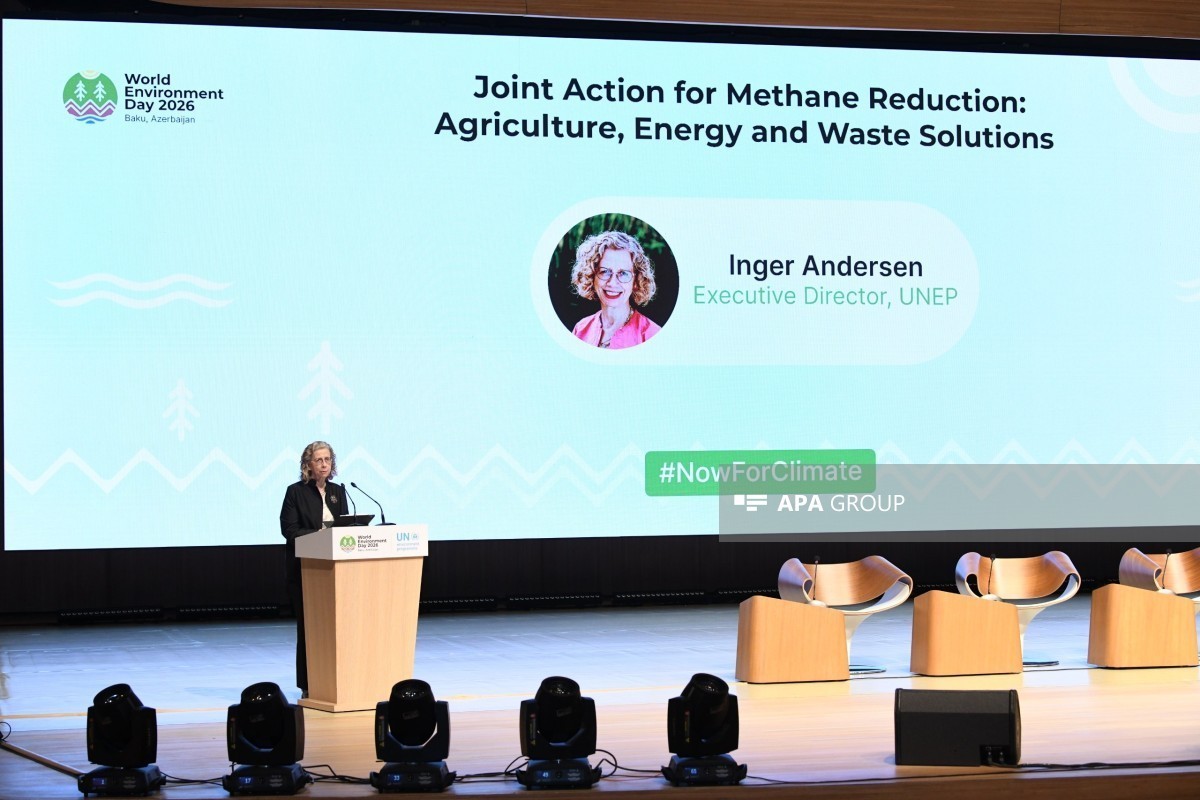
A side event titled “Joint Action for Methane Reduction: Solutions in Agriculture, Energy and Waste” was organized jointly by the Ministry of Ecology and Natural Resources and the United Nations Environment Programme (UNEP) within the framework of World Environment Day (WED), APA reports.
The speeches emphasized the importance of reducing methane emissions in combating climate change and provided information on the work carried out in this direction.
Executive Director of the United Nations Environment Programme (UNEP), Ms. Inger Andersen, stated that the risk of global temperatures reaching the 1.5°C increase threshold in the near future remains a serious concern:
“The situation regarding methane emission reductions remains critical. Global methane commitments and the scenario of temperatures rising by up to 2.5°C by 2050 are a major cause for concern. These processes have a serious impact on public health, agriculture, and particularly on the increase of respiratory diseases among children. Methane emissions are among the factors causing the greatest harm to agriculture. However, by reducing these emissions, it is possible to save approximately $330 billion.”
It was noted that Azerbaijan also plans to expand regional organic waste management and processing systems.
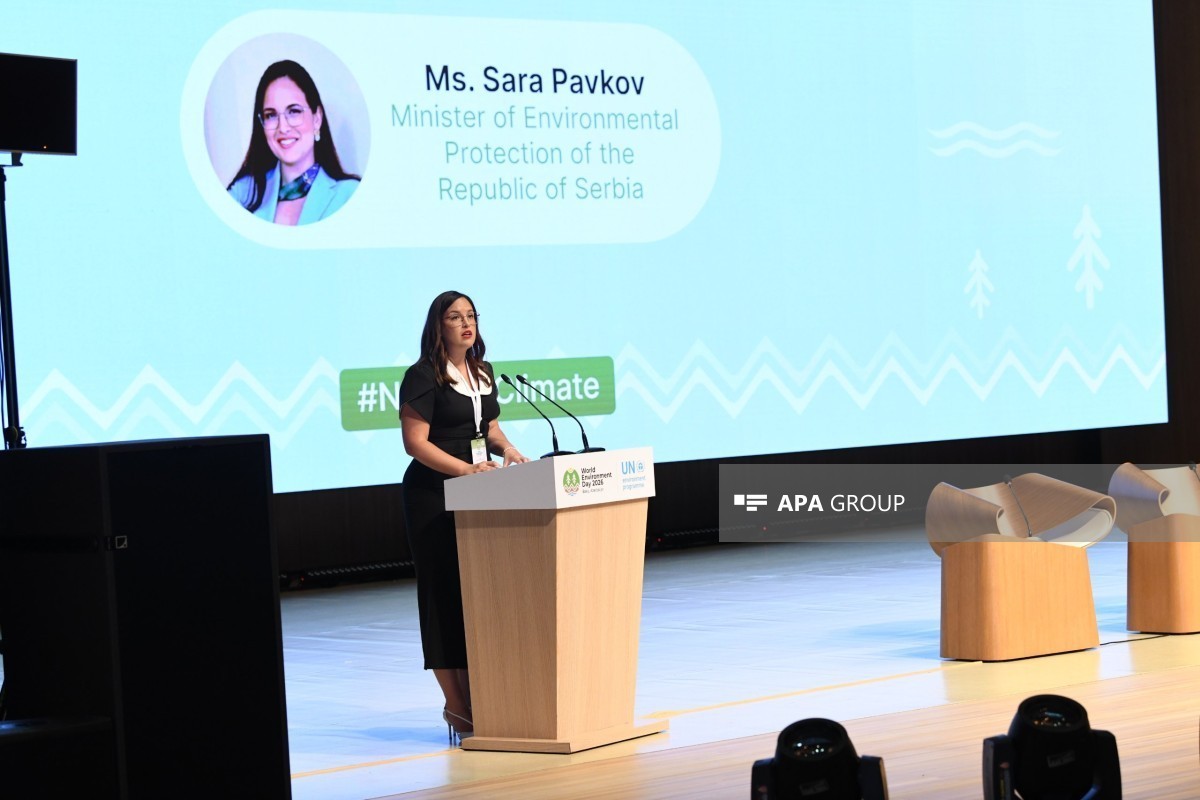
Serbian Minister of Environmental Protection Sara Pavkov said that approximately 75% of oil, gas, and methane emissions can be prevented through existing technologies, and in some cases, this could even generate additional revenue.
“Approximately 100 countries have already developed or are developing national methane action plans,” she added.
The Serbian minister drew special attention to Azerbaijan’s leadership: “The adoption and current implementation of the Regional Organic Waste Declaration is an important step. This initiative is an acceleration plan supported by UNEP and promotes concrete actions in the oil and gas sector. This also includes the active participation of the State Oil Company of the Republic of Azerbaijan (SOCAR) in the Oil and Gas Methane Partnership. We must do more and do it faster.”
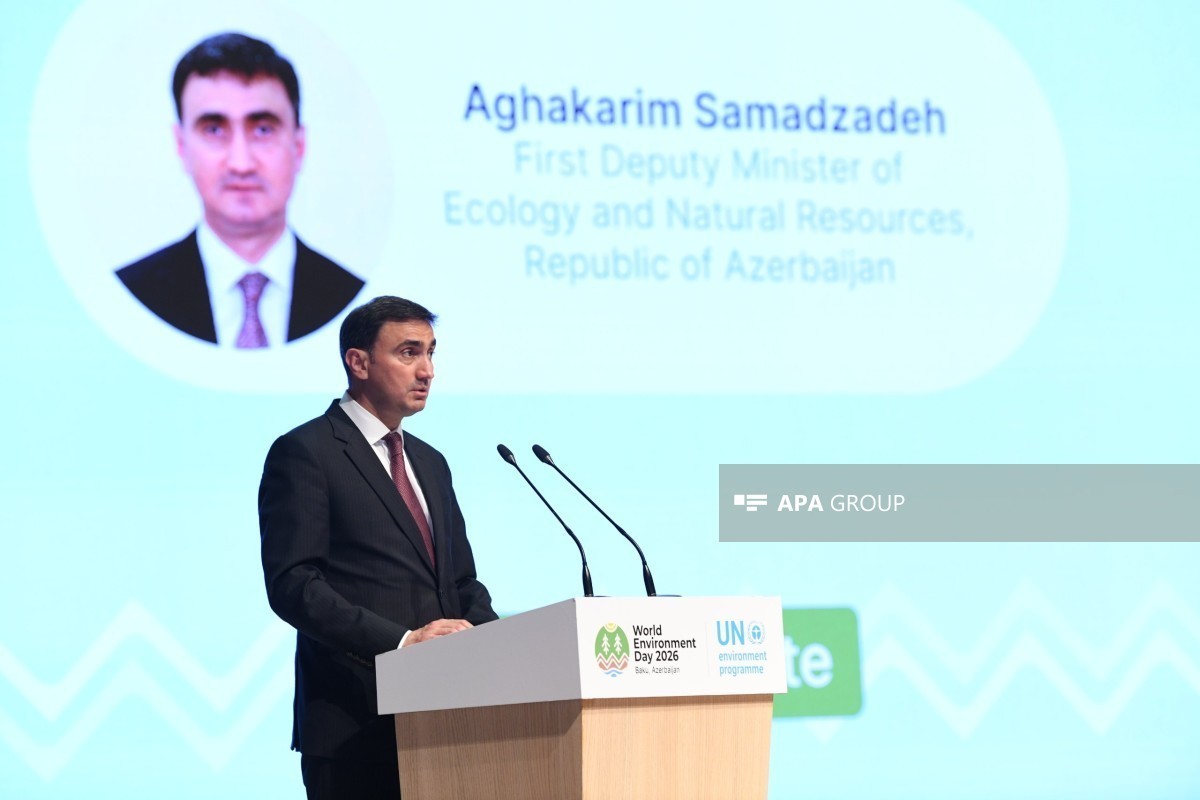
First Deputy Minister of Ecology and Natural Resources Aghakarim Samadzade noted that Azerbaijan is consistently fulfilling its international commitments on methane emission reduction: “The country’s updated national climate documents identify the reduction of greenhouse gas emissions, improvement of energy efficiency, minimization of methane losses, and expansion of the share of renewable energy sources as key targets.”
According to the deputy minister, Azerbaijan reduced its total methane emissions by 12.5% between 1990 and 2022. At the same time, the share of methane emissions has remained stable in recent years despite continued economic growth: “As part of its COP29 presidency, Azerbaijan has put forward 14 initiatives to support global climate action.”
It was also noted that in the energy sector, SOCAR has joined the Oil and Gas Decarbonization Charter and the Oil and Gas Methane Partnership 2.0. Within this framework, the targets include achieving net-zero operational emissions by 2050, ending routine flaring by 2030, and minimizing methane emissions by 2035.
Later, a panel session titled “National Joint Actions and International Cooperation” was held. The session discussed the work being carried out to reduce methane emissions, as well as opportunities to strengthen joint action and international cooperation in this field.


 Follow us on Telegram
 t.me/apanewsaz
 Follow us on Instagram
 Follow us on TikTok
 Follow us on Facebook
 Follow us on X