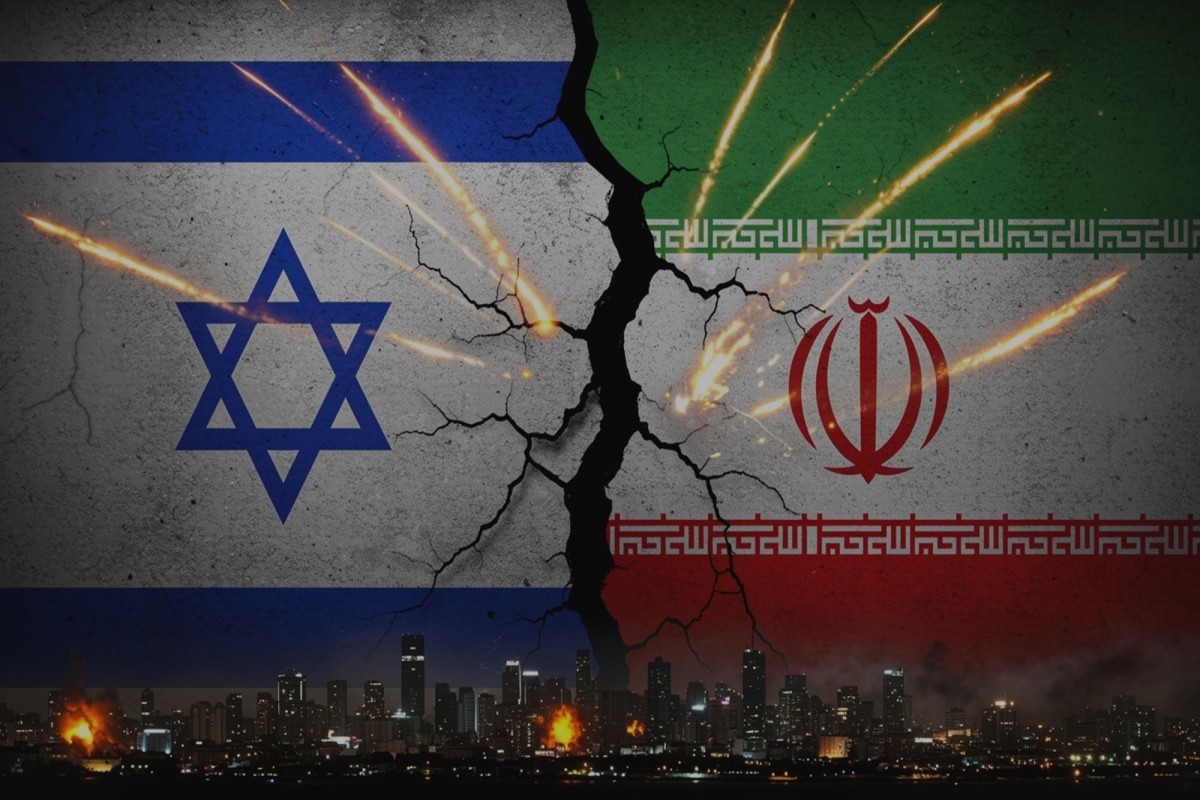


The Middle East is facing one of its most dangerous military escalations in years. Israel has launched direct strikes on Iranian territory. Iran has responded with missiles and drones, APA reports.
The United States has acknowledged conducting major combat operations against Iranian targets. Airspace closures, emergency declarations and confirmed exchanges of fire indicate that this is no longer a shadow confrontation. It is an overt state to state conflict with unpredictable consequences.
Below is a detailed FAQ explainer outlining what is known, what remains unclear and what could happen next.
What triggered this latest escalation
Israel says it launched pre emptive strikes against Iran, citing what it describes as an immediate and intolerable threat linked to Iran’s missile capabilities and nuclear program. Israeli officials framed the action as defensive in nature, arguing that delaying action would have increased strategic risk.
The United States has confirmed involvement in strikes on Iranian targets, stating that operations are aimed at degrading Iranian military infrastructure. Washington has warned that the situation may involve risks to American forces.
Iran has denounced the attacks as aggression and has vowed retaliation. Within hours of the initial strikes, Iranian missiles and drones were launched toward Israel.
Is this a completely new war
This is a new direct phase of confrontation. Israel and Iran have engaged in years of shadow warfare involving cyber operations, proxy forces and limited strikes. However, direct acknowledged strikes on each other’s territory represent a significant escalation.
There was also a major escalation in 2025 involving large scale exchanges. That earlier episode raised tensions but did not fundamentally resolve the strategic dispute over Iran’s nuclear program and regional influence.
This latest round appears broader and more coordinated, particularly due to open United States participation.
What has Israel targeted
Public reporting suggests strikes were carried out against Iranian military infrastructure, missile sites and facilities linked to strategic weapons development. Explosions were reported in and around Tehran and other locations.
Precise damage assessments remain unclear. In active conflicts, early claims often exceed confirmed evidence. Independent verification is limited due to restricted access and ongoing operations.
Has Iran’s nuclear program been directly targeted
The nuclear issue is central to the conflict narrative. Israel has long argued that Iran’s enrichment activities present an existential threat.
International monitoring bodies have reported difficulties verifying the full status of Iran’s uranium enrichment due to access limitations and monitoring disruptions. That verification gap has increased mistrust.
Whether specific nuclear facilities were struck in this round of fighting remains unconfirmed at the time of writing. Both sides are cautious in publicly detailing sensitive targets.
How has Iran responded
Iran has launched missiles and drones toward Israel. Air raid sirens and interception activity have been reported. Iranian officials have warned of broader retaliation if attacks continue.
Tehran has also suggested that American forces in the region could be targeted if United States involvement expands.
Iran’s leadership frames the response as defensive and necessary to preserve sovereignty.
What is the United States role
The United States has acknowledged conducting combat operations against Iranian targets. Officials describe the operations as necessary to protect regional security and allied interests.
This marks a major escalation compared to previous periods when Washington limited its involvement to deterrence and support roles.
The United States presence in the region includes military bases and naval assets. These could become targets if the conflict widens.
Is regional spillover likely
The risk is high. Several regional actors host American military installations. Missile and drone ranges mean that conflict could extend beyond Israel and Iran.
Airspace closures in multiple countries indicate elevated threat levels. Maritime routes in the Gulf could also be affected, which would have global economic implications.
Even if leaders intend to limit the war, miscalculation can rapidly expand it.
What is happening inside Israel
Israel has implemented emergency measures including airspace closure, school closures and restrictions on public gatherings.
Civil defense systems are active. Missile defense interceptors have been deployed in large numbers.
The Israeli government presents the campaign as necessary for long term security.
What is happening inside Iran
Iran has closed its airspace and heightened military readiness. State media reports emphasize resilience and retaliation.
There are reports of explosions and air defense activity in several regions.
Public information inside Iran is tightly managed during wartime, making independent assessment difficult.
What about casualties
Accurate casualty figures are not yet available. Early numbers in conflicts often change significantly as verification improves.
Both military and civilian casualties are possible given missile exchanges and air strikes.
Hospitals and emergency services in affected areas are operating under strain.
Why is the nuclear issue so central
Iran has enriched uranium to high levels that shorten the technical pathway to weapons grade material if a political decision were made to proceed.
Iran insists its nuclear program is peaceful. Israel argues the enrichment levels and missile development create unacceptable risk.
The breakdown or stagnation of negotiations has increased tensions. Without credible verification mechanisms, distrust deepens.
Were diplomatic efforts underway
Yes. Indirect negotiations had been taking place through mediators. However, differences over enrichment limits, missile programs and sanctions relief proved difficult to bridge.
Diplomatic channels often continue even during active fighting, but public progress has stalled.
Is regime change part of the objective
Some rhetoric from political leaders suggests broader ambitions. However, official war aims are often deliberately ambiguous.
Military operations may focus on degrading capabilities rather than explicitly pursuing political transformation.
Whether internal political change in Iran becomes a factor will depend on conflict duration and domestic pressures.
How could this conflict evolve in the next 72 hours
Several scenarios are possible.
One scenario is a contained exchange. After initial strikes and retaliatory responses, both sides could pause under international pressure.
Another scenario is escalation. Additional waves of strikes could expand target lists and widen geography.
A third scenario involves conditional de escalation tied to renewed nuclear verification agreements.
The direction will depend on perceived damage, leadership calculations and domestic political constraints.
What indicators suggest escalation
Targeting of United States bases in the region would represent a significant escalation.
Attacks on major energy infrastructure or maritime routes would also widen the conflict.
Large scale civilian casualties could intensify public pressure for expanded retaliation.
Conversely, diplomatic announcements or verified pauses in strikes could signal de escalation.
How might global markets react
Military escalation in the Middle East historically increases volatility in energy markets.
Shipping routes near the Strait of Hormuz are strategically vital. Any disruption would affect global oil and gas flows.
Insurance premiums for shipping and aviation may rise rapidly.
What are the biggest uncertainties
The full extent of damage to Iranian military and nuclear infrastructure is unknown.
The depth of United States operational commitment remains unclear.
Iran’s threshold for expanding retaliation beyond Israel is uncertain.
Verification gaps regarding nuclear activities complicate any immediate diplomatic solution.
What does international law say
States justify pre emptive action under self defense if they believe an armed attack is imminent. However, interpretations of imminence vary widely.
International responses often align with geopolitical alliances rather than purely legal arguments.
Could cyber operations be part of the conflict
Highly likely. Cyber warfare often accompanies physical strikes. However, such operations are rarely acknowledged in real time.
Disruptions to communications, financial systems or infrastructure could emerge.
How concerned should civilians be
In Israel and Iran, civilians face immediate risk from missile and drone exchanges.
In neighboring states, risk depends on whether the conflict widens.
Travel disruptions and airspace closures may affect international passengers.
What is the broader strategic significance
This confrontation goes beyond immediate military objectives. It affects regional balance of power, nuclear non proliferation norms and global energy stability.
If nuclear facilities are significantly damaged, verification challenges could intensify rather than diminish.
If military objectives are not decisively achieved, cycles of retaliation could persist.
Bottom line
Israel and Iran are engaged in direct military confrontation. The United States is actively involved. Missile exchanges are ongoing. Airspace closures and emergency measures confirm a high intensity crisis.
The next several days will determine whether this becomes a contained exchange or a prolonged regional war.
Information remains fluid. Verified facts are limited. Strategic consequences could extend far beyond the immediate battlefield.


 Follow us on Telegram
 t.me/apanewsaz
 Follow us on Instagram
 Follow us on TikTok
 Follow us on Facebook
 Follow us on X