










Baku-APA. Israel is proposing to essentially turn its West Bank separation barrier into the border with a future state of Palestine, two Palestinian officials said Friday, based on their interpretation of principles Israel presented in talks this week, APA reports quoting Associated Press.
The officials said Israeli envoy Yitzak Molcho told his Palestinian counterpart that Israel wants to keep east Jerusalem and consolidate Jewish settlements behind the separation barrier, which slices close to 10 percent off the West Bank. They spoke on condition of anonymity, citing strict no-leaks rules by Jordanian mediators.
The proposal would fall short of what the Palestinians seem likely to accept, especially because it would leave Jerusalem on the "Israeli" side of the border.
But it would also mark a significant step for Israeli Prime Minister Benjamin Netanyahu, who has spent most of his career as a staunch opponent of Palestinian independence.
And if talks advance in such a direction, it could also spell the end for his nationalist coalition, where key members would consider the abandonment of most of the West Bank — a strategic highland and biblical heartland — an unforgivable betrayal.
Israel has confirmed that it presented principles this week for drawing a border with a Palestinian state. But the politically charged nature of the talks — even though they were held at a relatively low level, below that of Cabinet ministers — was reflected in the guarded refusal by any top official to discuss details.
An Israeli government official said that as far as he knew, the information was incorrect, but declined to elaborate or go on the record, citing Jordan’s demand for discretion.
Deputy Prime Minister Dan Meridor, one of the closest Cabinet ministers to Netanyahu, said he has been supporting such an offer for months, and that Israel should concentrate on preserving the large West Bank settlement blocs, close to the pre-1967 border. But he could not confirm whether the offer was in fact made.
"I do not know if (Molcho) said these words exactly, but it would be great," Meridor told The Associated Press.
The Palestinian officials — one a senior member of the leadership — said Molcho told the Palestinians that Israel wants to live peacefully beside a Palestinian state.
It would be the most detailed offer yet from Netanyahu on how much he wants to keep of the lands Israel captured in the 1967 Mideast War — the West Bank, Gaza and east Jerusalem.
The Palestinians want to establish their state in virtually all of these lands — although they do seem ready to accept minor adjustments, through land swaps in which Israel keeps some of the largest settlements.
Palestinian President Mahmoud Abbas is certainly unlikely to consider a proposal that keeps east Jerusalem under Israeli control. The eastern sector of the city is home to key Jewish, Muslim and Christian sites.
And Israel’s position, as described by the Palestinians, is less than what was offered by Netanyahu’s predecessors, Ehud Barak and Ehud Olmert, who were willing to discuss a partition of Jerusalem as well.
About half a million Israelis settled in east Jerusalem and the West Bank after 1967, including tens of thousands east of the barrier.
Israel started building the barrier in 2002, in the midst of a Palestinian uprising that included scores of deadly attacks by Palestinian militants who crossed from the West Bank into Israel and blew themselves up among civilians.
Israelis have generally credited the barrier — along with other punitive measures — with stopping the spate of incursions several years ago.
However, it was routed in a way that raised questions about Israel’s claim that it was a temporary security measure — weaving through the West Bank, looping wide around some settlements to leave room for expansion, and looking very much like a border a future Israeli government might argue for. The Palestinians condemned it from the start as a land grab.
The Palestinian officials also said that Molcho portrayed the Jordan Valley, which makes up about one-fourth of the West Bank and borders Jordan, as a strategic Israeli security asset. However, that wording suggests less than a demand for firm territorial control.
Netanyahu has said he wants a continued Israeli presence on the eastern border of a future Palestinian state as part of any peace deal.
Netanyahu has long argued Israel needs the area as a security buffer — protection against possible attack from the east.
The 1994 peace treaty with Jordan eased this concern — but the Arab Spring has given it new life: although it is almost never discussed by officials, mindful of riling Jordan, many in Israel ponder a nightmare scenario in which the Jordanian monarchy falls to Israel’s enemies, who then pour weapons and militants into the West Bank, reaching within miles (kilometers) from its major cities.
A senior Israeli military official said last week the Israeli army had to consider in its planning the possibility of heightened threats from east of the West Bank.
Israeli officials have said any presence in the Jordan Valley could be reviewed over time.
Abbas, meanwhile, is under growing pressure from the Quartet of Mideast mediators — the U.S., the U.N., the EU and Russia — to continue the talks with Israel, which began earlier this month. The Quartet had asked the sides to present detailed proposals on borders and security arrangements.
The Palestinians argue that the period set aside for the contacts ended Thursday, or three months after the Quartet issued its marching orders. Israel says the intention was to have three months of talks, and so wants meetings to continue.
Abbas will consult Monday with senior officials from the Palestine Liberation Organization and his Fatah movement. Later next week, he will also seek advice from the Arab League.


 Follow us on Telegram
 t.me/apanewsaz
 Follow us on Instagram
 Follow us on TikTok
 Follow us on Facebook
 Follow us on X
Asia
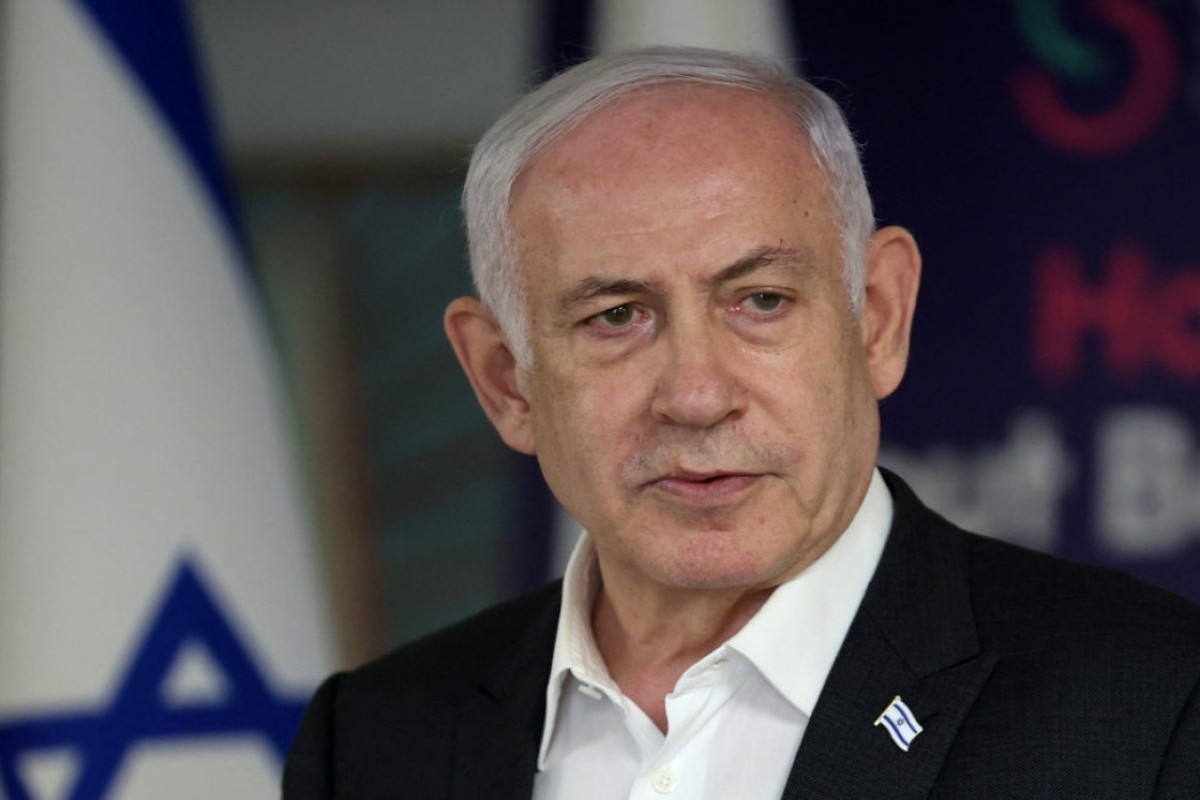
Netanyahu says Israel should gradually end dependence on US financial aid
 10:00
10:00
 2 July 2026
Qatari diplomat notes progress at US-Iranian indirect talks in Doha
01:38
2 July 2026
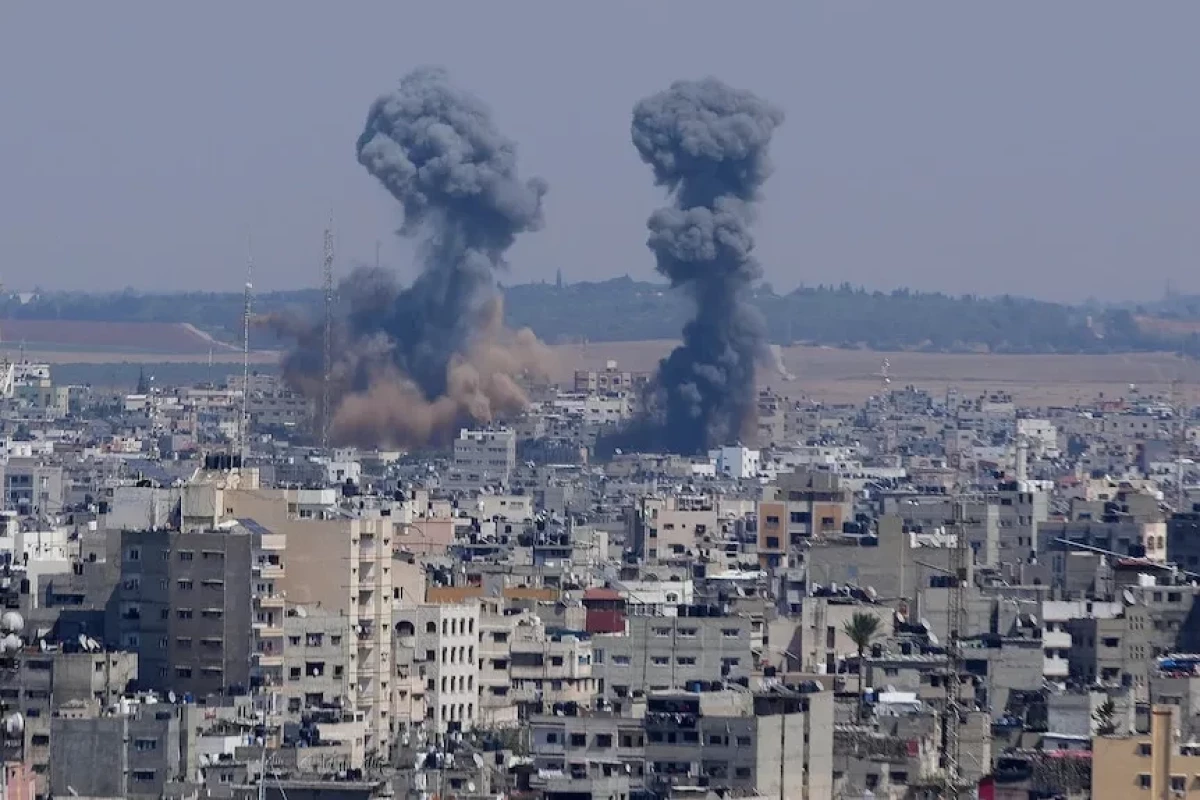
Israel strikes Gaza to kill Hamas's military wing platoon commander
22:30
1 July 2026
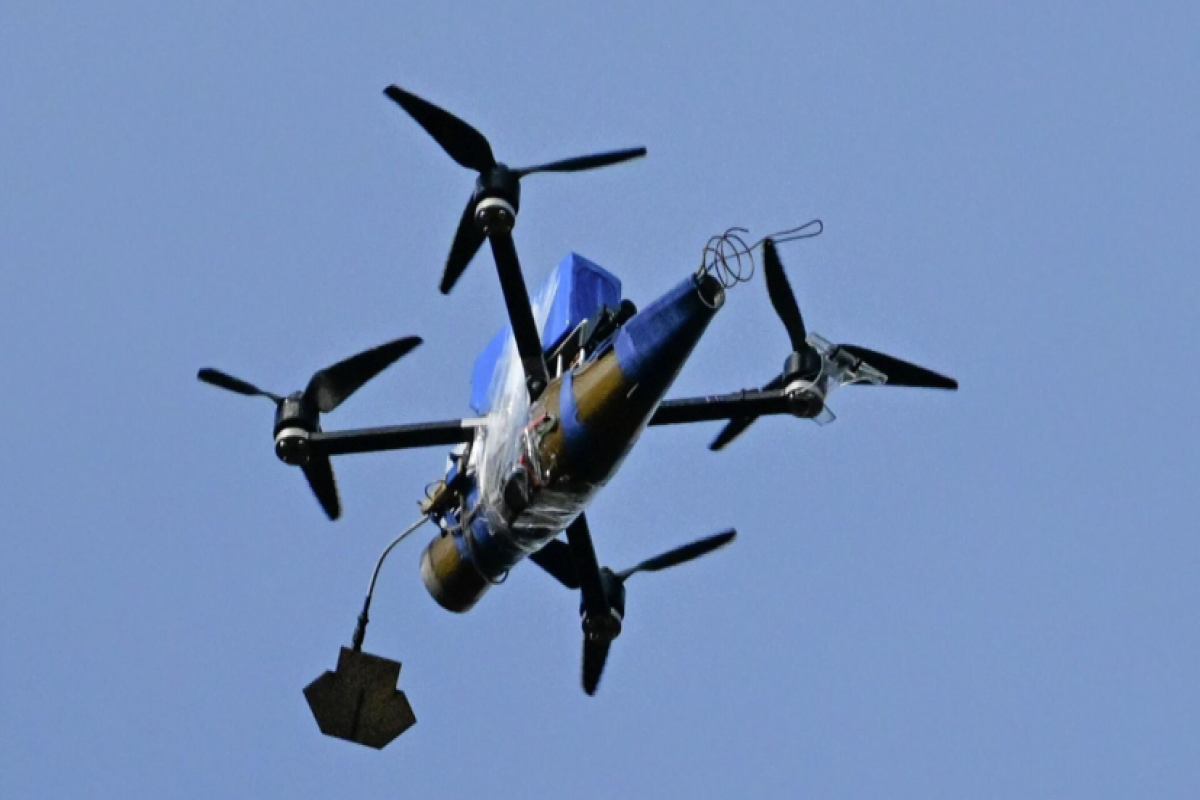
Ukrainian drone carrying explosives crashes on Türkiye’s Black Sea coast
20:49
1 July 2026

NEWS FEED
Kyiv declares mourning for victims of Russian attack
11:14
2 July 2026
BSTDB has financed over €9 billion in projects since its establishment – Vice President
11:11
2 July 2026
Armenian PM Nikol Pashinyan meets European Commission President Ursula von der Leyen
11:08
2 July 2026
Death toll from Russia's Kyiv attack rises to 13, 86 injured - UPDATED - PHOTO
10:58
2 July 2026
Azerbaijan launches Online Inquiry Center for missing persons
10:54
2 July 2026
BSTDB President: Our more than 20-year partnership with Azerbaijan is built on mutual trust
10:53
2 July 2026
BSTDB ready to expand investments and business cooperation with Azerbaijan – President
10:50
2 July 2026
Finance Minister: The Middle Corridor further strengthens Azerbaijan's strategic position
10:46
2 July 2026
BSTDB Business Forum held as part of the Annual Meeting - PHOTO
10:44
2 July 2026
Finance Minister: Azerbaijan's economy is undergoing a major transformation
10:42
2 July 2026
President Ilham Aliyev receives Turkish Justice Minister Akın Gürlek - PHOTO
10:23
2 July 2026
Azerbaijani oil sold for $72
10:08
2 July 2026
Gold futures decline, silver edges up on COMEX
10:06
2 July 2026
Two killed, six injured in Ukrainian drone strikes on two Russian regions
10:05
2 July 2026
Netanyahu says Israel should gradually end dependence on US financial aid
10:00
2 July 2026
Oil prices are falling again on global markets
09:50
2 July 2026
Construction of the Asgaran–Khojaly–Khankendi highway reaches 86% completion
09:49
2 July 2026
European Commission President Ursula von der Leyen concludes working visit to Azerbaijan
09:36
2 July 2026
UN's new Resident Coordinator in Azerbaijan assumes office
09:22
2 July 2026
US advances to Round of 16 at 2026 World Cup after 2-0 win over Bosnia and Herzegovina
08:33
2 July 2026
Brent falls below $71 per barrel, first time since February 27
07:14
2 July 2026
Belgium beat Senegal 3-2 to reach World Cup last 16
02:53
2 July 2026
Trump believes Cuba is "moving toward" the United States
02:27
2 July 2026
Qatari diplomat notes progress at US-Iranian indirect talks in Doha
01:38
Audio
2 July 2026
Rutte says White House is disappointed with European allies over Iran
00:38
2 July 2026
President Ilham Aliyev and President of the European Commission delivered press statements - UPDATED-1
00:05
2 July 2026
President Ilham Aliyev held expanded meeting with President of the European Commission-UPDATED
00:03
2 July 2026
President Ilham Aliyev’s social media accounts shared video on Ursula von der Leyen’s visit to Azerbaijan
23:55
1 July 2026
US declines to extend North American trade deal, starting clock to end it while seeking changes
23:17
1 July 2026
Death toll from devastating earthquake in Venezuela has exceeded 2,000
22:40
1 July 2026
Israel strikes Gaza to kill Hamas's military wing platoon commander
22:30
1 July 2026
England eliminates DR Congo in World Cup's round of 32
22:02
1 July 2026
US VP not rules out possibility of resuming US military action against Iran
21:20
Audio
1 July 2026
Ukrainian drone carrying explosives crashes on Türkiye’s Black Sea coast
20:49
1 July 2026
Assistant to President: Azerbaijan- EU partnership - looking beyond horizons
20:16
Audio
1 July 2026
Amy Carlon: Azerbaijan and United States continue to work together today for a more connected, more prosperous, and more secure future-PHOTO
20:12
1 July 2026
Leyen: We also highly appreciate your proposal to lay electric cable to Armenia
20:06
1 July 2026
Ursula von der Leyen: The European Union believes in the bright future of this region
19:59
1 July 2026
European Commission President: We will launch a new €20 million program to promote peace in the region
19:55
1 July 2026
European Commission President: We want to hold the Regional Connectivity Investment Conference in Baku
19:51
1 July 2026
Ursula von der Leyen: We propose establishing an EU-Azerbaijan Connectivity Partnership
19:49
1 July 2026
EU to allocate up to €200 million for transport, energy, and digital connectivity in the South Caucasus
19:47
1 July 2026
Ursula von der Leyen to President Ilham Aliyev: You have demonstrated personal leadership in promoting peace and cooperation in the region
19:47
1 July 2026
Von der Leyen: I am in Baku to further strengthen the EU-Azerbaijan partnership
19:43
1 July 2026
Ursula von der Leyen: Azerbaijan has proven to be a reliable partner for the EU
19:41
1 July 2026
President Ilham Aliyev: Azerbaijan can become a strategic renewable energy partner of the European Commission
19:39
1 July 2026
President: Cargo volumes through Azerbaijan are increasing in all directions
19:36
1 July 2026
President Ilham Aliyev: Azerbaijan is the EU's main trading partner in the South Caucasus
19:34
1 July 2026
President Ilham Aliyev: Half of Azerbaijan's gas exports now go to EU member states
19:33
1 July 2026
President Ilham Aliyev: Azerbaijan-Armenia normalization process is progressing successfully
19:31
1 July 2026


