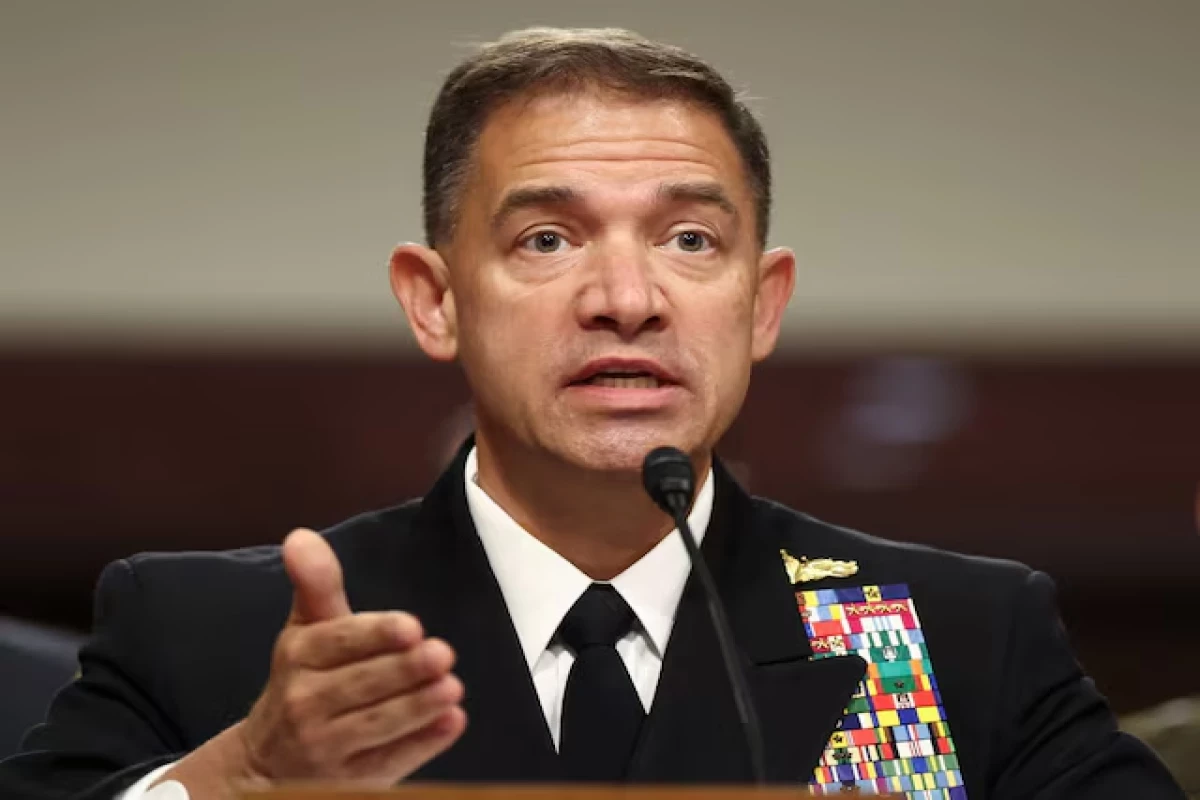


The top U.S. commander for the Middle East has warned troops that cellphone videos shared online can help Iran target American bases, and sources told Reuters some deployed personnel could soon be ordered to surrender their phones, Reuters reports.
Any crackdown on mobile communications would add a new dimension to the conflict for the thousands of U.S. troops in the region, many of whom still rely on phones to periodically message loved ones and assure them they are well.
Admiral Brad Cooper, in a previously unreported letter, said Iran was benefiting from being able to see the success or failure of its strikes in near real-time by searching news reports or online posts by journalists referencing "reactions, photos, and footage from the cellphones of our troops."
"The direct, unavoidable cost of this open-source intelligence could be measured in the lives of American service members and civilian residents in targeted Gulf countries," Cooper, head of U.S. Central Command, wrote in his July 28 letter, a copy of which was obtained by Reuters.
He called on troops to "redouble our focus on operational security," without prescribing specific steps in the memo.
The warning underscored the mounting tensions between real-time news reporting on the war, often aided by satellite imagery and first-person accounts, and the desire by the U.S. military to restrict any information that could aid Iran as it tries to kill and wound U.S. troops.
In Jordan, which has been a frequent target of Iranian strikes, some troops have been told their phones will be confiscated in the coming days, two sources familiar with the matter told Reuters.
A third source said such a move was being considered in the region due to operational security concerns but did not present the confiscation as a certainty.
Asked for comment, U.S. Central Command spokesperson Captain Timothy Hawkins said: "The message is a general reminder to our service members on the importance of maintaining operational security. This is one of many opportunities Admiral Cooper has used to convey operational priorities."


 Follow us on Telegram
 t.me/apanewsaz
 Follow us on Instagram
 Follow us on TikTok
 Follow us on Facebook
 Follow us on X