













APA presents Mohammad Rahmanifar's "The Story of a Book" article as part of the "Explore South Azerbaijan" project.
You can read the previous article of the project [here].
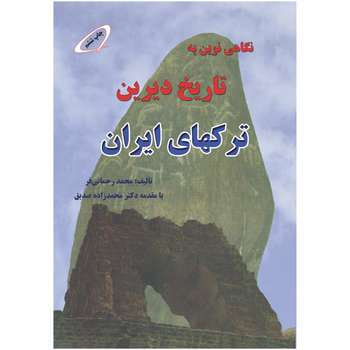
Previously, as part of the "Explore South Azerbaijan" project, we had written articles titled "Historians Fighting for Azerbaijani Identity in Iran" and "A Book About Armenian Atrocities in South Azerbaijan," which discussed the role of history in the formation of collective identity, the progress of Azerbaijan-centric historiography in South Azerbaijan, and the authors active in this field. As I mentioned in one of those articles, one of the books written in this field, which was warmly received by the Turkic people of South Azerbaijan and reprinted several times, was a book I authored. In this article, I would like to discuss the circumstances that motivated me to write this book, as well as how the Turkic people of South Azerbaijan received it. However, I find it necessary to emphasize at the very beginning that this article reflects the cultural, social, and political situation in South Azerbaijan approximately 25 years ago, rather than being solely a memoir of the author of that book.
How did the idea of writing the book come about?
In the late 1990s, the issue of national identity and the tendency of self-reclamation had intensified among the Turkic people of South Azerbaijan. During the presidency of Khatami (Mohammad Khatami), who called himself a supporter of reforms and freedom of expression, the publication of books, magazines, and newspapers in Iran had increased significantly. Writers and journalists from South Azerbaijan also took advantage of that situation and began publishing books and newspapers about Azerbaijan and the Turks. Thus, the issue of Azerbaijanism had become an agenda topic among the Turkic people of South Azerbaijan, particularly among students and the youth. Meanwhile, the independence of Northern Azerbaijan and the Karabakh war had also played a major role in bringing the Azerbaijan issue to the forefront among the Turkic people of South Azerbaijan.
Under the circumstances I briefly described above, questions such as "Who am I?", "Who is a Turk?", and "What does it mean to be Azerbaijani?" constantly lingered in the minds of students and the youth. They knew they needed to read books to find answers to such questions. However, at that time, the number of books addressing these questions and discussing the history of Azerbaijani Turks was almost negligible. The new generation, accustomed to the opportunities provided by the internet, might find it difficult to understand me, but those who witnessed those days will acknowledge that I am right.
At that time, I was studying at the Faculty of English Language and Literature at Tabriz University. One night, a dispute broke out in the student dormitory between Turkic and Persian students about the origin and ancestry of the Turks. The Persian students insulted the history of the Turks. Their arguments were the same as those written in textbooks and constantly promoted by official state propaganda. However, the responses the Turkic students could offer were not found in any of the books they had read up to that point. That night was a very difficult one for me. On one hand, we witnessed the blatant belittlement of our history and identity; on the other, we were unable to put forward any arguments to defend ourselves and our identity.
I remember well that the next morning, I did not attend classes. Instead, I went to the faculty library and borrowed two books about Azerbaijani history. Since the faculty library did not allow more than two books to be borrowed at once, I went to the central library of Tabriz University and borrowed two more books from there. Then, I returned to the dormitory and started reading the books. That day, my goal was simply to find answers to the questions lingering in my mind. My next objective was to refute the arguments put forward by the Persian student who had insulted the history and identity of the Turks the previous day. Finding the books I needed was not easy in an environment where, on one hand, the internet was not yet widely available, and on the other hand, books related to Azerbaijan and the Turks were heavily censored. The books I borrowed from Tabriz University’s library were actually written based on the very arguments presented by that Persian student. However, I was trying to find my own history and identity within those very books because, as I said, I had no other choice or alternative.
Just around that time, the first volume of the magnificent work titled "The Ancient History of the Turks of Iran" by Professor Mohammad Taghi Zehtabi was published. Since I had not been educated in my mother tongue, I could not write in Turkish at that time. I even struggled to read and understand the Turkish book written by Zehtabi. But I was very determined in my task. No matter what, I had to find answers to the questions in my mind.
In fact, the questions in my mind were not just issues that troubled me alone. Many of my fellow students I encountered were also disturbed by the same questions, and everyone was searching for answers to such questions. Professor Zehtabi's unique book was a profoundly scholarly work. However, as I mentioned, even though I had begun learning Turkish, I found it difficult to read that book—let alone the young people who, until that day, had not even read a single page in their mother tongue!
As my research on the ancient history of the Azerbaijani Turks deepened and my knowledge expanded, countless students—both familiar and unfamiliar—approached me with questions. I still remember how they would joyfully thank me after I answered their questions. Truly, the Azerbaijani youth of that time were immensely eager to learn about their history, literature, culture, and identity. This situation gave me courage and motivated me to work even more diligently. There was not a single night when I went to bed without studying or researching the subject, and every day without exception, I conducted research on this matter.
Of course, I could not answer all the questions my fellow students asked me. However, even the questions I did not know the answers to were helpful to me. I would try to find the answers to those questions the next time. In those years, none of the professors at Tabriz University, especially those in the history faculty, were willing to step away from the official narratives of Persian historiography and conduct independent historical research. In such a situation, I had become a reference point for students who refused to accept these official narratives. Not all of them came to me solely to get answers to their questions. Some came with the intention of assisting me in the work I had started. Some introduced me to sources they knew, others shared information they had managed to obtain, some lent me books, and some even invited me to their homes to browse their personal libraries and borrow any books that might be useful for my research...
Thus, the questions that initially formed in my mind multiplied day by day with the addition of my friends' inquiries. When I began this work, it never crossed my mind that the books I was searching for to answer these questions might one day be compiled into a book. However, after extensive effort, my work gained such seriousness that when two or three renowned newspapers in Tabriz expressed interest in publishing my research, I told them I preferred to have my studies published in the form of a book.
After working day and night for two to three years, the book was ready for publication. As I mentioned earlier, during those years, Iranian President Khatami had implemented significant freedoms in the field of book publishing, and many books that previously could not be published received printing licenses during that period. This environment worked in our favor, and we managed to obtain a printing license for the book I had written.
A book that reflected the answers to the inquiries of the young generation had now been written and had even obtained publication permission. However, a significant challenge remained. Since I was a young and unknown writer, no publishing house in Tabriz was willing to take the risk of printing the book I had written. This was entirely understandable—no publishing house wanted to take a risk on a young writer's book. But once again, it was the Azerbaijani youth who resolved this issue. After consulting with some friends, we decided to pre-sell the book and use the proceeds to cover the printing and publication costs. In other words, we would sell the book before it was even published. The book was received with such enthusiasm by university students and the new generation that over 800 copies were sold even before it was officially published and released to the market. When the owner of a publishing house heard this news, he offered to publish the book at his own expense, but by then, there was no longer any need for it.
The Azerbaijani youth, eager to know their identity, existence, and history, played a very significant role in the writing, publication, and even promotion of this book. In fact, the book, which was published in 3,300 copies, sold out completely within three months and went into a second edition. Although I faced some pressure for writing this book, I am proud of it. Those exerting pressure did not hesitate to acknowledge that the reason was the book’s wide readership and impact. While the book explores the ancient history of Azerbaijani Turks, its creation, publication process, and the strong interest it generated among readers also reflect the contemporary history of the South Azerbaijani Turks.


 Follow us on Telegram
 t.me/apanewsaz
 Follow us on Instagram
 Follow us on TikTok
 Follow us on Facebook
 Follow us on X


