




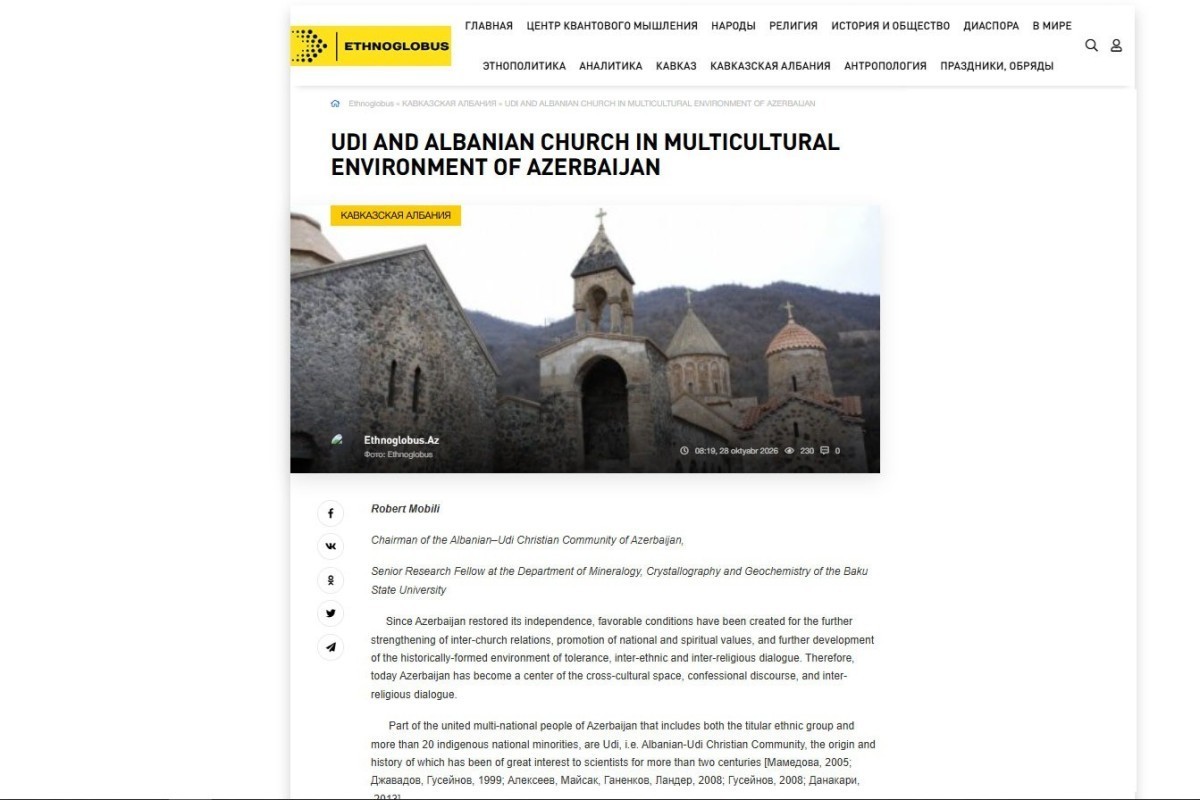


The Ethnoglobus.az portal has published an article titled “Udi and Albanian Church in Multicultural Environment of Azerbaijan,” APA reports.
The article was written by Robert Mobili, Chairman of the Albanian-Udi Christian Community of Azerbaijan and Senior Research Fellow at the Department of Mineralogy, Crystallography and Geochemistry of Baku State University.
APA presents the article published by Ethnoglobus.az on October 28:
"The article states that following the restoration of Azerbaijan's independence, favorable conditions were created for strengthening interchurch relations, promoting national and spiritual values, preserving the country's historically established environment of tolerance, and developing interethnic and interreligious dialogue. As a result, Azerbaijan has become an important center for intercultural relations, interconfessional cooperation, and interreligious dialogue.
The author notes that the Udis, who form part of Azerbaijan's multinational society, are among the oldest indigenous ethnic groups of the Caucasus. The origins and history of the Albanian-Udi Christian Community have attracted scholarly interest for more than two centuries.
The article emphasizes that the Udis are among the ancient ethnic communities that contributed to the ethnogenesis of the Azerbaijani people. It notes that throughout history, the Udis have faced various political, religious, and confessional conflicts, as well as rivalry among major powers, yet have managed to preserve their national identity, language, religious beliefs, and cultural traditions.
Robert Mobili writes that references to the Udis can be found in ancient historical sources, including accounts associated with the Battle of Gaugamela between Alexander the Great and the Persians in 331 BC. They are also mentioned in the works of ancient authors such as Herodotus, Strabo, Ptolemy, and Pliny the Elder, as well as in Arab sources and the travel diaries of European explorers.
According to the author, one of the most detailed historical accounts of the Udis appears in The History of the Albanians, written by Movses Kaghankatvatsi, a historian from the village of Kalankatuk in the Utik province of Caucasian Albania.
The article also recalls French writer Alexandre Dumas's encounter with G. Bezhanov, an ethnic Udi, during his journey through the Caucasus in 1859.
It quotes Dumas's travel notes:
“The origin of the Udis is unknown; their language, which nobody understands, resembles no other language. They lose themselves in the darkness surrounding them.”
The publication notes that information about the Udis also appears in the works of French scholar Édouard Dulaurier, the diaries of English travelers, Arutyunov's anthropological studies, and A. Yanovsky's research on Caucasian Albania.
Citing archival materials, Robert Mobili states that between 10,000 and 12,000 Udis lived within the Russian Empire during the last quarter of the 19th century.
According to the figures presented in the article, the worldwide Udi population currently exceeds 10,000, approximately 5,000 of whom live in Azerbaijan. The Udis are primarily concentrated in Nij village in the Gabala district, although communities also live in Oghuz and Baku.
Udi communities are also found in southern Russia, Kazakhstan, Georgia, Ukraine, Belarus, and several European countries.
The author notes that approximately half of Nij village's population of 7,500 consists of Udis. Despite living through different historical periods under the Sasanian Empire, the Arab Caliphate, the Ottoman and Russian empires, and the Soviet Union, the Udis have preserved their language, religion, and cultural identity.
A substantial section of the article is devoted to the history of the Udi language and the ancient Albanian script.
The publication explains that Udi belongs to the Nakh-Daghestanian language family and has two closely related dialects. Historically one of the widely spoken languages of Caucasian Albania, it played an important role in the development of a literary language and the emergence of the Albanian writing system in the fourth century.
The author states that the ancient Albanian alphabet consisted of 52 letters. Religious texts, liturgies, and church hymns were translated into Albanian, and religious services were conducted in the language. However, subsequent historical developments gradually led to the disappearance of the Albanian writing tradition.
Robert Mobili describes the discovery of a palimpsest containing ancient Albanian texts at St. Catherine's Monastery on the Sinai Peninsula in 1996 as a major scholarly development. According to him, the discovery provided researchers with new opportunities to study the existence and development of the Albanian alphabet and literary language.
The article states that the manuscript contained passages from the Gospel of John, liturgical texts, and religious readings.
Research conducted with the participation of scholars including Zaza Aleksidze, Jost Gippert, Wolfgang Schulze, and Jean-Pierre Mahé resulted in the decipherment and publication of the ancient texts in two volumes. The texts were subsequently translated into nine languages, including Udi.
The author emphasizes the particular importance of the Udi language in deciphering these manuscripts.
The article identifies the restoration and preservation of the religious and cultural heritage of the ancient Albanian Church as one of the Albanian-Udi Christian Community's principal objectives.
Robert Mobili states that the abolition of the Albanian Church by the authorities of the Russian Empire in 1836 had serious consequences for the religious and cultural life of the Udis. He maintains that the process was carried out with the support of the Armenian Gregorian Church.
According to the author, the decision resulted in the destruction of ancient religious books, chronicles, and other written sources, causing significant damage to the spiritual heritage and religious traditions that had developed over centuries.
Nevertheless, the Udis managed to preserve their native language and religious identity.
The publication also notes that more than 100 monuments associated with the Albanian religious heritage are located in Azerbaijan's territories liberated from Armenian occupation.
The author describes the Udis as one of the ethnic communities preserving the Christian heritage of ancient Caucasian Albania, emphasizing their continued efforts to protect and develop their distinctive national and cultural traditions in Azerbaijan, their historical homeland.
The article also examines the centuries-old experience of coexistence among Azerbaijan's different religious and ethnic communities.
It notes that Muslims, Jews, Orthodox Christians, Catholics, and representatives of other religious communities have historically lived together in an atmosphere of mutual respect.
Robert Mobili regards the proximity of temples, synagogues, churches, and mosques belonging to different religions as evidence of Azerbaijan's shared historical, religious, and cultural heritage.
The author highlights Nij village as a particularly significant example.
The article points out that the presence of three churches, two mosques, two Christian communities, and a Udi cultural and educational center in the village demonstrates the preservation of religious diversity.
It states that while maintaining their Christian beliefs, the Udis also respect the religious ceremonies and holidays of their Muslim neighbors. The joint celebration of Novruz is presented as an important factor in cultural integration between Muslim and Christian communities.
According to the author, hospitality, mutual respect, and tolerance toward different religious traditions have been maintained in Nij for centuries.
The article pays particular attention to the support provided by the Azerbaijani state to the Albanian-Udi Christian Community.
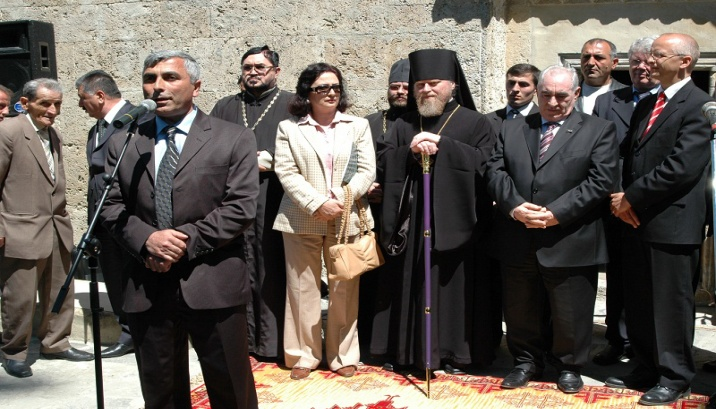
Robert Mobili recalls President Ilham Aliyev's visits to Nij village in 2005 and 2011. He expresses appreciation for the support provided by the head of state, the State Committee for Work with Religious Organizations, various ministries, nongovernmental organizations, and Azerbaijani citizens in preserving the community's religious and cultural heritage.
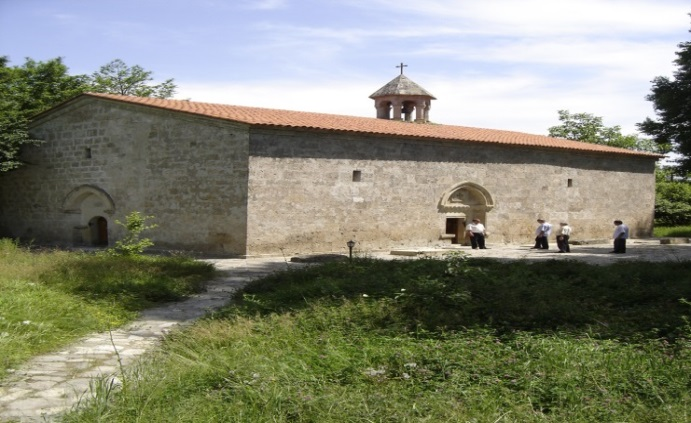
The restoration of the St. Elishe (“Chotari”) Albanian-Udi Church in Nij in 2006 is described as an important step toward restoring historical justice and protecting religious and cultural heritage.
The article also discusses the Udi Hearth Historical and Ethnographic Park-Museum, established in Nij in August 2018.
It notes that local and Polish specialists participated in the creation of the museum, including Azerbaijani architect and artist Shahvalad Mammadov.
The author explains that the Azerbaijani word ocaq refers to fire, a household hearth, and a sacred place. The concept occupies an important place in the ancient beliefs and traditions of both Udis and Azerbaijanis.
The article states that the museum preserves a house belonging to the Gangalov family, built in the late 17th century, along with traditional agricultural buildings, a garden, and other ethnographic exhibits.
The publication also provides information about the traditional lifestyle, architectural characteristics, agricultural activities, and domestic culture of the Udis.
It notes that one distinctive feature of traditional Udi homes was the presence of a separate prayer room.
The author also highlights the importance of hazelnut cultivation in Nij's economic life, noting that a significant proportion of the local population is engaged in this activity.
The museum is described not only as a site for displaying historical and cultural heritage but also as a venue for international forums, conferences, and other meetings.
Robert Mobili considers Nij village a practical example of Azerbaijan's multiculturalism policy.
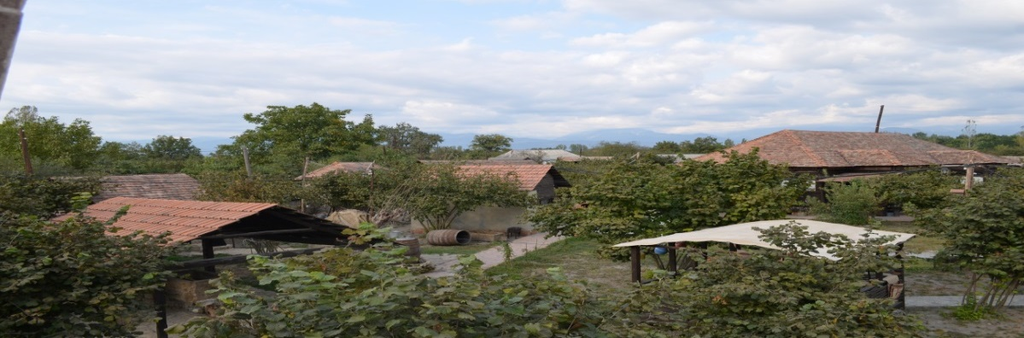
According to him, representatives of different religious communities gather during Udi celebrations of Easter and Christmas, with the holidays observed in an atmosphere of mutual respect and friendship.
The article states that two mosques operate in Nij, two of its three churches have been restored, and five schools serve the local population. Three schools provide instruction in Russian, while two teach in Azerbaijani.
The publication also recalls the renovation of Secondary School No. 2 in Nij in 2012 with the support of the Heydar Aliyev Foundation.
It notes that Udi children attending the school receive instruction in Russian while also studying their native language through the fifth grade.
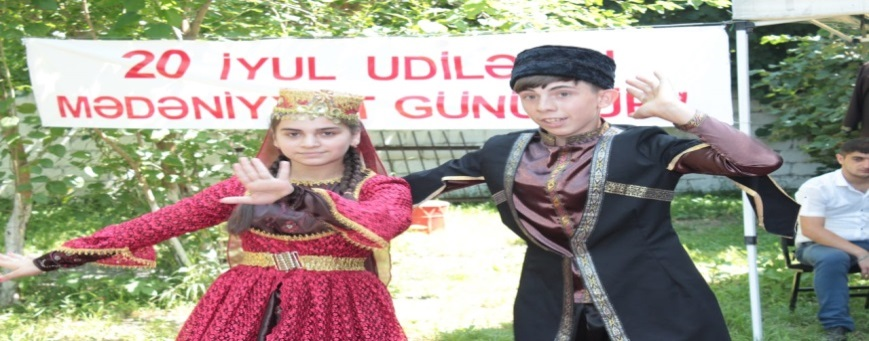
The author identifies the Albanian-Udi Christian Community's primary mission as researching its historical heritage, preserving national and cultural values, and transmitting them to future generations.
Robert Mobili argues that preserving the languages, religions, and traditions of small ethnic communities is particularly important in the context of globalization.
He considers the historical experience of the Udis an example of how a community can maintain its national identity over many centuries.
The article also extensively discusses the restoration of the Church of the Most Holy Mother Mary in Nij under the Heydar Aliyev Foundation's “Azerbaijan – the Address of Tolerance” project.
It notes that the church had been used as a warehouse during the Soviet period and remained neglected for many years. Its dome collapsed, its walls deteriorated, and its historical architectural features were seriously threatened.
Restoration work reconstructed the church's architectural elements, and an Albanian cross was installed on its dome.
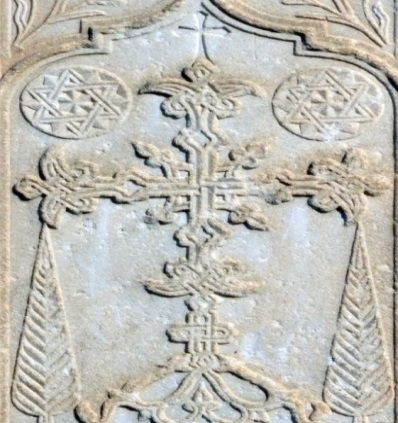
The author explains that the Albanian cross differs from those used by other Christian traditions.
According to his description, each of the cross's four ends has three pointed petals. The central petal symbolizes a flame, while the outer petals represent crescents.
These elements are interpreted as traces of ancient beliefs associated with fire and the Moon among the peoples of Caucasian Albania.
The article also reports that ancient clay resonators designed to improve acoustics were discovered in the church's walls and vaults during restoration.
Preserving these elements in their original locations is described as significant for protecting the building's historical architectural heritage.
The publication adds that three springs in the church courtyard and the historical areas once used for baptism ceremonies were also restored.
Following the restoration, the Church of the Most Holy Mother Mary was handed over to the Albanian-Udi Christian Community of Azerbaijan.
Robert Mobili emphasizes the Udis' active participation in Azerbaijan's public and religious life, as well as in international events.
The article notes that representatives of the Albanian-Udi Christian Community participate in UNESCO-related activities, international conferences, forums, and various meetings.
In the concluding section, the author highlights the important role of the Udis in the history of Caucasian Albania and in preserving Eastern Christian heritage, ancient language, culture, customs, and traditions.
Robert Mobili states that the Udi Church is an integral part of the Albanian Apostolic Autocephalous Church. He particularly emphasizes the historical, ethnic, and cultural ties that have developed between Udis and Azerbaijanis over centuries.
According to the author, the Udis have entered a new period of cultural revival and ethnic consolidation over the past decade, reflecting their continued attachment to their historical heritage.
The article presents the relations established among representatives of different nationalities and religious denominations in Nij as an example of tolerance and coexistence within Azerbaijan's multicultural environment.
Robert Mobili concludes by emphasizing that preserving the historical identity of the Udis, the Albanian Christian heritage, their native language, and national traditions constitutes an important part of Azerbaijan's centuries-old multicultural environment."


 Follow us on Telegram
 t.me/apanewsaz
 Follow us on Instagram
 Follow us on TikTok
 Follow us on Facebook
 Follow us on X