










Baku. Kamala Guliyeva – APA. APA’s interview with Cherine Pollini, Head of the Delegation of the International Committee of the Red Cross (ICRC) in Azerbaijan
-How many missing persons have been registered by the International Committee of the Red Cross? How many of them are Azerbaijani?
-Since the conflict started, the ICRC has supported the government bodies in clarifying the fate of the people missing in connection with the conflict. About 4600 missing people have been registered in connection with Nagorno Karabakh conflict. Approximately 3700 of them are from Azerbaijan. According to the agreement reached with the relevant government bodies in 2008-2010, ante-mortem data about the missing people have been collected. Up to now, ante-mortem data have been collected about 3650 missing people in Azerbaijan. Collecting ante-mortem data aims to help clarify the fate of the missing people. Moreover, according to the agreement reached with the government agencies of Azerbaijan, another program will be launched next year. This is connected with the collection of the DNA samples from the relatives of the missing persons.
-Could you go into the details of the project? Which government bodies will participate in the project?
-Ante-mortem data are collected basing on the physical characteristics, such as clothing worn prior to his or her disappearance, dental records, fracture of bone etc. These data help identify the persons having similar features. Blood samples will be taken from four close relatives of the missing persons. The Ministry of Health will collect and store these samples. We will closely cooperate with the State Committee on Prisoners of War, Hostages and Missing Persons. The DNA samples must be stored by seriously observing the necessary requirements. These samples will be stored at the laboratory of the Forensic Medical Examination and Pathological Anatomy Union of the Ministry of Health. The collected samples along with the ante-mortem data will help clarify the fate of the missing persons.
-How will the missing persons be identified?
-It is hard to say when the identification of the missing persons will start. When exhumation is made, both ante-mortem data and the DNA samples we collected will help much identify those persons. Maybe there will be alive among the missing people. Note that the same work is carried out in Armenia. The difference is that the number of missing people in Azerbaijan is greater and it will take much time. In general, the project on collecting DNA samples will be implemented within 2 or 3 years.
- DNA analysis is considered expensive enough. Does Azerbaijan have corresponding labs for carrying out these analyses?
-It is up to the governmental bodies to clarify the fate of the missing people. They will pass decision on carrying out the analyses in the country or abroad. Anyway these analyses must be carried out. If there is no opportunity to carry out these analyses in the country, certainly, the analyses will be carried out in another place.
- According to the recent reports of Azerbaijan State Committee on Prisoners of War, Hostages and Missing Persons, it was determined that 13 people, who were registered in the State Committee as missing, are alive and have been taken captive in the territories occupied by Armenians. Was the ICRC addressed regarding this fact? Did the ICRC address to the opposite side for searching those people?
- We weren’t addressed with regard to these 13 people. May be those 13 people are in the list of missing people and their families addressed us. There were such cases that the governmental bodies of each of the sides addressed us saying its citizen is in the territory of another country and we addressed another side concerning these appeals. But we don’t know who these 13 people are, what their names are. At the same time, there are certain confidential issues and we discuss them with the governmental bodies and do not make them public.
-Will the project on collecting DNA samples be implemented for the first time, or does the ICRC have such experience? In general, what makes it necessary to use the DNA analyses?
- We have implemented the project on collecting DNA samples in the other countries, but on a very small scale. It has never reached the scale considered in the project which will be implemented in Azerbaijan in 2012. In general, DNA analysis is a new technology and will give an opportunity to identify missing people more precisely. That’s why we support the use of this technology which enables the more precise identification.
ICRC to launch new project for clarifying fate of persons missing in Karabakh war – INTERVIEW

 02 December 2011 15:51 (UTC +04:00)


 İDMAN XƏBƏR
 Follow us on Telegram
 t.me/apanewsaz
 Follow us on Instagram
 Follow us on TikTok
 Follow us on Facebook
 Follow us on X
Social

Azerbaijan moves to tighten penalties for repeated online gambling
13:16
 30 June 2026

Azerbaijan identifies new grounds for temporary restriction of internet information resources
13:16
30 June 2026
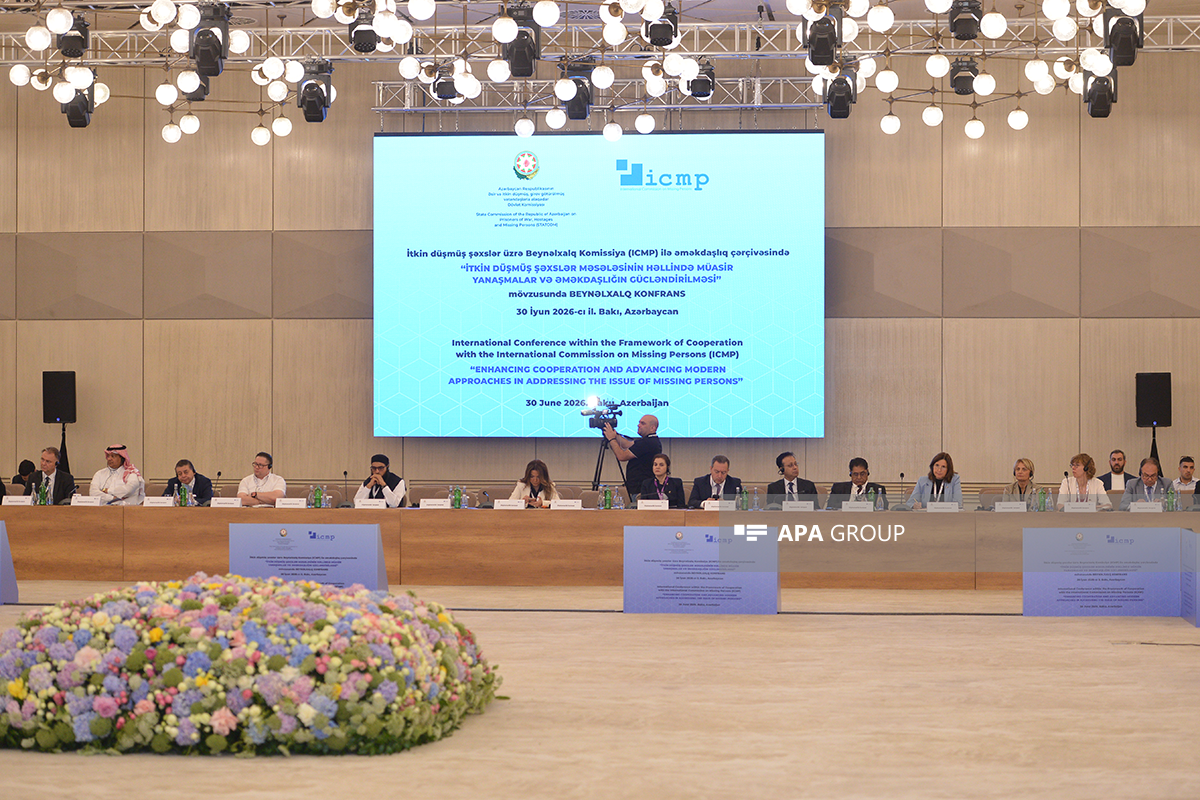
International conference on missing persons held in Baku - PHOTO - UPDATED
13:06
30 June 2026

International congress held in Baku as part of Turkic World Week
12:52
30 June 2026

NEWS FEED
14 students killed as tuition academy roof collapses in Pakistan's Lahore
18:46
30 June 2026
Lithuania's parliament approves Sinkevičius as prime minister
18:15
30 June 2026
Azerbaijan FM meets with ICMP Director General Kathryne Bomberger
18:10
30 June 2026
Israel's so-called "Armenian genocide" decision: Azerbaijan once again became the first to stand by Türkiye - ANALYSIS
17:37
30 June 2026
President Ilham Aliyev offers condolences to Delcy Rodríguez over earthquake in Venezuela
17:16
30 June 2026
First meeting of heads of religious affairs institutions of OTS member states held in Shusha - PHOTO - UPDATED
17:12
30 June 2026
Heads of OTS religious affairs institutions tour Shusha - PHOTO
17:09
30 June 2026
Iran: Speaker Ghalibaf's visit to Baku was successful
16:36
30 June 2026
Milli Majlis Support Group calls for granting Corsican people the broadest autonomy
16:30
30 June 2026
Iran FM: No separate meeting with the US planned in Doha, discussions will focus on memorandum
15:56
30 June 2026
Final communiqué signed following First Meeting of OTS religious affairs chiefs in Shusha - PHOTO
15:50
30 June 2026
Rutte: Claims that the US is distancing itself from NATO are not true
15:29
30 June 2026
Samvel Karapetyan claims Armenian opposition has "secret plan" to remove Pashinyan from power
15:18
30 June 2026
Germany and the Netherlands take command on NATO's eastern flank
15:03
30 June 2026
State Commission announces burial ceremonies for six more missing martyrs
15:02
30 June 2026
US envoy Witkoff and Kushner will be in Qatar, but no meeting with Iran, Qatari official says
14:50
30 June 2026
Morgan Stanley cuts Brent price view as Hormuz flows recover, flags 2027 surplus
14:42
30 June 2026
EU allocates €3.9 billion for drones for Ukraine under €90 billion loan package
14:27
30 June 2026
Fuel sales restricted in Russia's Altai Republic from July 1 to September 1
14:20
30 June 2026
Kremlin to keep names of fuel supplier countries confidential
14:13
30 June 2026
Armenian PM to attend Ali Khamenei's funeral ceremony in Tehran
13:42
30 June 2026
Zelenskyy: Ukrainian long-range strike hits Russia's Dubna Space Communications Center again
13:42
30 June 2026
Uzbek committee chairman: Strengthening cooperation in religion and education across the Turkic world is essential
13:40
30 June 2026
ICMP chief: More mass and clandestine graves remain to be discovered - INTERVIEW
13:38
30 June 2026
2 members of Iran's IRGC killed in shooting: Reports
13:33
30 June 2026
Azerbaijani and Kazakh foreign ministers hold phone call
13:29
30 June 2026
Türkiye strengthens air defense capabilities, considers acquiring SAMP/T and Patriot systems
13:23
30 June 2026
Azerbaijan moves to tighten penalties for repeated online gambling
13:16
30 June 2026
Azerbaijan identifies new grounds for temporary restriction of internet information resources
13:16
30 June 2026
International conference on missing persons held in Baku - PHOTO - UPDATED
13:06
30 June 2026
Talantbek Tashybekov: Strengthening coordination on religious policy within the OTS is essential
12:58
30 June 2026
International congress held in Baku as part of Turkic World Week
12:52
30 June 2026
Customs duty exemption to be introduced for exports of goods produced in the Alat Free Economic Zone
12:48
30 June 2026
State Commission: Azerbaijan to acquire specialized underground radar systems for missing persons searches
12:36
30 June 2026
Safi Arpaguş: Turkic states should strengthen coordination in religious affairs
12:32
30 June 2026
OTS Secretary General: New cooperation format on religious affairs will contribute to social cohesion and stability
12:25
30 June 2026
Ramin Mammadov: Foundation laid in Shusha for OTS' first multilateral platform in the religious sphere
12:21
30 June 2026
Georgian speaker: Azerbaijan-Armenia peace process creates cooperation opportunities for the region
12:17
30 June 2026
Nearly 100 bcm of Azerbaijani gas transported via TANAP to date
12:15
30 June 2026
Uzbekistan's Culture Minister: Unity is essential in the face of threats
12:06
30 June 2026
ANAS: Acts of culturicide documented in the liberated territories
12:05
30 June 2026
Azerbaijan to establish Permanent Settlement Fund in liberated territories
11:55
30 June 2026
Azerbaijan moves to revise legislation on IDP status
11:55
30 June 2026
Azerbaijan to gradually transition IDP social support system to new model
11:54
30 June 2026
Azerbaijan introduces fines for violations by age-restricted social media platforms
11:52
30 June 2026
Azerbaijan introduces new requirements for children's registration on social media platforms
11:51
30 June 2026
Nearly 2 billion manats to be allocated for financing the State Program on Agriculture through 2030
11:50
30 June 2026
Director: One person's remains are sometimes found in several mass graves
11:49
30 June 2026
Finance Minister: Reducing the state budget's dependence on oil revenues is one of the main priorities
11:47
30 June 2026
Adalat Hasanov: Forensic examinations revealed injuries on bone remains belonging to 454 individuals
11:46
30 June 2026


