

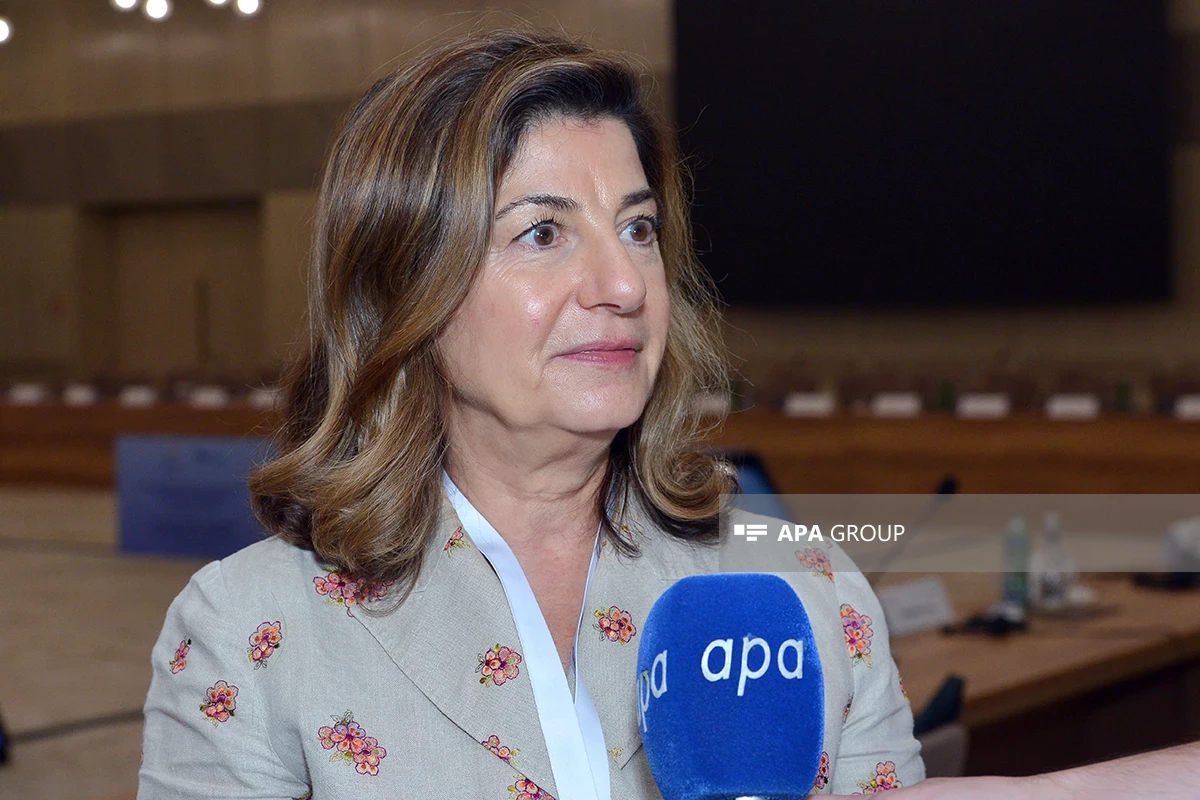


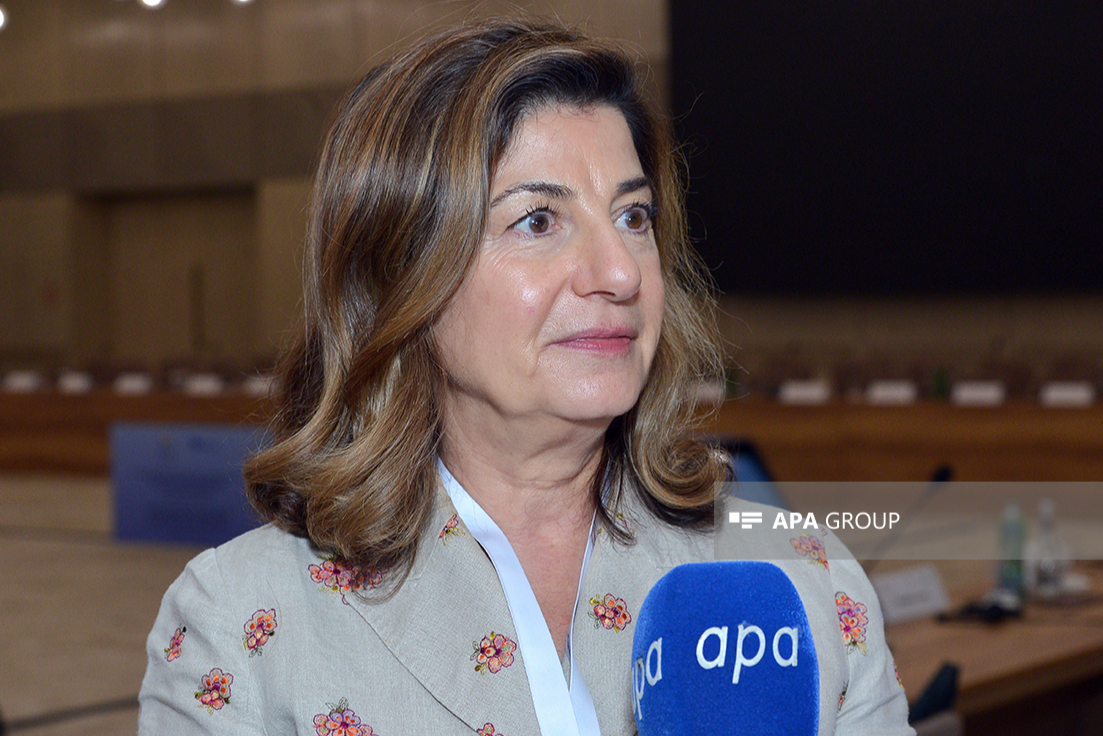
APA conducted an interview with Kathryne Bomberger, Director-General of the International Commission on Missing Persons (ICMP), who is visiting Azerbaijan.
Efforts to secure peace between Azerbaijan and Armenia are progressing
– As a result of Armenia's military aggression against Azerbaijan during the First Karabakh War, 4,010 people were registered as missing. What mechanisms does the International Commission on Missing Persons (ICMP) have to compel or encourage Armenia to provide Azerbaijan with the exact coordinates of mass graves?
– In general, the ICMP's work is aimed at facilitating cooperation between governments. This means strengthening the technical and legal capacities of the governments we work with, as well as promoting cooperation both among state institutions and between governments of countries that have previously experienced conflict.
This will be extremely important. We firmly believe that efforts to secure peace between the two governments are currently moving forward. A clear example of this is the initialing of the peace agreement, and we hope it will enter into force. In particular, Article 9 of the peace agreement is of great significance in this regard.
We hope that these new technologies, including the database that the ICMP has donated to the Azerbaijani government, will serve as a tool for strengthening cooperation between the governments and for sharing important information on possible locations of missing persons on both sides. This includes information about mass or concealed graves, as well as other information that Azerbaijan and Armenia may be able to exchange.
As I mentioned during the conference, the former Yugoslavia is a successful example of this. The governments of that region established a joint working group on missing persons and, in 2021, launched an active database system through which information is exchanged.
I believe that as progress continues toward improving relations between Azerbaijan and Armenia, opportunities for information exchange will also continue to expand.
We are also ready to support Venezuela, where there are a large number of missing persons
– Azerbaijan is carrying out exhumation work in the liberated territories. Does the International Commission on Missing Persons provide technical, laboratory, and expert support for this process?
– Yes. We are currently supporting Azerbaijan in the field of DNA analysis. This is one of the ICMP's main areas of expertise. We have worked on the front lines in different parts of the world. For example, we are also ready to support Venezuela, where there is a large number of missing persons.
We are very pleased that we are able to assist both Azerbaijan and Armenia in strengthening their technical capabilities. This support primarily covers DNA analysis. We have had the opportunity to visit the laboratory here and observe the work being carried out.
At the same time, we have welcomed highly qualified scientists from both Azerbaijan and Armenia to our laboratories in the Netherlands to further enhance their expertise.
The greatest challenge is usually obtaining DNA from severely degraded bone remains because many years have passed since the conflict occurred.
We have particular expertise in working with such heavily degraded bone samples, and we have achieved successful results in cases where other governments were unable to do so. I believe this will make a significant contribution to increasing the number of identified missing persons in Azerbaijan.
However, there are still additional mass and concealed graves that need to be located and excavated. Therefore, we also plan to provide further training in this area.
At the conference in Baku, you heard Deputy Chief of the State Security Service Sharafat Hasanov and representatives of other institutions working on this issue speak about the extensive work being carried out. We have also visited the anthropological laboratories here, observed the exhumation process on site, and begun cooperation on organizing additional training.
This is because, in DNA-based identification, it is essential that both the work carried out at excavation sites and the anthropological examinations conducted in morgues meet the highest standards. Scientists must accurately determine which bone samples are most likely to yield usable DNA.
Therefore, our support is comprehensive. It includes strengthening state institutions, improving the legislative framework, enhancing technical capabilities, and developing information systems. The ultimate goal of all these efforts is to better ensure the rights of the families of missing persons to know the truth, obtain justice and compensation, and to support successful cooperation between Armenia and Azerbaijan, thereby contributing to lasting peace in the region.
All information on human remains, cause and circumstances of death will also be entered into the system
– What advantages will the newly developed Information Management System for missing persons provide for Azerbaijan?
– This information system consists of numerous modules and covers every stage of the search for and identification of missing persons.
One of the modules is designed for the families and relatives of missing persons. Through the system, they can submit various types of information, including genetic reference samples for comparison.
The other modules are primarily intended for use by state institutions. The system monitors the entire process, beginning with exhumation work. Information collected at excavation sites is entered into the system and then transferred to the morgue, where all information related to the human remains, as well as the cause and circumstances of death, is also added.
The system also tracks the work carried out in DNA laboratories.
In addition, it facilitates the comparison and matching not only of genetic data but also of other information collected during field investigations. As a result, we hope that the families of missing persons will receive the most comprehensive information possible about their loved ones. This includes not only the scientifically confirmed identification based on DNA matching, but also the determination of the circumstances surrounding the person's disappearance.
That is why this system is of great importance.
At the same time, the system enables families to submit information about missing persons online and monitor the progress of their cases.
I hope this will significantly improve transparency and allow families to track the status of their cases in real time. They have been waiting for answers for many years and now want to know the truth.
I believe this system will modernize the existing process in many ways by replacing paper-based procedures with electronic ones and significantly increasing the capacity to locate and identify missing persons.


 Follow us on Telegram
 t.me/apanewsaz
 Follow us on Instagram
 Follow us on TikTok
 Follow us on Facebook
 Follow us on X