


The latest military operations carried out by the United States and Israel against Iran have sharply escalated geopolitical tensions in the Middle East. In official statements, Washington and Tel Aviv said the strikes targeted Iran’s military infrastructure and facilities posing a threat to regional security. Tehran, however, described the attacks as a violation of its sovereignty and has taken retaliatory measures. Airspace closures across the region, rising energy prices, and intensified diplomatic consultations have been observed. Although the United Nations and the European Union have called on the parties to exercise restraint, mutual accusations continue. Analysts do not rule out the possibility of the conflict expanding further. Regional allies are strengthening their security posture.
Iran’s position and legal argumentation
 Photo: Mohsen Pakaeen, Iranian diplomat
Iranian diplomat Mohsen Pakaeen told APA that Iran considers the recent attacks by the United States and Israel — including the killing of Supreme Leader Ayatollah Khamenei and the strike on a school in Minab — to be “illegal acts of terror.”
“In response, Tehran declares that it has the right to defend the country without limitation. The ongoing aggression against Iran appears aimed at ensuring Israel’s dominance in the West Asia region. The killing of our leader was also intended to end Ayatollah Khamenei’s leadership of the Islamic system and weaken his global role in supporting oppressed peoples, especially the Palestinian people. During the US and Israeli attack, an airstrike on a primary school in the city of Minab reportedly killed 168 schoolgirls. If confirmed, this would constitute a gross violation of international law and humanitarian principles. We hope the international community will firmly condemn this crime. These attacks took place during the third round of negotiations between Iran and the United States,” Mohsen Pakaeen said.
Israel’s perspective and military targets
 Photo: Mikhail Borodkin, Israeli political analyst
Israeli political analyst Mikhail Borodkin stated that the Israeli and US Air Forces continue to carry out systematic and consistent strikes against military infrastructure located in Iranian territory within the framework of a pre-determined strategic plan: “The targets of the strikes have included military bases of the Islamic Revolutionary Guard Corps, Basij headquarters, police units, and other facilities. It has been reported that three US aircraft were shot down by friendly fire in Kuwait, but the pilots survived. Iranian authorities have confirmed the deaths of the Supreme Leader and several generals of the Islamic Revolutionary Guard Corps, as well as other high-ranking officials.”
The political analyst noted that in response, Iran is striking Israel, US bases located in Gulf Arab countries, and also a British base in Cyprus, despite the United Kingdom not participating in the war: “Iran’s strikes are not characterized by high effectiveness, but Iranian propaganda presents them as major successes. Unfortunately, false information spread by Iranian propaganda is actively disseminated, for example, by Russian and Armenian media.”
US argumentation and security approach
 Photo: Paolo von Schirach, President of the Global Policy Institute and Professor of Political Science and International Relations at Bay Atlantic University in Washington DC USA
Paolo von Schirach, President of the Global Policy Institute and Professor of Political Science and International Relations at Bay Atlantic University in Washington DC USA, told APA that the large-scale military operation is primarily aimed at protecting US national security and preserving regional stability:
“Washington believes that Iran continues its efforts to obtain nuclear weapons, which poses a serious threat both to the United States and its allies. At the same time, by supporting Hezbollah, Hamas, the Houthis, and other armed groups in the region, Tehran is deepening instability in the Middle East. Statements by the Iranian leadership about the destruction of Israel are also perceived by Washington as a direct threat. In this context, the main objective of the operation is presented as weakening Iran’s military and nuclear potential, limiting its regional influence, and restoring a deterrent balance. Although the issue of regime change remains a subject of political debate, the official argumentation focuses more on eliminating security risks. The conflict is still at an early stage, and it is too early to make definitive judgments about its long-term consequences.”
Regional dynamics and risk of escalation
 Photo: Ali Bakir, Associate Professor of International Relations, Security and Defense at Qatar University
Ali Bakir, Asst. Professor of international affairs, security, and defense at Qatar University, believes that the situation in the Middle East is rapidly entering a phase of escalation, with the process already moving beyond the framework of a localized confrontation into a broader arena of geopolitical rivalry.
According to him, the United States and Israel are determined to continue their line of strategic pressure against Iran and believe that intensified military pressure could create the groundwork for internal political transformation, and even regime change: “In response, Tehran is seeking to draw its adversaries into a prolonged war of attrition by demonstrating resilience against the ongoing attacks.”
Ali Bakir notes that as Iran’s room for maneuver narrows, Tehran may expand both the geographical scope of its targets and its instruments of influence in an effort to involve international actors in the process. At the same time, Israel is working to secure more open support from other countries. In his view, this dynamic places member states of the Gulf Cooperation Council in the face of growing security risks and could inadvertently turn them into part of the confrontation.
Historical context of the strategic confrontation
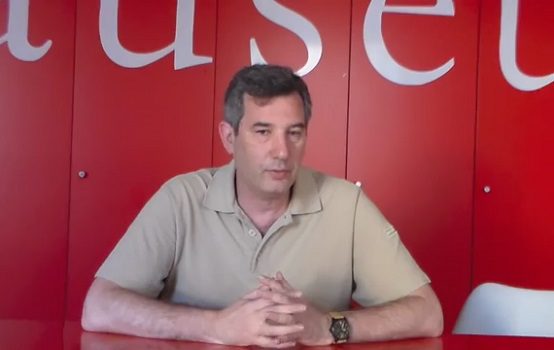 Photo: Gil Mihaeli, French political commentator
French political commentator Gil Mihaeli noted that at the current stage, the confrontation between the United States, Israel, and Iran should be assessed not merely as a tactical military clash, but as the open phase of strategic contradictions that have developed over many years: “This conflict is the logical continuation of the ideological and security architecture established after 1979.”
Mihaeli emphasized that Iran’s expansion of its regional influence through proxy networks, its missile program, and its nuclear ambitions is perceived by Washington and Jerusalem as a structural threat. In his view, the United States and Israel believe that the root of the problem lies not with peripheral actors, but directly with Tehran. According to him, although the current dynamics increase the risk of escalation, the parties are, for now, attempting to pursue a policy of limited and targeted pressure in order to shift the strategic balance in their favor.
Possible trajectory of the war

The recent military escalation in the Middle East is putting the region’s security architecture under serious strain. The dynamics of events indicate that the process has already moved beyond the framework of a localized clash and is shifting into a broader arena of geopolitical rivalry. At the current stage, the key question concerns how far the parties are willing to expand the confrontation and whether their strategic objectives will remain limited or take on a more maximalist character.
Mohsen Pakaeen noted that the course of the war will depend on several key factors. According to him, if the parties manage to keep the confrontation within the framework of limited military operations, the process may lead to a reduction in intensity in a shorter period of time: “What has happened has already given the conflict a new legal and political dimension. An action carried out by external forces against the leader of another country is regarded as a serious violation of international law, and this could give the war a character of aggression and expand its scope.”
He added that under these circumstances, it is expected that Iran will seek to protect itself within the framework of its legitimate right to self-defense, and all of this increases the risk of the confrontation entering a more prolonged phase.
Escalation and diplomatic prospects
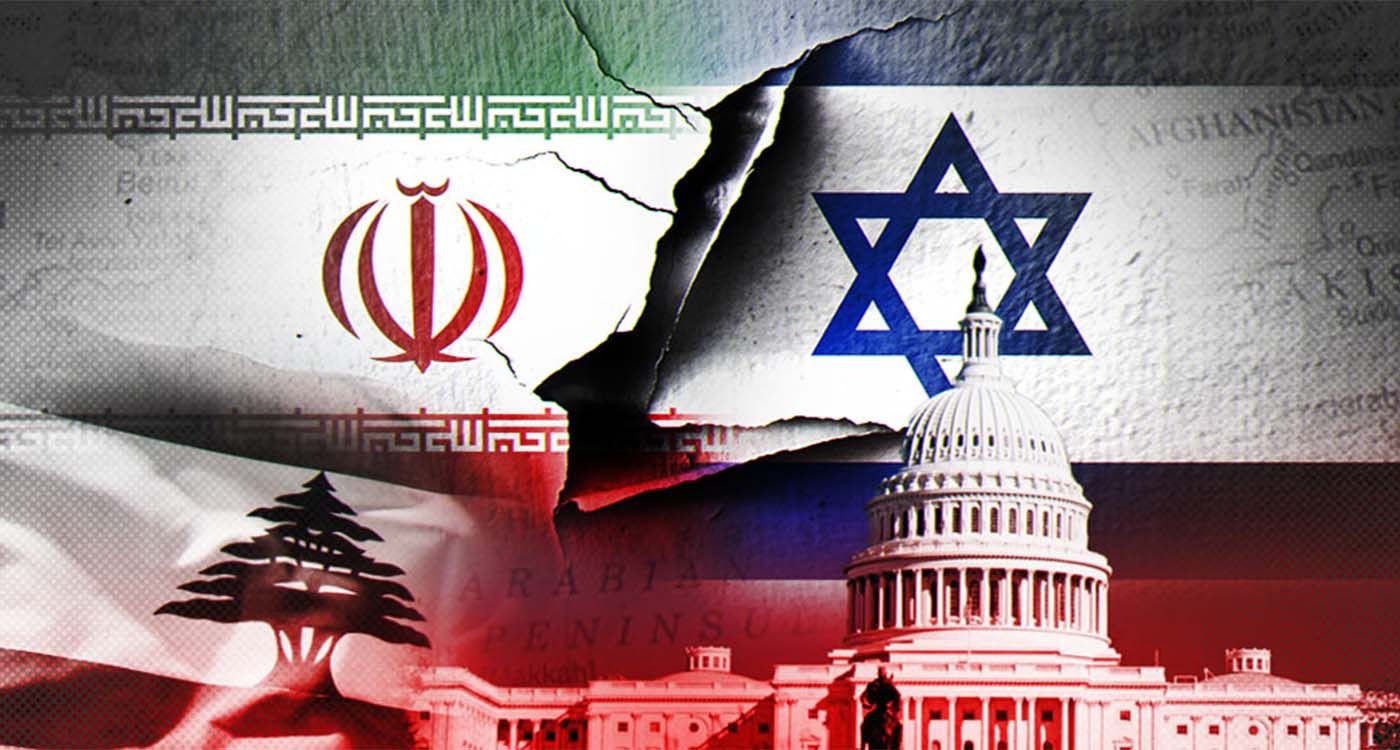
Against the backdrop of the current escalation, a transition from the military phase to diplomatic negotiations appears possible only after certain political and military conditions are formed. First and foremost, the intensity of mutual strikes must decrease and a minimum level of trust must be established. Acceptable security guarantees for the parties and the reduction of losses to a manageable level are among the key prerequisites. The mediating role of regional and global actors may also prove decisive. At the same time, limiting strategic objectives and abandoning maximalist approaches are essential factors for opening a diplomatic window. In this context, experts express differing views on various scenarios and possible transition mechanisms.
An Iranian expert stated in this regard that a shift from the military phase to diplomatic negotiations would only be realistic if attacks cease and the security environment stabilizes:
“Iran’s military units are operating according to a pre-determined strategy, and decisions are made in line with the development of the situation. For Tehran, the main condition is that the opposing side halt its pressure and strikes.”
He noted that Iran is capable of defending itself without expecting special guarantees from others, but a reduction in mutual escalation could create the necessary groundwork for opening diplomatic channels.
Pakaeen emphasized that for Iran, the priority is safeguarding national security and that the country has the capacity to defend itself without relying on any external guarantees.
Israeli expert Mikhail Borodkin stated that a genuine return to the negotiating table would only be possible if Iran makes concrete concessions and accepts the key demands put forward by the United States: “At the current stage, Tehran’s new leadership has not demonstrated political will in this direction and has not sent a clear signal that it is ready for compromise.”
Ekspert hesab edir ki, mövcud ritorika və hərbi dinamika fonunda diplomatik prosesin bərpası üçün ilk addım məhz İran tərəfindən atılmalıdır.
According to American expert Paolo von Schirach, a transition from the military phase to a diplomatic process would only be realistic if the Iranian leadership acknowledges that its position in the strategic environment has significantly weakened.
In his view, Tehran may agree to substantive concessions on fundamental issues such as its nuclear program, ballistic missile infrastructure, and support for regional proxies only under sustained military pressure and deepening economic sanctions: “At this stage, however, such political will does not appear to have formed.”
The expert emphasizes that whether Washington’s objective is to “force Iran into behavioral change or to achieve structural transformation” will determine the fate of diplomatic prospects.
Political analyst Ali Bakir believes that at the current stage, it is difficult to accurately predict in which direction the process will develop.
According to him, as also noted by the Omani foreign minister, the parties had been close to a certain agreement before Israel launched military operations: “However, the outbreak of war and the involvement of the United States, as well as other actors, have pushed the diplomatic track into the background.”
The expert emphasized that mediation initiatives have weakened recently and the environment of trust between the parties has narrowed even further: “If the United States revises its strategy, the window of opportunity for a political solution has not yet fully closed. Nevertheless, both Washington and Tel Aviv hope that a more favorable political configuration will emerge within Iran.”
The new security environment taking shape in the Middle East has already moved beyond the framework of a localized military clash and entered a phase of multi-layered strategic confrontation. While the United States and Israel justify their operations through the logic of security and deterrence, Tehran presents them as actions contrary to sovereignty and international law, emphasizing the concept of legitimate defense. Mutual strikes, information warfare, and the activity of proxy actors increase the risk of escalation while simultaneously narrowing the room for diplomatic maneuver. The current dynamics indicate that the parties are not yet ready to retreat from maximalist positions and are continuing a line of limited but consistent pressure in pursuit of strategic advantage. A transition to the diplomatic phase appears possible only if military intensity decreases, mutual security guarantees are established, and real possibilities for compromise on key political demands emerge. Otherwise, the process could transform into a prolonged war of attrition.



 Follow us on Telegram
 t.me/apanewsaz
 Follow us on Instagram
 Follow us on TikTok
 Follow us on Facebook
 Follow us on X