

The OSCE Minsk Group, which for more than three decades had been one of the most discussed platforms in international diplomacy, was officially dissolved today. This step is not merely the closure of a formal structure, but the complete collapse of the mediation model of the three major powers—the United States, Russia, and France—in the South Caucasus. For Azerbaijan, this decision marks the political and legitimate conclusion of an outdated mechanism and the international recognition of the new reality created by the country. Baku has sent the long-running “great power management game” to the dustbin of history through its own political will.
The Minsk Group played no role in resolving the conflict
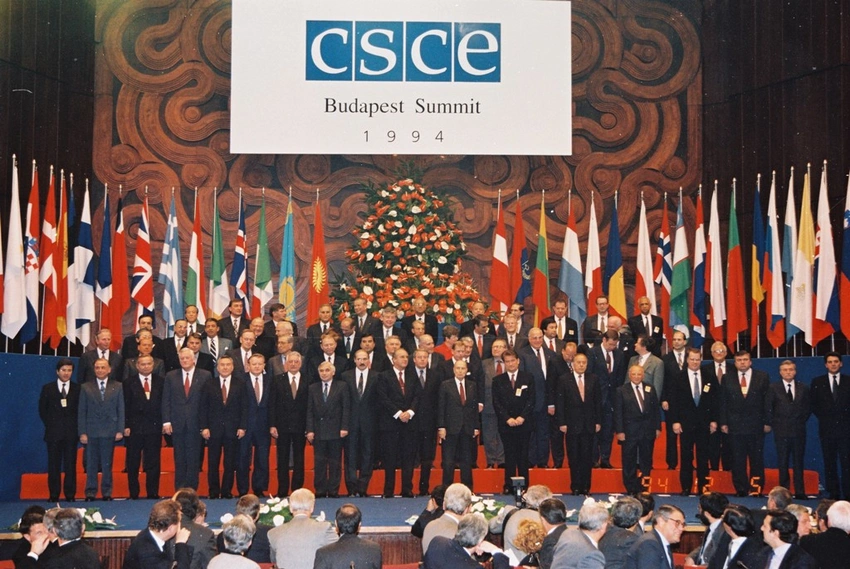
The Minsk Group was established in March 1992, during the military phase of the Armenia–Azerbaijan conflict. Theoretically, its goal was simple and clear: to bring the sides to the negotiating table, regulate the conflict through diplomatic means, and create a framework for lasting peace in the region. The selection of the U.S., Russia, and France as co-chairs was intended to give the mediation mechanism serious political weight.
However, reality developed in an entirely different direction. The group’s internal mechanisms were built on competition among the major powers. The United States and France preferred to maintain ties with Armenia; Russia considered the region an inseparable part of its sphere of influence. As a result, the mediation mission turned into an “international theatre of conflicting interests.”
Azerbaijan's interests were the least represented. Baku voiced this for years: the Minsk Group served not to resolve the conflict, but to freeze it. The outcome of 30 years confirmed this.
President Ilham Aliyev repeatedly emphasized over the years that the Minsk Group failed to fulfill its mandate. The head of state reiterated this during his meeting with the co-chairs who visited the region after the Patriotic War.
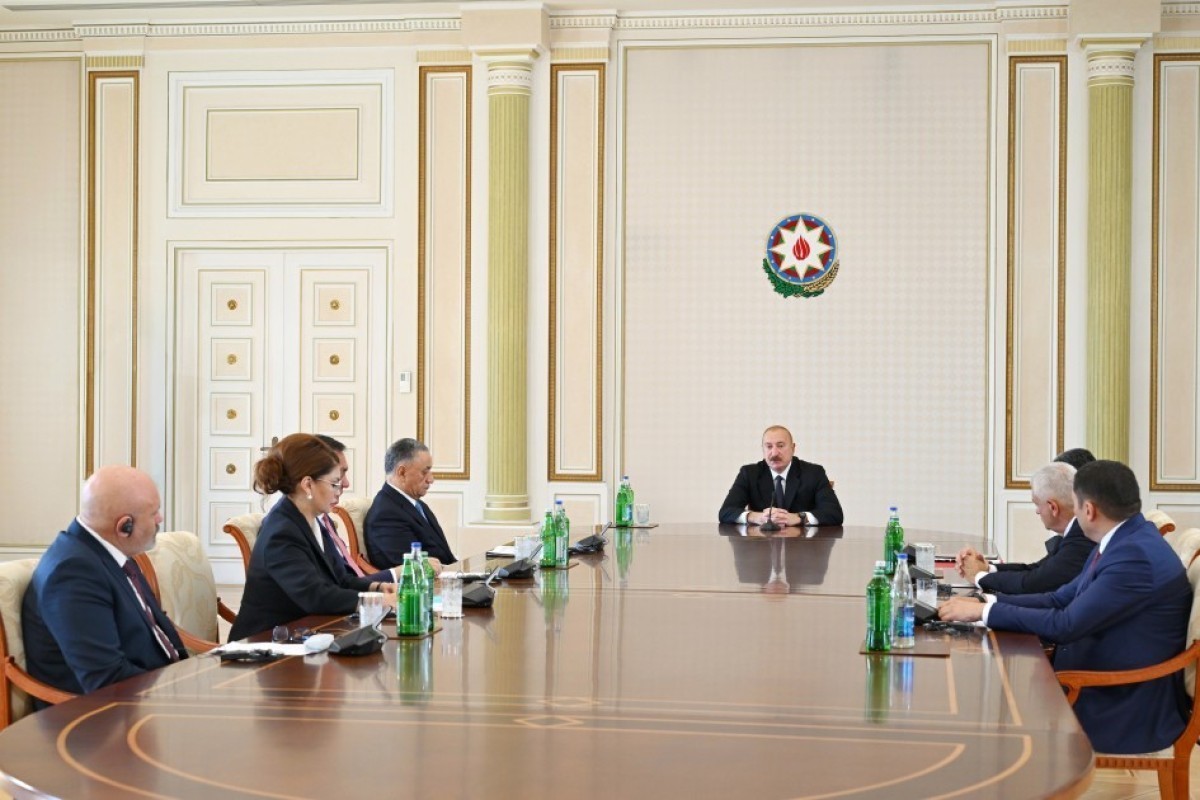
"Unfortunately, Minsk Group did not play any role in resolution of the conflict, though, Minsk Group had a mandate to do it for 28 years. I participated in negotiations for the last 17 years. As I said, during the war, though there have been an activity of the Minsk Group, in elaborating ideas and trying to be creative, but there was no result. And this is a reality," President Ilham Aliyev said on December 12, 2020, when receiving the Minsk Group’s French Co-Chair Stéphane Visconti, the U.S. Co-Chair Andrew Schofer, Russia’s Ambassador to Azerbaijan Mikhail Bocharnikov, and the OSCE Chairperson-in-Office’s Personal Representative Andrzej Kasprzyk.
Equating the occupier with the occupied

One of the most criticized aspects of the Minsk Group’s activities was its “balanced approach.” On paper, this appeared to be neutrality. But from Azerbaijan’s perspective, it was diplomatic injustice. Armenia was the occupier; Azerbaijani territories were under occupation; yet the Minsk Group treated both sides equally. It should be noted in particular that the mediators, ignoring the four UN Security Council resolutions, as well as documents adopted by individual international organizations, kept an equal distance from both sides, and in some cases even favored Armenia and resorted to pressure on Azerbaijan.
This approach distorted the essence of the conflict and masked Armenia’s violations of international law. For years, Azerbaijan's political elite has categorically rejected this approach and demanded fair mediation. However, this demand fell on deaf ears against the backdrop of international interests.
The Minsk Group’s biggest problem was its refusal to use pressure tools. The U.S., France, and Russia could have individually pressured Armenia, but none did. The reason was obvious: to the West, Armenia was a “symbolic partner”; to Russia, “managed instability” in the South Caucasus was more useful for maintaining leverage.
Thus, the mediation mission served to maintain, not resolve, the conflict. Azerbaijani diplomacy noted at every platform: “The Minsk Group is trying to freeze the conflict.”

In 2018, the change of power in Armenia accelerated the Minsk Group’s factual collapse. The new government increased its “status” claims, attempted to bring the Karabakh separatists to the negotiation table, and added new preconditions. This further deepened the impossibility of real negotiations.
Azerbaijan had already understood that no result could be achieved through Minsk Group mediation. Co-chair visits became symbolic, their statements mere recycled clichés. Baku was steadily moving toward a military-political solution to the conflict.
The Second Karabakh War: The end of the Minsk Group
The 44-day Patriotic War destroyed the Minsk Group’s legitimacy. Azerbaijan, by its own strength, changed the status quo, implemented UN Security Council resolutions independently, ended the occupation, and fully restored control over its borders. What the Minsk Group failed to do in 30 years, the Azerbaijani Army achieved in 44 days.
After this stage, the Minsk Group had no remaining subject of activity—no “status,” no “line of conflict,” no “negotiation agenda.” This was the political death of the Minsk Group.
After the war, Azerbaijan openly stated that there was no need for the Minsk Group’s activity. President Ilham Aliyev told the co-chairs in Baku: "I will probably conclude now in order to listen to you. Because it was your idea to come. I can tell you again in front of the cameras, I did not invite Minsk group to come. But when I was informed that Minsk Group wants to come, I said okay, I don’t mind, maybe they have something to tell me. If you want to do it in front of the cameras, it’s okay, if not, I can tell them to leave. It’s up to you. Yes, I am listening to you."
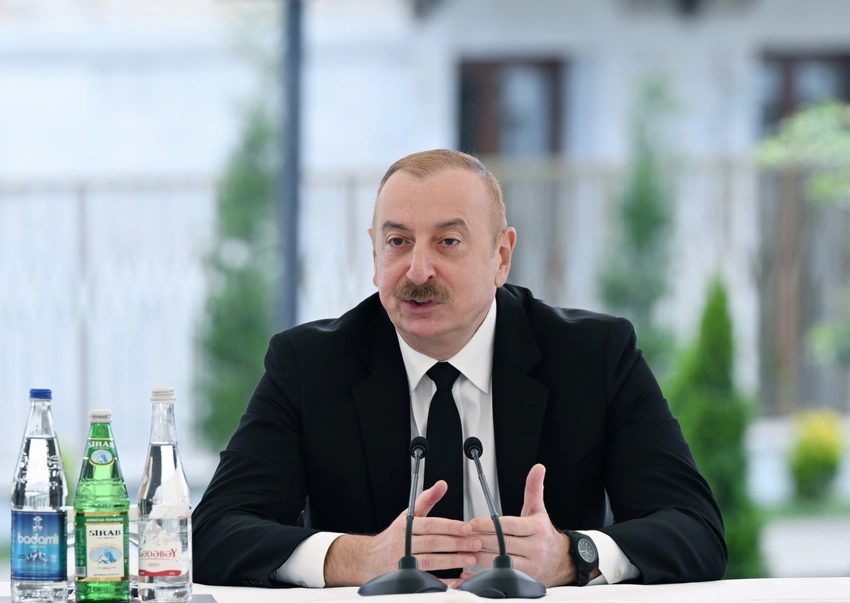
This was a “diplomatic ultimatum spelled out between the lines.”
From 2023 to 2025, the group effectively ceased to function. During the Washington and Brussels talks, Armenia also accepted this reality. Finally, in 2025, the OSCE Ministerial Council formally confirmed the dissolution of the Minsk Group. This was not just a formal decision - it was the formalization of Azerbaijan's diplomatic victory at the level of international institutions.
The Minsk Group’s 30-year failure
The dissolution of the Minsk Group has altered the nature of international relations in the South Caucasus. Baku has proven that the primary actor defining regional order is not external powers, but the region itself—particularly Azerbaijan.
Today, there is no conflict, no separatism, no negotiation agenda, and no role the Minsk Group can play. The new reality created by Azerbaijan has eliminated all weak mediation models.
Speaking to APA regarding the dissolution of the Minsk Group, Zaur Mammadov, adviser at the Academy of Public Administration under the President and chairman of the Baku Club of Political Scientists, stated that the official termination of the group’s activities in 2025 once again demonstrated that this mechanism—which produced no results for 30 years and froze the conflict instead of resolving it—became completely dysfunctional in the face of the new geopolitical reality created by Azerbaijan.
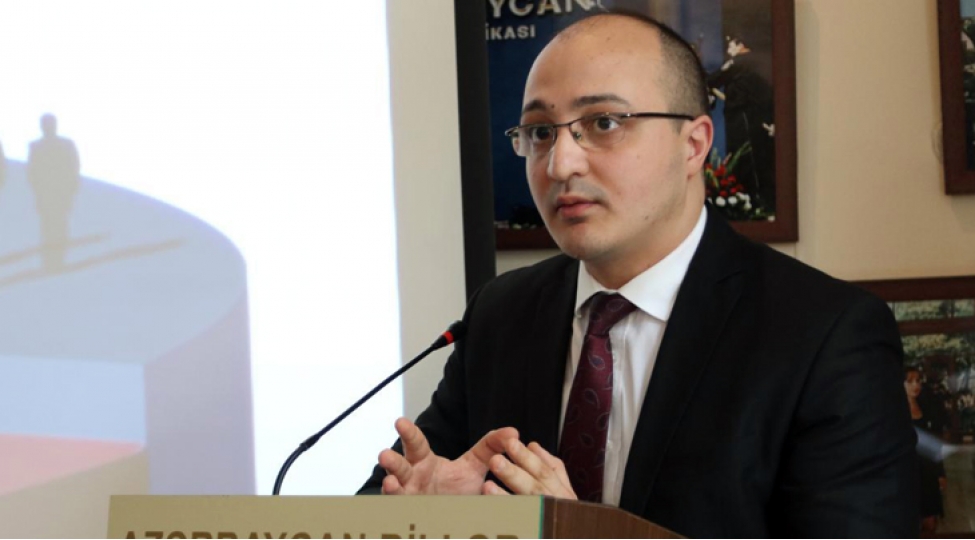
Zaur Mammadov noted that the dissolution process began on September 1, 2025, with an OSCE Ministerial Council decision and was formally completed on November 30. According to him, a special statement was made on the first day of the week, which should be considered a continuation of the issues agreed upon during the talks between the leaders of Azerbaijan and Armenia in Washington.
The political analyst recalled that Azerbaijani officials, including Presidential aide Hikmet Hajiyev, had repeatedly made statements about dissolving the Minsk Group. At the end of 2024, the issue was de facto leaked to the media, and it was reported that the dissolution of the group had largely been settled during negotiations between Azerbaijan and Armenia.
“At that time, Armenia denied this and said it would agree to the dissolution only after a peace treaty was signed. However, as a result of the Washington talks, Nikol Pashinyan agreed to this, opened a new chapter between the two countries,” he said.
The end of a 30-year diplomatic burden, a new reality
According to Zaur Mammadov, the Minsk Group’s activity in the region had long been part of a “divide and rule” strategy. He stated that the three major powers and permanent members of the UN Security Council were interested in keeping the Armenian issue alive in the region, which allowed the status quo to persist for many years.
“The Minsk Group took no practical steps in 30 years. Although certain proposals were presented to the sides, there was no distinction between the occupier and the occupied country, and no pressure was exerted on Armenia. However, France, the US, and Russia could have forced Armenia to make peace if they wanted to,” the political analyst emphasized.
The expert added that a similar approach can be seen today in the Ukraine issue. According to him, major powers sometimes use conflicts as subjects of political bargaining.
“The same situation once occurred in Azerbaijan. They wanted to form a committee in Karabakh, but they failed. The President of Azerbaijan clearly understood the tricks played by those states at different times. National Leader Heydar Aliyev and President Ilham Aliyev understood the nature of the Minsk Group very well and put them in their place when the time came,” he said.
Zaur Mammadov noted that after the 2020 war, it was openly declared that there was no need for the Minsk Group. According to him, President Ilham Aliyev’s words to the visiting delegation—"I did not invite the Minsk Group to come. But when I was informed that the Minsk Group wants to come, I said okay, I don’t mind, maybe they have something to tell me. Yes, I am listening to you,"—reflected the group’s true situation.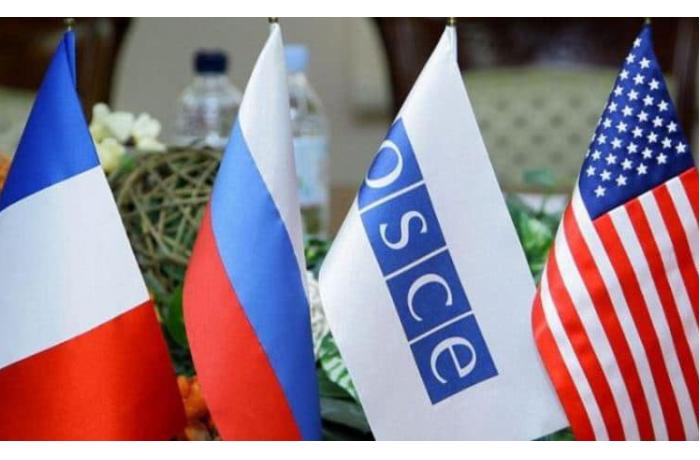
“This body existed only formally, received salaries, but had no real activity. Everyone knew this,” he said.
The expert believes that by creating a new reality, Azerbaijan also prevented the Armenian issue—kept in the region for decades—from being used as a tool of manipulation. “Attempts to revive old scenarios failed. If anti-terrorist measures had not been implemented in a timely manner, and if separatist calls had continued in the mountainous part of Karabakh, there could have been attempts to bring the Minsk Group back to the stage. However, the timely steps taken by President Ilham Aliyev solved the problems in advance,” the political analyst told APA.
In conclusion, Zaur Mammadov emphasized that the decision to dissolve the Minsk Group marks the beginning of a new stage in the region. “No one will be able to play the old tune again. The OSCE Minsk Group no longer exists, and no force will be able to interfere in Azerbaijan’s internal affairs,” he added.
The dissolution of the OSCE Minsk Group is not only liberation from the remnants of the past, but also the political recognition of a new regional order. It should be regarded as a victory of Baku’s sovereignty policy, confirmation of its independent will, and the collapse of international mediation monopolies. Azerbaijan has ended a diplomatic game prolonged for 30 years and drawn the new political map of the South Caucasus.


 Follow us on Telegram
 t.me/apanewsaz
 Follow us on Instagram
 Follow us on TikTok
 Follow us on Facebook
 Follow us on X