One of the key issues states face in the post-conflict phase is determining the legal framework under which serious crimes committed during and prior to the war will be assessed. Armed confrontations may end and control over territory may be restored, but the legal responsibility arising from violence does not disappear. In this context, the Ruben Vardanyan case is not merely a court proceeding for Azerbaijan; it represents the legal exposure and dismantling of the internal mechanisms of a separatist system that existed for many years. The primary focus here is not on an individual’s personal biography, but on the criminal infrastructures he created or supported.
The sustainability of separatist regimes usually depends not on ideological appeals, but on their financial and organizational support. In this regard, the illegal armed structures that operated in the Karabakh region for many years were no exception. Court materials showed that Ruben Vardanyan acted as one of the key figures in the financial provision, organizational coordination, and formation of the image of legitimacy of these structures. From a legal standpoint, these actions were assessed not as expressions of political position but as specific acts constituting serious criminal offenses.
Ruben Vardanyan's crimes against Azerbaijanis
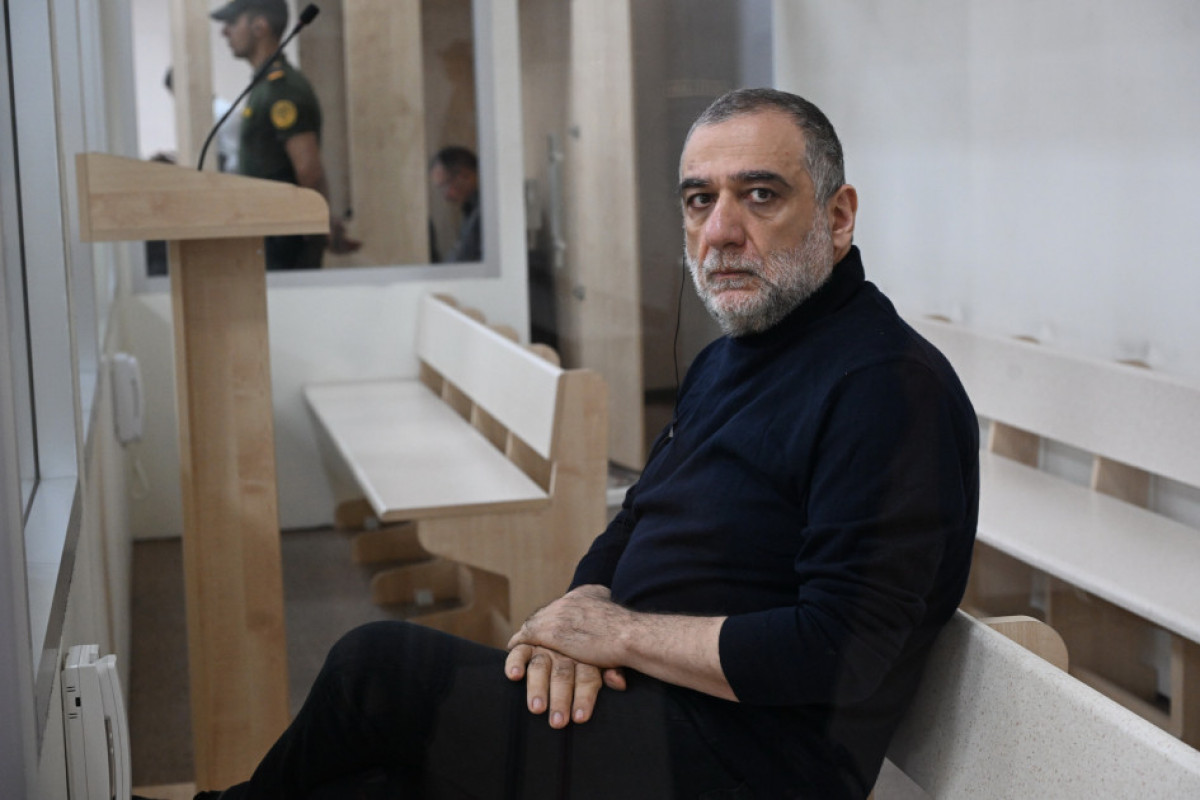
The crimes committed by Ruben Vardanyan against Azerbaijanis are assessed as a series of actions confirmed by concrete facts and investigative materials. In 2022–2023, by holding a high-ranking position within the illegal separatist regime in the Karabakh region, Ruben Vardanyan directly participated in processes aimed at forcibly undermining the constitutional order in the territories of Azerbaijan.
According to the investigation, Vardanyan was one of the key figures involved in financing and supplying separatist armed groups. Through financial resources under his control, illegal armed groups obtained weapons, communication equipment, and logistical support. These groups carried out provocations against positions of the Azerbaijani Army and deliberately threatened the security of the Azerbaijani civilian population.
The facts indicate that, with Vardanyan’s encouragement, residential settlements were militarized and civilian facilities were used as weapons depots and combat positions. This constitutes a clear violation of international humanitarian law. Additionally, the continuation of mine terror and the deliberate mining of new territories resulted in Azerbaijani civilians being killed or suffering serious bodily injuries.
Another important fact is Vardanyan’s organization of illegal economic activities in the territories of Azerbaijan. The unlawful exploitation of natural resources, particularly the illegal extraction of mineral deposits, caused significant economic damage to the state and increased the risk of environmental disaster in the region.
In addition, through information manipulation and political propaganda, Vardanyan attempted to obstruct the process of Azerbaijanis returning to Karabakh and made statements that fueled ethnic confrontation in the region.
Ultimately, Ruben Vardanyan’s activities are not merely a political issue, but a set of specific criminal acts. An objective examination of these facts within a legal framework and their assessment in accordance with international law are essential to ensuring justice.
Articles under which the criminal is charged
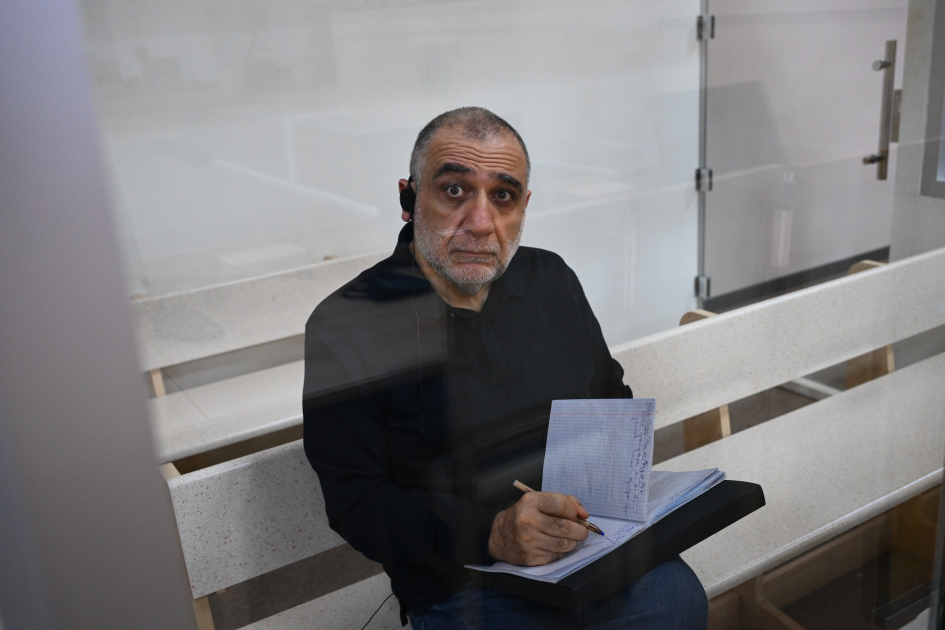
The investigation established that the financial resources directed by Ruben Vardanyan were used to maintain illegal armed formations operating in the Karabakh region, supply them with weapons and ammunition, and preserve their combat capability. This activity constituted a criminal offense under Article 279 of the Criminal Code of the Republic of Azerbaijan. The said article defines the creation and leadership of illegal armed formations as a serious crime. The court determined that these armed groups directly participated in attacks against civilians, the shelling of residential settlements, and acts of a terrorist nature.
Vardanyan’s financial activities were not limited to maintaining armed groups. The investigative materials indicate that these funds were also directed toward logistical mechanisms that ensured the continuity of terrorist activities. These cases constitute terrorism under Article 214 of the Criminal Code, as well as financing of terrorism under Article 214-1. The court specifically emphasized that the creation of financial support for the implementation of terrorist acts gives rise to direct liability for the consequences of the violence and does not create a legal distinction between the financier and the executor.
One of the key issues highlighted in the indictment concerns systematic acts of violence committed against the civilian population. The killing of Azerbaijani civilians, the destruction of residential areas, and the mass displacement of people from their native lands during the years of occupation in the Karabakh region were assessed by the investigation as the result of a deliberate policy. These acts were legally qualified under Article 100.2 of the Criminal Code as crimes against humanity, and under Article 107 as deportation or forcible transfer of population. The court specifically noted that these crimes were not incidental but were carried out in a planned and systematic manner.

In addition, during the court proceedings, facts of inhuman treatment against Azerbaijani civilians and captured persons were proven. The existence of physical and psychological violence, degrading treatment, and unlawful detention constituted the crime of torture under Article 113 of the Criminal Code. These acts were assessed as gross violations of the fundamental principles of international humanitarian law, and Vardanyan’s financial and organizational role was identified as a key factor in sustaining these crimes.
Another important issue the court focused on was Vardanyan’s role in mercenary activities and in attracting foreign armed elements. The investigative materials indicated that the recruitment of external armed individuals to the conflict zone and their material support were qualified as mercenary activity under Article 114 of the Criminal Code. This was regarded as a factor that expanded the scale of the conflict and intensified the violence.
Ruben Vardanyan’s activities were not limited to armed and terrorist-related crimes. His presentation of himself as a self-proclaimed “state minister” and his claim to exercise governing functions within the separatist regime provided legal grounds under Article 278 of the Criminal Code for an attempt to seize state power by force and to forcibly change the constitutional order. The court assessed this conduct not as political symbolism, but as a real source of threat, since the objective was to establish an alternative governance mechanism over the sovereignty of the Republic of Azerbaijan.
Another article included in the indictment is Article 218 of the Criminal Code. This article concerns the creation and leadership of a criminal organization. The court determined that Vardanyan’s activities were not the sum of separate criminal episodes, but part of a criminal system controlled from a single center. Financial flows, armed groups, ideological legitimization, and international information manipulation were assessed as the main components of this system.
One of the most serious charges was related to planning and waging a war of aggression under Article 100 of the Criminal Code. The court emphasized that Vardanyan’s activities served to prolong the conflict, reignite violence, and undermine prospects for peace. This positioned him not merely as a financier, but as a political actor with an interest in the continuation of the conflict.
Vardanyan’s bringing before the court
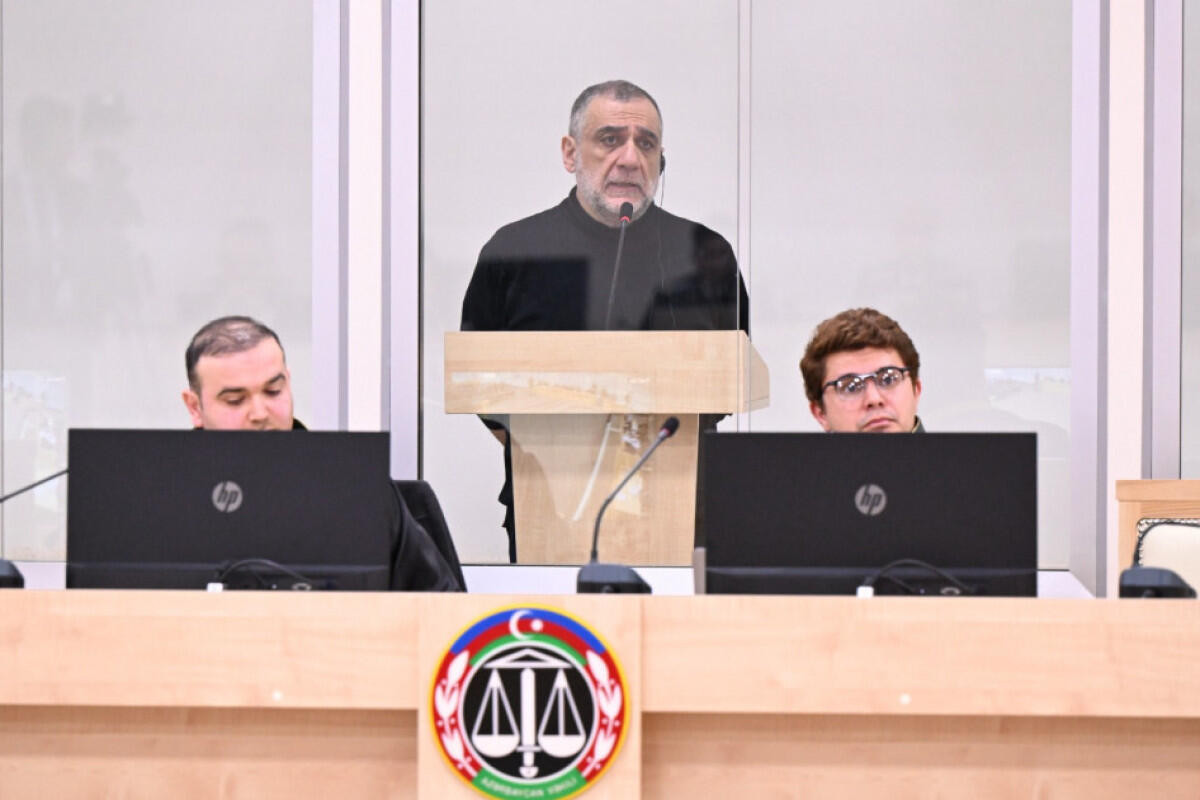
During the court proceedings, violations of the laws and customs of war under Articles 115 and 116 of the Criminal Code were also proven. The targeting of civilian objects, the destruction of humanitarian infrastructure, and violence against persons who should be protected during wartime were legally assessed within the framework of these articles. The court specifically emphasized that these acts could not be justified by military necessity.
All of these charges legally confirmed that Ruben Vardanyan’s activities were not limited to political statements or ideological positions, but constituted serious criminal offenses.
Ruben Vardanyan’s criminal case has been officially accepted into the proceedings of the Baku Military Court. The defendant’s rights were explained, defense mechanisms were ensured, and it was announced that the process would be conducted openly. This stage formed the legal foundation of the trial. The indictment was then announced. This hearing was of particular importance in that it marked the first time all serious charges brought against Ruben Vardanyan were presented in full before the court. Terrorism, financing of terrorism, crimes against humanity, the creation of illegal armed formations, violations of the laws of war, and activities against the constitutional order became the legal subject at this stage.
During the court session in which the examination of evidence began, financial flows, bank documents, communication networks, and other evidence started to be reviewed. The court paid special attention to Ruben Vardanyan’s financial and organizational role in ensuring the continuity of the crimes.

The statements of the victims were heard, and Azerbaijani civilians and their legal successors testified before the court. Acts of violence committed against the civilian population, forced displacement, and the consequences of the humanitarian catastrophe were formally established within the legal framework.
The court session in which legal assessment was given to the self-proclaimed “state minister” status was of particular importance, as the nature of Ruben Vardanyan’s position within the separatist regime was examined separately and evaluated as a political claim directed against the sovereignty and constitutional order of the Republic of Azerbaijan.
During the main court hearing, accompanied by the closing statement of the state prosecutor, all evidence was summarized, it was substantiated that Ruben Vardanyan’s activities had a deliberate and systematic criminal nature, and a severe sentence was requested.
Vardanyan delivered his final statement in court. This session effectively marked the final stage of the judicial investigation, after which the court retired to deliberate.
Legal assessment of the crimes

The court proceedings in the criminal case opened against Ruben Vardanyan were concluded today, February 17, 2026, and the verdict was announced in an open session at the Baku Military Court. Armenian citizen Ruben Vardanyan, who was charged under articles of the Criminal Code of the Republic of Azerbaijan relating to crimes against peace and humanity, war crimes, as well as terrorism, financing of terrorism, and other serious crimes, was sentenced by the court decision to 20 years of imprisonment.
The verdict was announced under the chairmanship of Judge Zeynal Agayev, with judges Jamal Ramazanov and Anar Rzayev (reserve judge Gunel Samadova). During the proceedings, the defendant was provided with an interpreter in his native language, Russian, as well as with a state-appointed defense counsel. The hearing was attended by the accused person, his defense counsel, some of the victims and legal successors of the victims, and their representatives, prosecutors representing the state prosecution, as well as Rufat Mammadov, Head of the Administration of the Cabinet of Ministers, representing the Republic of Azerbaijan as a victim.
During the court debates, the prosecutor representing the state prosecution requested life imprisonment for Ruben Vardanyan. However, taking into account the evidence collected in the case and the nature of the crimes committed, the court sentenced him to 20 years of imprisonment.
This decision is not only the legal conclusion of the trial, but also the final expression of the legal assessment of serious crimes in the post-conflict phase.


 Follow us on Telegram
 t.me/apanewsaz
 Follow us on Instagram
 Follow us on TikTok
 Follow us on Facebook
 Follow us on X