

The processes observed around the church in Armenia in recent months are being assessed not only as changes occurring in the religious sphere but also as significant developments indicating that the country is in a transitional phase in terms of its political, ideological, and national identity.
For many years, although the role played by the Armenian Apostolic Church in society was formally supposed to be limited to the function of a spiritual institution, in reality, it is claimed that this structure has turned into a platform influencing both internal political processes and the country’s geopolitical orientation. This situation naturally generates public discontent and further deepens the trust gap between the church and the people.
The dynamics currently observed in Armenia primarily emerge as a result of contradictions between society’s expectations of spiritual and moral leadership from the church and its actual activities. Although what is happening is presented as political interference, at the core of these processes lie public demand and a quest for sovereignty. Against this background, many strategic issues — from Armenia’s future development model and its choice between the West and Russia to concepts of national identity and statehood — have once again become subjects of discussion. Church reforms, in turn, are regarded as one of the central elements of broader transformations.
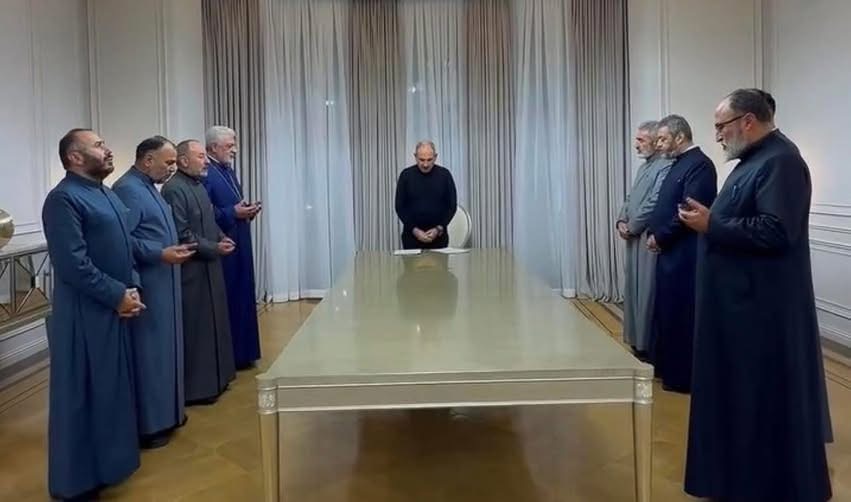
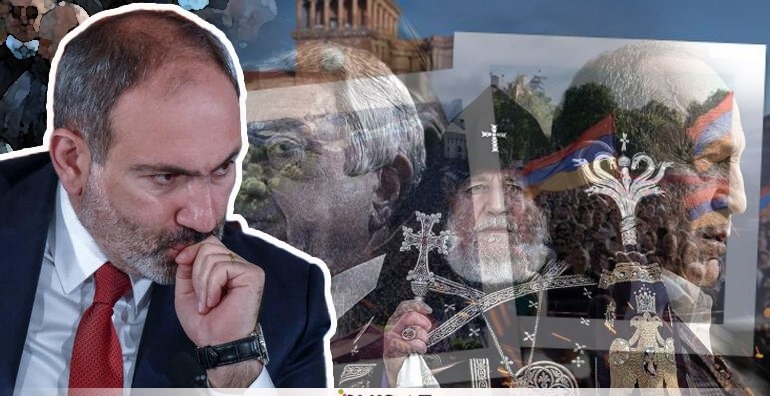
It is precisely in this context that Armenia’s Prime Minister Nikol Pashinyan announced the establishment of a coordination council for the renewal of the Armenian Church, together with 10 bishops who oppose Catholicos Garegin II. The document adopted by the council envisages the promotion of reforms within the church, the removal of the current head of the church from office, the appointment of an interim leader in place of the Catholicos, the adoption of the church’s charter, and the election of the Catholicos of All Armenians in accordance with established procedures.
The Armenian Apostolic Church must return to its true spiritual mission
Speaking to APA on the issue, Armenian political commentator Natalie Aleksanyan believes that the essence of the creation of the council in question is not government intervention in the processes taking place around the Armenian Apostolic Church, but an expression of the accumulated public will of society, which demands that the church, which has been away from external influences for years, return to its true spiritual mission:

“First of all, one point must be clearly emphasized: the processes unfolding around the Armenian Apostolic Church are not an initiative of the government, but the result of a demand that has accumulated among the people over many years and was long suppressed. Ktrich Nersisyan (Garegin II) and his brother Ezras Nersisyan, over many years, transformed the Armenian Apostolic Church from a spiritual institution into a system more influenced by external forces—particularly one bearing the traces of Soviet KGB traditions. As a result, the Church gradually moved away from its true mission and turned into a closed, controlling institution built on fear. It was impossible for society to leave such a situation unanswered.”
According to the Armenian commentator, the public is not demanding the abolition of faith, but rather the return of the Church to its national and spiritual essence: “For this reason, the processes we are witnessing today should not be viewed as political reforms imposed from above, but as the institutional expression of a public demand that has risen from below. Despite attempts by some circles, it is not possible to link these processes solely to the name of Prime Minister Nikol Pashinyan. Pashinyan appears not as the one who shaped this public demand, but as a democratic leader responding to it, acting not out of personal interest but in line with the will of the people. Therefore, what is happening should be perceived not as arbitrary interference by the authorities, but as the result of society’s demand to restore the Church, since this demand could no longer be ignored.”
Armenia’s future must be decided in Yerevan, not in Moscow

Aleksanyan stated that through this step, the Armenian people are effectively declaring their will to free themselves from KGB-linked agent networks and from Russia’s long-standing influence: “This influence has taken deep root over the years not only in the political sphere, but also in the spiritual domain. For a long time, the Armenian Apostolic Church was turned—contrary to the Constitution and for anti-state purposes—into an instrument of influence. However, the Constitution of the Republic of Armenia clearly states that the Church has no authority to interfere in political processes. The reality, however, has been quite different: Ktrich Nersisyan has long since moved away from spiritual service and has presented himself as a political figure, openly seeking to influence Armenia’s internal political life and even attempting to promote scenarios of power change and coups.
In this context, the name of Galstanyan (Bagrat Galstanyan), who is currently under arrest, should also be mentioned. He was deprived of his liberty not because of his political views, but as a result of the people’s explicit demand and lawful procedures—once again demonstrating that society no longer wishes to tolerate political figures operating under the guise of the Church.
The Republic of Armenia must unequivocally leave Russia’s zone of influence. This is not the result of any external pressure, but an expression of the sovereign will of the Armenian people. A state cannot be considered fully independent if its spiritual institutions continue to serve the interests of foreign powers. Therefore, the process of renewing the Church should be viewed as a stage of national self-cleansing and the restoration of sovereignty. At this stage, the Armenian people are sending a clear message: the future of the Republic of Armenia is determined not in Moscow, but in Yerevan.”
The purification and revival of the church is the people’s demand
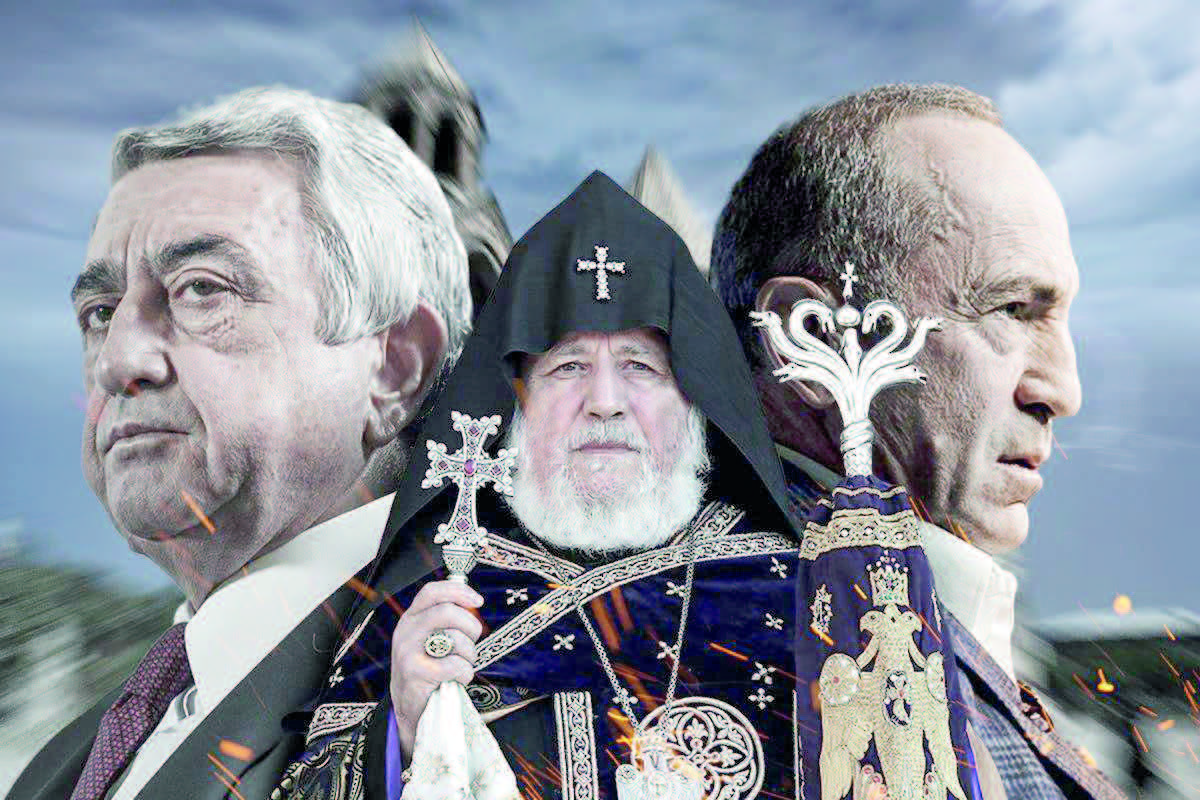
The political commentator noted that although the Armenian opposition is trying to discredit these processes and devalue them in the eyes of public opinion, the “interference” thesis represents a false agenda: “The Armenian people cannot be mistaken on fundamental issues concerning their own destiny. The processes taking place in Armenia today are the result of the conscious will of the people, despite the fact that the Armenian opposition is taking every step to discredit, distort, and devalue them in the eyes of society. Opposition circles claim that the government is allegedly interfering in the internal life of the church. However, these claims do not correspond to reality and are clearly manipulative. If such interference truly existed, Ktrich Nersisyan would have long since been held legally accountable. This fact alone proves that this is not a matter of abuse of power or pressure.”
According to her, the main problem has been that for 26 years the Armenian Apostolic Church failed to provide spiritual support to society:
“The real picture is deeper and more painful: for 26 years, the Armenian Apostolic Church has not provided spiritual nourishment to the Armenian people. The church has turned into a closed corporate structure and distanced itself from believers. The people did not reject faith — they rejected inactivity, hypocrisy, and service to external influences carried out under the guise of spirituality. The processes taking place today did not originate in government offices. They arose from years of accumulated disappointment, silence, and pain within the people. This is not a whim of the authorities, but the demand of the Armenian people. And no matter how hard they try to present this demand as a political scenario, reality does not change: the people demand the purification of the church, its revival, and its return to its true mission. This process cannot be stopped by intimidation, discrediting, or labeling, because this is not a political struggle, but a moment of national self-awareness.”
The rehabilitation of the church does not weaken the Armenian state, but strengthens it
Natali Aleksanyan also commented on claims of existing divisions within the church: “Yes, a certain degree of division within the church is inevitable, but correct wording is important here: the division is not being created by the reforms currently being implemented; it already existed. The church had long been divided: on one side stood the people and believers, and on the other, a closed clan system that had lost its legitimacy over many years. The so-called ‘legitimacy crisis’ is not the result of reforms, but their cause. If today, certain clerics and circles claim that reforms endanger church unity, in reality, they are simply trying to preserve the positions and influence they have lost. As for Armenia’s political stability, the picture is exactly the opposite: rehabilitating the church and freeing it from external influences strengthens the state. Political instability arises when spiritual institutions are turned into political tools and serve external agendas. It is precisely this danger that is being reduced as a result of the current processes.”
A strong national church is one that is free from external influence and serves the people

The commentator stated that the reforms being carried out in the church are also linked to Armenia’s civilizational choice:
“Church reforms are directly linked to Armenia’s civilizational choice. Integration with the West does not mean the loss of faith or the rejection of national identity. It means ensuring institutional accountability, transparency, and the church’s return to its true mission — service to the people, not to political or external centers. The Armenian Apostolic Church is one of the main pillars of national identity. However, being national does not mean being closed, unchanging, and beyond accountability. On the contrary, a strong national church is one that keeps pace with the times, acts in the interests of an independent state, and is not under the influence of Russia or any other country. These reforms are part of strengthening statehood. Because an independent state cannot have a dependent spiritual institution. National identity cannot develop under conditions of fear, silence, and KGB-type mechanisms. Despite the various political assessments given to these processes, the main factor is the real demand of the people and the internal choice of society.”


 Follow us on Telegram
 t.me/apanewsaz
 Follow us on Instagram
 Follow us on TikTok
 Follow us on Facebook
 Follow us on X