The Middle East Peace Summit held in Egypt was an important international diplomatic platform against the backdrop of ongoing armed conflicts, humanitarian crises, and geopolitical tensions in the region. Organized at the joint initiative of US President Donald Trump and Egyptian President Abdel Fattah el-Sisi, the summit aimed to ensure long-term peace and stability in the Middle East, strengthen dialogue between the parties, and harmonize the positions of global powers.

The Middle East region currently stands at the intersection of multiple political, security, and humanitarian crises. The Palestinian-Israeli conflict, ongoing military operations in Gaza, attempts by Arab countries to reformat their relations, and the increasing interest of global powers in the region have turned the summit into an important international event. Organized at the initiative of US President Donald Trump, this meeting also signals Washington's entry into a new era of diplomatic activity in the Middle East. Egyptian President Sisi’s hosting of the summit highlights Cairo’s historic mediation role in the region once again.
Political foundations of new phase and adopted document

The Middle East Peace Summit is regarded as a new diplomatic phase aimed at ensuring long-term stability in the region. At the summit, a joint declaration was signed regarding the strengthening of the ceasefire regime, the opening of humanitarian corridors, the safe return of refugees, and the restoration of political dialogue. The document envisages the strengthening of international mediation mechanisms and the enhancement of coordination between regional players and global powers. This document is considered an important step towards establishing the institutional foundation of diplomatic efforts in the Middle East.
Azerbaijan’s participation: a manifestation of balanced policy

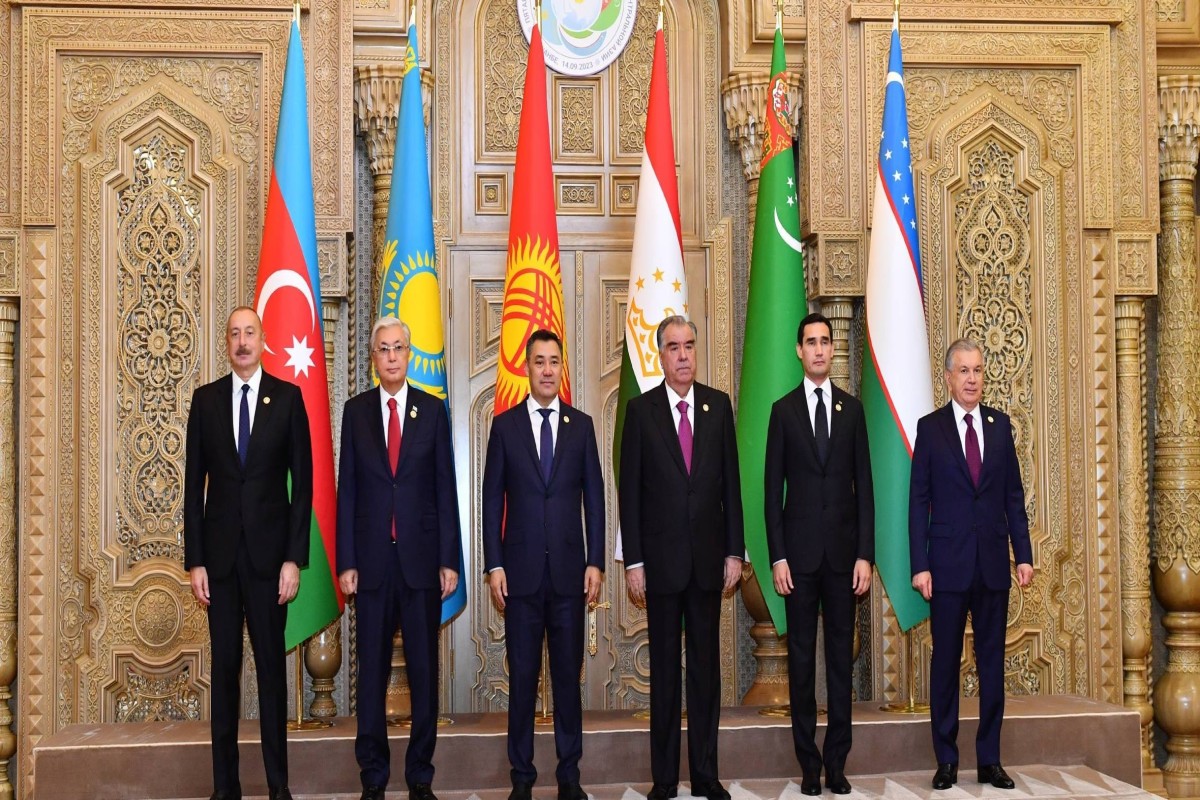
Forming the image of a balanced actor on the platform of political dialogue and cooperation by bringing together different religious and national poles, Azerbaijan’s development of relations simultaneously with both Islamic countries and Israel is particularly noteworthy. The tensions observed in the Middle East are also a cause of concern for Azerbaijan. Azerbaijan’s invitation to the summit, attended by a limited number of heads of state, is an indication of the country’s influence in the region. President Ilham Aliyev’s participation in the summit at the invitation of US President Donald Trump and Egyptian President Abdel Fattah el-Sisi is another clear sign of our country’s international diplomatic activity and increasing geopolitical weight. This visit creates new opportunities for deepening both bilateral and multilateral cooperation.
Diplomatic dialogue and internationalization of regional agenda

Within the framework of the summit, President Ilham Aliyev’s brief meetings with Armenia’s Prime Minister Nikol Pashinyan and French President Emmanuel Macron are also noteworthy from a diplomatic perspective. These meetings indicate the formation of additional diplomatic channels for discussing regional issues within the framework of international events and expand Azerbaijan’s opportunities to bring the peace agenda in the South Caucasus to the international arena. At the same time, the Middle East Peace Summit further strengthens Azerbaijan’s role as a bridge between the West and the Arab world. On one hand, Baku deepens cooperation with Western countries in the fields of energy and security, while on the other hand, by demonstrating a balanced and reliable position in the Middle East, it becomes an active participant in regional diplomatic processes.

The significance of the visit is reflected in several strategic directions. First, this step confirms Azerbaijan’s continued active participation in the main political platforms of the Muslim world. For many years, our country has established multilateral cooperation relations with Middle Eastern states within the framework of the Organization of Islamic Cooperation, as well as through bilateral relations. President Ilham Aliyev’s visit to Egypt opens new opportunities for further deepening the political and diplomatic aspects of these relations. This reflects Azerbaijan’s intention to develop its relations with the Islamic world not only on cultural and religious grounds but also in geopolitical and security dimensions.
Baku's position as part of global political discussions

The speech delivered by U.S. President Donald Trump at the summit has attracted significant attention. In his address, he referred to the Washington meeting between the leaders of Azerbaijan and Armenia, emphasizing and calling Azerbaijani President Ilham Aliyev a very strong leader:
"Anyway, thank you all for being here. I solved the war for this person, for Azerbaijan. You still get along with each other, right? We fought for 32 years, but we solved the issue in about an hour, right? And now they like each other. Thank you all for being here. He is a very strong leader, he does his job very well. We will make a speech after this ceremony, but this is a very important signing."
Trump’s statement not only highlighted Washington’s mediation efforts but also demonstrated that Azerbaijan is recognized as a central party in international negotiations. This also indicates that Baku’s position in the post-war phase of the Karabakh conflict has become an integral part of global political discussions.
New contours of Azerbaijan's diplomatic position

The Middle East Peace Summit coincides with a significant stage in the formation of a new strategic architecture, both in the regional balance of power and on the global diplomatic stage. President Ilham Aliyev’s participation in the high-level meeting is a real manifestation of Azerbaijan’s increasing political weight in the international relations system, as well as its multifaceted and flexible diplomatic strategy. By pursuing a parallel political line with the Islamic world, Western centers, and regional states, Baku positions itself as a reliable partner and an important geopolitical bridge. The documents signed and the negotiations held at the summit not only increase Azerbaijan’s activity in peace initiatives but also serve to elevate the South Caucasus issues to a strategic level on the international agenda. This visit is a significant political event that strengthens Azerbaijan’s role not only as an active participant in the formation of the new geopolitical order but also as an important diplomatic player influencing regional and global processes.


 Follow us on Telegram
 t.me/apanewsaz
 Follow us on Instagram
 Follow us on TikTok
 Follow us on Facebook
 Follow us on X