


The modern system of international relations is undergoing a deep phase of geopolitical transformation. Amid parallel conflicts on a global scale, shifting power balances, and the selective application of international law, the ways and mechanisms through which individual conflicts are resolved have gained particular importance. In this context, the resolution of the Karabakh conflict serves as an important case not only regionally but also from the perspective of international relations theory. The culmination of this process was the Prague Statement adopted on October 6, 2022.
Transition from the military phase to the legal phase of the conflict
The end of the Karabakh conflict is the result of a multi-stage and systematic process. As a result of the 44-day war, Azerbaijan restored its territorial integrity, and the long-standing “status quo” was changed. However, in international practice, the resolution of conflicts does not end with a military outcome alone. The key issue is the acceptance of this result by the opposing side and its confirmation within a legal framework.
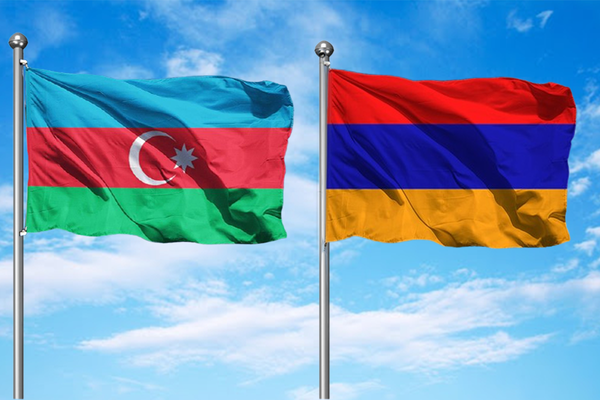
It is precisely from this perspective that the next stage of the Karabakh issue continued on the political and diplomatic plane. Azerbaijan’s strategic approach was not limited to achieving military superiority, but was also aimed at legitimizing this advantage within the framework of international law. This shaped the concept not of “freezing” the conflict, but of “closing” it. Therefore, the Prague Statement serves as the key document that ensured the conclusion of the Karabakh conflict not only politically, but specifically within a legal framework.
Attempts at manipulation and geopolitical motives
Nevertheless, attempts by certain external actors to bring the Karabakh issue back onto the agenda are being observed. These efforts are mainly driven by geopolitical interests and reflect the positions of actors seeking to alter the new realities in the region.
However, such attempts are legally unfounded. This is because, through the Prague Statement, the parties have reaffirmed their commitment to the fundamental principles of international law. These principles, in turn, exclude the reopening of the conflict. In this regard, attempts to present the issue again as a conflict remain only at the level of political rhetoric.
The Karabakh conflict has ended, and the parties to the conflict, Azerbaijan and Armenia, have mutually recognized each other’s territorial integrity and sovereignty. The delimitation and demarcation of borders are underway, a peace agreement has been initialed, and important steps are being taken toward restoring relations between the two countries, including economic ties. The necessary work is being carried out to conclude a final peace agreement. In short, both sides are moving toward peace. If Azerbaijan and Armenia, which were previously in a state of conflict over Karabakh, have declared that the issue has been resolved and have embarked on a process of peace and stability, then it appears inappropriate for external countries and forces to continue speaking about Karabakh, and it suggests that they may be pursuing certain interests. At the same time, such actions contradict UN documents, as well as the norms and principles of international law. Most importantly, these countries and forces must finally understand that the Karabakh conflict is over, that chapter has been closed, and their misplaced nostalgia only makes them appear unserious.
Because the Prague Statement is not only a document that closes the past, but also a legal framework that shapes the future. The end of the conflict creates new opportunities for cooperation in the region. The implementation of transport projects, economic integration, and energy cooperation are already becoming priorities.
This stage entails the transformation of the region. The model of confrontation is gradually being replaced by a model of cooperation. This creates a fundamental basis for long-term stability and development.
Prague Statement: ensuring legal legitimacy

Alongside all this, the occasional references to the Karabakh issue by certain circles and individuals make it necessary to focus on the essence and significance of the Prague Statement and to once again highlight its legal aspects.
It should be particularly emphasized that the essence of this document goes beyond the framework of a classical diplomatic agreement, acquiring a broader normative meaning and systematically defining the legal foundations of relations between the parties. In other words, the Prague Statement puts an end to discussions surrounding the Karabakh conflict.
Within the framework of this document, adopted on October 6, 2022, the references made by President of Azerbaijan Ilham Aliyev and Prime Minister of Armenia Nikol Pashinyan to the UN Charter and the 1991 Alma-Ata Declaration are not accidental. These references clearly confirm that the parties are building their relations on the fundamental principles of international law and ensure the closure of the conflict within a legal framework.
The main strength of this document lies in its ability to create legal coherence. The reference to the UN Charter establishes principles such as state sovereignty, territorial integrity, and the inviolability of borders as a legal basis. At the same time, the reference to the Alma-Ata Declaration reaffirms the legitimacy of administrative borders formed in the post-Soviet space from the perspective of international law. The simultaneous acceptance of these two references minimizes the possibility of differing legal interpretations between the parties and leaves no legal room for conflicting approaches. Thus, not only the factual but also the normative foundations of the conflict are eliminated.
One of the most important outcomes of the Prague Statement is Armenia’s official recognition, for the first time, of Azerbaijan’s sovereignty within its internationally recognized borders. This step carries more than symbolic political meaning and should be assessed as an obligation undertaken under international law. Under such recognition, the legal basis for any territorial claims is automatically removed, and consequently, the subject of legal dispute is eliminated. This effectively means the removal of the legal foundation of the conflict.
Another important aspect of the statement is that it defines the model for future interstate relations. The document establishes a system of mutual recognition and obligations based on law in the new phase. This is significant not only for bilateral relations but also for the construction of a stability architecture across the region.
At the same time, the Prague Statement holds particular weight in terms of international legitimacy. It is not merely an agreement between two states, but a document formed within the framework of accepted principles of international law, giving it broader potential for international recognition. This creates the basis for the Karabakh issue to be regarded as a “closed issue” from the perspective of international law.
In conclusion, the Prague Statement not only confirms existing realities but also creates a mechanism that ensures their legal irreversibility. In this sense, the document serves not only as the legal final point of the conflict, but also as the foundation for the formation of a new legal and political order in the region.
A change in Armenia’s position
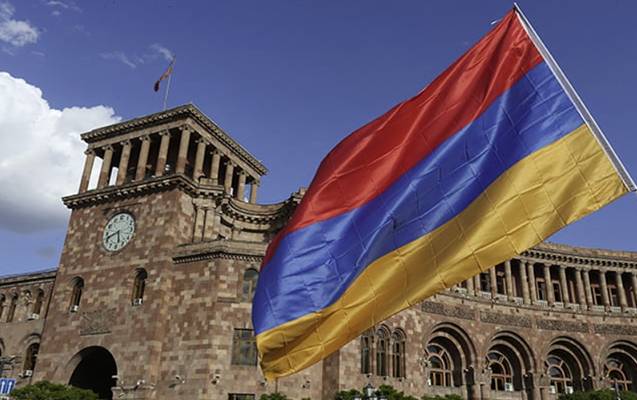
The Prague Statement created a serious turning point in the policy that Armenia had pursued for many years. In previous stages, Armenia approached the fundamental principles of international law selectively, either denying the principle of territorial integrity or interpreting it in a way that served its own political objectives.
However, in Prague, Armenia recognized that the principle of territorial sovereignty is a basic condition of modern international relations and that peace and stability are only possible on the basis of international legal norms and principles.
After the Second Karabakh War, it was precisely in Prague that Nikol Pashinyan, by officially recognizing Azerbaijan’s sovereignty over the territory within its internationally recognized borders, effectively renounced the baseless and internationally unlawful territorial claims that Armenia had long made against Azerbaijan.
This means the acceptance of international legal obligations. By declaring its commitment to the UN Charter, Armenia demonstrated that it had abandoned its previous approach.
This change is the main factor preventing the Karabakh issue from becoming a subject of dispute again in the future, as Armenia has already defined its position within the framework of international law.
The principle of “uti possidetis juris” and the inviolability of borders
One of the main elements deepening the legal essence of the Prague Statement is the effective affirmation of the principle of uti possidetis juris. This principle is considered one of the fundamental mechanisms ensuring the stability of state borders in international law and has been widely applied in decolonization and state-building processes, particularly in the post-Soviet space.
The principle essentially means that former administrative borders are recognized as the international borders of newly independent states.
The acceptance of this principle in the context of the Prague Statement can be regarded as a turning point in the legal analysis of the conflict. Armenia’s acceptance of this approach means recognition of the legal legitimacy of the administrative borders of former USSR republics. This confirms that Azerbaijan’s territorial integrity is not a subject of dispute under international law. Since the former Nagorno-Karabakh administrative region was part of the former Azerbaijan SSR during the Soviet period, the principle of uti possidetis juris naturally applies to Azerbaijan as well.
In other words, the territory of Karabakh—historically Azerbaijani land—is an inseparable part of today’s independent Azerbaijan, and this fact leaves no room for any doubt or dispute.
An important aspect here is that the uti possidetis juris principle not only concerns the determination of borders but also their immutability. This feature makes it not merely a technical legal rule, but also a security mechanism. By adopting this principle, future territorial claims are legally prevented.
The confirmation of this principle in the Prague Statement creates a structure that preemptively eliminates potential legal disputes between the parties. If borders are recognized under international law, any future claims against those borders automatically lose legal legitimacy. This minimizes the risk of the conflict being reignited.
Thus, the adoption of the uti possidetis juris principle serves as one of the main pillars of the legal closure of the conflict. The principle not only legally finalizes the past but also provides a normative framework that ensures stability for the future. In this regard, its inclusion in the Prague Statement can be seen as a legal guarantee of long-term peace in the region.
Mutual recognition of sovereignty and elimination of claims
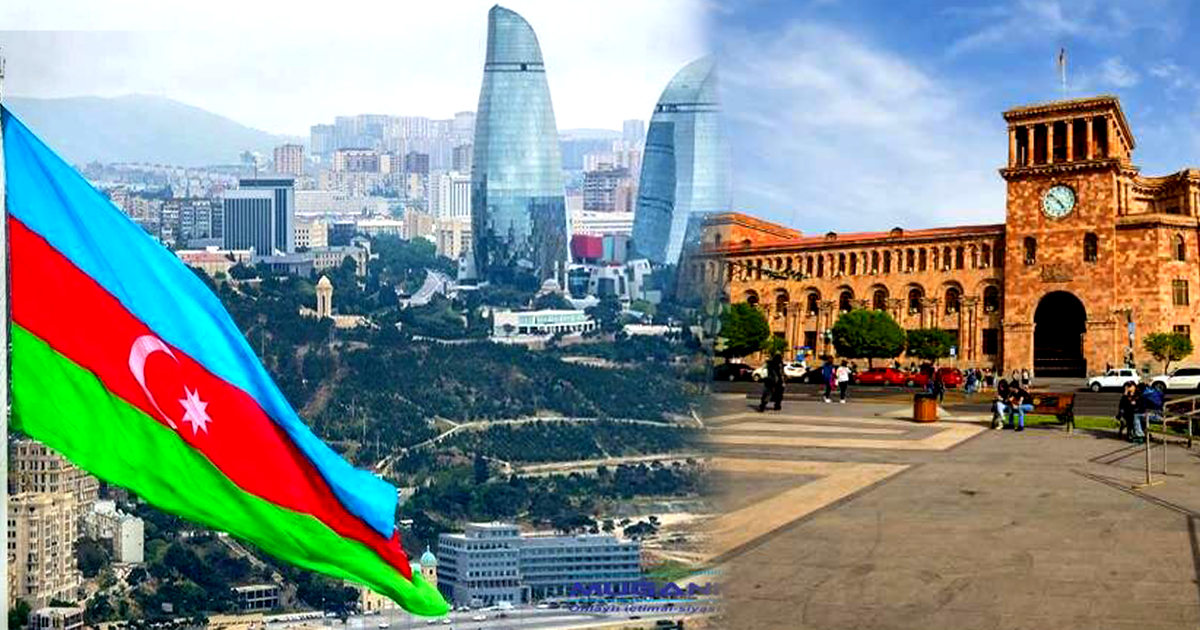
Another important element of the Prague Statement is the principle of mutual recognition of sovereignty. This principle forms the foundation of inter-state relations and indicates that there are no territorial claims between the parties.
Armenia’s recognition of Azerbaijan’s sovereignty signifies its renunciation of its earlier territorial claims. This, in turn, is the main legal factor ensuring that the Karabakh issue is removed from the international agenda. The issue is no longer regarded as a conflict but as a resolved matter.
Dissolution of the OSCE Minsk Group
The dissolution of the OSCE Minsk Group, which for many years was supposed to work on resolving the Karabakh conflict, is also a logical outcome of this process. The mechanism had been established for the purpose of conflict resolution, but after the conflict was closed from a legal standpoint, its functional necessity disappeared. It was precisely the adoption of the Prague Statement that made the termination of the Minsk Group possible.
Since the international community now considers the Karabakh conflict resolved and the dispute eliminated, there was no further justification for maintaining the Minsk Group.
The legal conclusion of the Karabakh conflict
Thus, the end of the Karabakh conflict became possible as a result of the logical sequence of military, political, and legal stages. The legal conclusion of this process is the Prague Statement. Armenia’s acceptance of the fundamental principles of international law, recognition of Azerbaijan’s territorial integrity, and abandonment of previous claims demonstrate the irreversible nature of this process.
In this sense, the Prague Statement is not merely a diplomatic document, but the legal final point of the conflict, a fundamental framework shaping a new regional reality, and a concrete example of the practical application of international law. This new reality shows that the Karabakh issue is now a matter of the past, and Azerbaijani-Armenian relations, as well as the region as a whole, have entered a new phase of development.



 Follow us on Telegram
 t.me/apanewsaz
 Follow us on Instagram
 Follow us on TikTok
 Follow us on Facebook
 Follow us on X