In recent days, the emotional statements voiced in Russia and the hysterical approach demonstrated by some media outlets regarding the removal of the statue of Ivan Aivazovsky—a Russian academic, classical and romantic painter of Armenian origin—unfortunately overshadow the political and legal essence of the issue. This matter is neither an act of disrespect towards Russian culture nor an act of nationalism. On the contrary, the said statue was illegally erected in Karabakh—an internationally recognized territory of Azerbaijan—without Azerbaijan’s consent, under the patronage of separatists and the Russian military contingent. Moreover, this occurred after the trilateral statement of November 10, 2020, in which Russia itself recognized Karabakh as part of Azerbaijan.
Given these circumstances, Azerbaijan is fully entitled to dismantle an illegally erected monument. This matter should be evaluated within the framework of respect for state sovereignty and international law, and should not be turned into a tool for manipulation or political pressure.
Political assessment of the instrumentalization of the monument
Advisor to the Academy of Public Administration under the President, and Chairman of the Baku Political Scientists Club, Zaur Mammadov, emphasized in his statement to APA that the artificial hysteria being created around the removal of Aivazovsky's statue is unfounded and this incident should not be evaluated in the same context as the removal of Russian monuments in other countries.
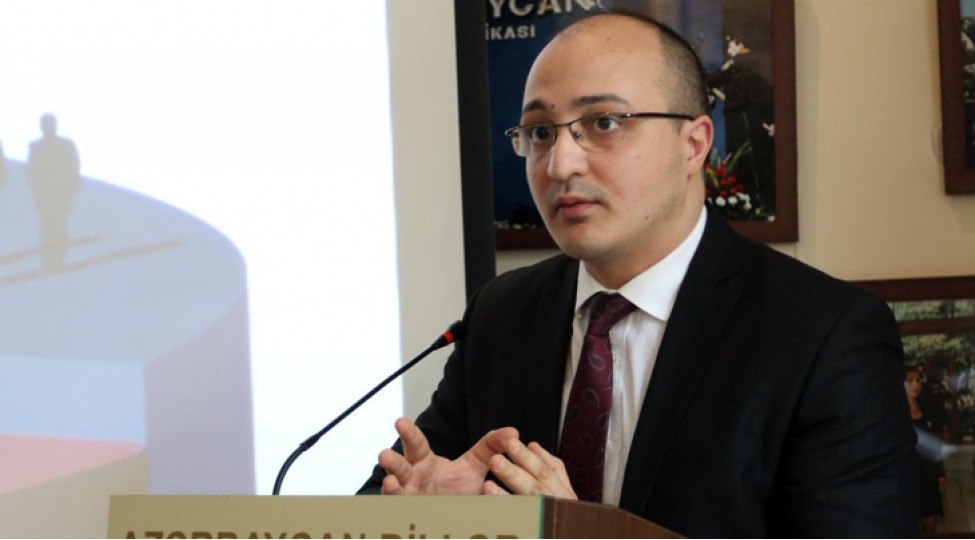
According to him, the artificial hysteria that has emerged in the neighboring country regarding the removal of Aivazovsky’s statue is completely incomprehensible: “Russia treats monuments and statues in neighboring countries with special sensitivity. In particular, in Ukraine, Armenia, Georgia, and other countries, when monuments and statues of Russians who fought in World War II are dismantled, official statements are issued against the governments of those countries, accusing them of disrespecting Russian history and Russian soldiers, nationalism, and other matters. Russia strongly condemns such actions. However, the issue of dismantling Aivazovsky’s statue should not be evaluated in the same context as similar previous incidents.”
“Stepanakert” and “Artsakh” rhetoric: Russian media refuses to accept new realities
Zaur Mammadov noted that while statues in other neighboring countries were once erected legally, Aivazovsky’s statue was illegally installed in Karabakh, Azerbaijan’s sovereign territory, under the patronage of separatists supported by Armenia and the Russian military contingent: “The monument in question was erected after November 10, 2020, when the leaders of Azerbaijan, Russia, and Armenia signed a trilateral statement. In that statement, the President of Russia and the Prime Minister of Armenia recognized Karabakh as part of Azerbaijan. If Russia itself recognizes Karabakh as part of Azerbaijan, how is it possible that a statue can be illegally erected there without Azerbaijan’s consent? And how can harsh and emotional statements now be made in Russia regarding its removal by the Azerbaijani authorities? Some Russian media outlets are even accusing Azerbaijan of nationalism and chauvinism. However, this matter has nothing to do with nationalism or hostility. It is about respecting Azerbaijan’s sovereign rights and territorial integrity. The fact that certain Russian media reports about Aivazovsky use illegal and separatist terms such as ‘Stepanakert’ and ‘Artsakh’ shows that there are circles that refuse to accept the new realities in the South Caucasus, wish to return to the past, and try to exert pressure on Azerbaijan in various ways. But I believe that train has already left the station. If anyone wants to cooperate with Azerbaijan, they must respect its territorial integrity. In Azerbaijan’s legal system, only the political authority elected by the people of Azerbaijan, operating within the powers granted by the Constitution adopted by the Azerbaijani people, can make decisions, and those decisions must be respected.”
Azerbaijan’s stability strategy and resistance to geopolitical pressure
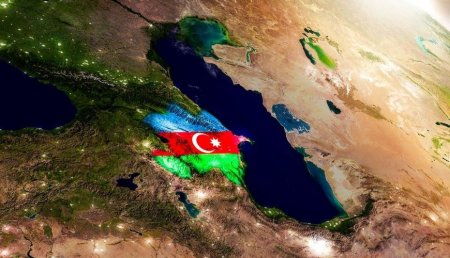
The political analyst emphasized that, against the backdrop of sensitive geopolitical developments in the South Caucasus, Azerbaijan has prioritized regional cooperation and mutual respect through a foreign policy based on stability and equality, while opposing interference by non-regional powers.
“Currently, very sensitive and dynamic processes are unfolding in the South Caucasus. Various geopolitical powers are competing for influence in the region. However, unlike Armenia, Azerbaijan does not allow non-regional countries to enter the region or to establish military and political presence through its foreign policy. On the contrary, over the past five years—and even earlier—Azerbaijan has consistently stated that, as a regional country, it strives to maintain stability and does not want any country to threaten the interests of others in the region. This is proof that Azerbaijan conducts its foreign policy based on principles of equality and mutual respect both with neighboring countries and international actors. This policy deserves recognition. It is also worth recalling a recent statement by Iran’s newly elected president, Pezeshkian. He said that the cause of tensions in Iran–Azerbaijan relations over time was not the Azerbaijan–Israel ties, but rather the flawed regional policy pursued by the Iranian leadership. He acknowledged that the fault for the deterioration of relations lies with the Iranian government. These statements can also be applied to Russia–Azerbaijan relations. At the level of political leadership, relations have always been built on mutual understanding and have contributed to the development of bilateral ties. However, since December 2024, certain developments show that there are forces in Russia that are not interested in advancing these relations. These circles may be trying to promote their own interests under the pretext of undermining Russia–Azerbaijan relations. Nevertheless, Azerbaijan remains interested in strengthening ties with Russia, and the 'Aivazovsky issue' should not harm this relationship. After all, the statue of Aivazovsky was unlawfully placed on Azerbaijani territory by separatists. That separatist regime no longer exists—and neither can its legacy remain on these lands,” he concluded.
Legal assessment of the removal of Aivazovsky’s statue
Amid the unfounded accusations surrounding the removal of Aivazovsky’s statue in the Karabakh region, it becomes necessary to assess the issue from a legal and international law perspective. Any official stance or international discussion must be evaluated on legal grounds. The statue’s erection in 2021 without the consent of relevant Azerbaijani state authorities, through the involvement of the separatist regime and Russian peacekeepers, renders its removal a necessary and legitimate legal step. In this context, an objective legal assessment is essential.
A member of Milli Majlis (Parliament) of the Republic of Azerbaijan, Nizami Safarov, offering a legal opinion on the matter, stated that the statue was unlawfully installed without Azerbaijan’s official consent, and therefore its removal was fully in line with the country’s sovereign rights. The accusations made in this regard are unfounded.
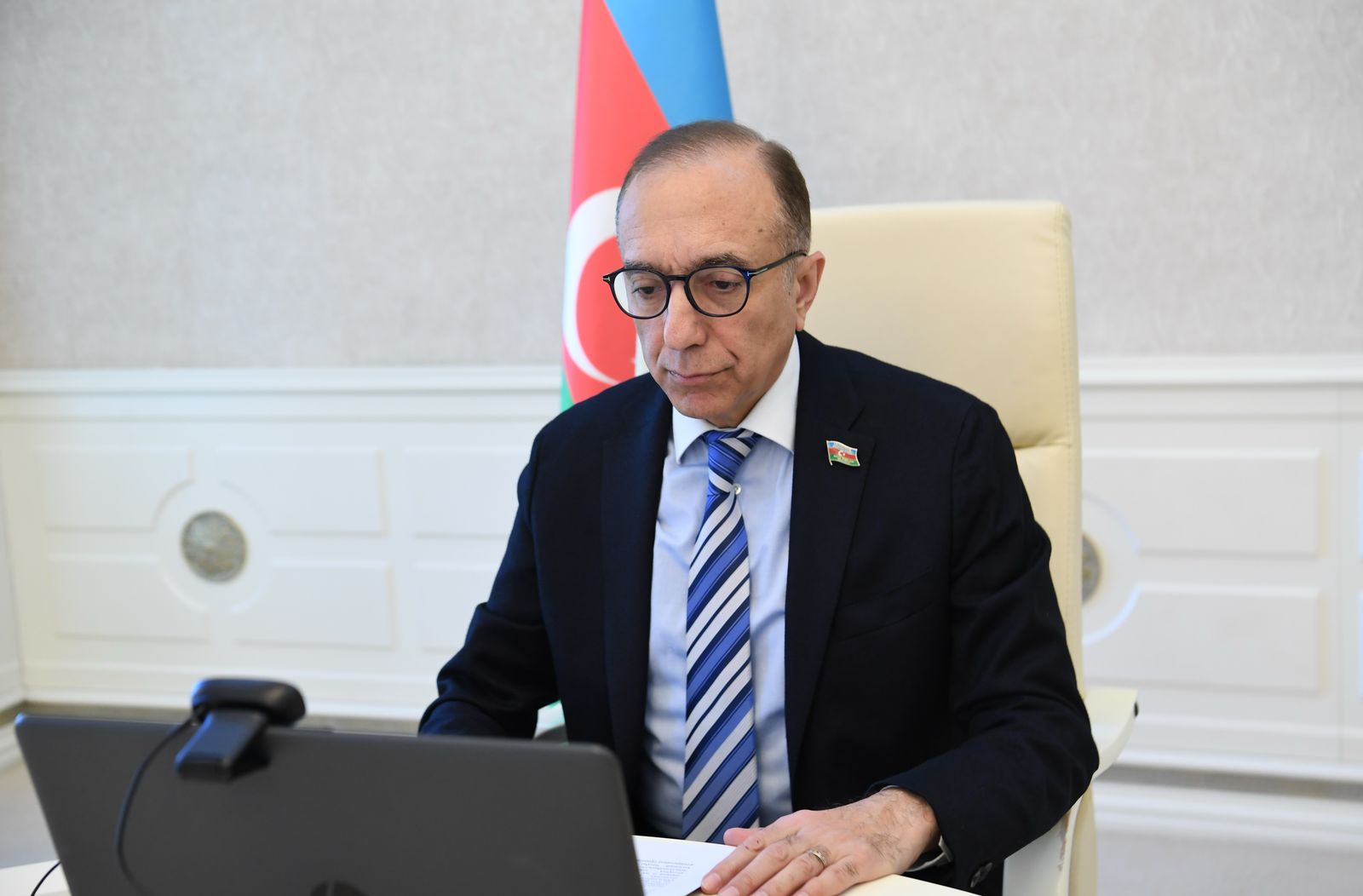
“The erection of Aivazovsky’s statue in December 2021 with the participation of the Russian peacekeeping contingent and representatives of the so-called separatist regime, without coordination with the official authorities of the Republic of Azerbaijan and without obtaining the necessary permission, was an illegal act. For this very reason, the monument was dismantled. In this context, accusations such as ‘an act of hostility,’ ‘destruction of cultural heritage,’ or ‘destructive action’ have no connection whatsoever with the measures taken in accordance with Azerbaijani legislation and sovereign rights,” said Nizami Safarov.
The MP also recalled that, as a full-fledged member of UNESCO, Azerbaijan actively and effectively cooperates with this specialized UN agency to preserve all cultural heritage sites located within its territory, including in the Karabakh region.


 Follow us on Telegram
 t.me/apanewsaz
 Follow us on Instagram
 Follow us on TikTok
 Follow us on Facebook
 Follow us on X