


As a result of the systematic policy of occupation and assimilation carried out by the Russian Empire in the Caucasus in the 19th century, the Circassians were among the peoples who suffered the most severe blow.
The lands of the Circassians were gradually seized, and the civilian population was forcibly displaced en masse. The mass deportation that took place in 1864, known in history as the "Great Exile," resulted in the death of hundreds of thousands of Circassians and the forced displacement of hundreds of thousands more from their homeland. Today, this process is the subject of legal and political struggle for its recognition as the “Circassian Genocide.”
Historical context: The North Caucasus and Russian expansion
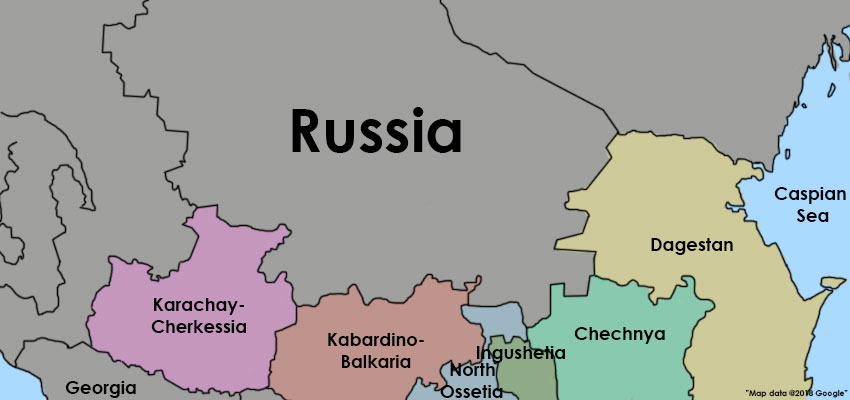
This tragedy, known in history as the “Circassian Genocide” and the “Great Exile,” is a classic example of the deliberate destruction of a people’s physical and spiritual existence at the state level. The Caucasian War, which began in 1763 and officially ended in 1864, was part of the Russian Empire's plans to bring the Caucasus under full control. The Circassians were one of the main peoples who resisted this process until the very end. Their will for freedom, attachment to their land, and identity posed a serious obstacle to the empire's expansionist policies. As a result, Russia decided to resolve the Circassian issue by military force. The military parade held in 1864 on the plain of Qbaada near Sochi is considered the official end of Circassian resistance and the peak of the genocide. Following this, millions of Circassians were exiled to the Ottoman Empire. During the deportation, hundreds of thousands died from starvation, disease, accidents, and drowning at sea. This is considered one of the most brutal acts of ethnic cleansing witnessed by humanity. The forced expulsion of the Circassians from their homeland was part of the Russian Empire’s deliberately executed demographic changes. By settling Russian families in their place, the ethnic map of the region was altered. In modern terms, this policy was clearly an act of violating the collective rights of a people and erasing their culture, language, and history.
Approximately 1.5 million Circassians were subjected to exile. Some of them settled on Ottoman lands – present-day Turkey, Syria, Jordan, Iraq, and the Balkan countries. A large portion of the exiled population assimilated into the countries they settled in, while others perished under difficult living conditions. Despite all these facts, the majority of the international community and leading international organizations have not recognized this tragedy as genocide to this day. Only Georgia officially recognized the Circassian Genocide in 2011. However, history, archival documents, oral testimonies, and modern humanitarian law norms provide a basis for classifying this tragedy precisely as genocide. Today, the Circassian diaspora living in various countries around the world continues to fight for the political and legal recognition of this history, for the recognition of the genocide at the international level, and for the restoration of the right to return to their homeland. May 21 – the date when the exile began – is commemorated annually by Circassians worldwide as a day of mourning and remembrance.
The road to genocide: the policy of “Russifying” the Caucasus
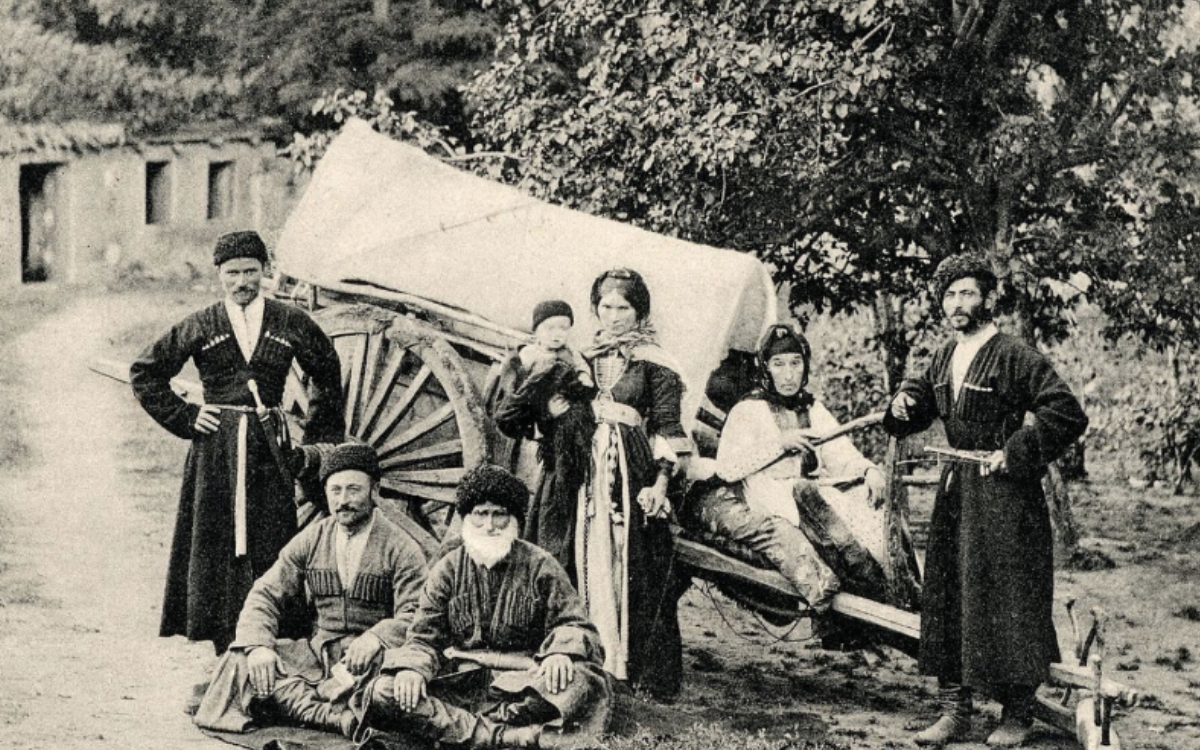
This event was not only a crime against the Circassian people, but also against international humanitarian principles, human rights, and the historical rights of ethnic minorities. The Circassian Genocide and Exile remain, to this day, a test for the Caucasus region in terms of historical justice and humanitarian values. Recognizing this tragedy could be an important milestone not only for the Circassians, but for the global fight for justice and human rights.
Speaking to APA about the tragedy experienced by the Circassian people, Caucasus history researcher Jem Kumuk stated that the genocide policy carried out by Russia in the North Caucasus in the 19th century was not only military and political in nature, but also the result of geopolitical and economic interests.

“Starting from the second half of the 18th century, Russia began to take an aggressive stance against the Ottoman Empire. The border regions located between these two empires became the areas most affected by this confrontation. The main spark of this situation was the Congress of Vienna in 1815. At that congress, the capitalist empire that had already subjugated the European monarchies decided to plunge these two empires – which it had not yet conquered – into an endless swamp of war, and to this end, it constantly incentivized generals serving in their armies financially to keep the flames of war alive. In Russia, the clearest example of this policy was General Yermolov. The process initiated by Yermolov was joined by other Russian generals, and for two centuries, steps were taken to keep alive the Tsarist dynasty's paranoia toward the peoples of the Caucasus.”
The policy pursued by the Russian Empire in the North Caucasus was not limited to mere military occupation. It was a long-term, systematically implemented military-political and demographic strategy. The goal was to erase the region's indigenous population—especially the Circassians—from their ancestral lands and to “Russify” the Caucasus by settling loyal, Orthodox Christian communities in their place.
The main stages of this process can be classified as follows:
1. Initial military aggression and border fortification (1763–1800): The Russian Empire began establishing footholds in the Caucasus with the construction of the Mozdok fortress. The objective during this phase was to control trade routes and strategic passages. The peoples of the Caucasus immediately responded to this intervention, and the first sparks of resistance ignited during these years.
2. Repressions and divide-and-rule policy to break resistance (1800–1859): The empire employed a “divide and conquer” policy to systematically eliminate fragmented tribes across the region. Meanwhile, it waged a prolonged war against the Caucasian Imamate led by Imam Shamil. Russia did not rely solely on military force—it also used tactics such as economic blockades and the cutting off of food and water supplies to weaken the civilian population. During this period, hundreds of villages were burned, and inhabitants were either massacred or forced to flee.
3. Complete occupation and preparation for mass deportation (1860–1864): After Imam Shamil was captured in 1859, resistance continued in the form of scattered groups, but Russia moved on to the next stage of “securing” the region. During this phase, special military units launched raids on villages, and like other peoples, the Circassians were given ultimatums: “surrender or be exiled.” In many cases, villages were surrounded and burned without any prior warning.

4. The year 1864 and the “Great Exile”: The Genocide phase
Although May 21, 1864, was declared by the Russian Empire as the official end of the Caucasian War, this date went down in history as the beginning of the Circassian genocide and exile. The Russian military command celebrated the event as a military victory by holding a grand parade, but this "triumph" came at the cost of destroying hundreds of thousands of lives. The Circassians were forcibly sent to the Black Sea coast and from there to the Ottoman Empire. Many of those transported by ship died on the way due to starvation, disease, or drowning at sea. This was not merely an act of deportation—it was a deliberately executed campaign of ethnic cleansing and genocide.
5. Ethnic engineering and the construction of the “New North Caucasus”
After the Circassians were exiled, the Russian Empire settled Cossacks, Orthodox Slavic peoples, and loyal colonists on their lands. The names of Circassian settlements were changed, their culture was subjected to restrictions, and attempts were made to erase their history. This shows that the Circassian genocide was carried out not only in physical terms, but also in cultural and historical dimensions.
Researcher Cem Kumuk states that after Imam Shamil’s resistance was broken, the Russian Empire targeted the free Circassians of Western Caucasus for political, strategic, and economic reasons, carrying out a systematic policy of genocide and mass exile that deprived them not only of their land, but also of their lives and identities.
“After Imam Shamil’s resistance was crushed in 1859, the Russian army mobilized all its forces and moved against the free Circassian tribes living in the Western Caucasus. No genocide or mass deportation was carried out in the Eastern Caucasus because it had already been occupied on all sides by Russia, and in the final years of Shamil’s struggle, his relations with the local feudal lords had deteriorated. The local population was no longer seen as a general threat to the Russian Empire. However, the same situation did not apply to the free Circassians of the Western Caucasus. This region remained open to the influence of both the British and Ottoman Empires, and the Circassians had deep historical ties with both. Therefore, the Russian Empire not only occupied Circassia but also set out to physically annihilate the Circassians.
This genocide was also profitable for Russian generals who thrived on war and bloodshed. The scale of military operations in the region increased their material gains. For this reason, the exile that began under the pretext of “forced reconciliation,” initiated by a special commission established by General Yevdokimov on May 10, 1862, soon turned into a genocide. Circassians preparing to leave their homeland were massacred in surprise raids even before they could exit their villages. Civilians trying to flee toward the coast were pursued; tens of thousands died on the roads, and many of those who reached the coast perished from hunger and disease during long waiting periods. Moreover, people were crammed into poorly maintained ships at up to ten times their capacity. Thousands of Circassians lost their lives in the stormy waters of the Black Sea.
Out of the approximately 2 million Circassians forced to leave their homeland, only 800,000 were able to reach the shores of the Ottoman Empire. Among them, tens of thousands more died due to disease and starvation. The exile did not end with the “Great Exile” of 1864. Over the next 20 years, the Russian army continued to monitor the relocated Circassians in the areas where they had settled, killing them and forcing them into new waves of deportation.”
Legal and political demands: Recognition and the right of return
The Circassian genocide and exile are not remembered merely as historical tragedies—they remain subjects of ongoing legal and political discourse today. Although the systematic deportation, ethnic cleansing, and cultural assimilation policies carried out by Tsarist Russia in 1864 meet the criteria of genocide under international law, this tragedy has yet to be widely recognized at the international level. However, such recognition is of fundamental importance for the preservation of Circassian identity, the restoration of historical justice, and the acknowledgment of the right to return.
The Circassian diaspora—particularly communities in Turkey, Jordan, Syria, Germany, and the United States—have, over recent decades, been engaged in consistent and organized efforts for the international recognition of this historical tragedy. In 2011, the Georgian Parliament took a significant step by becoming the first state to officially recognize that the Circassians had been subjected to genocide by the Russian Empire. While this decision is considered a precedent for other countries, there has still been no official recognition by the United Nations, the European Parliament, or the Council of Europe. Diaspora organizations are working to draw global public attention to the issue through petitions, international conferences, documentaries, historical research, and awareness campaigns in the media.
Another core issue directly linked to the recognition of the genocide is the Circassians’ right of return. Today, millions of Circassians live mostly in the Middle East and European countries, and many of them face either restrictions on permanent settlement in the North Caucasus or a complete absence of such rights. Yet according to the principles of the United Nations on the “right to citizenship” and the “right of return of displaced persons,” ethnic groups forcibly removed from their homelands have the right to return. The Russian Federation, however, does not recognize this right and instead seeks to evade responsibility by ignoring both the historical and legal dimensions of the issue.
In the current environment, Russia not only refuses to acknowledge the 19th-century tragedy, but also actively obstructs various efforts to preserve the Circassian language, culture, and historical memory. The reduction of opportunities to teach the Circassian language, the weakening of legal protections for cultural autonomy, the renaming of settlements, and the marginalization of cultural heritage are clear examples of this policy. This represents not only historical injustice, but also a violation of cultural rights.
Based on international law, the Circassian community advances several key demands: official recognition of the tragedy as genocide; the development of mechanisms for rehabilitation and compensation as a people who suffered materially and morally; restoration of the right to return; and, finally, the recognition of cultural autonomy and linguistic rights. These demands are fully aligned with the relevant norms of international law, particularly the UN Universal Declaration of Human Rights, the Convention on the Prevention and Punishment of the Crime of Genocide, and regional human rights mechanisms.
In recent years, young Circassians, NGOs, and civil society institutions both inside and outside Russia have continued this struggle through legal and civic means. On the other hand, the Russian Federation’s war against Ukraine and its continued imperial mindset have led to growing international sensitivity toward past atrocities. In this context, calls for the restoration of historical justice regarding the Circassian genocide and exile are becoming increasingly urgent and relevant.
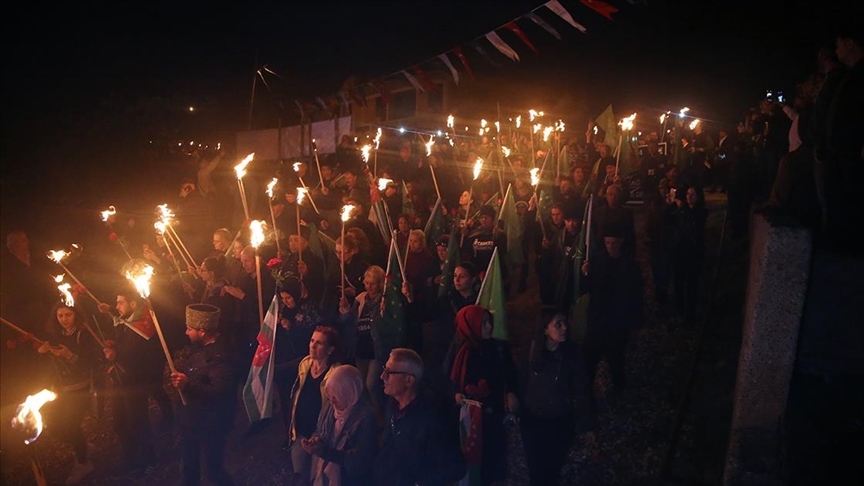
According to Jem Kumuk, the trauma experienced by Circassian society as a result of this exile is still deeply felt today: “This genocide and exile brought total destruction to Circassian society. A civilization once referred to by Western travelers and scholars two centuries ago as ‘the knights of our time’ now faces the threat of extinction. To this day, among UN member states, the Circassian genocide has been officially recognized only by Georgia and Ukraine. As you know, for a genocide claim to gain global recognition, it must be acknowledged by the UN Security Council. However, a paradoxical situation arises because all permanent members of this Council—those with veto power—have genocide crimes in their own histories.”
Jem Kumuk emphasized that May 21, 1864, the date associated with the Circassian genocide, has become a symbolic day of remembrance and is commemorated worldwide by the Circassian diaspora with large-scale events.
“This exile and genocide have left a deep imprint on Circassian literature. The laments created during the deportation era are still sung by all Circassians. International diplomatic circles may choose to ignore the genocide, but Russia was condemned in human conscience for this atrocity 160 years ago. No official recognition or denial can change this truth. Therefore, the fight against the Russian Federation should not be limited to formal recognition of the genocide on paper, but must also focus on legalizing and facilitating the return of Circassians to their homeland. Concrete steps must be taken by all relevant states, especially Russia, to support this process. Today, Circassians are not demanding revenge—they are demanding justice,” he stated.
Connection with Azerbaijan: Shared history and examples of solidarity
Although there is no direct geographical proximity between the Circassian people and Azerbaijan, shared historical experiences, collective traumas caused by imperial policies, and the fate of diaspora life have led to the formation of spiritual bonds between the two nations. Both peoples have been caught between empires throughout history, subjected to policies of assimilation and forced deportation, and have struggled to preserve their cultures and identities. This collective memory and shared destiny were especially evident in the late 19th and early 20th centuries.
This spiritual closeness is still reflected in the modern era. In December 2024, the downing of a passenger plane belonging to Azerbaijan Airlines by Russia, which resulted in the deaths of dozens of Azerbaijani civilians, triggered a strong reaction from the international community. Among the first to respond were Circassian diaspora organizations. Several Circassian associations based in Turkey not only expressed condolences to the Azerbaijani people but also condemned the act as another example of imperial violence and disregard for law. They declared that Russian imperial brutality is not just the pain of one nation, but a shared grief for all peoples of the region.
This solidarity is not limited to that particular response. Some representatives of the Circassian diaspora, when speaking at various international platforms, have cited Azerbaijan’s own history of occupation and deportation as an example to demonstrate the systemic nature of imperial policy. They state that such acts of violence are part of political agendas targeting ethnic identity, and that these plans have consequences not only in the past but also in the present.
At the same time, Azerbaijan also approaches the tragic history of the Circassian people with sensitivity. Interest in this issue is growing among local media, researchers, and civil society activists. This approach, which brings together the collective historical memory of the peoples of the Caucasus, creates opportunities for deepening regional solidarity and building more robust foundations for political dialogue.
History shows that empires have used various forms of violence and assimilation to divide peoples and rule them in isolated, fragmented ways. However, despite experiencing this violence in different forms and at different times, the Circassian and Azerbaijani peoples have been drawn closer by shared suffering, a common struggle, and similar hopes for the future. This solidarity holds not only emotional but also significant political and legal potential. In the struggle to restore historical justice and ensure human rights, such mutual understanding and support between peoples has always been decisive.

Caucasus researcher Jem Kumuk also noted that the Circassian people’s attitude toward the Azerbaijani people is based not only on shared ethnic and cultural ties, but also on unwavering feelings of brotherhood and solidarity rooted in the historical defense of the “Greater Caucasus” ideal, the legacy of the struggle for freedom, and aspirations for closer cooperation in the future:
“The Circassians’ attitude toward the Azerbaijani people, as with the Turks of Turkey, is built on brotherhood, deep spiritual connection, and unshakable solidarity. This relationship is not based solely on ethnic and cultural similarities, but is also strengthened by a shared history, struggle, and common ideals. The Circassians see themselves not just as a people of the Caucasus, but as bearers of a collective historical legacy committed to the freedom and future of the entire Caucasus.
From this perspective, the Circassians have historically supported the idea of a 'Greater Caucasus Confederation' alongside other freedom-loving peoples of the region—especially Georgia and Azerbaijan. This ideal was not limited to emotional appeals and heartfelt wishes; it was expressed through concrete political platforms, voiced in international forums, and documented by political leaders and intellectuals in exile.
In particular, during the early 20th century—a time of imperial collapse, revolutions, and world wars—Azerbaijani and Circassian political leaders worked together under the framework of the Caucasus Mountain Peoples Government in exile. They issued joint declarations and actively promoted this idea in European diplomatic circles in support of the independence and unity of the Caucasus.
That historical cooperation still lives in memory today and is reflected in the Circassians’ relationship with the Azerbaijani people. This relationship is not merely a romanticized recollection of the past—it forms a strong moral and political foundation for deeper and more lasting cooperation among the region’s peoples in the future. Both Circassians and Azerbaijanis understand well that the future of the Caucasus depends on mutual respect, solidarity, and a shared strategic vision.
After the Russian downing of the AZAL passenger aircraft, the Ankara Circassian Association and several other Circassian NGOs operating in Turkey and other countries expressed deep condolences to the Azerbaijani people and issued official statements strongly condemning this brutal attack. This action once again demonstrated the spirit of solidarity within the Circassian community toward the Azerbaijani people, and their shared pain and commitment to justice.”
Restoring justice begins not with silence, but with recognition
The Circassian genocide and exile were the result of an imperial policy aimed at the systematic destruction of a people. This tragedy should not remain buried in history—it must be recognized at the international level to restore justice. Recognition means respect for the memory of the victims, affirmation of the rights of the living, and safety for future generations. Silence about history opens the door to new acts of violence, while recognition is the first step toward justice. If the world remains silent in the face of this and similar tragedies, the repetition of such injustices becomes inevitable. Justice begins with recognition.



 Follow us on Telegram
 t.me/apanewsaz
 Follow us on Instagram
 Follow us on TikTok
 Follow us on Facebook
 Follow us on X