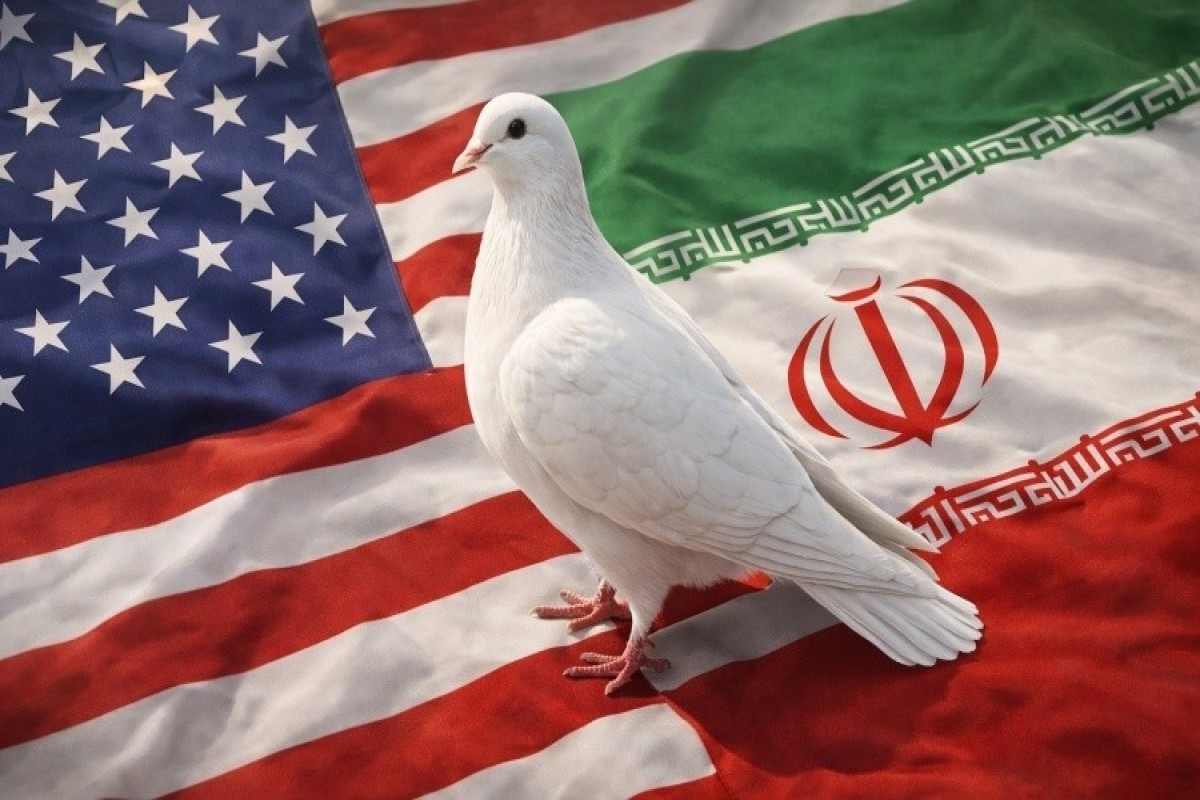


The ongoing military confrontation between the United States, Israel, and Iran temporarily subsided with a ceasefire reached on the night of April 7–8, leading to a relative calm in the region.
At first glance, the halt of military operations that lasted 39 days and the achievement of a political understanding between the parties may appear to be a sudden decision, but the course of events can, in fact, be assessed as a logical outcome of intensive and multi-layered diplomatic efforts carried out behind the scenes.
APA presents the chronology of how the agreement was reached:
Ultimatum strategy and time pressure

On April 4, Donald Trump’s ultimatum giving Iran 48 hours to reach an agreement became a turning point in the process. With this step, the United States aimed to receive a concrete response by April 6. On that day, Donald Trump wrote on the Truth Social platform: “We have given Iran a clear message — the Strait of Hormuz must be opened. Time is very limited and a decision must be made immediately.”
During the 24-hour period from April 4 to 5, military escalation reached its highest level. According to various reports, more than 40 missiles were launched and around 20 unmanned aerial vehicles were used in just one night. Air defense systems in the region operated continuously. During this period, oil prices increased by approximately 8–10 percent in a short time.
Statements by the parties indicated that the risk of the confrontation getting out of control was real.
From the night of April 5, diplomatic activity reached a high level. It is reported that more than 10 high-level contacts took place within a short period. Parallel negotiation channels were activated between the United States, Iran, and mediating countries. Donald Trump wrote: “Negotiations are ongoing and significant progress is possible.”
Iranian Foreign Minister Abbas Araghchi stated that “an agreement is possible if mutual respect is maintained.”
At this stage, diplomacy became the main mechanism preventing military escalation.
Mediation mission of Pakistan, Türkiye, and China

On April 6–7, during the most critical stage of the diplomatic process, Pakistan and Türkiye simultaneously assumed mediation and coordination functions. Especially from the afternoon of April 7, intensive diplomatic contacts were recorded along the Islamabad–Ankara line. According to reports, at least 5–7 separate communication channels were active at this stage, and the transmission of messages took place not in hours, but sometimes within minutes.
The Pakistani side acted as a direct communication platform, playing the role of a “message transmission center” between Washington and Tehran. Pakistan’s Prime Minister Shehbaz Sharif and Field Marshal Asim Munir were directly involved in the process, ensuring coordination through both political and military channels.
Donald Trump wrote on the Truth Social platform: “We had very productive talks with Pakistani leaders. They are playing a key role in this process.”
This statement demonstrated that Pakistan’s role extended beyond technical mediation to the level of strategic coordination.
At the same time, Pakistan’s mediation was structured in a two-stage model: in the first stage, the transmission of urgent messages to halt escalation, and in the second stage, the agreement on a conditional ceasefire mechanism. As a result of this model, an initial environment of trust was formed between the parties. Abbas Araghchi stated: “Some mediation channels have produced real results, and this made dialogue possible.”
This statement is indirectly assessed as a reference to Pakistan’s role.
In parallel, Türkiye acted more as a “strategic balancer” and a “dialogue-promoting” actor. Rather than directly transmitting messages, Ankara focused on maintaining an overall coordination environment between the parties. Through diplomatic channels, Türkiye intensified contacts with both the United States and regional countries, seeking to prevent the process from getting out of control. At this stage, Türkiye’s main role was to prevent the spread of tensions to the regional level and to keep the diplomatic platform active.
Israeli Prime Minister Benjamin Netanyahu stated, “Regional coordination and the participation of partners are of great importance for security.”
This view indirectly shows that the role of countries such as Türkiye and Pakistan is also taken into account by Israel.
The China factor also became an active topic of discussion during the first week of April. It was revealed after the agreement was reached that Beijing had played an important role in persuading Iran to agree to the ceasefire.
A statement from Trump that shook the world
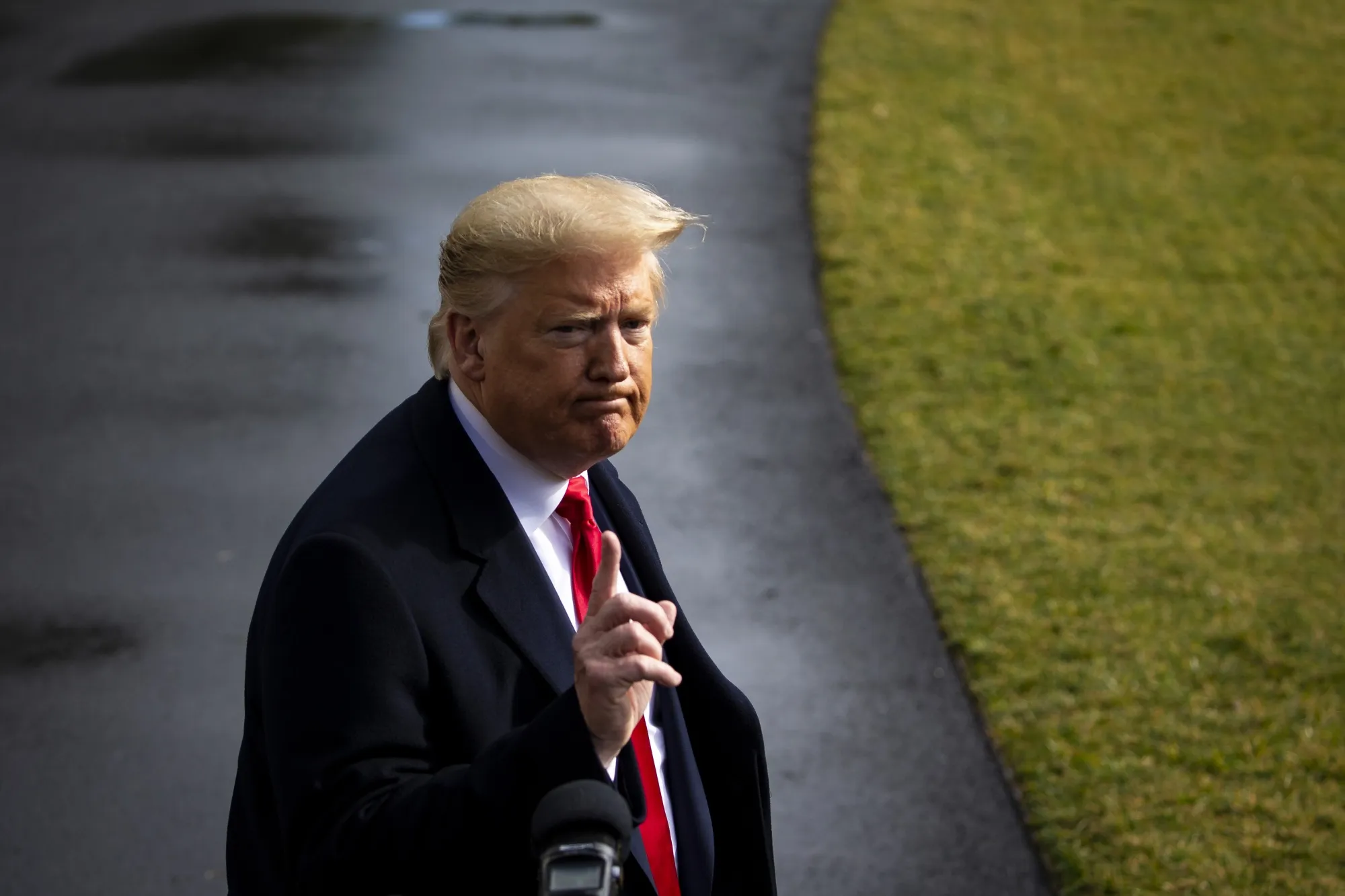
On April 7, at around midday Baku time, a statement by Donald Trump shook the entire world. He said that Iran’s existence would be brought to an end.
“A whole civilization will die tonight, never to be brought back again. I don’t want that to happen, but it probably will. However, now that we have Complete and Total Regime Change, where different, smarter, and less radicalized minds prevail, maybe something revolutionarily wonderful can happen, WHO KNOWS?” Trump said.
Trump also emphasized in his statement: “We will find out tonight, one of the most important moments in the long and complex history of the World. 47 years of extortion, corruption, and death, will finally end. God Bless the Great People of Iran!"
Following these remarks, speculation even emerged that the United States could use nuclear weapons against Iran. However, the White House soon denied these claims.
At nearly the same time as Trump’s statement, US and Israeli forces began striking Iran’s Kharg Island as well as strategic infrastructure in other provinces, including bridges and energy facilities.
Ceasefire decision

On the night of April 7–8, Baku time, shortly before the expiration of the given deadline, it was announced that a two-week ceasefire had been declared between the parties. The duration of the agreement was set at 14 days. The main condition is the cessation of military operations against Iran and the restoration of navigation in the Strait of Hormuz.
Donald Trump wrote: “A two-week ceasefire has been reached. This is a big step.”
Benjamin Netanyahu stated that “Israel supports the ceasefire, but security remains the priority.”
Abbas Araghchi emphasized that “if the attacks stop, Iran will also halt its operations, and safe passage through the Strait of Hormuz will be possible.”
Thus, the whole world, at least temporarily, breathed a sigh of relief as tensions eased.
Impact of the agreement on energy markets and oil prices
During the period of heightened tensions, oil prices had risen sharply within a few days. Following the announcement of the ceasefire agreement, oil prices began to decline by 10–20 percent. Donald Trump described this as “Energy markets are stabilizing, and this is a positive signal.”
Benjamin Netanyahu noted that “stability is key for energy security,” while Abbas Araghchi wrote that “the security of energy routes is a shared responsibility.”
The main issue is negotiations and reaching a final agreement
Although the ceasefire reached on April 8 has created short-term stability, long-term prospects remain uncertain.
Interestingly, both the United States and Iran consider themselves the winners of the 39-day war. However, this is not the main issue at the current stage. The key is to continue the process, conduct negotiations, and reach a final agreement.
The level of trust between the parties remains low, and the agreement is conditional in nature. This shows that the current ceasefire is more of a tactical pause, and the next 14 days will be a decisive stage in determining the future of the process.
Direct negotiations between the United States and Iran will begin on April 10 in Islamabad, the capital of Pakistan. The entire world is now waiting with anticipation to see whether a final agreement will be reached.



 Follow us on Telegram
 t.me/apanewsaz
 Follow us on Instagram
 Follow us on TikTok
 Follow us on Facebook
 Follow us on X