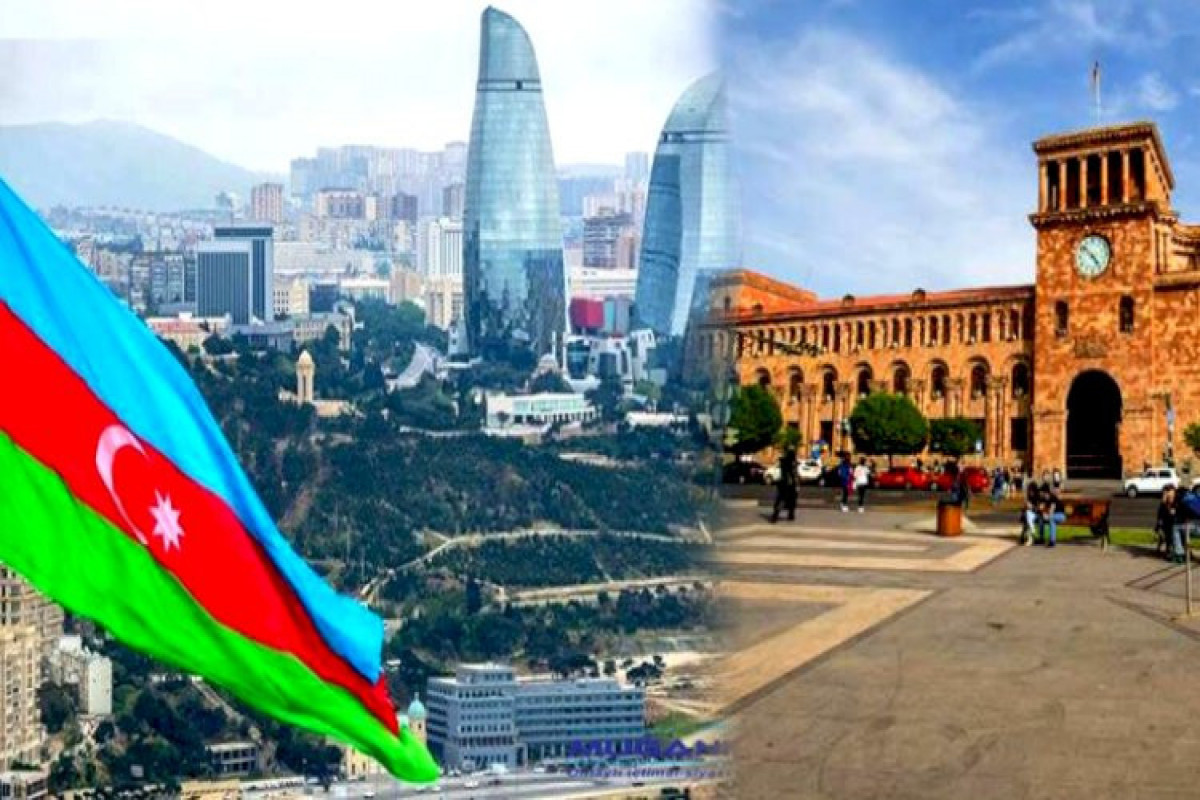


On October 21–22, a meeting was held in Yerevan with the participation of representatives of civil society from Armenia and Azerbaijan. During the meeting, the parties discussed the implementation of the peace agenda formed after the meeting held in Washington on August 8, the steps to be taken toward strengthening mutual trust between the two countries’ societies, as well as opportunities for developing sustainable economic cooperation in the South Caucasus. The sides also exchanged views on the prospects of establishing direct and long-term relations between representatives of civil society in Azerbaijan and Armenia.
At the round table, the Azerbaijani side was represented by Farhad Mammadov, Rusif Huseynov, Ramil Iskandarli, Kamala Mammadova, and Dilara Afandiyeva, while the Armenian side was represented by Areg Kochinyan, Boris Navasardyan, Naira Sultanyan, Narek Minasyan, and Samvel Meliksetyan.
First flight to Yerevan – a symbol of the peace era
Sharing his impressions of the visit with APA, political scientist Farhad Mammadov stated that, for the first time in about thirty years, the landing of an Azerbaijan Airlines aircraft in Yerevan is not merely a technical or diplomatic step, but a symbol of the new reality taking shape in the region.

“One of the most remarkable moments of this visit was that, for the first time in about thirty years, an aircraft belonging to Azerbaijan Airlines landed in the Armenian capital. This event gave the visit a special symbolic meaning and at the same time showed that a new stage has begun in bilateral relations. I believe that the flight carried out within the framework of this visit is one of the events of historical significance. After the Washington meeting, both sides declared that the era of peace had begun. The President of Azerbaijan has also repeatedly emphasized this in his speeches. We are already observing that steps have been taken in the statements and decisions of the governments in accordance with the period of peace. The parties have begun to abandon some of the decisions that were previously adopted against each other. For example, according to the statement made by President Ilham Aliyev in Kazakhstan, the ban on the transit of goods to Armenia through Azerbaijani territory has been lifted. This decision was positively received in Armenia,” he said.
Dialogue without mediators – a new stage of peace in the region
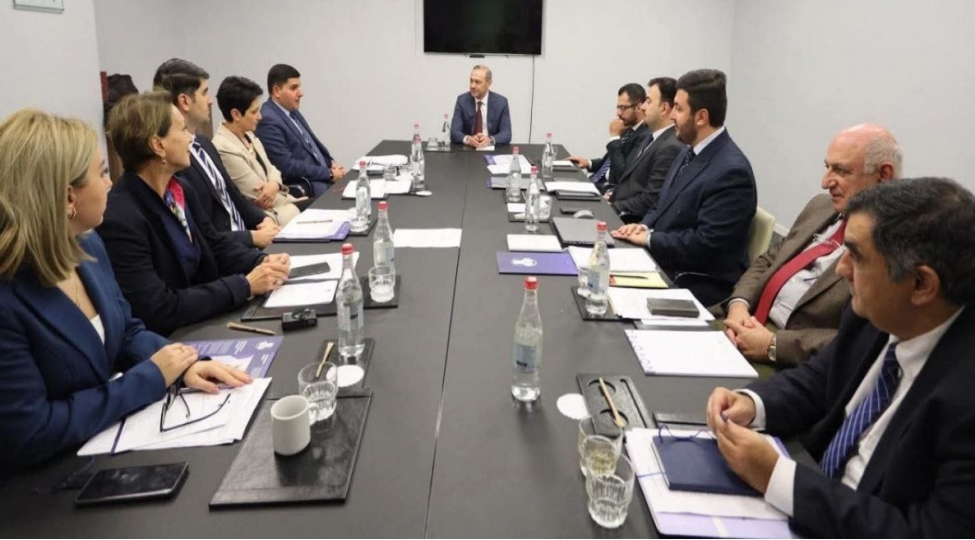
At present, various dialogue platforms operate between Azerbaijan and Armenia at the level of state and government structures. As an important component of this process, the direct participation of civil societies is also in the spotlight. The coming together of public representatives without mediators is considered a concrete step toward strengthening mutual trust and symbolizes a transition to a sustainable and mutually understanding stage of peacebuilding in the region.
In general, conducting direct contacts between the two countries is of great importance. There is a bitter experience that mediators have not contributed anything to the settlement process for many years. Various circles have long held the initiative in this field and dictated their own will.
Therefore, it should be welcomed that all mediators, including Western institutions, are being kept out of this process. Azerbaijan and Armenia are now implementing the confidence-building process without any external interference.
In this context, the meetings between the Speaker of the Azerbaijani Parliament, Sahiba Gafarova, and the Speaker of the Armenian Parliament, Alen Simonyan, are of particular importance in terms of advancing the peace agenda.

These contacts indicate that the dialogue between the two countries is now being conducted not only through governments and diplomatic channels but also at the parliamentary level. The meetings mainly discussed the rapprochement of societies, strengthening mutual trust, and the formation of a culture of coexistence. The activation of parliamentary diplomacy supports the peace process at both political and public levels and serves the restoration of mutual trust.
These meetings also create a real platform for turning the relations into a sustainable institutional mechanism and for expanding humanitarian and social cooperation, thereby promoting the stability of the peace process.
Civil societies also bear a great responsibility in building trust between the parties. It should be taken into account that this is only the beginning, and a long process awaits both nations.
The two sides have been in conflict for many years, and an entire generation has lived in a state of war. In this regard, preparing societies for peace and strengthening the atmosphere of trust through the establishment of communication among citizens is a long and difficult process.
Farhad Mammadov considers these contacts significant in terms of confidence-building.

“Currently, a number of dialogue platforms operate between Azerbaijan and Armenia at the level of heads of state, foreign ministers, administrations, special services, and deputy prime ministers. In this context, the inclusion of civil society representatives in the process has also been considered. We, for our part, declared our readiness to contribute in this direction and put forward a relevant initiative. As a result, the governments supported this initiative and created conditions for its implementation. Of course, intersocietal work is the most difficult and long-term stage of peacebuilding, but it was important to start it. The participants of the meeting—representatives from both the Azerbaijani and Armenian sides—already knew each other. This acquaintance had been formed at events held by international organizations and in projects of foreign NGOs related to peacebuilding. However, the distinctive feature of this meeting was that both the organization and participation were entirely carried out by representatives of the civil societies of Azerbaijan and Armenia. In other words, this meeting took place without mediators, in a purely bilateral format. If governments consider building relations through direct dialogue without mediators a priority, then civil society also continues its activity in this direction precisely in this format,” the political scientist added.
Revanchist rhetoric in Armenia, resistance to the peace agenda
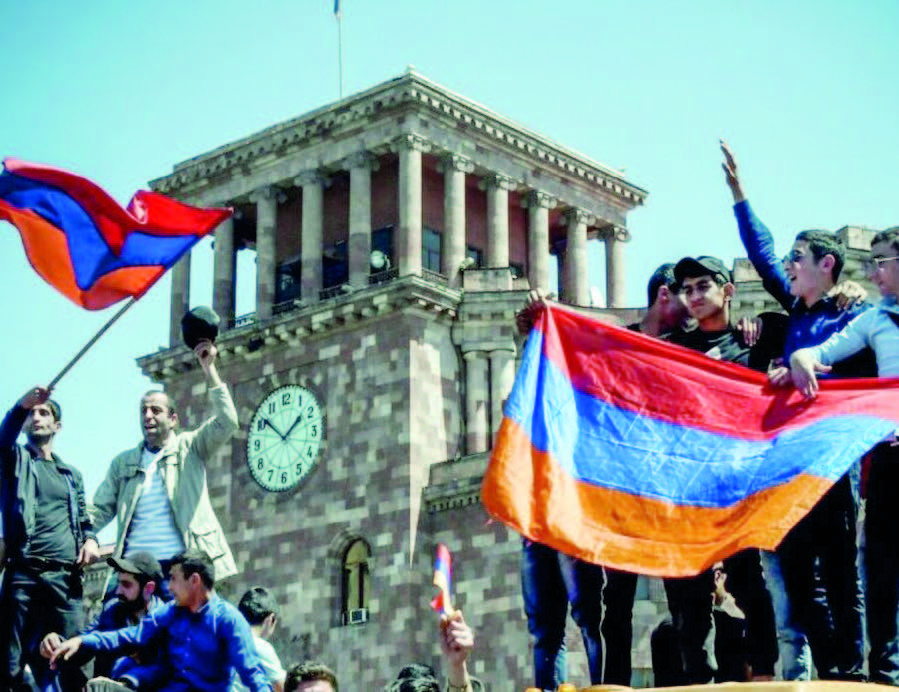
The renewed activation of revanchist tendencies in Armenia poses a serious threat to the country’s internal stability and the regional peace process. Behind these tendencies stand the “Karabakh clan” led by the Kocharyan-Sargsyan duo, Armenian-origin oligarchs in Russia, the diaspora, and the church. They are trying to revive the old rhetoric of hatred and return Armenia to a state of isolation. However, today, the main goal of Armenian society should not be war but the achievement of social welfare and economic development.
The political scientist noted that there are still political and social forces in Armenia acting with revanchist thinking, opposing the peace agenda and the normalization process with Azerbaijan. According to him, these groups are still trying to preserve the old conflict rhetoric in society and hinder the establishment of stability in the region: “However, they are currently in a marginal position. The parliamentary elections to be held in June next year will show how different political forces view relations with Azerbaijan and which direction Armenian society will support. This will also confirm that the implementation of the peace agenda is beneficial for both Armenia and the region. The decisions to be made during this period will also show that the realization of the peace agenda is advantageous for both Armenia and the region. The pace of processes is currently very high. Meetings between heads of government, speakers, and civil society representatives are being held intensively. Work on the peace agenda is actively progressing. This demonstrates that both governments, after the Washington meeting, are determined to support the peace process and are ready to devote both political will and resources to this goal.”


 Follow us on Telegram
 t.me/apanewsaz
 Follow us on Instagram
 Follow us on TikTok
 Follow us on Facebook
 Follow us on X