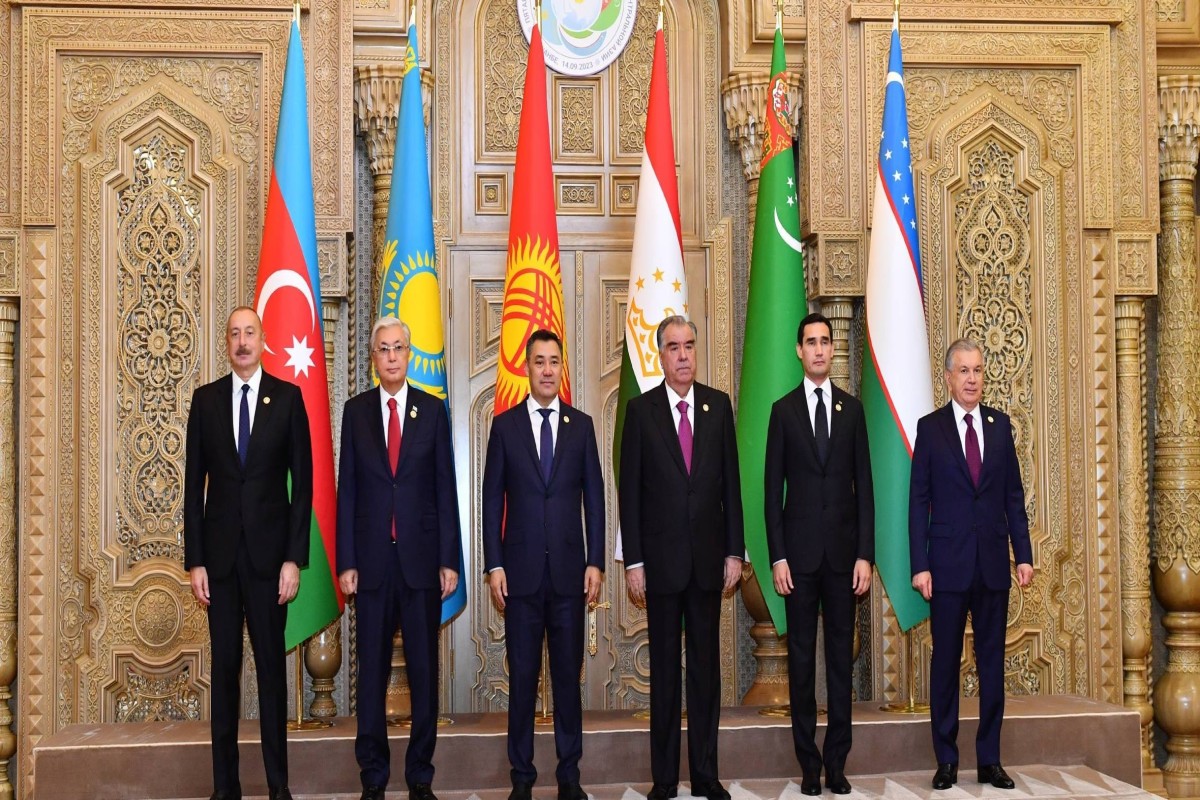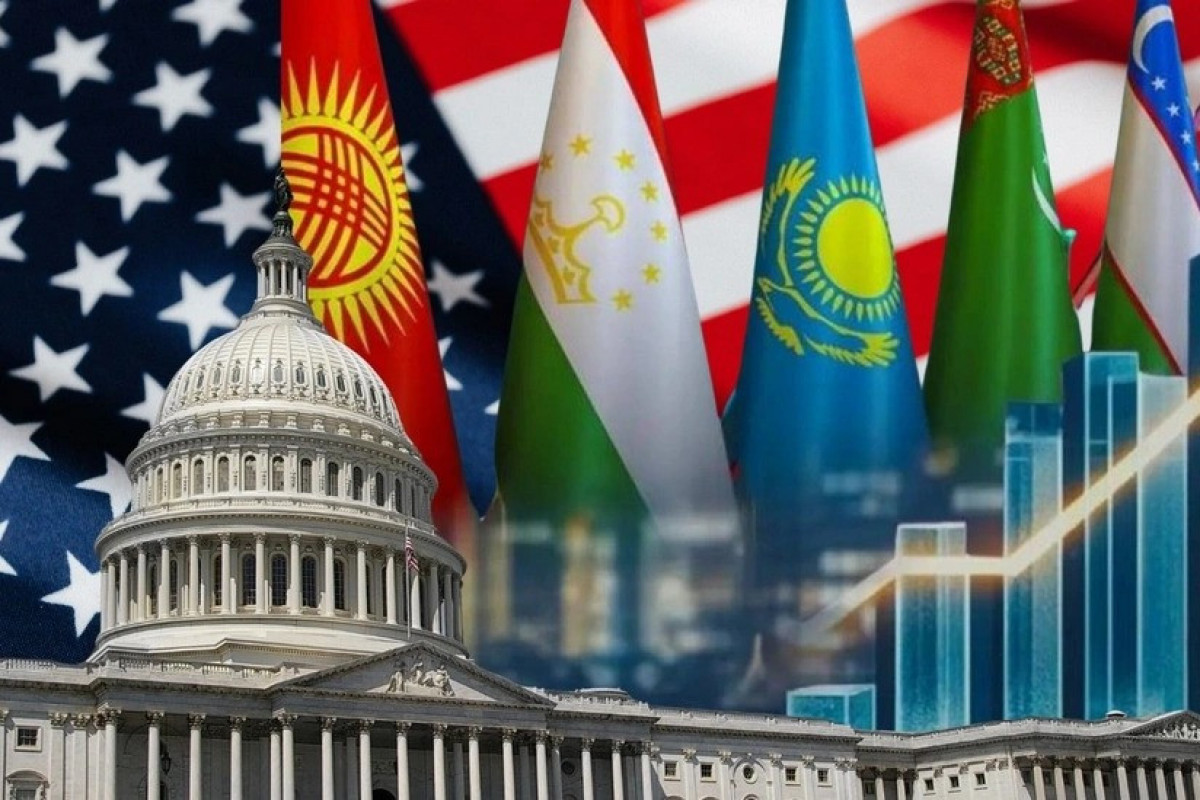


Trump's meeting with Central Asian leaders shows that Washington's attention to the region has increased again and a new stage in the geopolitical balance is being formed. During the meeting, Donald Trump's views on Azerbaijan and TRIPP attracted particular attention. He emphasized the importance of Azerbaijan as a central hub for both energy security and transport and communication networks, noting that the Central Corridor creates an alternative and safer direction for global trade. Trump's special emphasis on the growing role of Azerbaijan-Central Asia relations within the framework of TRIPP confirms Washington's strategic interest in this route.
A new strategic stage in US-Central Asia cooperation

One of the important outcomes of the meeting was the expansion of economic and trade relations between the United States and the countries of Central Asia. Cooperation was agreed on critical mineral resources - lithium, copper, uranium and rare earth elements. Since these resources are vital for the United States in terms of industry and defense, partnerships with Kazakhstan and Uzbekistan were further deepened. In addition, new mechanisms were formed with the countries of the region on digital economy, green energy and investment projects.
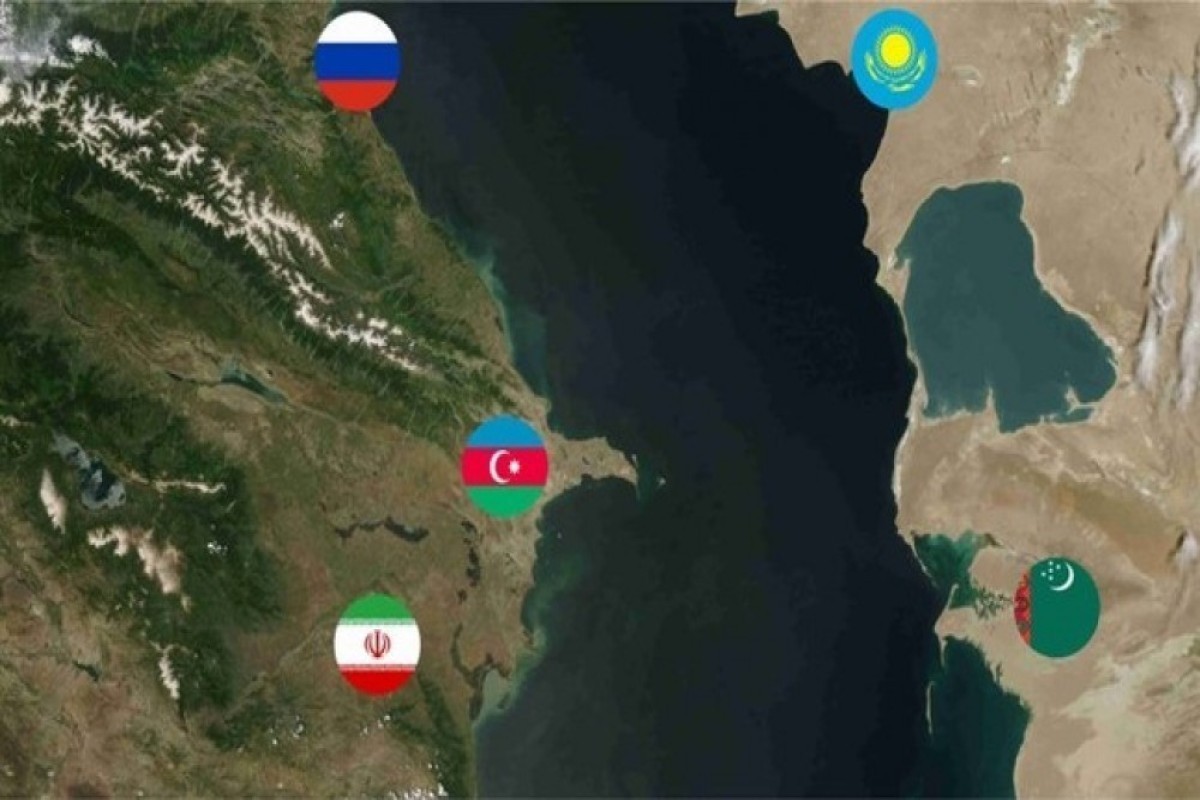
Against the background of these processes, the transportation of the main cargoes of Central Asia through Azerbaijan is now of particular importance. The Middle Corridor and the perspective Zangezur corridor change the logistics map of the region, shortening the distance between Europe and Asia. Azerbaijan's ports, railway infrastructure and simplification of customs procedures create the most optimal route for the Central Asian states. Thus, Azerbaijan-Central Asian transport cooperation is becoming one of the main pillars of the new economic and geopolitical model supported by the United States.
Trump’s meeting further strengthened Azerbaijan’s strategic role
Adviser to the Academy of Public Administration under the President and Chairman of the Baku Political Scientists Club, Zaur Mammadov emphasized in a statement to APA that Trump’s meeting demonstrates the United States’ growing interest in Central Asia and shows that the Middle Corridor–Zangazur Corridor route through Azerbaijan has become a new strategic line.
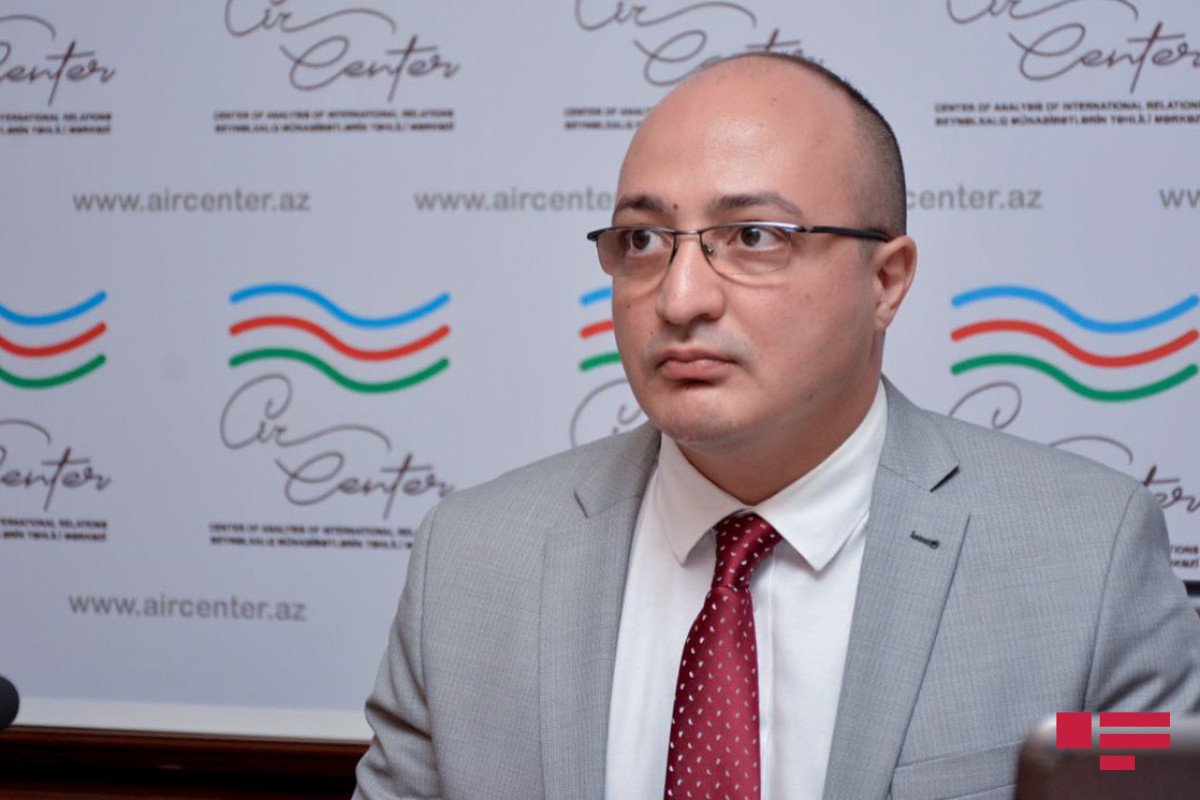
According to him, Trump’s meeting with Central Asian leaders indicates Washington’s renewed attention to the region and the formation of a new stage in the geopolitical balance: “During the meeting, Donald Trump’s remarks about Azerbaijan and the TRIPP were particularly noteworthy. He highlighted Azerbaijan’s increasing strategic importance both in energy security and as a central hub for transport and communication networks, noting that the Middle Corridor provides an alternative and safer route for global trade. Trump’s emphasis on the growing role of Azerbaijan–Central Asia relations within the TRIPP framework confirms Washington’s deepening strategic interest in this route.”
The political analyst noted that one of the key outcomes of the meeting was a significant expansion of economic and trade relations between the United States and Central Asian countries: “An agreement was reached on cooperation in critical mineral resources — lithium, copper, uranium, and rare earth elements. Ensuring access to this raw material base, which is vital for the U.S. industrial and defense sectors, led to deeper partnerships with Kazakhstan and Uzbekistan. In addition, new cooperation mechanisms were established with regional countries in the areas of digital economy, green energy, and investment projects. Against this backdrop, the growing volume of Central Asian cargo transiting through Azerbaijan has particular significance. The Middle Corridor and the prospective Zangezur Corridor are reshaping the region’s logistics map, shortening the distance between Europe and Asia. Azerbaijan’s port capacities, railway infrastructure, and simplified customs procedures create the most optimal route for the Central Asian states. As a result, Azerbaijan–Central Asia transport cooperation is becoming one of the key pillars of the new economic and geopolitical model supported by the United States.”
Economist Eldaniz Amirov, in his statement to APA, noted that the United States and China, which are simultaneously becoming more active in Central Asia, are deepening their competition for the region through different economic and political strategies, turning rising states such as Uzbekistan and Kazakhstan into a new center of global geopolitics.

“In various speeches over the past five years, I have noted the emergence of new ‘tigers’ in Central Asia — that is, rapidly developing states — and I still hold that view today. This dynamic is based on two key factors: the consistent economic course chosen by Uzbekistan and Kazakhstan, and China’s soft power strategy in the region. At the same time, the United States’ growing attention to the region and recent high-level meetings show that Central Asia has become a priority area for global powers. However, the approaches of these two major powers differ. The U.S. focuses more on security, strengthening political institutions, and governance reforms, while China advances through discreet but steady economic influence mechanisms. The China–Uzbekistan partnership is the clearest example of this: trade turnover has exceeded $14 billion, reaching $12 billion in just nine months. The number of Chinese companies in Uzbekistan has surpassed 4,400, confirming the scale of Beijing’s economic expansion,” he said.
According to him, the U.S. approach represents a completely different model: “If Chinese capital flows into Uzbekistan, the U.S., conversely, attracts Uzbek capital into its own industry. As the U.S. President announced, Uzbekistan plans to invest $35 billion into the American economy over the next three years, and more than $100 billion within ten years. This clearly illustrates the strategic nature of Washington–Tashkent relations. Thus, although both powers operate in the same region in parallel, their influence vectors and goals differ. In some ways, this picture resembles the U.S.–Soviet rivalry of the 1980s: China is expanding quietly, while the U.S. is defending its positions through tougher and faster moves. The long-term outcome of these strategies, however, remains an open question.”
The economic and geopolitical motives behind Trump’s Central Asia initiative
Kazakh political scientist Almat Toyekin, in his statement to APA, said that the main goal of Trump’s gathering of Central Asian leaders is to expand economic cooperation between the U.S. and the region’s countries, increase mutual investments, and turn the strategic position of Central Asia into a more constructive partnership.

“The main reason why U.S. President Donald Trump brought together the leaders of Central Asia lies at the intersection of economic, political, and geopolitical factors. During the meetings held in New York in September within the framework of the UN, Kazakhstan and Uzbekistan signed billion-dollar agreements with the United States, which increased Trump’s interest in the region. Kazakhstan agreed to purchase over 300 U.S.-made locomotives worth $4.2 billion, while Uzbekistan committed to buying Boeing aircraft worth more than $8 billion. This effectively means a large-scale investment into the U.S. economy, and Trump, being a businessman, prioritizes the benefits of this process. The regional context is also important — Central Asia is located in a strategic zone between China and Russia. Against the backdrop of the U.S.–China trade war, agreements in Kazakhstan’s major tungsten deposits and Uzbekistan’s rare metals sector appear to be part of the competition with China. The U.S. is trying to take a more active role in developing the region’s natural resources,” he said.
According to the expert, this will not cause the Central Asian countries to shift their strategic direction: “The geographic reality — long land borders with China and Russia — requires them to pursue a diversified and balanced policy. China and Russia remain their main partners in economy, trade, and transportation projects. On the other hand, the meeting also highlights the importance of the Middle Corridor — the route extending through Azerbaijan, Georgia, Türkiye, and into Europe. Due to Russia’s war with Ukraine, northern routes have become limited, making the Middle Corridor increasingly vital. The ports of Kazakhstan and Azerbaijan are among the key elements of this corridor. Trump’s initiative reflects both economic interests and this geopolitical competition.”
C5+1: A new stage in U.S.–Central Asia cooperation
Political analyst Adkhamjon Janobiddinov from Uzbekistan told APA that the C5+1 meeting in Washington shows that political, economic, and strategic cooperation between the United States and Central Asia is strengthening and entering a new phase.

“The gathering of Central Asian leaders in Washington within the framework of the C5+1 format demonstrates the United States’ growing attention to the region and the emergence of new opportunities for mutual cooperation. To understand the essence of this initiative, it is necessary to look back to 2015, when the platform was established during the 70th session of the UN General Assembly. C5+1 was initially formed as a model of cooperation that allowed the Central Asian countries to present a unified stance and maintain balance in their relations with Russia and China. The fact that the first summit was held in Samarkand also confirmed the regional importance of this format. The initiative to host the latest summit in Washington was proposed by the U.S. House Subcommittee on South and Central Asia. In a letter sent to President Trump by Sydney Kamlager-Dove and Bill Huizenga, the strategic significance of the meeting was emphasized in the context of the 10th anniversary of C5+1. Diplomat Sergio Gor, originally from Tashkent, played an active role in organizing the event,” Janobiddinov noted.
According to him, the summit created an opportunity for Central Asia to strengthen cooperation with the U.S. in political, economic, and security areas: “One of the main topics for the U.S. side was rare earth elements and critical minerals, since the region possesses rich reserves in this field, which is of strategic importance for reducing America’s dependence on China. During the event, President of Uzbekistan Shavkat Mirziyoyev put forward a number of significant initiatives: the establishment of a permanent C5+1 Secretariat, an Investment and Trade Council, a special committee on critical minerals, an agro-innovation partnership, and an exhibition of Central Asian cultural heritage in the U.S. — all aimed at contributing to regional integration. He also proposed holding the next summit in Samarkand. Following the visit, President Trump announced that Uzbekistan would invest $35 billion in trade with the U.S. over the next three years and more than $100 billion in total investments — demonstrating that cooperation between the two sides has entered a new stage.”



 Follow us on Telegram
 t.me/apanewsaz
 Follow us on Instagram
 Follow us on TikTok
 Follow us on Facebook
 Follow us on X