The meeting between Azerbaijani President Ilham Aliyev and Armenian Prime Minister Nikol Pashinyan held on July 10, 2025, in Abu Dhabi marks a new chapter in the political history of the South Caucasus. Unlike the negotiations that had dragged on for years with the involvement of international mediators and yielded no results, this meeting demonstrated the viability of a result-oriented format based on the direct will and responsibility of the parties. Initial outcomes of the meeting are already known. The discussion of strategic issues such as border delimitation, the opening of the Zangezur Corridor, and the initialing of a peace treaty shows that the entire spectrum—from technical details to political decisions—is now being resolved through a bilateral format.
The beginning of a sovereign peace model in the South Caucasus

Sultan Zahidov, Senior Advisor at the Center for Analysis of International Relations (AIR Center), stated in an interview with APA that the mediator-free meeting in Abu Dhabi, made possible by Azerbaijan's initiative and diplomatic will, demonstrates the emergence of a sovereign decision-making model in the South Caucasus free from the dictates of regional powers.
“Today, a meeting of historical significance took place in Abu Dhabi between the President of Azerbaijan Ilham Aliyev and the Prime Minister of Armenia, Nikol Pashinyan. What makes this meeting historic is that, for the first time, it was held completely without mediators, involving only the leaders and delegations of the two states. The proposal to hold the meeting in the United Arab Emirates came from Azerbaijan. The UAE’s neutral stance, acting as an impartial and disinterested party, was the reason Azerbaijan chose it as the venue. From this perspective, the Abu Dhabi meeting can also be considered a landmark event from both geopolitical and diplomatic angles,” he said.
According to the expert, the Abu Dhabi meeting is a step toward eliminating the main political and legal obstacles that have been hindering the peace process: “The meeting was extremely important in terms of advancing the peace and normalization agenda. As you know, in March, the parties had issued a statement on finalizing the peace treaty text, yet several obstacles remained. One such obstacle was Armenia’s failure to eliminate territorial claims from its Constitution, and another was the uncertainty regarding the dissolution of the OSCE Minsk Group. The acceptance of the direct negotiation format today indicates that Armenia is beginning to retreat from its previously destructive rhetoric and is taking steps to move beyond the influence of third parties. If this political will is expressed in a consistent and principled manner, it can lead to lasting peace not only between Azerbaijan and Armenia but throughout the entire South Caucasus region.”
The geopolitical message of the Abu Dhabi meeting

One of the primary current objectives in Azerbaijan–Armenia relations is to minimize the influence of third countries on the peace process. The mediator-free meeting in the Abu Dhabi format demonstrated that direct and open dialogue between the parties is possible. This format provides a more effective and sustainable basis for problem-solving. Whereas international mediators in previous years often prolonged the process, bilateral negotiations now have the potential to deliver tangible results. Therefore, attempts by third parties to interfere in the process must be prevented, and the dialogue should be conducted solely between Azerbaijan and Armenia. In particular, Armenia must adopt a principled stance in this matter and resist external influence in favor of establishing regional stability. Peace can only be achieved through bilateral political will.
Sultan Zahidov also emphasized that sustainable peace in the South Caucasus can only be ensured through bilateral political will and sovereign decisions, free from the interest games of foreign powers: “Geopolitically, the South Caucasus is a highly strategic region where the interests of regional and global powers have constantly clashed. Unfortunately, these powers have often used the region’s conflicts to serve their own interests rather than promoting peace. This is precisely why Azerbaijan prioritizes bilateral negotiations. Talks conducted within various trilateral platforms have failed to yield the expected results. The states involved in these processes were, in fact, pursuing their own geopolitical agendas, and the competing dialogue platforms proposed by rival powers reduced the effectiveness of the process. Therefore, Azerbaijan preferred that negotiations continue only in a bilateral format. Although Armenia initially resisted this approach, the Abu Dhabi meeting proves that the Pashinyan government has now begun to accept it. What matters most now is that this political will and support not remain merely verbal but be translated into practical action. If an agreement has been reached today to hold bilateral talks, it cannot be reversed tomorrow.”
Armenia's choice: Global pressure or the path to sovereign peace?
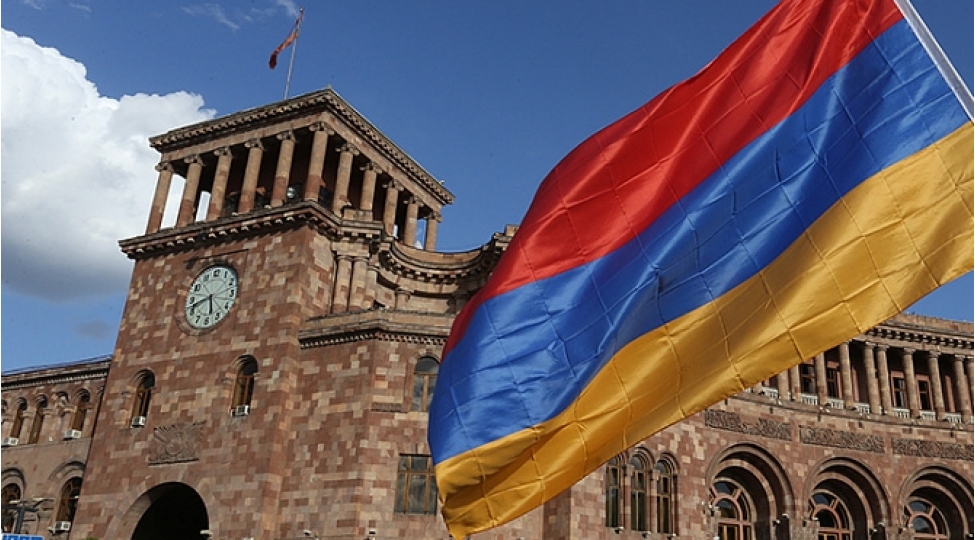
The expert emphasized that if Armenia adheres to the commitments it undertook during the Abu Dhabi meeting with political courage, it could lay the groundwork for sustainable peace and regional integration in the South Caucasus.
“The main topics discussed at the meeting included the initialing of the peace treaty, the opening of the Zangezur Corridor, the delimitation of borders, and other technical matters. Agreed decisions regarding both the continuation of dialogue and progress on communication and border issues show that this meeting yielded real results. If Armenia maintains a stable and consistent position, the signing of a peace treaty becomes possible. In that case, the opening of transport and communication lines, including the Zangezur Corridor, will take place, and the South Caucasus region will turn into a hub of peace, stability, and economic development. As renowned political analyst Svante Cornell has also noted, certain regional and global powers are not genuinely interested in peace in the Caucasus. Therefore, Armenia’s demonstration of political will in the face of pressure from these powers will be decisive. If the Pashinyan government honors its commitments made at the Abu Dhabi meeting, it could mark the beginning of a new, stable, and peaceful phase for the South Caucasus,” he stated.
Toward peace under Azerbaijan’s leadership

In this process, Azerbaijan’s initiative, political foresight, and strategic determination must be especially highlighted. The foreign policy course shaped under the resolute and purposeful leadership of President Ilham Aliyev has laid the foundation for a new geopolitical reality in the South Caucasus. Azerbaijan’s promotion of a direct bilateral negotiation format without mediators forms the basis of a fair and lasting peace model rooted in international law and the principle of regional cooperation. From this perspective, the Abu Dhabi meeting is not only a diplomatic initiative but also a manifestation of Azerbaijan’s determination to change the status quo in the region and establish a new order of stability. Official Baku’s active role in the process and its focus on key issues—border delimitation, the opening of the Zangezur Corridor, and the finalization of the peace treaty—once again confirms that Azerbaijan is the architect and driving force behind peace in the region. Azerbaijan proposed a peace agenda immediately after the 44-day war and assumed leadership of the process. That leadership continues today at the highest level.
Sultan Zahidov also believes that the Abu Dhabi meeting once again proved that Azerbaijan’s peace initiative can yield real results and that the only path to regional stability lies in the bilateral dialogue format put forward by Baku.
“The post-meeting statement also noted that the talks between President Ilham Aliyev and Prime Minister Pashinyan were held in a constructive and positive atmosphere. This can be clearly seen in the videos released from the meeting. I believe this meeting is of great importance in advancing the peace process and shows that both sides genuinely intend to move the peace forward. Pashinyan has finally demonstrated an interest in normalizing relations with Azerbaijan by breaking free from the chains of external influence and pressure. He is inclined to accept Azerbaijan’s peace initiative. Now, the primary responsibility that falls on Pashinyan is to implement this intent with political determination. We hope that this will happen and that stability, peace, and security will finally be ensured in the South Caucasus region. It must be emphasized that the peace process is a complex and long-term issue. We know of peace initiatives in various parts of the world that have lasted for decades without yielding results. For example, no peace treaty has been signed between Russia and Japan since World War II. In such cases, building mutual trust and creating a positive and constructive dialogue environment are essential conditions. At the same time, the realization of a bilateral format is critically important. This minimizes the opportunities for third parties to interfere in the process. The meeting held in Abu Dhabi demonstrated both the emergence of trust and the possibility of conducting mediator-free, direct negotiations. This means that foreign powers with geopolitical interests in the region are now deprived of the ability to steer this process,” he concluded.



 Follow us on Telegram
 t.me/apanewsaz
 Follow us on Instagram
 Follow us on TikTok
 Follow us on Facebook
 Follow us on X