

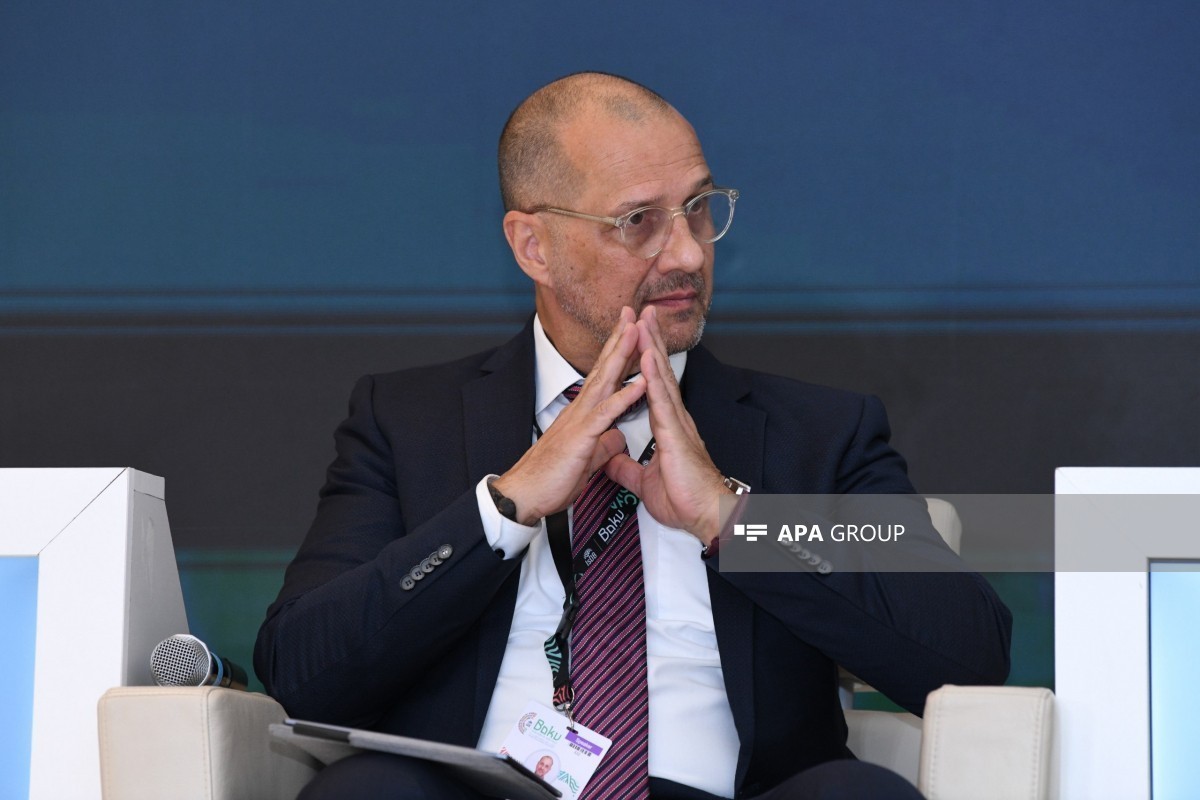


Regional cooperation, reliable energy transmission systems and strong institutions are essential for implementing the clean energy transition on a large scale, said Siegfried Leffler, Division Director at the German Agency for International Cooperation (GIZ), during the panel discussion titled “Regional Energy Connectivity for Sustainable Development” held within the framework of the annual meetings of the Islamic Development Bank Group (IsDB), APA reports.
He said that countries in Africa, Central Asia and the Middle East-North Africa region are expanding their solar, wind and hydropower capacities:
“This process makes flexibility in energy systems, balancing, reliable transmission networks and regional cooperation more important than ever before. No country can address these challenges on its own.”
Leffler noted that regional energy integration can generate significant economic benefits:
“Integrated electricity trade in West Africa could generate savings of approximately $5-8 billion annually.”
According to him, the key issue in energy connectivity is not only the construction of transmission lines:
“Our experience across different regions shows that infrastructure creates connectivity, while institutions shape integration. The main challenge is not building the line, but ensuring that it operates sustainably across borders, institutions and different regulatory systems.”
The GIZ representative stressed that rules, technical standards and cooperation mechanisms are essential for successful regional energy trade:
“Physical infrastructure makes energy trade possible, but strong institutions and mutual trust are needed to ensure that it is reliable and sustainable.”
Leffler stated that the most successful projects are not merely infrastructure projects, but long-term cooperation projects:
“Countries are no longer asking only ‘What will we build?’ They are increasingly seeking answers to questions such as ‘How can we make regional integration work?’ and ‘How can we turn political agreements into practical implementation?’”
He added that technical assistance plays an important role in the preparation, implementation and post-implementation phases of projects and helps attract private capital.



 Follow us on Telegram
 t.me/apanewsaz
 Follow us on Instagram
 Follow us on TikTok
 Follow us on Facebook
 Follow us on X