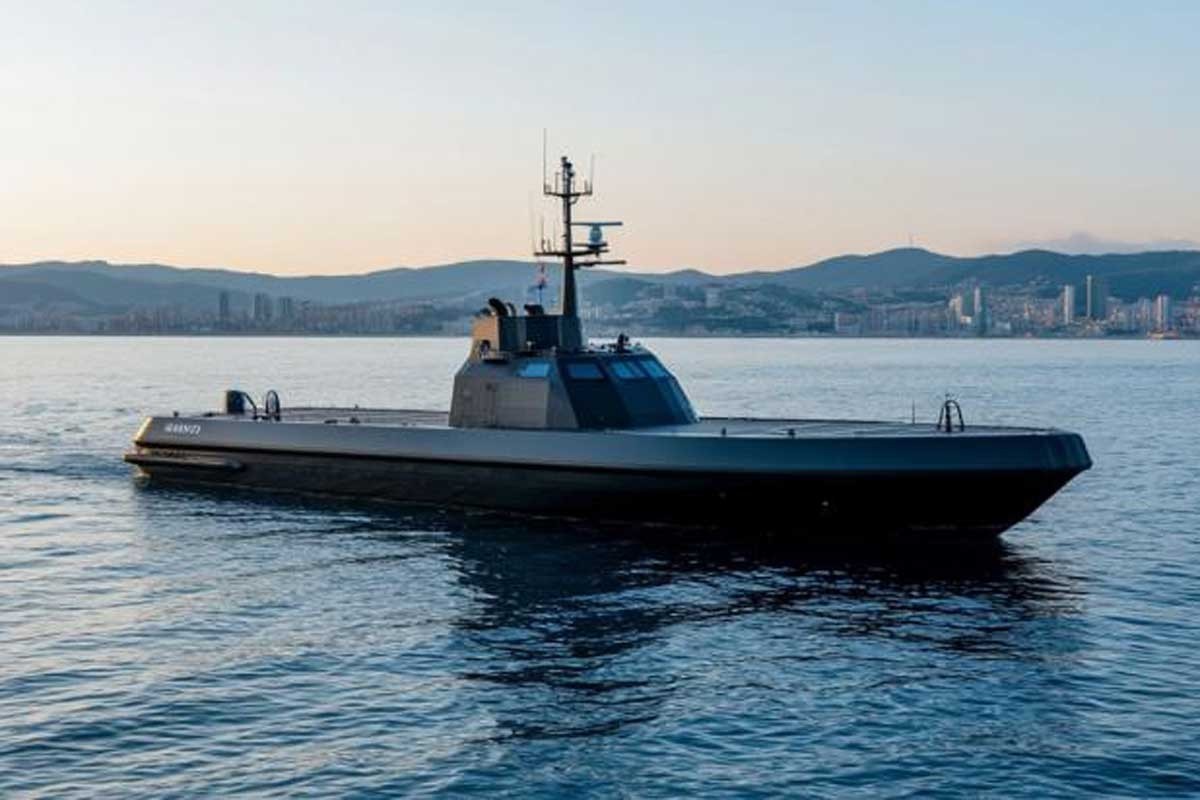


The principles governing the operation of autonomous ships and the procedure for regulating their activities are being determined, APA reports.
This is reflected in the proposed amendments to the Merchant Shipping Code discussed at today's meeting of the Milli Majlis Committee on Economic Policy, Entrepreneurship and Industry.
According to the draft, an autonomous ship is a civilian vessel capable of operating through an automated control system during any part of a voyage or throughout the entire voyage without direct or continuous human intervention. The operator of an autonomous ship is a person holding the relevant certificate who ensures the functioning of the ship's automated control system. A remote control center is a control point from which the functioning of the automated control system of an autonomous ship is ensured remotely.
The Code will apply to the operation and activities of autonomous ships with high automation (a level at which navigation control, detection of objects and events during navigation, including appropriate response and backup control, are carried out by the system while supervision of control is performed by the operator) and full automation (a level at which navigation control, detection of objects and events during navigation, including appropriate response and backup control, are carried out by the system without operator supervision).
The owner of an autonomous ship must ensure that the vessel is maintained in accordance with the technical and software requirements established by the manufacturer, engage a certified operator for autonomous navigation, and obtain operating rules and intervention procedures in the event of malfunctions and emergencies (including stopping navigation) from the manufacturer. The owner of the autonomous ship or an operator engaged under a civil contract must establish a remote control center, while the person establishing the center must ensure regular software updates, cybersecurity protection, and security audits.
Requirements for autonomous ships, remote control centers, and operators will be determined by the Law on Transport, other normative legal acts of the Republic of Azerbaijan, and international treaties to which the country is a party in the field of maritime transport. The provisions of this Code concerning ships, crews, registration of ships and rights thereto, state flag and port control, navigation in territorial waters, and transportation operations will also apply to autonomous ships.
An autonomous ship may operate only within an area designated by the body (institution) determined by the relevant executive authority. Individuals and legal entities, including branches and representative offices of foreign legal entities, must obtain a certificate in accordance with the Law on Transport in order to operate as an autonomous ship operator.
Among the operator's duties are ensuring the real-time transmission of data contained in the autonomous ship's automated control system, as well as information on any accidents involving the ship, to the information system of the body (institution) designated by the relevant executive authority and to the ship owner, as well as ensuring the storage and protection of data related to the use of the autonomous ship covering the last six months.
If the operator is an individual, the operator himself or herself, and if the operator is a legal entity, the employees supervising navigation through the autonomous ship's automated control system, as well as the automated control system and the remote control center, must meet the requirements established by the Law on Transport.
According to the proposed amendment to the Law on Transport, the automated control system of an autonomous ship must be equipped with an automatic collision avoidance system. The movement of autonomous ships within the territories of seaports and maritime operation bases will be carried out with the permission of the port captain.


 Follow us on Telegram
 t.me/apanewsaz
 Follow us on Instagram
 Follow us on TikTok
 Follow us on Facebook
 Follow us on X