












Baku – APA. Highly radioactive water has leaked from a reactor at Japan’s crippled nuclear complex, the plant’s operator said on Monday, while environmental group Greenpeace said it had detected high levels of radiation outside an exclusion zone, APA reports quoting “Reutersâ€.
Reflecting growing unease about efforts to control the six-reactor Fukushima Daiichi complex, plant operator Tokyo Electric Power Co (TEPCO) had appealed to French companies for help, the Kyodo news agency said.
The plant, 240 km (150 miles) north of Tokyo, was damaged in a March 11 earthquake and tsunami that left more than 28,000 people dead or missing across northeastern Japan.
Fires, explosions and radiation leaks have repeatedly forced engineers to suspend efforts to stabilize the plant, including on Sunday when radiation levels spiked to 100,000 times above normal in water inside reactor No. 2.
A partial meltdown of fuel rods inside the reactor vessel was responsible for the high levels, although Chief Cabinet Secretary Yukio Edano said the radiation had mainly been contained in the reactor building.
But TEPCO later said radiation above 1,000 millisieverts per hour had been found in water in underground concrete tunnels that extend beyond the reactor.
That is the same as the level discovered on Sunday. The U.S. Environmental Protection Agency says a single dose of 1,000 millisieverts is enough to cause hemorrhaging.
TEPCO officials said the tunnels did not flow into the sea but the possibility of radioactive water seeping into the ground could not be ruled out.
The nuclear crisis has compounded Japan’s agony after the magnitude 9.0 quake and huge tsunami devastated its northeast coast, turning whole towns into apocalyptic landscapes of mud and debris.
About a quarter of a million people are living in shelters and damage could top $300 billion, making it the world’s costliest natural disaster.
The suffering may not be over.
Greenpeace said its experts had confirmed radiation levels of up to 10 microsieverts per hour in the village of Iitate, 40 km (25 miles) northwest of the plant. It called for the extension of a 20-km (12-mile) evacuation zone.
"It is clearly not safe for people to remain in Iitate, especially children and pregnant women, when it could mean receiving the maximum allowed annual dose of radiation in only a few days," Greenpeace said in a statement.
More than 70,000 people have been evacuated from an area within 20 km (12 miles) of the plant and another 130,000 people within a zone extending a further 10 km are recommended to stay indoors. They have been encouraged to leave.
Beyond the evacuation zone, traces of radiation have turned up in tap water in Tokyo and as far away as Iceland.
Japanese officials and international experts have generally said the levels away from the plant were not dangerous for people, who anyway face higher radiation doses on a daily basis from natural substances, X-rays or flights.
But Greenpeace urged the government to acknowledge the danger and "stop choosing politics over science".
Nuclear safety agency deputy Hidehiko Nishiyama said the environmental group’s measurement was not reliable and hardly any people were still living in that area. A Greenpeace nuclear expert later defended the reliability of their findings.
CALL FOR HELP
At the weekend, the spike in radiation forced a suspension of work at the reactor, with experts warning that Japan faced a long fight to contain the world’s most dangerous atomic crisis in 25 years.
"This is far beyond what one nation can handle -- it needs to be bumped up to the U.N. Security Council," said Najmedin Meshkati, of the University of Southern California.
TEPCO, which has conceded it faces a protracted and uncertain operation to contain the crisis, sought outside help from French firms including Electricite de France SA and Areva SA, a French government minister said.
A spokesman for state-owned nuclear reactor maker Areva said the company was studying the request.
Murray Jennex, a nuclear power plant expert and associate professor at San Diego State University, said "there’s not really a plan B" other than to dry out the plant, get power restored and start cooling it down.
"What we’re now in is a long slog period with lots of small, unsexy steps that have to be taken to pull the whole thing together," he said by telephone. The good news, he said, was that the reactor cores appeared to be cooling down.
There was good news as well about the radiation levels in the sea just off the plant, which skyrocketed on Sunday to 1,850 times normal. Those had come down sharply, the nuclear safety agency said the next day.
Though experts said radiation in the Pacific would quickly dissipate, the levels at the site are clearly dangerous, and the 450 or so engineers there have won admiration and sympathy around the world for their bravery and sense of duty.
Last week, two workers at Fukushima were injured with radiation burns after water seeped over their shoes, and on Sunday, engineers had to abandon reactor No. 2 after the new reading.
The world’s worst nuclear disaster since Chernobyl in 1986 has prompted a reassessment of nuclear power across the world. It had its most direct political impact yet in foreign politics in Germany at the weekend.
Chancellor Angela Merkel’s Christian Democrats lost control of Germany’s most prosperous state, Baden-Wuerttemberg, as anti-nuclear sentiment benefited her opponents in a regional vote.
Residents of the northeast have been rattled by aftershocks from the strongest earthquake in Japanese history, including a magnitude 6.5 tremor on Monday that triggered a tsunami warning.
"I lived through World War Two, when there was nothing to eat and no clothes to wear. I’ll live through this," said Mitsuharu Watanobe, sitting cross-legged on a blanket in an evacuation center in Fukushima city.
"But the scary thing is the radiation. There is a gap between what the newspapers write and what the government is saying. I want the government to tell the truth more."
The latest death toll was 11,004 people, with 17,339 people missing 17 days after the disaster.
Highly radioactive water leaks from Japanese nuclear plant

 28 March 2011 19:04 (UTC +04:00)



 İDMAN XƏBƏR
 Follow us on Telegram
 t.me/apanewsaz
 Follow us on Instagram
 Follow us on TikTok
 Follow us on Facebook
 Follow us on X
Incident

Pakistani citizen detained while attempting to cross Azerbaijan-Russia border illegally - PHOTO
13:11
 20 October 2026
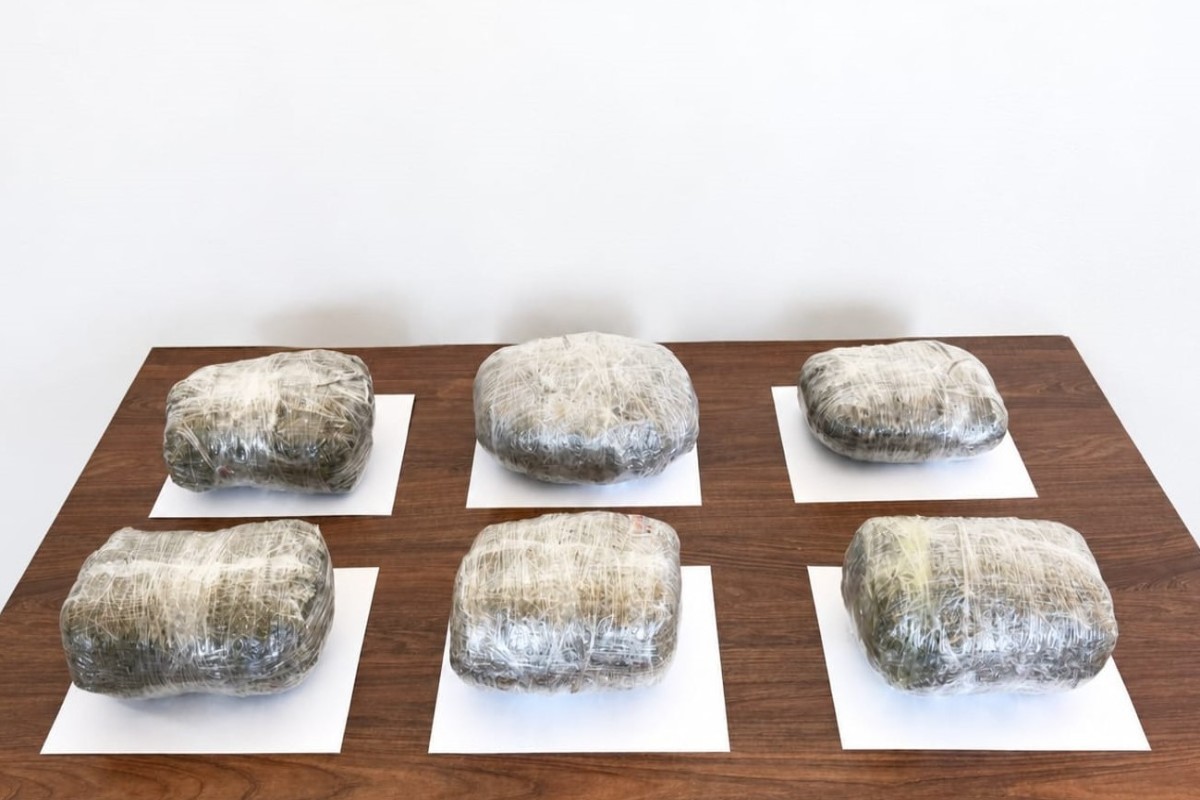
Drug smuggling from Iran into Azerbaijan prevented - PHOTO
11:23
20 October 2026

SWISS flight aircraft en route Zurich-Shanghai made emergency landing in Baku
20:45
19 October 2026
Seven people suspected of calling for violent seizure of power in Azerbaijan placed on international wanted list
18:28
19 October 2026

NEWS FEED
Qatar and Pakistan have offered to transfer interest on $6 billion to Iran
23:52
20 October 2026
Trump: Ukraine and Zelenskyy must strive to resolve the conflict
23:20
20 October 2026
IRGC Navy says supertanker exploded after hitting mine south of Hormuz
22:55
20 October 2026
UEFA Champions League: Germany’s Borussia Dortmund defeat Azerbaijan’s FC Sabah
22:39
20 October 2026
Witkoff’s plans to visit Russia on October 21 confirmed
22:36
20 October 2026
Iranian President: United States must lift pressure, threats and sanctions before any negotiations
22:32
20 October 2026
Ghalibaf rejects change in demands during talks with Pakistan army chief
22:03
20 October 2026
Russia ready to listen to US proposals, rules out political concessions — Lavrov
21:31
20 October 2026
Kallas claims that the US has been "pushing Ukraine toward capitulation" for 1.5 years
21:13
20 October 2026
Iran tells Munir it won't allow any enriched nuclear material to leave country
21:09
20 October 2026
Ambassador: Hungarian companies have invested USD 2 billion in Azerbaijan's economy
20:50
20 October 2026
Baku hosted event on the occasion of National Day of Hungary-PHOTO
20:42
20 October 2026
Day of Zangilan City celebrated in the city for first time -PHOTO-UPDATED
20:36
20 October 2026
Families of missing Azerbaijanis held protest in front of the European Parliament-PHOTO
20:28
20 October 2026
Turkish Presidency: Claims of attempt to lower Turkish flag in Azerbaijan are disinformation
19:53
20 October 2026
Kremlin considers Trump's actions a step toward Russia's victory over Ukraine
19:42
20 October 2026
Tanker violating regulations catches fire in southern corridor of Strait of Hormuz
19:07
20 October 2026
BP: Offshore construction work begins on Shah Deniz Compression project
18:51
20 October 2026
Azerbaijan urges citizens to avoid travel to France amid widespread unrest
18:31
20 October 2026
MAMA “Mother Nature” international art exhibition opens in Ashgabat - PHOTO
18:23
20 October 2026
Leyla Aliyeva visits Turkmen Carpet Museum in Ashgabat
18:21
20 October 2026
Katz: Hezbollah will be dealt a heavy blow if it joins Iran's attack on Israel
18:14
20 October 2026
Political consultations held between Azerbaijan and Croatia
18:14
20 October 2026
Azerbaijani parliament announces date and agenda of next session
18:06
20 October 2026
Zelenskyy: "Putin’s emergence from isolation has already begun"
17:45
20 October 2026
Zelenskyy says Ukraine may accept an alternative to NATO, but only under one condition
17:27
20 October 2026
TRIPP Fund director: US company acquires Armenia's second-largest copper mine
17:24
20 October 2026
Russia-Türkiye consultations held in Moscow
17:20
20 October 2026
UK to deploy Typhoon jets to help defend Saudi Arabia from Houthi attacks
17:10
20 October 2026
12 killed, 30 injured in bus-truck collision in Egypt
17:05
20 October 2026
Israel and Lebanon to hold ‘working level’ talks in Florida today, US official says
16:36
20 October 2026
Azerbaijani Parliament speaker addresses TURKPA meeting
16:29
20 October 2026
149 people sentenced to prison for participating in riots in France
16:25
20 October 2026
Moscow confirms dialogue with Washington on prisoner releases
16:23
20 October 2026
Moscow condemns US arrest warrant for Raul Castro
16:16
20 October 2026
Reuters: Witkoff travels to Norway for talks on Ukraine
16:13
20 October 2026
Memorandum of Understanding between Azerbaijan and UN approved
16:00
20 October 2026
Iran prolongs talks in stalemate to influence US midterms, officials say
15:57
20 October 2026
Ganja Memorial Complex established under Ministry of Culture
15:55
20 October 2026
Karabakh National Park established - ORDER
15:53
20 October 2026
Swedish ambassador meets with Hikmat Hajiyev
15:38
20 October 2026
Russia to increase penalties for calls for mass riots
15:34
20 October 2026
“Falcons Meet – 2026” exercise holds Distinguished Visitors’ Day - VIDEO
15:32
20 October 2026
Armenia could lose more than half of remittances from Russia
15:22
20 October 2026
Armenia's trade turnover with EAEU countries could fall by 55.6% if membership is suspended
15:13
20 October 2026
Azerbaijan adopts new state standards for railway and road transport
15:03
20 October 2026
Armenia's gas import costs could rise by 69% if it leaves EAEU
14:55
20 October 2026
Türkiye appoints Sergen Yalcin as national football team coach
14:50
20 October 2026
Azerbaijan reveals total oil output from East Azeri platform
14:26
20 October 2026
Kyrgyz President receives Azerbaijani Parliament speaker
14:12
20 October 2026


