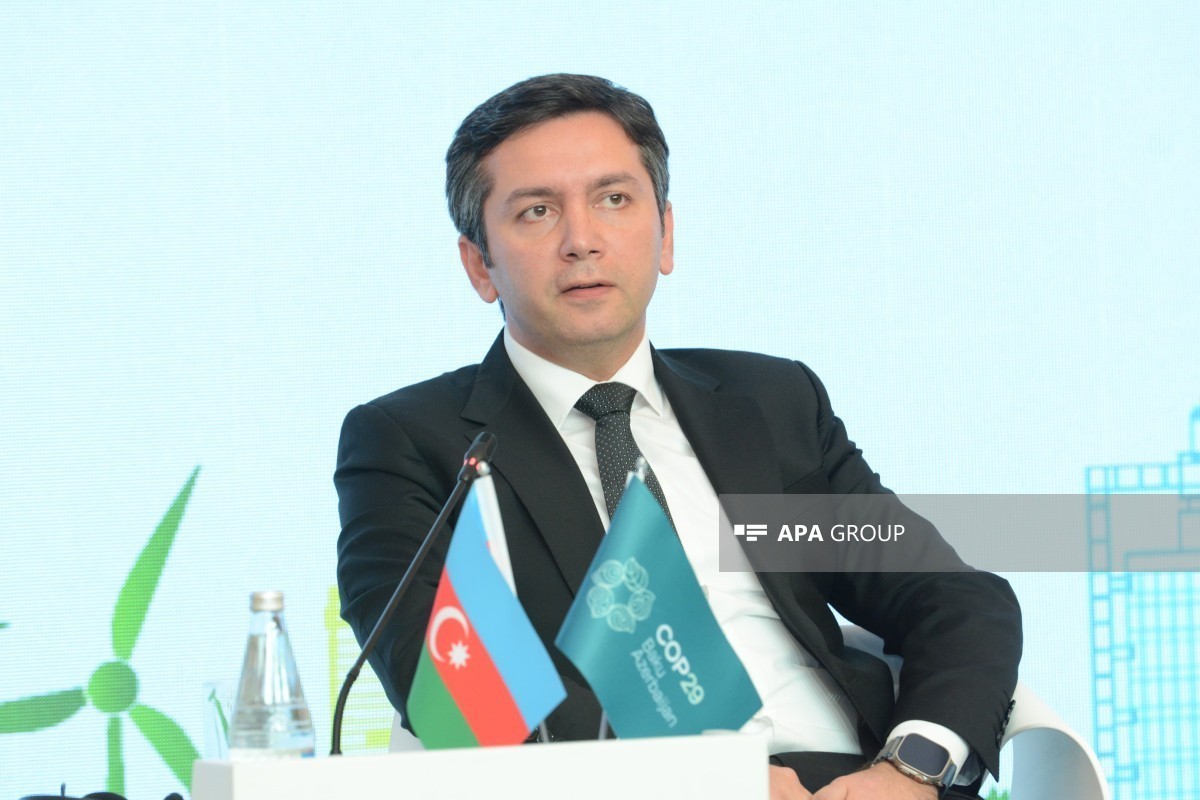


Climate-vulnerable developing countries are no longer facing challenges limited only to climate change. Many countries must simultaneously cope with development needs, institutional capacity gaps, humanitarian pressures and growing demand for sustainable public services, Deputy Foreign Minister Yalchin Rafiyev said during the session titled “High-Level Dialogue: Beyond Aid to Capacity Development,” organized within the framework of the Islamic Development Bank Annual Meetings in Baku, APA-Economics reports.
“Within the framework of COP29, together with our partners, Azerbaijan launched the Baku Call on Climate Action for Peace, Relief and Recovery. This initiative is aimed at ensuring that the most vulnerable countries are not left behind. One of the key outcomes of this initiative was the establishment of the Baku Climate and Peace Action Hub. The Hub is designed to support climate-vulnerable countries through practical partnerships, technical assistance, capacity-building and project preparation support.”
According to him, the main objective of the Hub is simple: to transform countries’ national priorities into investment-ready projects.
“We understand that access to finance depends not only on the availability of resources, but also on the institutional capacity and technical knowledge required to prepare high-quality projects. One of the latest examples of these efforts is Guinea-Bissau. We recently launched practical cooperation with the Government of Guinea-Bissau within the framework of the Baku Hub, and we expect this partnership to deliver tangible results in the near future.”


 Follow us on Telegram
 t.me/apanewsaz
 Follow us on Instagram
 Follow us on TikTok
 Follow us on Facebook
 Follow us on X