Interview of Ramil Hasan, the new Secretary-General of the Parliamentary Assembly of Turkic States to APA
“We strive to ensure that our countries’ national interests yield results in a common direction”
– You recently began your duties as the new Secretary-General. What are your main goals and new plans?
– As you know, the Parliamentary Assembly of Turkic States was established in 2008 at Dolmabahçe Palace in Istanbul, laying the foundation for a historic mission that brings together the parliaments of brotherly countries. It is well known that there are many unions and assemblies around the world that bring parliamentarians together, such as the Parliamentary Assembly of the Council of Europe, the European Parliament (an integral part of the European Union), and the OSCE Parliamentary Assembly, among others.
As the name suggests, the Parliamentary Assembly of Turkic States aims to elevate inter-parliamentary cooperation among member states to a new level, coordinate parliamentary diplomacy in foreign policy within the context of national interests, and, undoubtedly, work jointly with the intergovernmental organization, the Organization of Turkic States, to ensure that historic decisions made by the heads of Turkic states at summits are ratified by parliaments and turned into law.
Therefore, within the authority granted to us as an inter-parliamentary body among brotherly countries, our priorities include developing relations between our countries, harmonizing laws, adopting common legislation, and working in areas that serve our shared goals and interests, such as foreign policy, military-political cooperation, economic relations, and infrastructure projects. While such projects may be approved by governments, forming the legislative framework around them falls on parliaments. In this process, the Parliamentary Assembly of Turkic States plays a coordinating bridge role.
In essence, we are not reinventing the wheel; rather, we are striving to maximize existing opportunities to ensure our countries’ national interests yield results in a common direction. In this regard, my meetings have involved extensive discussions on the activities of the Parliamentary Assembly of Turkic States.
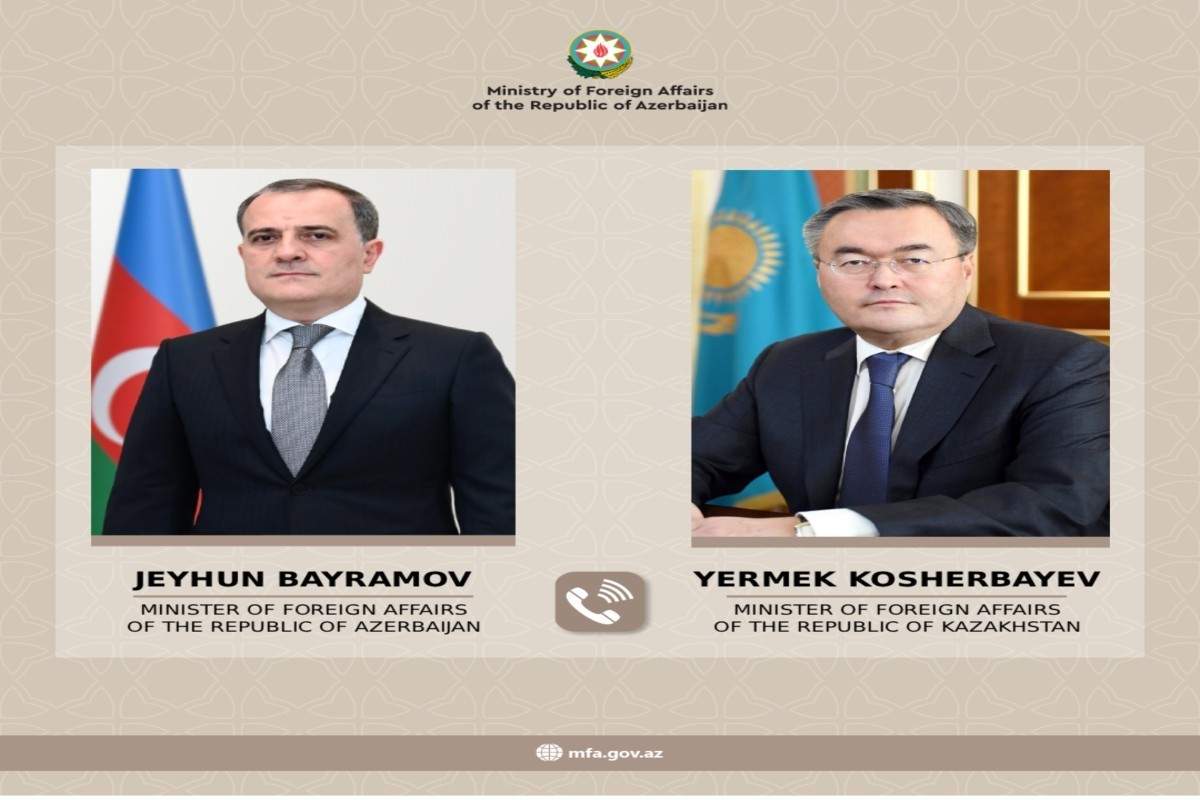
These include meetings with the Chairperson of the Milli Majlis (Azerbaijani Parliament), Ms. Sahiba Gafarova, our esteemed Minister of Foreign Affairs, Jeyhun Bayramov, both chambers of the Kazakh Parliament and the Kazakh Minister of Foreign Affairs, the Speaker and Foreign Minister of Türkiye, the Vice President, political party leaders, as well as the Speaker and Foreign Minister of Kyrgyzstan. In addition, meetings with international inter-parliamentary organizations were also important from this perspective.
Notably, as the Parliamentary Assembly of Turkic States, we have entered a new process. It is an important factor that we must work closely with the foreign ministers and ministries of the member countries. Parliamentary assemblies not only establish inter-parliamentary relations but also ensure bilateral coordination between the government and the parliament. In this context, foreign ministries act as state institutions maintaining intergovernmental coordination under the Nakhchivan Agreement of the Organization of Turkic States. Therefore, advancing our cooperation with foreign ministries to a new level is crucial, and this matter has been highly appreciated by our ministers and chairpersons.
I can share a few very important points regarding the meetings I have conducted. The issues we discussed were focused on concrete proposals, which fall within the functions of the Parliamentary Assembly of Turkic States.

"Here, the importance of TÜRKPA comes to the forefront"
One of the most important nuances is the coordinating role of TURKPA in the ratification, initialing and formation of the legal basis of many statements and governmental agreements adopted by the Organization of Turkic States within the framework of multilateral cooperation, and the submission of these draft laws to the parliaments of member countries through the relevant committees for voting. This needs to be implemented in our member states. As you know, even bilateral agreements cannot become law if they are not submitted to the parliament for ratification. Our goal is to accelerate this process through meetings. In Gabala, our heads of state signed a declaration that reflects many historical provisions. As a result, the matters outlined in this declaration will be sent to the parliaments by the governments in the form of draft laws. These will be discussed in parliament and ratified. According to internal procedure, since the Organization of Turkic States is an international and intergovernmental organization, the law cannot be applied in all countries without ratification in the parliaments of the three countries. This is where the importance of TÜRKPA comes to the forefront. Coordinating this process quickly with the parliaments and ensuring multilateral cooperation between governments and parliaments, rather than bilateral cooperation, is among the tasks TÜRKPA can perform.

"Why do we leave such a coordination gap when TÜRKPA exists?"
Let me point out a second important aspect. Our parliaments have delegations in international parliamentary organizations, such as the OSCE Parliamentary Assembly, the Parliamentary Assembly of the Organization of Islamic Cooperation, the Non-Aligned Movement Parliamentary Assembly, and the NATO Parliamentary Assembly. Sometimes, these delegations meet during assembly sessions. When issues serving the national interests of Azerbaijan, Türkiye, Kazakhstan, Kyrgyzstan, or Uzbekistan are discussed, the delegations of our brother countries are sometimes either absent from the hall or do not participate in the vote. This, in turn, leads to outcomes that harm the national interests of our countries. We have experienced and witnessed this.
This raises a question: why do we leave such a coordination gap when TÜRKPA exists? Therefore, we proposed that a coordinating body be formed through TÜRKPA, and that delegation heads maintain regular contact with the TÜRKPA Secretariat. For example, if an issue serving Kazakhstan’s national interests is brought up in the OSCE, it should be shared with us in advance so that we can inform the member countries. In this way, the heads of the delegations of member countries can instruct their teams to be present in the hall, participate in the vote, and provide support. Moreover, sharing this information in advance allows member countries with good relations to be involved in lobbying for the issue.

Therefore, we presented our proposal to the heads of parliaments and foreign ministers of the member countries, and they welcomed it. We are already laying the foundation for this process. A note on the matter has been sent to the member countries. It was decided that our first coordination meeting would be held within the framework of TÜRKPA during the OSCE Parliamentary Assembly’s autumn session in Istanbul, scheduled for November 16–19. This will be the first coordination meeting and will later extend to our national delegations in other parliamentary organizations. Moreover, this process will provide us with a new platform to build dialogue, conduct discussions, jointly resolve many issues, and defend common interests.
- What other proposals did you have?
- Yes, we had another proposal, which was also accepted. This proposal involves holding regular meetings—on a continuous, systematic basis rather than sporadically—of the joint committee heads of foreign affairs committees, defense and security committees, and other committees aligned with the national interests of our countries, within the framework of the active presidency of the Parliamentary Assembly of Turkic States. Uzbekistan, Hungary, and Northern Cyprus are also involved. This process facilitates future cooperation opportunities.
"Because even if Ramil Hasan or someone else leaves after a while, the system will continue to function."
President Ilham Aliyev emphasized at the Gabala Summit the future implementation of military cooperation within the framework of the Turkic States. This is a very important issue. There are many platforms for cooperation in the national defense industry, and we must link the meetings of these committees to the system rather than to individuals. Because even if Ramil Hasan or someone else leaves after a while, this system will continue to operate.

For this reason, we proposed incorporating this issue into the mechanism of the active presidency. Within our structure, there are also groups of women parliamentarians and young parliamentarians. This is very important from the perspective of international practice, as it allows our messages and positions to be communicated to the international community. At the same time, we proposed implementing a model among parliament speakers that has already been applied by the heads of Turkic states for several years, and everyone accepted and welcomed it.
As you know, TÜRKPA convenes the Assembly Council and the plenary session of parliament speakers once a year. We proposed that TÜRKPA hold informal summits of parliament speakers once a year. These informal summits will greatly contribute to the faster implementation of our activities. The Organization of Turkic States holds two summits annually—one informal and one formal. By leveraging this, we can avoid waiting an entire year to adopt important documents and ensure their quicker adoption. Using the joint platform of the speakers provides incredible opportunities to discuss many upcoming issues. Parliament speakers support this, and a decision has already been made.
In April 2026, the 152nd plenary session of the Inter-Parliamentary Union (IPU) will be held in Istanbul, hosted by the Speaker of the Turkish Parliament, Numan Kurtulmuş. The IPU unites over 190 countries and is referred to in diplomacy as the “United Nations of parliamentarians,” because it represents parliaments from over 190 countries and brings together all parliamentary assemblies. This is an incredible platform—there is no bigger platform than this. Therefore, based on our proposal and the approval of the speakers, the first informal meeting of parliament speakers within the framework of TÜRKPA will be held during this session in Istanbul in April. Preparations will begin, and this meeting is expected to be held at a high level.
The meeting of the chairs of foreign affairs committees is scheduled for February in Kazakhstan under the framework of TÜRKPA. Later, meetings of other committees will follow. In Kyrgyzstan, the next TÜRKPA plenary session will be held in 2026. By that time, we need to make progress on many issues to present concrete results to the speakers.

- Is the level of TÜRKPA’s relations with regional and international organizations satisfactory?
- You know, we should never remain static. A few years ago, it might have been satisfactory, but today it shouldn’t be. Why? Because we are racing against time, and international organizations and parliamentary diplomacy play a very important role today. Parliamentary diplomacy is a key tool for establishing peace in regions, promoting dialogue, resolving conflicts, and addressing other issues. For example, we have cooperation with the OSCE Parliamentary Assembly, and we are thinking about developing this relationship further.
We know that the European Parliament sometimes issues biased statements against the positions of Azerbaijan, Türkiye, and Kazakhstan. Therefore, we need to work very closely with the European Parliament so that, on issues against us, we can present the joint positions of our countries, ensure the formation of accurate information, and create a united front against countries and structures that lobby against us. Ultimately, parliamentary diplomacy allows us to do this. The Turkic States Parliamentary Assembly can and should play a very important role here. The decisions taken and the political will expressed confirm this.
In my personal view, we should not avoid organizations that issue statements against us; on the contrary, we must engage with them. We must demonstrate the firmness, correctness, and justice of our position through a joint stance. We support Azerbaijan, Kazakhstan, Kyrgyzstan, Türkiye, and Uzbekistan, and we must put forward the positions of these countries. This is our duty. I have always emphasized this. A good example is the previously tense relations between France and Türkiye, and France and Azerbaijan, a year ago. The firm determination, diplomatic approach, and achievements of the President of Azerbaijan have opened a new page in Azerbaijan-France relations. The same is evident in the relations between President Erdoğan and the French President. Here, Azerbaijan and Türkiye act in concert. We must implement this at the parliamentary level as well, so that parliamentarians from Azerbaijan, Türkiye, Kazakhstan, and Kyrgyzstan act together, helping to soften opposing positions and contribute to normalization. If leaders do this at the leadership level, we must do it at the level of parliamentary diplomacy.
In this regard, we work closely with the Inter-Parliamentary Union, where we are official observers. We have guest status at the OSCE Parliamentary Assembly, observer status at the Non-Aligned Movement Parliamentary Assembly, presence at the Asian Parliamentary Assembly, and participation in the Parliamentary Assembly of the Organization of Islamic Cooperation. We are also official observers in international structures like CICA, which bring together many countries from Asia and Europe. Many institutions can be listed—there are numerous European and Asian institutions. But of course, this is not sufficient. I also believe we must elevate our relations with the Parliamentary Assembly of the Gulf countries to a new level. The Arab countries—especially Qatar, Oman, Saudi Arabia, and the United Arab Emirates—have close relations with Azerbaijan, Türkiye, Kazakhstan, and Kyrgyzstan, and we need to strengthen our relations with them as well. We should also work closely with the ASEAN Parliamentary Assembly. This significantly expands the scope and mechanism of our activities. In this way, we maximize the use of the parliamentary institution for the joint protection of our countries’ national interests.

“We can implement cooperation formats such as ‘TÜRKPA Plus European Parliament’ and ‘TÜRKPA Plus OSCE PA'”
- Do you plan to expand TÜRKPA’s observer or partner network, for example, to build deeper cooperation with Hungary, Northern Cyprus, or other friendly countries?
- As indicated in the Gabala Declaration, this year the Organization of Turkic States adopted a new cooperation format. This is the model we call “Organization of Turkic States Plus.” We proposed adopting the same model as “Turkic States Parliamentary Assembly Plus” (TÜRKPA Plus). Türkiye’s Foreign Minister, Mr. Hakan Fidan, highly appreciated this and noted that we can implement cooperation formats such as “TÜRKPA Plus European Parliament” and “TÜRKPA Plus OSCE PA.” This significantly contributes to our activities and ensures more effective cooperation with international parliaments.
It also allows us to eliminate disinformation and quickly convey the necessary messages regarding the protection of our countries’ national interests through parliamentarians. We are already working on this mechanism. A coordination meeting within the framework of the OSCE PA will be held in November. The meeting of the chairs of foreign affairs committees is scheduled for February. We are also working on other projects, which will be implemented in the near future.
At the same time, as you know, the Organization of Turkic States is an international intergovernmental organization, and working group meetings are held there. The secretaries of the relevant commissions participate in these meetings and continue cooperation with international experts. This contributes to strengthening the connection between the government and the parliament.

"The official TÜRKPA website announced that four new positions have been opened in the International Secretariat of the Parliamentary Assembly of Turkic States"
- Compared to the Organization of Turkic States, TÜRKPA’s recognition is relatively limited. How do you plan to change this situation?
- TÜRKPA’s influence and reputation are indeed more limited compared to the Organization of Turkic States. However, these steps will expand TÜRKPA’s influence. The important point is not so much expanding influence as how effective we can be. We are not an NGO or an organization of a single country. TÜRKPA is a diplomatic corps and an inter-parliamentary union. The Organization of Turkic States, on the other hand, is an intergovernmental organization. One is inter-parliamentary, the other intergovernmental—they complement each other, not compete. This complementarity greatly contributes to safeguarding our countries’ national interests.
We support the steps taken by the Organization of Turkic States at the government level, and if we elevate these efforts as TÜRKPA, our influence will naturally reach a new level. Recognition, vision, and visibility will follow automatically, but they are not our primary goal. Visibility should result from our work, not from PR activities. The steps we have taken in the areas mentioned earlier will serve the benefit of Turkic states and the Turkic world, which is very important.
Another point to note: we have reached an agreement with the Secretariat of the Inter-Parliamentary Union (IPU) for TÜRKPA International Secretariat staff to undertake short-term practical training at the IPU Office in Geneva. We will send our staff in two groups for these trainings, which are very valuable, as they will enhance the experience and skills of our personnel through practical knowledge shared by the IPU Secretariat. We have also coordinated these trainings with the OSCE Parliamentary Assembly. There will be a separate bilateral meeting with the Secretary-General of the OSCE Parliamentary Assembly on November 16–17 in Istanbul to discuss future cooperation opportunities.
Additionally, I would like to mention via the media that the official TÜRKPA website has announced four new positions in the International Secretariat of the Turkic States Parliamentary Assembly. These positions are intended for individuals aspiring to become part of the diplomatic corps. Candidates will take examinations and, if deemed suitable, may be employed. Citizens of Azerbaijan, Türkiye, Kazakhstan, and Kyrgyzstan who have a strong sense of responsibility and meet the requirements can apply. Successful candidates will be selected through a two-stage exam. I also recommend spreading this information through the media.

- How should TÜRKPA balance neutrality and initiative in its activities—can the organization take a political stance, or should it remain purely advisory?
- TÜRKPA cannot remain purely in an advisory role because it is a decision-making body. It is a joint and political institution, not a cultural organization. At the same time, TÜRKPA also has a base in science and education. In other words, it is an international inter-parliamentary union, and its primary activities are not foreign policy, parliamentary diplomacy, inter-parliamentary cooperation, or improving legislative frameworks, but rather bringing them closer together.
The organization also supports joint action between governments and parliaments through the Organization of Turkic States. This includes assisting in the process of transforming government agreements and issued declarations into legal form and ensuring their ratification. As a result, the Parliamentary Assembly of Turkic States is a very important institution.
Photo - Ilkin Nabiyev ©️ APA GROUP


 Follow us on Telegram
 t.me/apanewsaz
 Follow us on Instagram
 Follow us on TikTok
 Follow us on Facebook
 Follow us on X