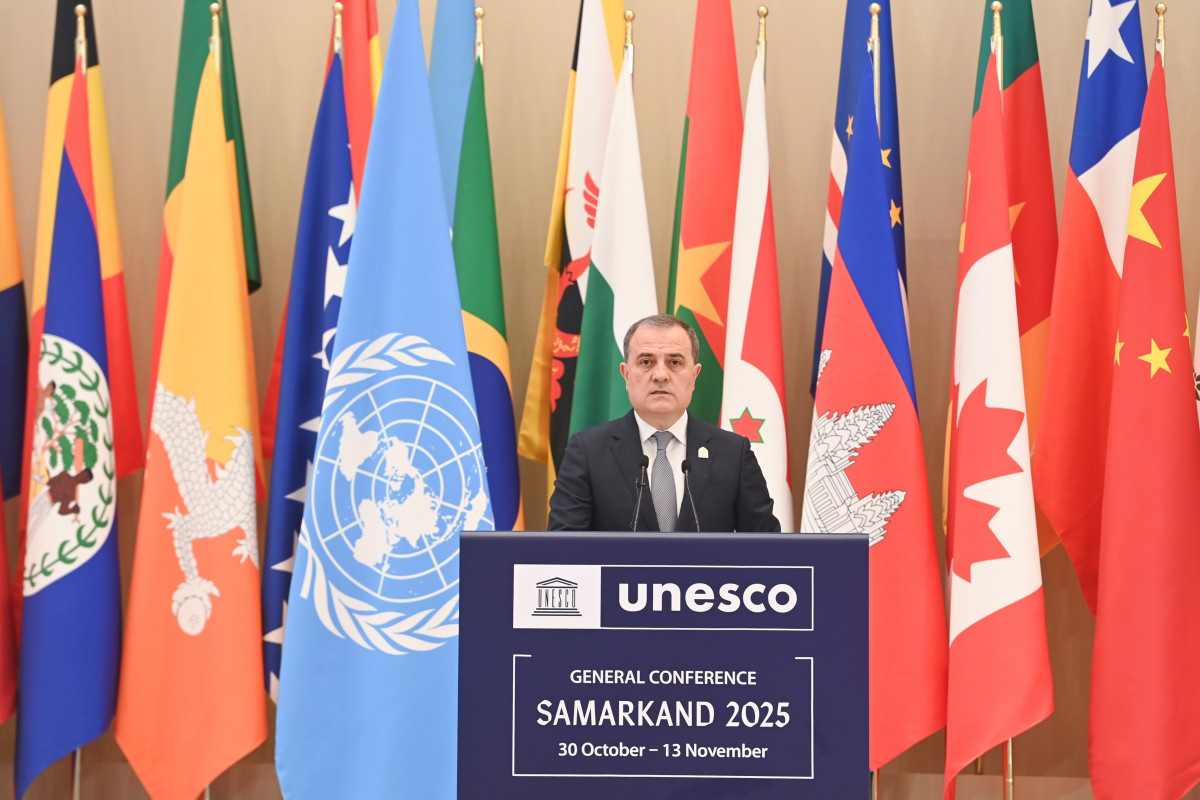

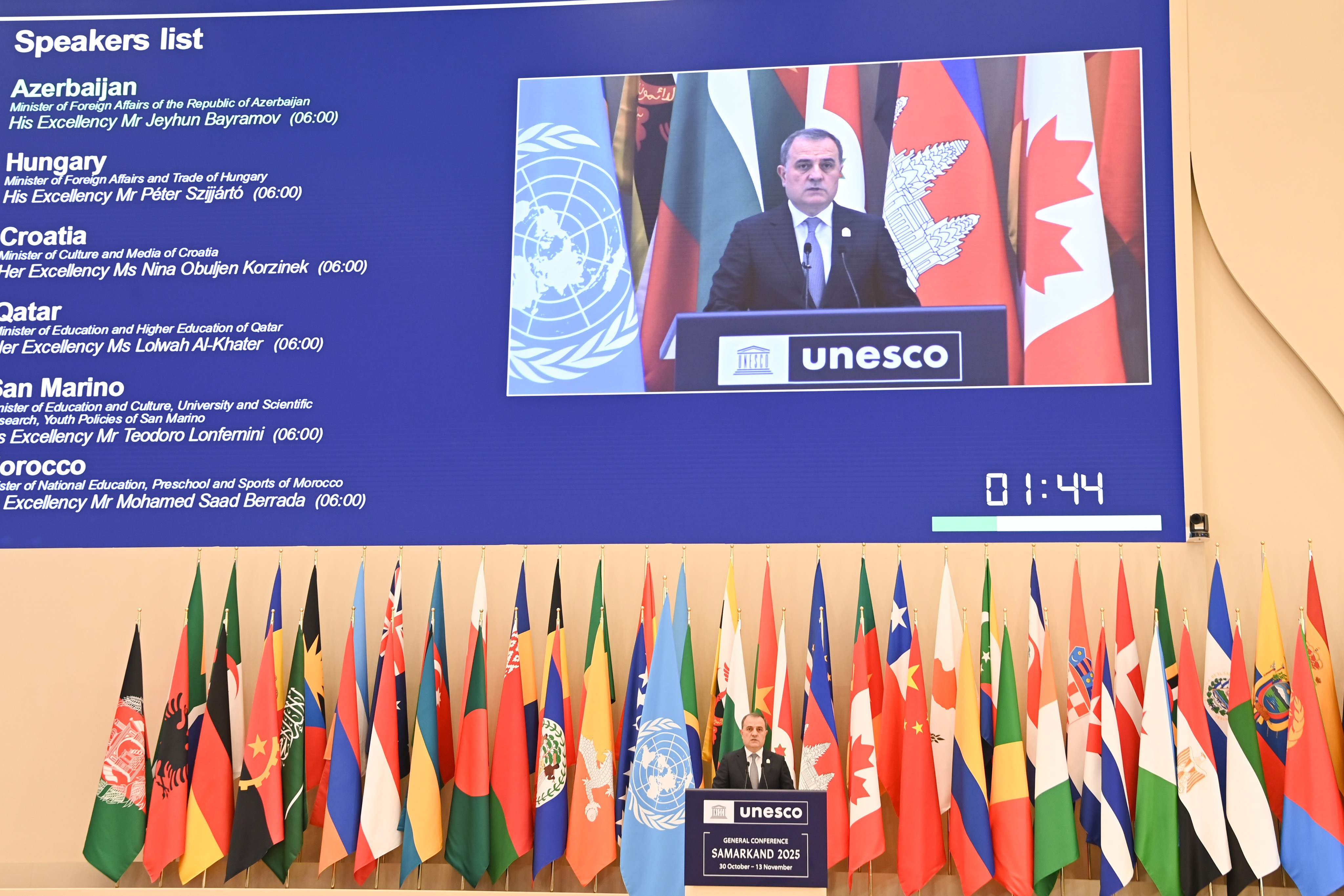
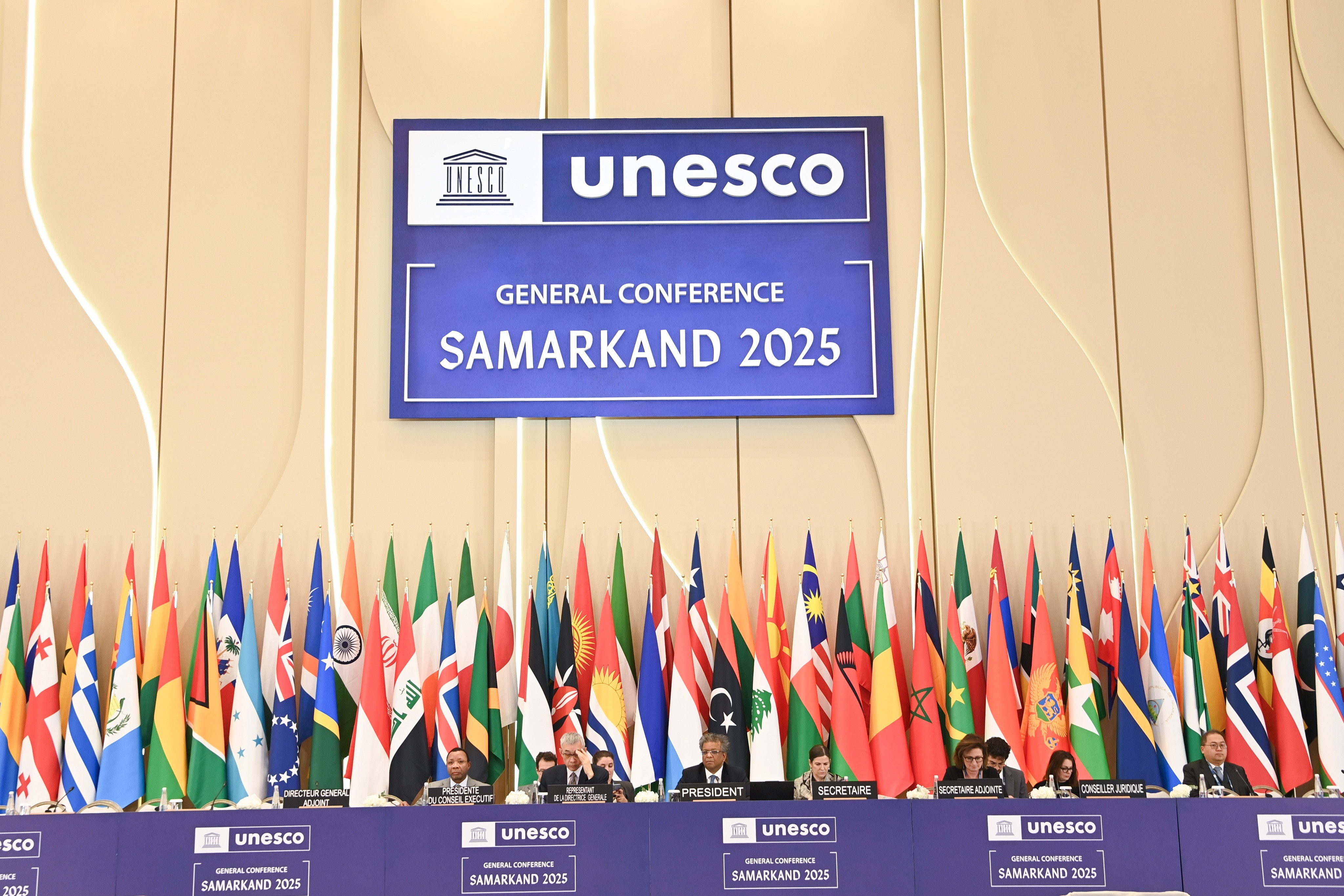
Azerbaijan’s Minister of Foreign Affairs, Jeyhun Bayramov, delivered a speech at the 43rd session of the General Conference of the United Nations Educational, Scientific and Cultural Organization (UNESCO) in Samarkand, Uzbekistan, as part of his working visit to the country, APA reports.
According to the Ministry of Foreign Affairs, in his speech, Minister Bayramov expressed gratitude to the brotherly people of Uzbekistan for their warm hospitality and excellent organization. He emphasized that the 80th anniversaries of the UN Charter and the UNESCO Constitution mark an important historical milestone in reaffirming commitment to the principles of multilateralism and peace, as well as strengthening global solidarity based on shared values.
It was noted that Azerbaijan’s partnership with UNESCO is based on shared commitments to cultural heritage and diversity, inclusive education, scientific progress, and international solidarity. As a donor country, Azerbaijan supports initiatives in the fields of culture, science, youth empowerment, and intercultural dialogue.
Minister Bayramov highlighted that Azerbaijan attaches great importance to promoting intercultural and interreligious dialogue, and that the “Baku Process,” launched in Baku in 2008 and supported by UNESCO, is recognized internationally as a successful example in this regard.
He also noted that Azerbaijan ranks among the leading countries in the world with 24 elements included in UNESCO’s Representative List of the Intangible Cultural Heritage of Humanity.
The minister stressed that one of the government’s key priorities is the restoration of the cultural heritage destroyed in the liberated territories, noting that mine contamination remains a major obstacle in this process.
He further emphasized the importance of Azerbaijan’s efforts toward sustainable development in education, noting that under the decree of President Ilham Aliyev dated July 8, 2023, the Heydar Aliyev International Education Grant Program was established, providing opportunities for 100 students annually—a total of 500 students over five years—from member states of the Organization of Islamic Cooperation and the Non-Aligned Movement to study in Azerbaijan.
Minister Bayramov also touched upon education reforms, digital literacy, and investments in STEM (Science, Technology, Engineering, and Mathematics) opportunities for youth, underlining Azerbaijan’s strong commitment to the UN 2030 Agenda, particularly Sustainable Development Goal 4 on quality education. He added that several projects have been supported through the Azerbaijan-UNESCO Trust Fund.
In conclusion, the minister emphasized that UNESCO remains an important platform for partnership and understanding, calling for enhanced joint efforts to ensure that no region or country is left behind.


 Follow us on Telegram
 t.me/apanewsaz
 Follow us on Instagram
 Follow us on TikTok
 Follow us on Facebook
 Follow us on X