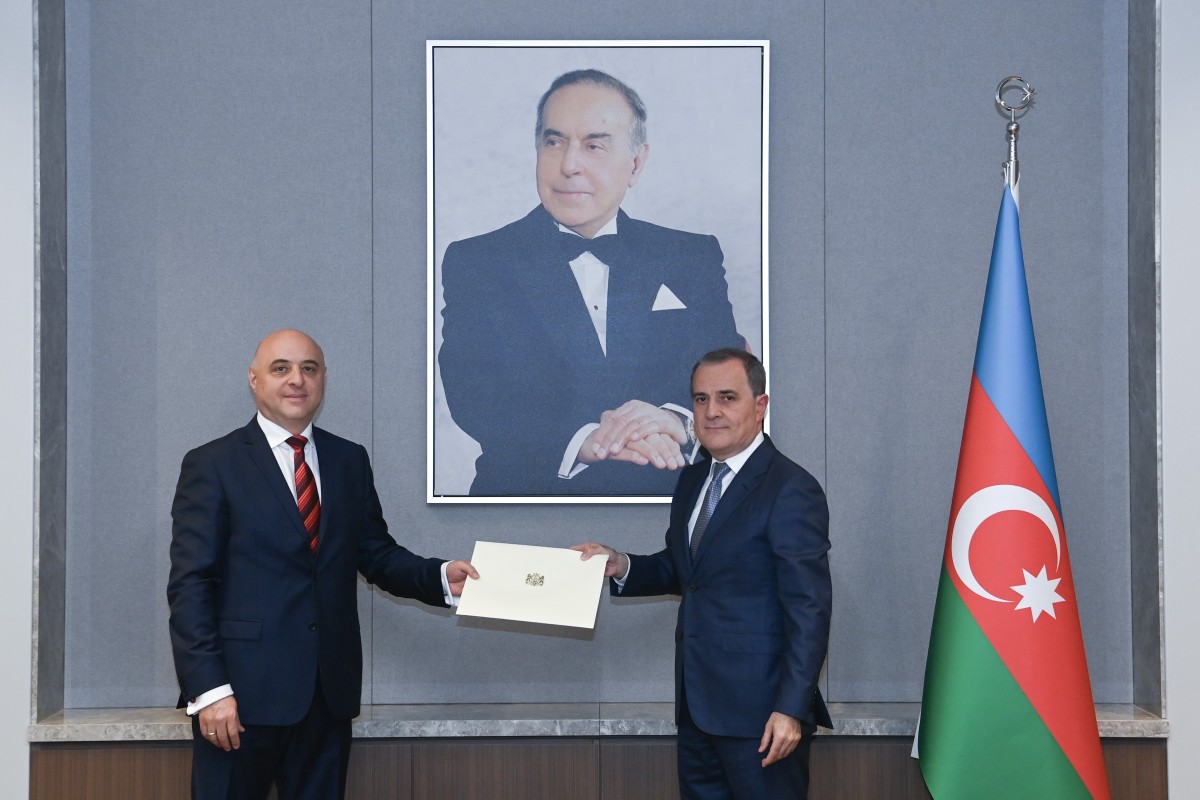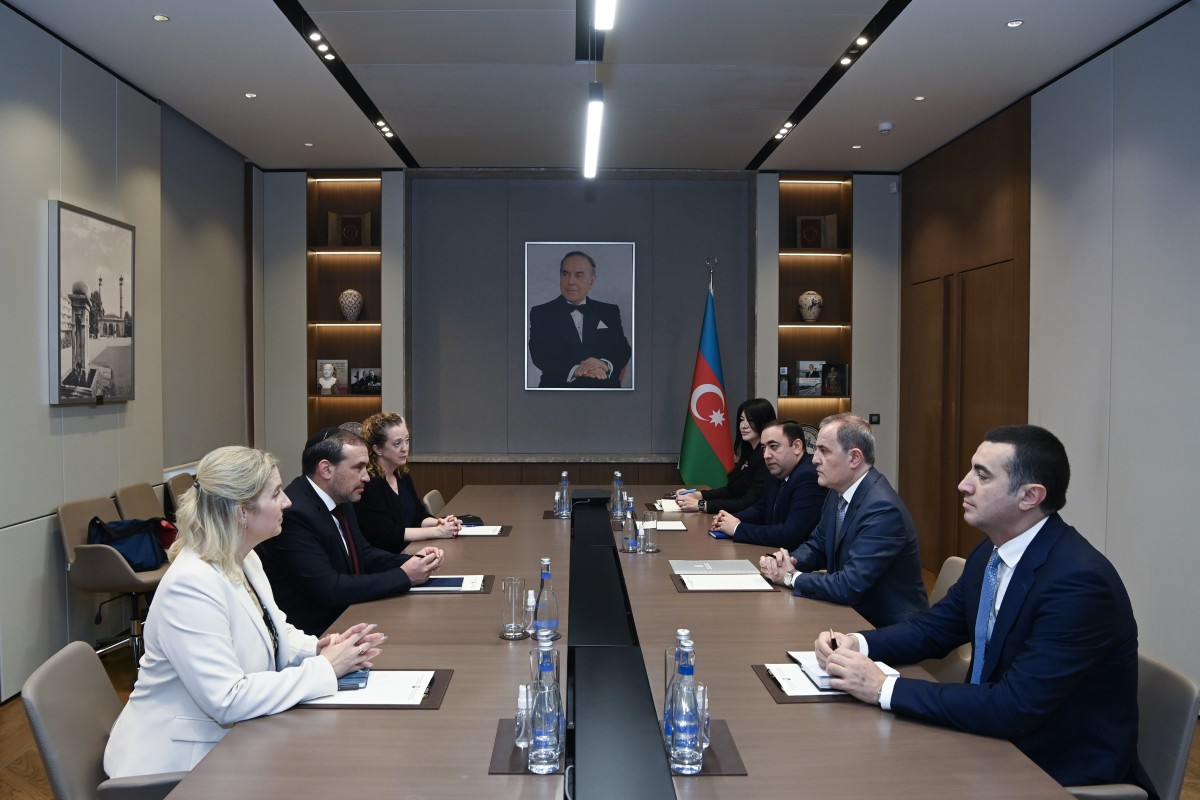


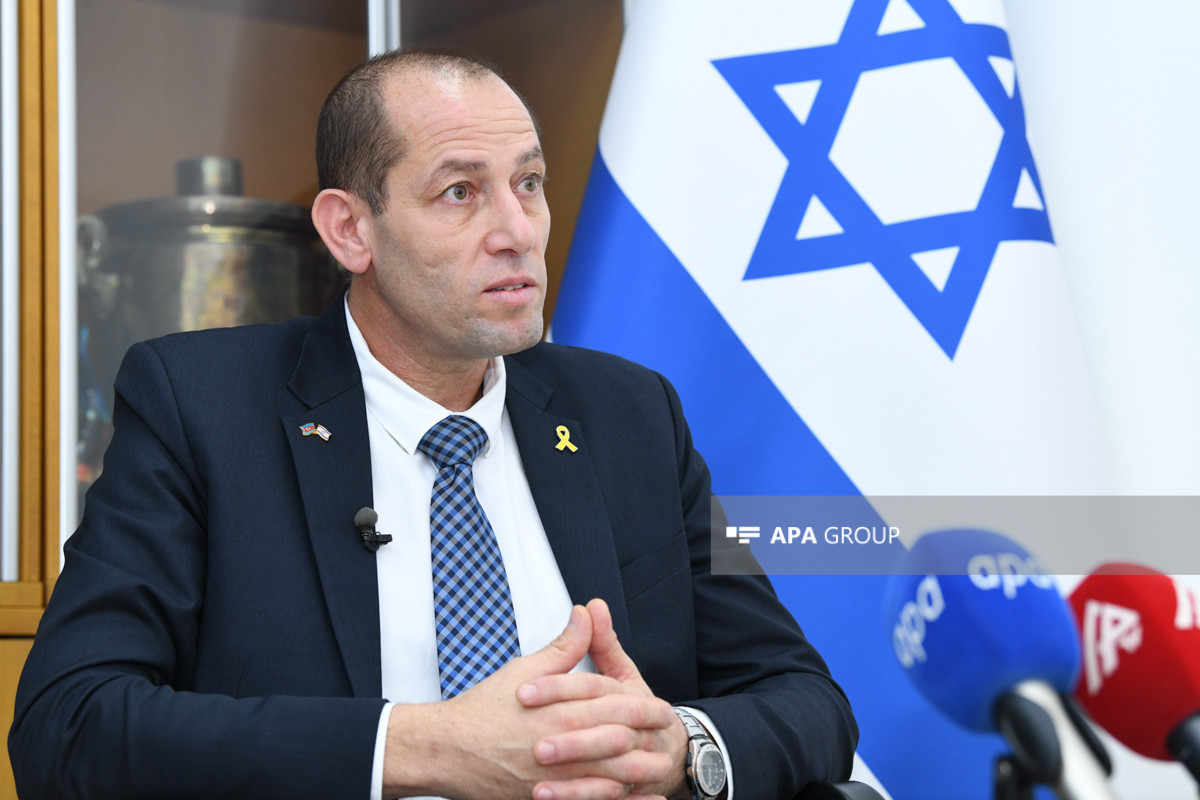


Interview with Ronen Krausz, the newly appointed Ambassador Extraordinary and Plenipotentiary of the State of Israel to Azerbaijan, to APA
I am very happy to be back in Azerbaijan
- Mr. Ambassador, first of all, congratulations on your appointment as the Extraordinary and Plenipotentiary Ambassador of the State of Israel to Azerbaijan. We thank you for taking the time for this interview. You have already been in Azerbaijan for some time. You visited the “Red Settlement” in Quba and met with the Jewish community there. You also visited the University of Languages and met with many people. What impressions have you gained about Azerbaijan?
- First of all, thank you for your kind wishes. I am very excited to return to Baku. This is my second diplomatic mission in Baku. From 2010 to 2015, I served as Deputy Head of Mission at Israel’s Embassy in Azerbaijan. I am very happy to have the opportunity to return here as ambassador. I still recall my previous stay here positively. I made many good friends back then, with whom I am still in touch. Within just a few days of being back, I have already met many of them. As you mentioned, I visited the “Red Settlement.” Seeing this unique place that tells the story of the Jewish community in Azerbaijan was extremely moving. The Jewish community here is free and respected by the government. I think this is a fact that should be shared with the entire world. I also had the pleasure of meeting Boris Simanduyev, the former leader of the Jewish community. Meeting him was very exciting. Yesterday I visited the Azerbaijan University of Languages. There is an Israel Center there. I still remember that in 2012, Israel’s former Foreign Minister Avigdor Lieberman participated in the reopening of this center. It was established for young Azerbaijanis who wish to learn about Israel, Judaism, the Hebrew language, and to deepen their general knowledge about Israel. I think that my return to Azerbaijan has been highly emotional and successful so far. I am very happy to be back.

Former Ambassador George Deek is my friend
- Your predecessor George Deek had a very productive diplomatic mission in our country. In recent years, cooperation between Azerbaijan and Israel has expanded in all areas. As ambassador, what directions do you plan to focus on? In which areas do you see further need for strengthening cooperation? What plans have you come with?
- You are right to note that Ambassador George Deek’s role here was very successful. He is my friend, and I believe this is an opportunity to thank and congratulate him. During my tenure, I hope to continue expanding the strategic, friendly, and close relations between Azerbaijan and Israel—both in the strategic sense and in the ever-deepening field of energy. Azerbaijan offers many opportunities in economic fields where Israeli companies can invest and create mutually beneficial businesses. There are a number of sectors where Israel is highly developed. For example, agriculture, water, cybersecurity, and tourism. The tourism sector is very advanced in Israel. Of course, people-to-people relations are very important. If there is one factor that best illustrates good relations between countries, it is not only the ties between leaders, but also the bonds between peoples. Today, there is greater knowledge and familiarity in Israel about Azerbaijan, its geographic location, and its tourism potential. I would like to dedicate my time also to this field, to tourism.
Israel's military cooperation with Azerbaijan is at a very good level and is developing
- You mentioned sectors such as economy and tourism. What about the military sphere? Are there any planned projects between our countries? It is well known that Israel possesses some of the most advanced technologies in the world. Are there plans for Azerbaijan to purchase new weapons from Israel?
- Of course, our cooperation in this field is also well developed. I won’t go into much detail on this subject, but I can say that our military cooperation is at a very good level and continues to develop. I am confident that these relations will last for many years. I am seeking opportunities to further enrich and deepen this cooperation. I believe we will succeed in this field as well.
- Water shortages have become a serious regional problem. Israel has world-renowned expertise in water technologies. It is known that Israel recycles 90 percent of its water. Former Ambassador George Deek had discussions on cooperation in desalination. What projects is Israel planning to implement in Azerbaijan to address water scarcity? Have these projects already been agreed upon, or are discussions still ongoing?
- Certainly, water technology is one of the fields in which Israel is a leader. As you know, Israel is located in the Middle East, in the desert. We too suffer from water scarcity and low rainfall. Nevertheless, we have found other sources of water. We built five desalination plants that desalinate seawater from the Mediterranean. Also, nearly 100 percent of wastewater is treated for reuse, mostly in agriculture. Today, Israel even supplies water to its neighbors—we help Jordan and the Palestinians in this regard. In Israel, children from the age of five are educated about the importance of water. Of course, we are very happy to share our knowledge and experience on the efficient use of water with our Azerbaijani friends. Israel’s water company “Mekorot” is already active in Azerbaijan and provides consultation. I hope that more Israeli companies and technologies will enter Azerbaijan’s water sector in the future and provide assistance in any possible way.

-Recently, there have been discussions in the media about whether Azerbaijan will join the “Abraham Accords.” In your view, how necessary is it for Azerbaijan to join?
- As you rightly mentioned, relations between Azerbaijan and Israel are strong and have existed for more than 33 years—since Israel recognized Azerbaijan’s independence in 1991. Our bilateral relations have developed significantly. The opening of Azerbaijan’s Embassy in Israel in 2023 brought a new dimension and fresh energy to our ties. I believe everything is moving forward very positively. The more substance there is in our relations, the more achievements we will see.
- Some time ago in Washington, under the witness of U.S. President Donald Trump, the leaders of Azerbaijan and Armenia initialed a peace agreement. Israeli Prime Minister Benjamin Netanyahu and President Herzog also congratulated both countries on this occasion. Has Israel contributed in any way to the peace process between Azerbaijan and Armenia?
- First of all, this is a wonderful opportunity to congratulate Azerbaijan and Armenia. I think this is a significant and positive step for the future. It will bring prosperity and stability to the region and contribute to building trust between the sides. Both Prime Minister Netanyahu and President Herzog congratulated the parties. Regarding Israel’s contribution—Israel has very close and strategic relations with both the U.S. and Azerbaijan. Naturally, it is in Israel’s interest that there be good relations between these countries as well. We have provided modest assistance and support to the parties’ meetings. I am glad that the outcome has been successful, and I believe even greater achievements will follow in the future.
Israel and Azerbaijan have been very successful in neutralizing third-party interference
- Azerbaijan’s relations with Israel sometimes provoke dissatisfaction in certain international circles, including Iran, and they issue provocative statements aimed at damaging these ties. In your opinion, what is the best joint response to such interference? In this context, in which directions should Israel–Azerbaijan cooperation develop?
- I believe every country in the world has the freedom to determine its own foreign policy. No third party has the right to interfere, dictate, or decide whom a country should build relations with. Regarding Azerbaijan–Israel relations, we have been very successful in neutralizing such interference from any third party. You mentioned Iran—of course, such interference should not occur. These interventions have no basis. Israel and Azerbaijan must continue to maintain and develop their relations in the best possible way.

Israel could no longer tolerate Iran
- A 12-day war recently broke out with Iran. Did Israel achieve its objectives in this war? What is the likelihood of a similar clash between Israel and Iran in the future? What could trigger such a confrontation?
- It was necessary to confront the threat posed by Iran’s nuclear and missile programs not only to Israel but to the whole world. The 12-day war in June was forced upon Israel, as we had no other option. For many years, we have heard calls from the Iranian regime to destroy Israel. Their parades display missiles with “Death to Israel” written on them. In Tehran, a clock was put up counting down to Israel’s destruction. We have heard countless statements from Iranian leaders calling for Israel’s annihilation. This was an unbearable threat, and Israel had to take responsibility to eliminate it. I hope Iran has learned its lesson. If they have, that’s good. If not, and they continue threatening Israel, then Israel will have to act again. Unfortunately, we still see Iran supporting its proxies such as Hezbollah and Hamas. The Houthis are also included. They continue to attack Israel. Just a few days ago, the Houthis launched drones and rockets against Israel, and Israel had to respond. These actions are not carried out independently—they follow Iran’s orders. The Houthis rely on Iran’s capabilities, since Yemen itself lacks the technology to produce missiles. Clearly, it is Iran that provides this. As long as they continue to pose a threat to Israel’s security and sovereignty, we will continue to act. Israel cannot tolerate threats to its security. As long as there is no threat, Israel does not plan to attack anyone. We want to live in peace—that is all we want.
Azerbaijan's taking side of Israel in the war with Iran is a James Bond story
- During the 12-day war, some circles in Iran accused Azerbaijan of allegedly assisting Israel. These accusations still continue. What is Israel’s reaction to this?
- A few days ago, we heard some statements from Iran. Larijani clearly said that Azerbaijan did not take sides in this war. I recall that in 2012, during Israeli Foreign Minister Avigdor Lieberman’s visit to Azerbaijan, he was asked the same question. His answer was very clear: “These are all James Bond stories.” I think that is the appropriate answer to your question as well—these are all James Bond stories.

Any initiative or statement aimed at recognizing the Palestinian state is a reward for HAMAS
- In the context of the war in Gaza, international pressure against Israel is increasing. Some countries have decided to recognize Palestine, and international organizations and prominent diplomats are calling on Israel to stop the war. What is striking is that some European countries, which previously had friendly relations with Israel, are also among those actively calling against it. How does Israel view this? How does it plan to balance this pressure? If mass recognition of Palestine occurs, what steps will Israel take?
- First of all, I would like to stress that the October 7 events did not happen as a result of Israel’s actions. The October 7 attack was forced upon us. I still remember waking up that Saturday morning to the sound of explosions. We were shocked—nobody expected this. We thought the people of Gaza wanted to live in peace. Hamas’ brutal attack on Israeli civilians was not a response to Israeli aggression. Since then, we have been at war, and this war has several goals. The first goal is the release of hostages. I still carry a pin on my jacket reminding me of the Israelis held in captivity. There are 50 of them, and Israel is working for their release. Until they are freed, we will continue to act and do everything necessary for their release. Our second goal is to ensure that Hamas has no role or sovereignty in Gaza. This is not only in Israel’s interest but also in the interest of the Palestinians themselves, as they too suffer under Hamas’ pressure. Gaza needs to be demilitarized, meaning that there must be no weapons left that can be aimed at Israel. In addition, a new solution for sovereignty and governance in Gaza must be found—one that will take responsibility for governing Gaza in a more civil and liberal manner. Any initiative or statement aimed at recognizing a Palestinian state is a reward for Hamas. Hamas will view these declarations as justification for its crimes. Recognizing a Palestinian state would reward the terrorist acts that killed thousands of Israelis and left 50 people as hostages. This is completely absurd.

Some of the children in the footages are actually children being treated in Israeli hospitals
- One of the main accusations against Israel is related to the humanitarian situation in the region. What is Israel’s response to these accusations?
- Unfortunately, the world has become a victim of Hamas’ propaganda. Hamas accuses Israel of supposedly creating famine. The published photos have been investigated and it has been proven that the children shown are suffering not from hunger but from other illnesses. Some of the children in those photos were in fact being treated in Israeli hospitals. Yet these images were used for propaganda. Every day, Israel allows hundreds of trucks to enter Gaza, and humanitarian aid is also delivered by air. Footage from Gaza shows that there is sufficient food there. Unfortunately, much of this aid ends up in the hands of Hamas. The terrorist organization uses it as a tool, selling it at exorbitant prices to the Gaza population. Hamas uses its own people as human shields. Their propaganda accusing Israel of carrying out a starvation campaign in Gaza must end.
- Despite ongoing talks about a ceasefire between Israel and Hamas, no result has been achieved. Is a ceasefire with Hamas possible? How does Israel plan to end the conflict in the region? Do you see a solution based on the “two-state principle” as possible?
- I try to be optimistic about this matter—because there is no other way. For an agreement to be realized, the 50 hostages must be released, Hamas must lose its control in Gaza, and a new administration must be established there. Gaza must be returned to its people. I believe this can be achieved.
- Will you accept a two-state solution?
- I think that in the current situation, a two-state solution is not possible. In fact, Israel’s Foreign Minister even called it not a two-state solution, but a two-state illusion. Unfortunately, we are still at war with Hamas. As long as 50 hostages remain in captivity, there can be no talk of any solution. The hostages must be freed, Hamas’ rule in Gaza must end, and a long-term solution for Palestinians in Gaza must be found.

We hope that Israel's relations with Syria and Türkiye will be at their best
- Mr. Ambassador, let us return to Azerbaijan–Israel cooperation. Recently, meetings were held in Baku between Israeli and Turkish delegations. These took place with Azerbaijan’s mediation, and the subject was establishing a mechanism to prevent clashes between Turkey and Israel in Syria. Do you think Azerbaijan will continue to contribute to progress in Israel–Turkey–Syria relations? Is it planned to hold such dialogues in Baku again in the future?
- First of all, this is an opportunity to thank Azerbaijan for its efforts to bring the parties together. These efforts have been quite successful and are highly valued by Israel. We hope that such initiatives will continue in the future. I hope that Israel’s relations with Syria and Turkey will reach their best level. Talks are underway with Syria on a kind of security arrangement. People in Azerbaijan understand and respect the importance of stability and security. The same applies in Israel. We hope to expand circles of stability around us. We have peace agreements with Egypt and Jordan. We achieved the “Abraham Accords.” Talks are ongoing with Syria, and we also hope to make progress with Lebanon. The elimination of the harmful organization “Hezbollah” would be a positive development. We hope that Israel’s security will be in a much better situation in the future.
Photo - Ilkin Nabiyev ©️ APA GROUP


 Follow us on Telegram
 t.me/apanewsaz
 Follow us on Instagram
 Follow us on TikTok
 Follow us on Facebook
 Follow us on X