












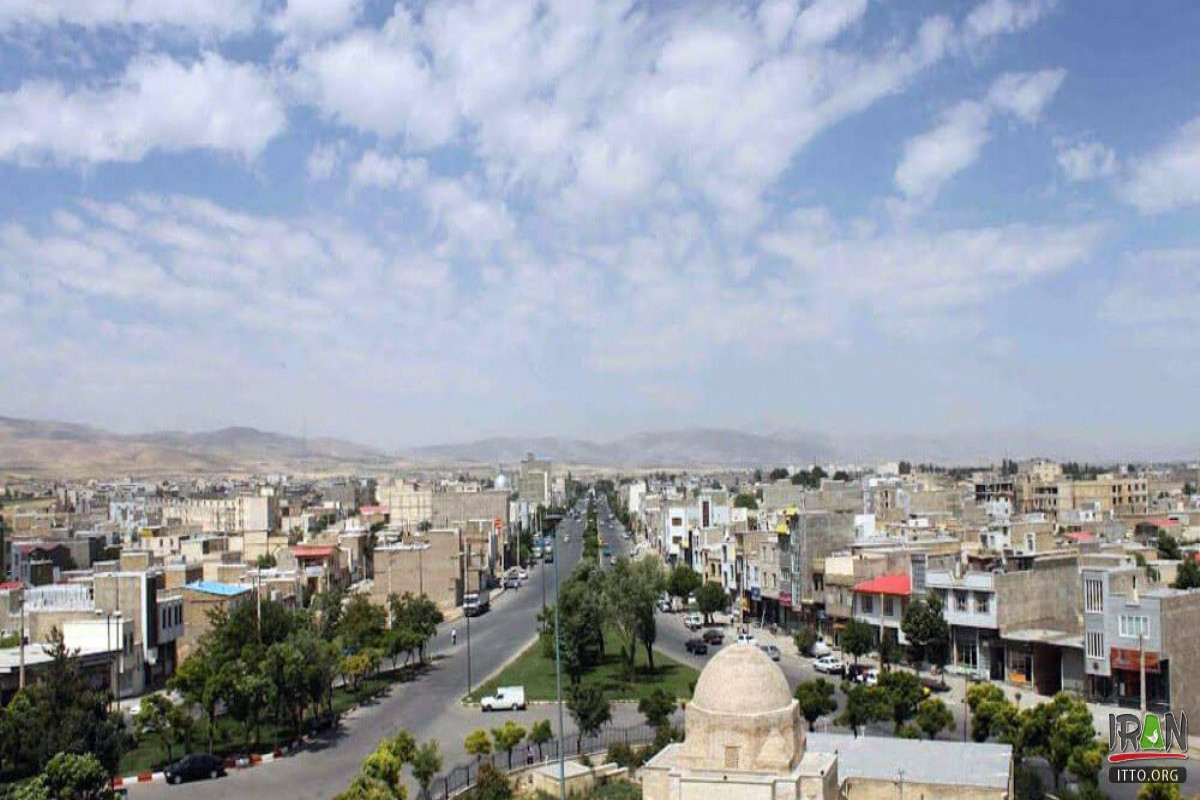


APA presents the article "The City of Abhar" by Mahammad Rahmanifar within the framework of the "Explore South Azerbaijan" project.
You can read the previous article in the project [here].
The city of Abhar is the second largest and most densely populated city in Zanjan Province, after the provincial capital, Zanjan. It is located 90 kilometers southeast of Zanjan and 230 kilometers west of Tehran. The distance from Abhar to Tabriz is approximately 400 kilometers. It should be noted that, according to Iran’s administrative-territorial division, the South Azerbaijan region consists of the provinces (ostans) of West Azerbaijan, East Azerbaijan, Ardabil, Zanjan, Alborz, Gazvin, and Hamedan. Abhar is situated in the center of Abhar County (shahrestan) and is surrounded by smaller towns such as Hidaj and Sain Gala.

Abhar lies on a plain near the Abharchai and Delichai rivers. To the north of the city are the Aghdagh, Garlug, and Shotorkuh (Camel Mountain) ranges, while to the south lie the Malladaghi and Chalchala mountain chains. This beautiful city is surrounded for kilometers by vineyards, orchards, and farmlands. Abhar is famous for its grapes — so much so that, similar to Urmia (Urmu), a statue of a grape cluster has been erected as a symbol of the city.
In fact, one of the main factors that led to the emergence of Abhar was its geographical features. The flow of the Abhar River, which created relatively large alluvial and fertile lands in the area, played a major role in the development of agriculture. However, in addition to farming, industry has also developed to a certain extent in this city. Abhar County is considered the industrial center of Zanjan Province. In recent years, the city has expanded rapidly, its population has increased, and at the same time, Abhar has become known for its historical and tourist attractions.

According to the 2017 census, the population of the city of Abhar was 99,285, while the population of Abhar County stood at 159,324. Historically, the vast majority of the city’s inhabitants have been Azerbaijani Turks. The local population continues to speak Azerbaijani Turkish today. Most residents are Shia Muslims, although there is also a Sunni Muslim minority living in the city.
A brief overview of Abhar’s history
Like many regions of Azerbaijan, the Abhar area has an ancient history. Archaeological excavations at the historic Tapa Gala site in Abhar indicate that the area’s history dates back 6,000 years. The earliest layer of settlement on Tapa Gala belongs to the Bronze Age. Alongside Bronze Age artifacts, objects from the Iron Age, the Parthian period, and the Islamic era have also been found at this historic site. Historians believe that the items discovered during excavations at Tapa Gala represent the Transcaucasian or Kura–Araxes culture.
In the 2nd millennium BCE, the Abhar River valley experienced significant development. In the 9th century BCE, the Medes established a confederation of tribes in this region with their headquarters located near the Abhar River. However, according to some historical sources, the foundation of the city of Abhar dates back to the reign of Shapur II (309–379) of the Sasanian dynasty. In the early 10th century CE, Abhar was part of the territory governed by Yusuf ibn Abu Saj, the ruler of Azerbaijan, but it later came under the control of the Daylamites for a period of time.

During the era of the Mongol Ilkhanate Empire — particularly when the nearby city of Soltaniyeh was chosen as the capital of the great Mongol Empire — this region gained greater importance due to its road networks and witnessed substantial development. Jean Chardin (1643–1713) wrote that during the reign of Shah Abbas II of the Safavid dynasty, Abhar had 2,500 houses and gardens. The 17th-century French traveler Jean Tavernier, who visited Abhar, described it in his writings as an ancient city in ruins.

(A 16th-century map of Abhar attributed to Ottoman geographer and cartographer Nasuh Efendi)
During the Qajar period, Abhar was remembered as a prosperous and influential part of the Khamseh (Zanjan) province, known for its many gardens and flowing waters. Two prominent Turkic dynasties — the Amir Afshari family of the Gasimlu lineage and the Zulfaghari family of the Ayrilu lineage — held power in the Khamseh region during the Qajar era. Strong Afshar tribes had migrated to various parts of Azerbaijan and Zanjan at different points in history, with the last wave of their settlement in Khamseh taking place during the Safavid period. The Afshars (or Avshars) were among the Gizilbash tribes that formed the core of the Safavid Empire, and after its fall, they established a powerful state under Nadir Shah.
During the reign of Fath-Ali Shah Qajar, another famous traveler — Napoleon Bonaparte’s envoy, Amédée Jaubert — praised the gardens of Abhar and its clean, comfortable houses. Under the rule of Naser al-Din Shah Qajar (1848–1896), one of the royal artillery’s main bases was established in this city.

As we have reported in our previous articles, a period of stagnation and even decline began in Azerbaijan with the establishment of the Pahlavi government in 1925. Reza Shah, who knew Azerbaijan well and its role in the Constitutional Revolution (1905-1911), tried to weaken Azerbaijan.Of course, the fact that the Azerbaijani people were Turks was not without influence in Reza Shah's approach. The Pahlavi government was a Persianist and racist government. In fact, the essence of the Persianist idea, which has its roots much further back, but which re-emerged as a theory on the eve of the constitutional revolution, is Turkish and Arab hostility. For this reason, when this idea became an official state policy during the Reza Shah era, the native language of the South Azerbaijani Turks was banned, and Azerbaijani Turks were humiliated and insulted both in the education system and in all state institutions. The ultimate goal of this policy was to erase the Turkish identity and culture of the Azerbaijani people.

Over the past hundred years, although the Iranian state has managed to assimilate part of the Azerbaijani Turk population, Azerbaijani culture still lives on in this city. As we have mentioned in our previous writings about other Azerbaijani cities, Azerbaijani dance and music, performances by Azerbaijani amateurs, ashugs’ (folk bards’) performances, bayatis (traditional quatrains), Azerbaijani mugham, customs of the last Tuesday night of the year, Nowruz traditions, sayachis and tekemchis (folk performers who go door-to-door during holidays), Chilla night, and the epic of “Koroglu” — as long as these customs, fashions, and traditions are kept alive in this city, it means that Azerbaijan still lives here. It must not be forgotten that Azerbaijani identity and culture are not limited to these elements alone. This culture can also be seen in the names and preparation of foods, in carpets, and in the patterns woven into them.
Naturally, it cannot be denied that the state’s assimilation policies toward Azerbaijani Turks, especially in Zanjan province and the city of Abhar, have achieved some degree of success. One could say that, compared to the cities located west of Zanjan and Abhar, these assimilation policies have had a stronger effect in Zanjan, Abhar, and the cities situated to their east. It must be sadly acknowledged that the number of Persian speakers in this city is increasing day by day.
Today, despite all the obstacles and harsh measures of the government, Azerbaijani youth appear determined to preserve their Azerbaijani identity, culture, history, and language. The activities of the youth in Abhar are not limited to protecting and developing Azerbaijani culture and language; in recent years, these young people have repeatedly expressed their protest against the Iranian government’s policies toward Azerbaijani Turks in various ways. In short, cities like Zanjan and Abhar remain places where Persianization and Azerbaijani Turk identity are in strong confrontation. However, this confrontation takes place under unfair conditions — while the Persianizers hold all the resources and means of power, on the other side, the Azerbaijani people and national activists are struggling with only their modest personal resources.


 Follow us on Telegram
 t.me/apanewsaz
 Follow us on Instagram
 Follow us on TikTok
 Follow us on Facebook
 Follow us on X


