












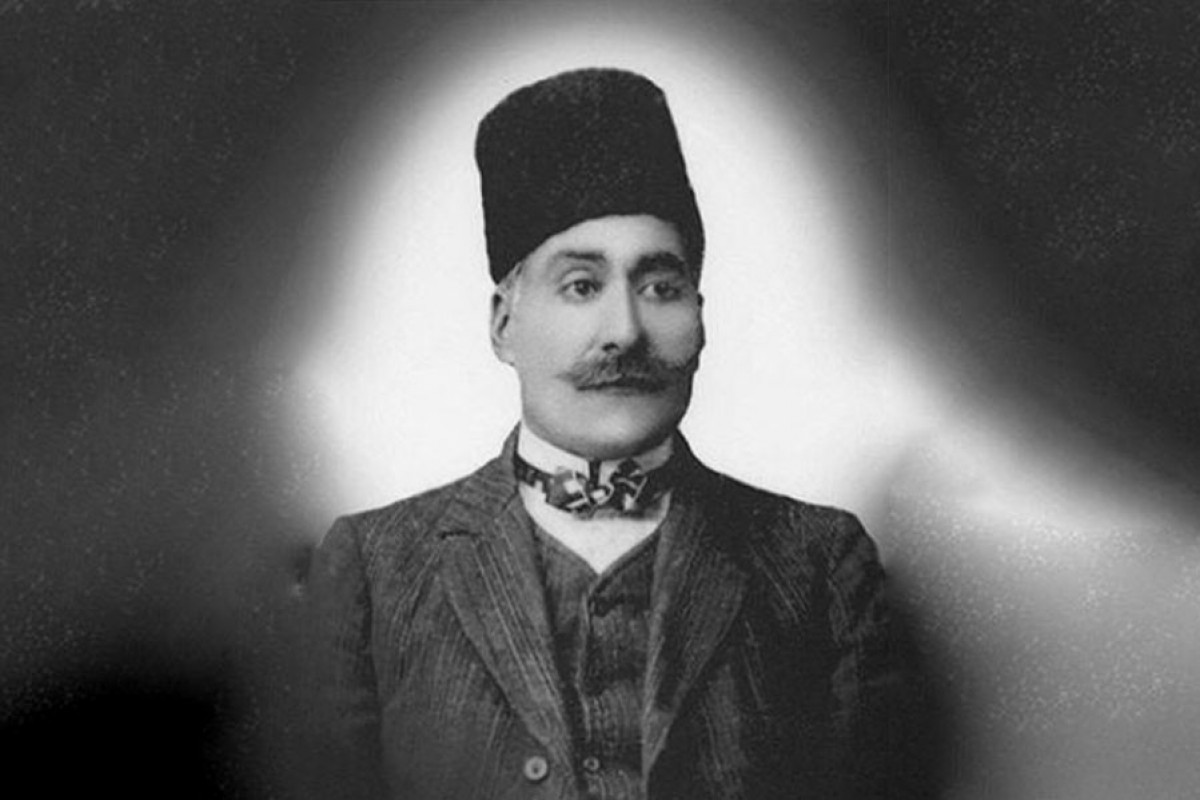


APA presents the article “Mirza Nurullah Khan, the true embodiment of historical continuity” by Mohammad Rahmanifar as part of the “Discover South Azerbaijan” project.
You can read the previous article of the project here.
In the previous article, we examined the three major uprisings in the modern history of South Azerbaijan — the Mashruteh movement (1905–1911), the Sheikh Mohammad Khiyabani uprising (1920), and the Azerbaijan National Government (1945–1946) — through the lens of the concept of “historical continuity.” We stated that, contrary to the view of some who praise one of these three great leaders while criticizing the other two, we see these three successive uprisings as a continuation of one another, even though we do not regard them as being on the same level. Thus, the earlier uprisings, as historical experiences, influenced the subsequent ones, contributing to their completion and evolution.
In this article, while avoiding repetition of the previous content, we will discuss an important historical figure whose life and activities played a key role in the crystallization, embodiment, and realization of the idea of “historical continuity” in the modern history of South Azerbaijan. As mentioned in the previous article, there were many individuals who once stood alongside Sattar Khan and later joined the Azerbaijan National Government (1945–1946). One of them — and perhaps the most renowned — was Mirza Nurullah Khan.
The identity of Nurullah Khan in his own words
Mirza Nurullah Khan’s biography, written in his own words, was published in the 46th issue of the “Azad Millet” newspaper during the period of the Azerbaijan National Government (1945–1946). With minor adjustments, the text reads as follows:

(Nurullah Khan)
“My name is Nurullah, son of Ali. I was born in 1877 in the village of Yekan, where I studied in an old traditional school before going abroad. At that time, I took part in the establishment of the Social Democrats (Ijtimaiyun-Amiyun) Party, which was formed against the tyranny in Iran. The Party played an influential role during the Constitutional Revolution (Mashruteh Movement). After the return of despotism with the support of Tsarist Russia, I was arrested along with several others. Some time later, I was freed from prison and went to the city of Khoy to assist those who were striving for freedom. I engaged in numerous struggles in the path of liberty.
Later, due to the pressure of Tsarist Russia and Iranian despots, I was forced to move to Istanbul. There, I completed my education and entered the Police Academy to serve my homeland. After graduating, I participated in the First World War. Following the war, I returned to Iran and was appointed by the Tehran government as an officer of the Tabriz Police Department. While serving as an officer, I used my own financial means to open several schools in my native Yekan region to promote education among its people.
Some time later, during the Lahuti uprising, I was accused of ‘atheism’ and imprisoned, and my schools were shut down. During Reza Shah’s dictatorship, I was arrested several times on charges of being a libertarian. In September 1941, when Iran was occupied and Reza Shah was forced to leave the country, I once again joined the struggle for freedom by becoming a member of the Azerbaijan Democratic Party.
In 1945, when the Azerbaijan National Assembly was formed, I was elected as a parliamentarian by the people of Khoy, and I am currently serving my homeland as Deputy Minister of Internal Affairs in the Azerbaijan National Government.”

(From the book written by Nurullah Khan’s nephew, Parviz Yekani)
Naturally, as a great man, Nurullah Khan spoke modestly about himself in his writing, avoiding mention of the significance and impact of his actions. We know well that during the Constitutional Revolution, Nurullah Khan was assigned the mission of liberating the city of Khoy — a task he accomplished successfully. This event was so significant that some well-known historians called him “the Conqueror of Khoy.”
After the Constitutional Revolution, whether during Sheikh Mohammad Khiyabani’s uprising (1920) or in the period leading to the Azerbaijan National Government and other movements against the central regime, Nurullah Khan played an influential role. Therefore, we believe it is insufficient to understand him solely through his brief autobiographical note. For this reason, we have drawn upon historical sources to provide a more detailed account of this remarkable individual.
Nurullah Khan in the modern history of Azerbaijan:
As mentioned above, Nurullah Khan played an important role during the Constitutional Revolution. When Russian forces attempted to cross the Julfa Bridge to enter Tabriz and suppress the constitutionalists, Nurullah Khan and his small group of soldiers heroically resisted them and did not allow the Russian army to cross the bridge until a telegraph message arrived from Tabriz.
After the Russians entered Tabriz, contrary to their previous promises and agreements, they occupied the city and began to suppress the constitutional fighters. Following the decision of the Secret Society of Tabriz, Sattar Khan was forced to leave Tabriz. On this painful and difficult journey from Tabriz to Tehran, Nurullah Khan accompanied Sattar Khan. He also took part in the battle at Atabek Park in Tehran, where Sattar Khan was wounded and several constitutional fighters were killed — this was, in fact, Nurullah Khan’s last battle alongside Sattar Khan. As we know, the bullet that struck Sattar Khan during that battle eventually caused the death of this Azerbaijani hero.
However, unlike Sattar Khan, Nurullah Khan’s story of courage did not end with that battle. He survived and, a few years later, joined Sheikh Mohammad Khiyabani’s movement (1920). During Khiyabani’s brief rule over Azerbaijan, Nurullah Khan headed the Tabriz Police Department. Just as he had never abandoned Sattar Khan until the end, Nurullah Khan also stood by Sheikh Mohammad Khiyabani until the last day of the movement. When Khiyabani’s uprising was suppressed by the central government, Nurullah Khan was arrested and imprisoned. Yet, his fame and influence as a veteran of the Constitutional Revolution were so great that the central government neither dared execute him nor keep him imprisoned for long.
Neither the tragic fate of Sattar Khan and Sheikh Mohammad Khiyabani nor the repeated imprisonments and exiles could break Nurullah Khan’s will for freedom or stop his struggle. Shortly after the suppression of Khiyabani’s movement, another Azerbaijani patriot, Colonel Mohammad Taghi Khan Pessian, launched an armed uprising (1921) against the central government’s corruption and deceit. Nurullah Khan also played an active role in this movement. After the uprising was suppressed by the central government, he joined another rebellion that emerged in Tabriz in January 1922. The uprising was sparked by the discontent of several gendarmerie officers, led by Major Abolghasem Lahuti, over Reza Khan’s plan to unify Iran’s armed forces by merging gendarmerie and Cossack units. Nurullah Khan, never one to miss an opportunity to resist Reza Khan, joined this uprising as well. After its failure, he was imprisoned for a long time and later released on the condition that he would not leave his native Yekan region — effectively placing him under local confinement.
After his release, Nurullah Khan was forced to remain in the Yekan district until the end of Reza Khan’s reign. Although this step was intended to restrict a hero of liberty, Nurullah Khan was such a great man that such measures could not prevent his humanitarian and freedom-oriented activities. During these years, he not only worked for the development of his region but also focused on enlightening its people and raising their political awareness.
In August 1941, with the arrival of Allied forces (Soviet and British), Reza Shah’s dictatorship collapsed, and he was forced to leave Iran. Consequently, the long-oppressed and silenced Azerbaijani people once again found an opportunity to revive, to breathe freely, and to stand tall. As we have already described in other articles within this project, the events that unfolded in South Azerbaijan between 1941 and 1946 — including the emergence of the Azerbaijan Democratic Party and the formation of the Azerbaijan National Government — will not be repeated here to avoid prolonging this article. Instead, we will focus briefly on Nurullah Khan’s activities during that period.

(Nurullah Khan)
With the formation of the Azerbaijan Democratic Party, Sattar Khan and Khiyabani’s comrade-in-arms, Mirza Nurullah Khan, joined the Party without a moment’s hesitation. Soon after, he was elected head of the Party’s branch in Khoy. Later, when the Azerbaijan National Assembly was established, he was elected a member of parliament by the people of Khoy. He was also appointed Deputy Minister of Internal Affairs in the Azerbaijan National Government.
In the final months of the one-year existence of the National Government, due to security incidents in the city of Urmia, he was sent there as the Chief of Urmia Police. When the National Government was overthrown, he refused to leave the country, was arrested, and tragically executed.
Nurullah Khan’s influence and respect among the people were so great that his treacherous execution by the Iranian royal army not only angered the Azerbaijani population but also caused discontent even among opponents of the Azerbaijan Democratic Party. So much so that Brigadier General Hashemi, commander of the Shah’s army sent to occupy Azerbaijan, expressed his concern about Nurullah Khan’s execution.
From the Constitutional Revolution to the establishment of the Azerbaijan National Government in South Azerbaijan, Nurullah Khan’s active and devoted participation in all movements against the tyranny and deceit of the central Iranian government is the clearest proof that these historical events were not contradictory but rather interconnected phases of a continuous struggle — parts of the same historical continuity.
According to his nephew, the contemporary Azerbaijani writer Parviz Yekani, Nurullah Khan loved Azerbaijan deeply and never ceased, even for a moment, to work for the honor and greatness of his homeland.


 Follow us on Telegram
 t.me/apanewsaz
 Follow us on Instagram
 Follow us on TikTok
 Follow us on Facebook
 Follow us on X


