The meeting between the leaders of Azerbaijan and Armenia at the White House, mediated by President Donald Trump, is regarded as a rare and significant event in the history of relations between the two countries, Professor Jeton Kelmendi, Expert in International Relations and Security Affairs told APA.

The Political and economic architecture of peace
Mr Kelmendi noted that the decades-long and repeatedly recurring Karabakh conflict has created an atmosphere of tension and hostility in the region, hindering sustainable development and economic cooperation.
“The meeting at the White House, under the leadership of President Donald Trump, between the leaders of Azerbaijan and Armenia, marks a unique moment in the history of relations between these two countries. For decades, recurring conflicts over the Nagorno-Karabakh region have created a constant atmosphere of tension and hostility, hindering sustainable development and economic cooperation in the region. This meeting was not merely a diplomatic conversation but a concrete step toward normalizing relations. Its significance lies in the fact that, for the first time in many years, the parties sat at the same table and agreed on an accord that could lay the foundations for lasting peace. A stable peace in this region would bring political stability, economic development, and greater integration into international infrastructure and energy projects, while also having vital importance in every aspect. This document represents a framework agreement that sets the foundations for future cooperation in key areas such as energy security, technology, education, military cooperation, and trade. With Azerbaijan being one of Europe’s main natural gas suppliers, this memorandum could strengthen its role in ensuring global energy security, directly linking it to the interests of the United States and its allies. Furthermore, this strategic partnership will enable greater American investment in Azerbaijan and strengthen cooperation in the field of regional security, particularly in the face of rival powers’ influence," he said.
Suspension of section 907 – A strategic shift

According to the American political expert, the suspension of Section 907 represents an important political turning point that formalizes Azerbaijan’s recognition as a reliable strategic partner in the South Caucasus, elevating its cooperation with the United States in the fields of defense, security, and economy to a qualitatively new stage.
“Section 907 of the Freedom Support Act has, for years, prohibited direct U.S. assistance to the Azerbaijani government due to the conflict with Armenia. Its suspension following the Washington meeting signals a major shift in U.S. policy, reflecting a recognition of Azerbaijan’s role as a strategic partner. This step opens the way for Azerbaijan to benefit from closer cooperation with the United States in defense, military training, and the modernization of its security infrastructure,” noted Mr Kelmendi.
The professor noted that by strengthening its presence in this sensitive region, the United States aims to balance the influence of Russia and Iran, as well as to ensure the unobstructed and secure delivery of energy resources to global markets: “The United States aims to strengthen its presence in this sensitive region in order to balance the influence of Russia and Iran, as well as to guarantee the free flow of energy to global markets. The results of the Washington meeting give the U.S. a stronger position to act as a peace mediator, promoting stability and paving the way for major infrastructure projects, such as railway and energy corridors linking Asia to Europe. The main objectives will include: securing strategic corridors, preventing new conflicts, and promoting regional economic integration.”
Zangezur corridor – more than a transport project
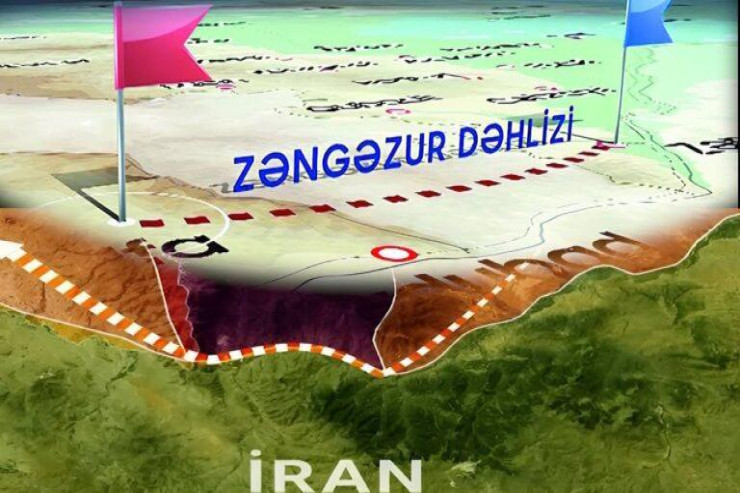
According to the expert, although at first glance the opening of the Zangezur Corridor may seem like merely a transport project, in reality, this initiative carries profound geopolitical and strategic implications.
He stated that the corridor will connect Azerbaijan with the Nakhchivan Autonomous Republic, and from there provide direct access to Türkiye, thereby creating a new, short, and secure trade route that bypasses Armenia’s mainland territory and the existing routes through Iran: “Although at first glance the opening of the Zangezur Corridor may appear to be a simple transport project, in reality it has significant geopolitical implications. This corridor will connect Azerbaijan with the Nakhchivan exclave and further with Türkiye, creating a new trade route that bypasses mainland Armenia and Iran. This move increases the economic and strategic influence of both Türkiye and Azerbaijan, shifting the balance of power in the region and making this step far more than just an infrastructure project.”
Positions of regional powers

According to the American political expert, Russia, which has long held a leading influence in the South Caucasus, will seek to maintain its role as a guarantor in the process of implementing the newly reached agreements.
“Russia, as a traditional player in the South Caucasus, is likely to seek to maintain its role as guarantor of the new agreements, ensuring that its military and economic interests are not undermined. Iran, on the other hand, may view the opening of the Zangezur Corridor with concern, as it could weaken its role as an alternative trade route and reduce its influence in the region. The agreement may also intensify strategic competition, prompting other powers such as the EU and China to step in with investment offers to secure a presence in this strategic hub”, Mr Kelmendi concluded.



 Follow us on Telegram
 t.me/apanewsaz
 Follow us on Instagram
 Follow us on TikTok
 Follow us on Facebook
 Follow us on X