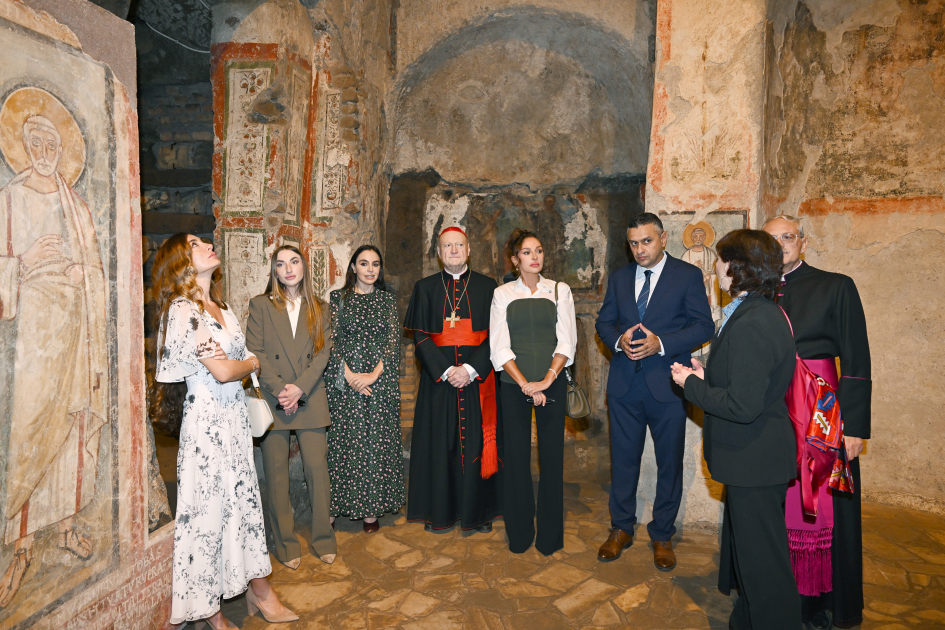
First Vice-President Mehriban Aliyeva’s official visit to the Holy See showcased Azerbaijan’s concept of humanitarian diplomacy to the world through practical projects, institutional partnerships, and high-level dialogue. At the center of the visit was the inauguration of the restoration of the Catacombs of Saint Commodilla, supported by the Heydar Aliyev Foundation. This ceremony was not only an archaeological and cultural event but also a symbol of long-standing trust and systematic cooperation.
The gratitude expressed at the leadership level of the Vatican’s Pontifical Commission for Sacred Archaeology, as well as Cardinal Gianfranco Ravasi’s emphasis on “friendship formed over years,” demonstrates that these relations have deepened to the level of personal trust.
Mehriban Aliyeva’s visit to the Vatican – Humanitarian diplomacy
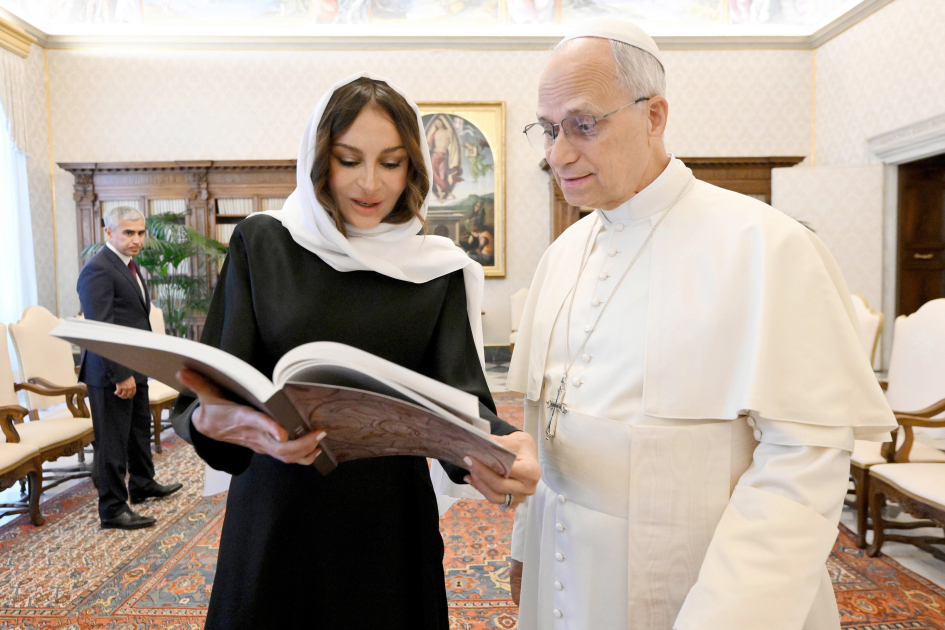
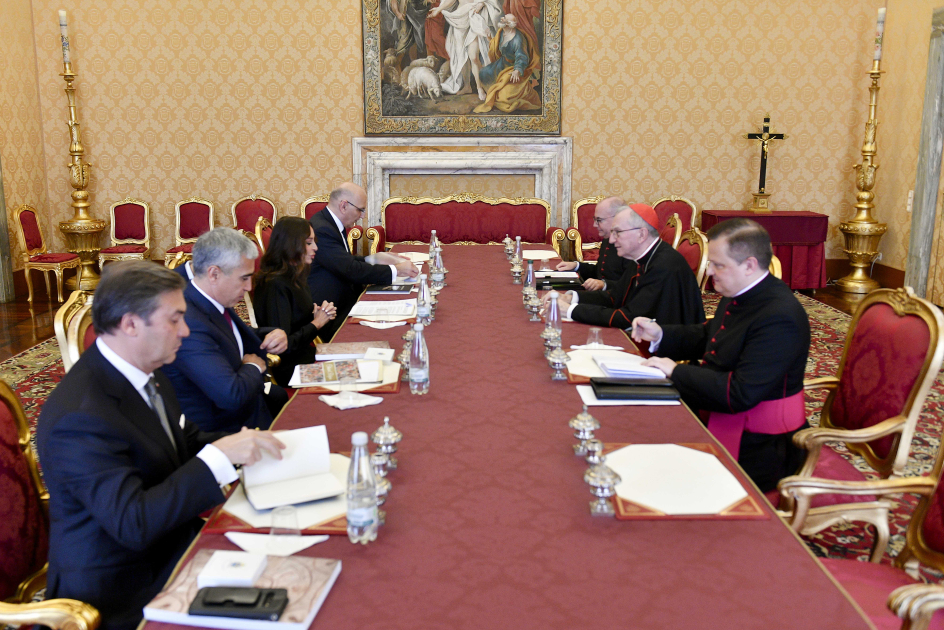
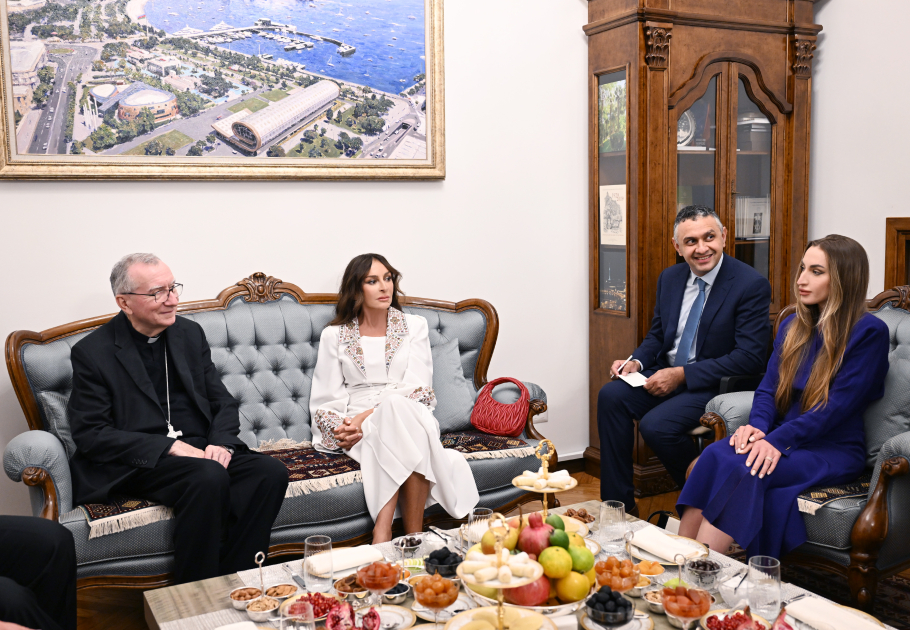
The political and moral significance of the visit was underscored during meetings with Pope Francis and Vatican Secretary of State Cardinal Pietro Parolin. These platforms confirmed, on the one hand, the continuation of restoration, scientific, and cultural exchange projects, and on the other hand, the commencement of construction of the second Catholic Church in Baku. Thus, humanitarian diplomacy is not limited to the restoration of “visible” monuments; it evolves into a multifaceted cooperation package encompassing public institutions, religious communities, and fields such as medical science.
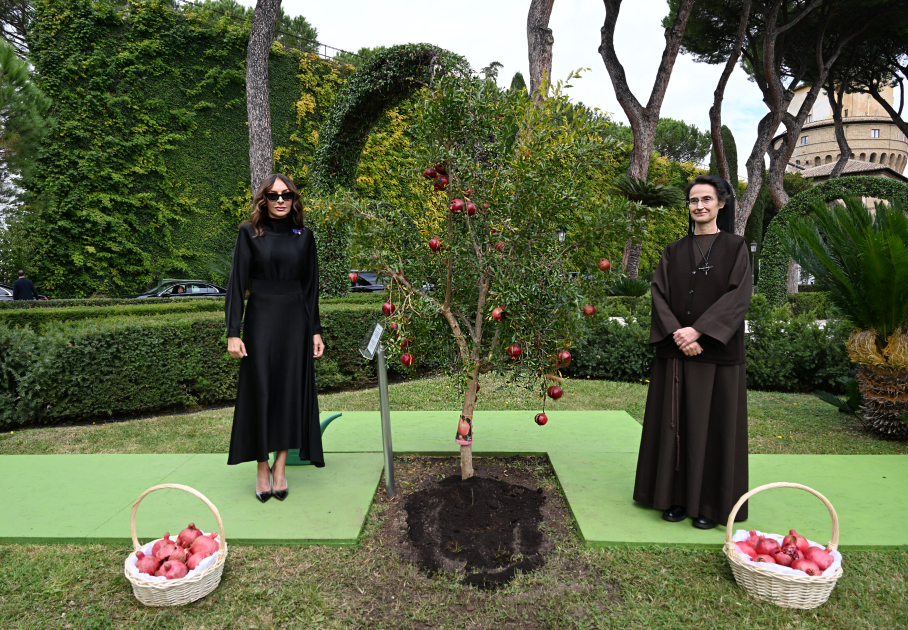
A particularly symbolic event during the visit was the planting of a pomegranate tree in the Vatican gardens — demonstrating how the Azerbaijani narrative (life, abundance, family unity) harmonizes with universal values. Such gestures are among the soft-power tools of humanitarian diplomacy: in the short term, they create an emotional connection, and in the long term, they help cultivate a cultural environment that facilitates political dialogue.
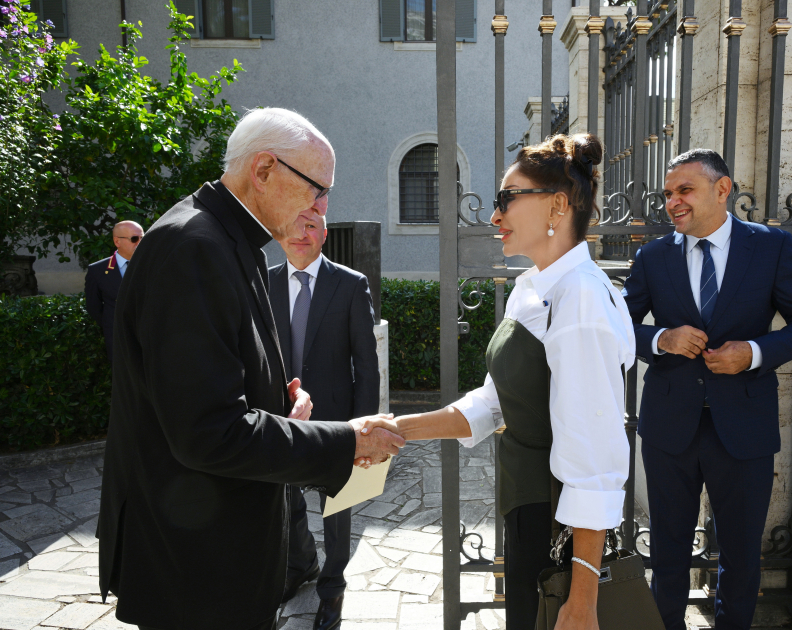
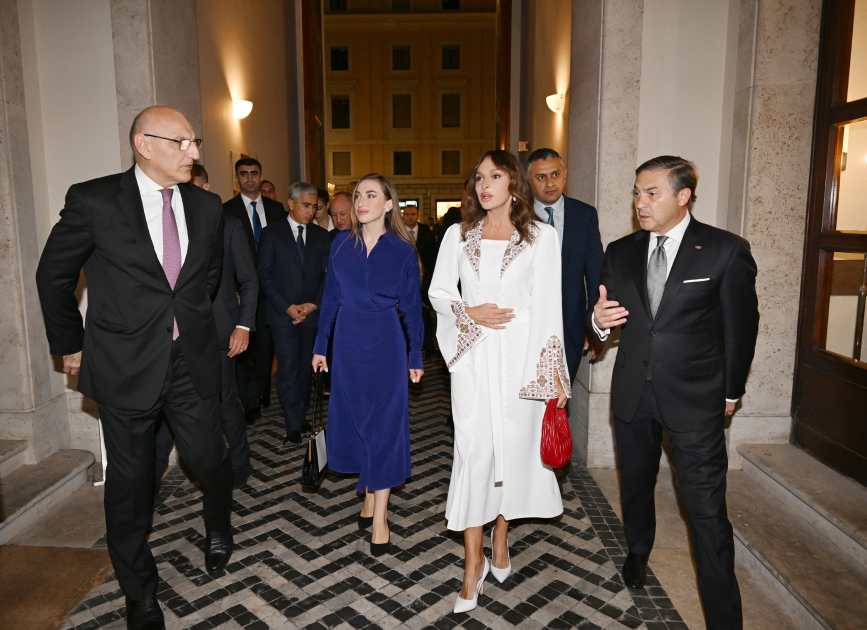
The opening of the administrative office of Azerbaijan’s embassy at the Holy See on Via Conciliazione signals that humanitarian diplomacy has entered the stage of institutionalization. These relations will now be supported by permanent diplomatic infrastructure, the coordination of practical projects will accelerate, and the pace of information exchange and communication will increase. Overall, Mehriban Aliyeva’s visit consolidated the three pillars of humanitarian diplomacy — the preservation of cultural heritage, interfaith trust, and human-centered cooperation — within a single framework, strengthening Azerbaijan’s global reputation and creating a stable platform for new projects.
Azerbaijan’s contribution to interfaith and intercultural dialogue
Azerbaijan’s presentation as a “model country” in the field of interfaith dialogue is no coincidence. It stems from the synthesis of long-term institutional policy and concrete projects. Within the framework of the visit, this can be observed along three main lines.
First, trust-building: the consistent dialogue experience demonstrated by Mehriban Aliyeva with Pope Francis, Cardinal Pietro Parolin, Cardinal James Harvey, and other clergy transforms personal relationships into institutional cooperation. This represents a subtle but enduring “top-down” trust mechanism.
Second, the practical embodiment of values: the restoration work carried out in catacombs and basilicas, political support for the construction of the second Catholic Church in Baku, and the exemplary state relations with the Catholic community in Azerbaijan move dialogue from words to action. Crucially, this approach ensures equal distance toward different confessions, the preservation of cultural and religious heritage regardless of ownership, and the addressing of community needs through concrete projects.
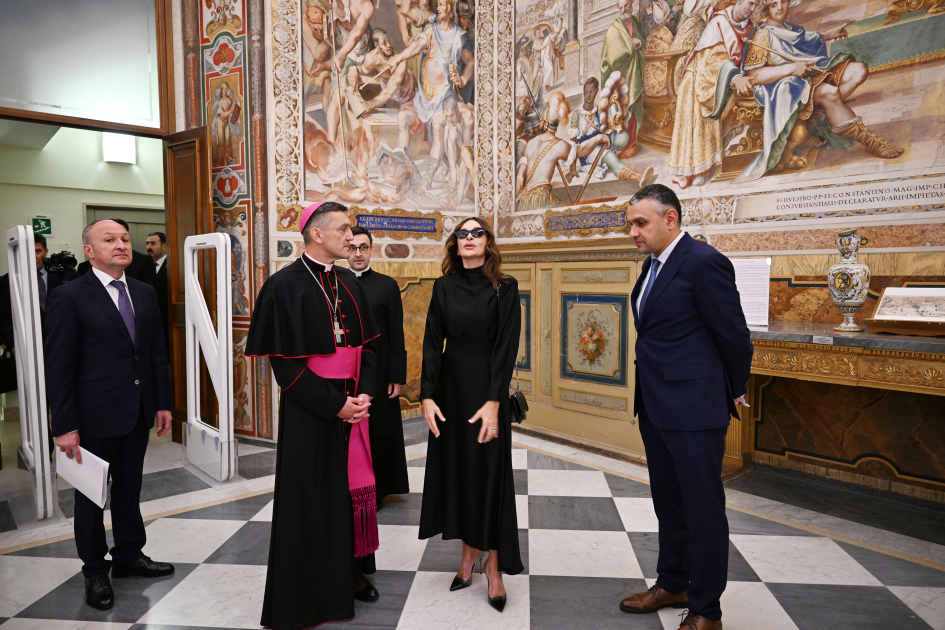
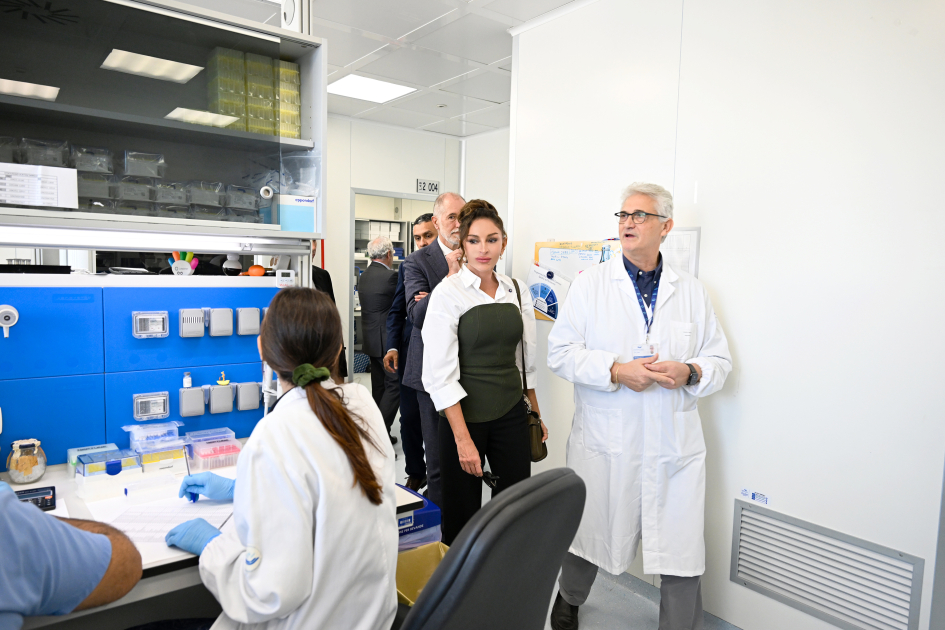
Third, the social-science dimension of dialogue: the Memorandum of Understanding signed with the “Bambino Gesu” pediatric hospital connects interfaith dialogue to health, science, and education platforms. Research on rare diseases, training in molecular-genetics laboratories, and the expansion of clinical diagnostic capabilities — all of these extend humanism beyond confessional boundaries and transform it into intercommunal solidarity.
Through this model, Azerbaijan does not “export values”; rather, it realizes shared values — human dignity, cultural heritage, and collective well-being — in technological, legal, and organizational formats. The expressions of appreciation and gratitude from the Vatican reflect recognition of this pragmatic, results-oriented approach. As a result, Azerbaijan is recognized not merely as a promoter of dialogue, but as an actor that constructs it: preserving historical monuments, responding to the real needs of communities, and carrying out the humanitarian agenda in parallel with political, cultural, and scientific lines. This constitutes a sustainable model both for regional stability and for intercultural understanding on a global scale.
Respect for world culture
The most important lesson of the visit in the context of cultural heritage is that Azerbaijan views restoration not merely as a cosmetic or decorative act, but as a combination of scientific-technological, ethical, and organizational standards. The work carried out in the Catacombs of Commodilla, Marcellino and Pietro, and Sebastian, as well as in the Basilicas of St. Peter and St. Paul, demonstrates the application of nanotechnologies and laser methods: the goal is not the “visual restoration” of the monument, but the safe transmission of its material structure and spiritual narrative to future generations. Requirements such as selecting materials compatible with the underground environment, eliminating structural risks, and ensuring visitor safety are fully aligned with modern preservation standards.
Two strategic impacts are evident here. First, knowledge transfer: through partnerships, Azerbaijan familiarizes its specialists with advanced methodologies, strengthening local human capital for future projects. Second, reputation capital: successful restoration work in UNESCO-designated cultural sites consolidates Azerbaijan’s brand as a reliable partner and positions the country as an active player in cultural heritage diplomacy.
It is no coincidence that Vatican officials described their efforts as an example of strengthening inter-civilizational ties: work on cultural monuments preserves the most emotional foundation of intercommunal dialogue — shared spaces of memory. These spaces soften ideological confrontation, weaken the “us” versus “them” divide, and create a common humanitarian language.
Azerbaijan’s approach is also ethical: regardless of a monument’s religious affiliation, it is valued as part of humanity’s heritage. This sends a clear message to both domestic and international audiences: inclusivity and universal respect form the basis of cultural heritage policy. Thus, respect for world culture is not just a statement on paper, but is confirmed through standardized technical processes, transparent partnerships, and outcomes aimed at public benefit. The expressions of gratitude during the visit and the opening of doors to new projects are a natural result of this professional and responsible approach.
Reflection of the Azerbaijani people’s rich legacy of tolerance and the significance of this visit
Azerbaijan’s tradition of tolerance stems from historical experience: the centuries-long coexistence of diverse religions and cultures has become not just a geographic necessity, but a value system embedded in social norms. Today, this heritage is presented on international platforms as one of the main pillars of state policy. Mehriban Aliyeva’s visit to the Vatican made this heritage visible both symbolically and practically.
The symbolic dimension is represented by the pomegranate tree planted in the Vatican gardens, which demonstrates the synthesis of local cultural symbols with universal humanitarian values. The practical dimension encompasses restoration, community relations, and social-science projects: the political decision to construct the second Catholic Church in Baku, exemplary relations with the Catholic community, scientific and healthcare cooperation with the “Bambino Gesu” hospital, and the opening of the embassy office all illustrate how tolerance has been transformed into everyday governance mechanisms.
The significance of this visit can be summarized in three directions. First, domestic legitimacy: the multicultural identity of Azerbaijani society receives international recognition, which strengthens the sustainability of the country’s tolerance policy. Second, regional stability: cooperation within interfaith and legal frameworks contributes to an environment of peace and trust, creating mutual interdependence through soft power. Third, global image: Azerbaijan presents a results-oriented model of humanitarian diplomacy — not just a “process”; monuments are restored, community needs are met, and knowledge and technology are shared.
Thus, the visit does not merely recall Azerbaijan’s heritage of tolerance; it transforms it into a living element of modern governance, diplomacy, and social policy. This strengthens the country’s status as a reliable partner on the international stage, opens broad opportunities for future cultural, scientific, and social projects, and further consolidates Azerbaijan’s role as a bridge between civilizations.



 Follow us on Telegram
 t.me/apanewsaz
 Follow us on Instagram
 Follow us on TikTok
 Follow us on Facebook
 Follow us on X