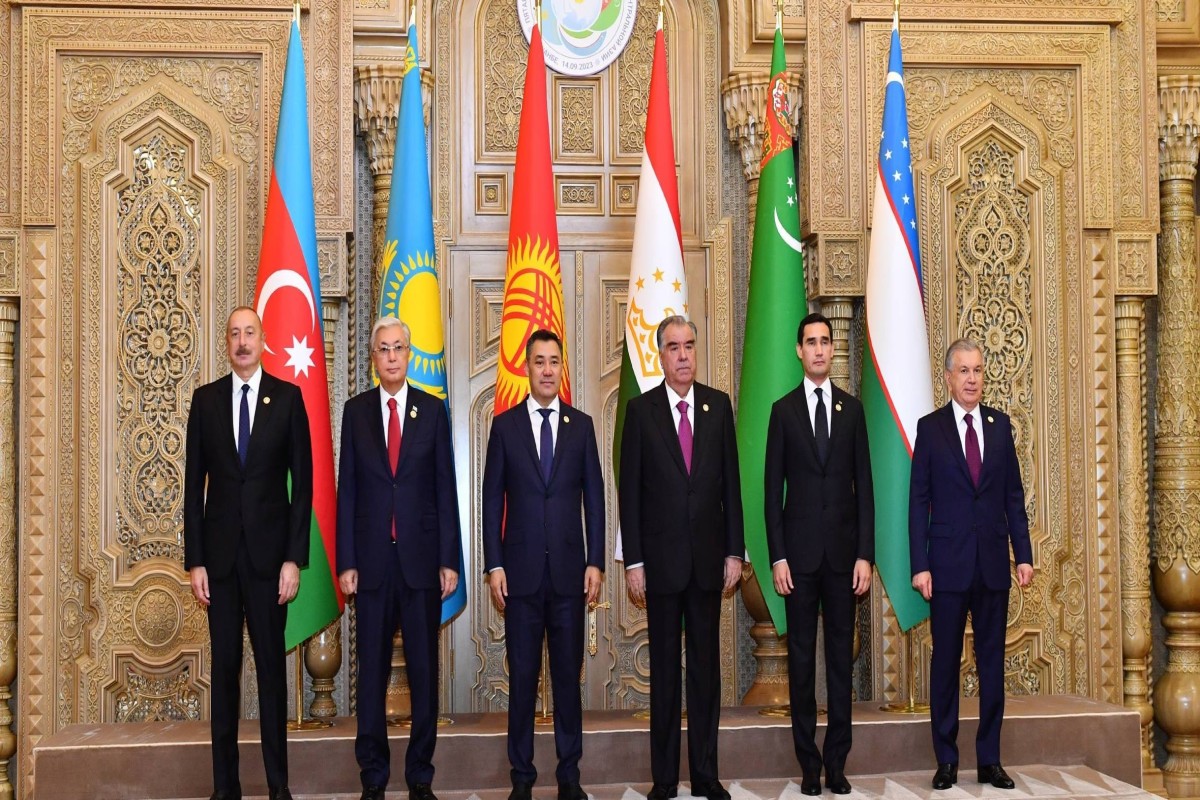


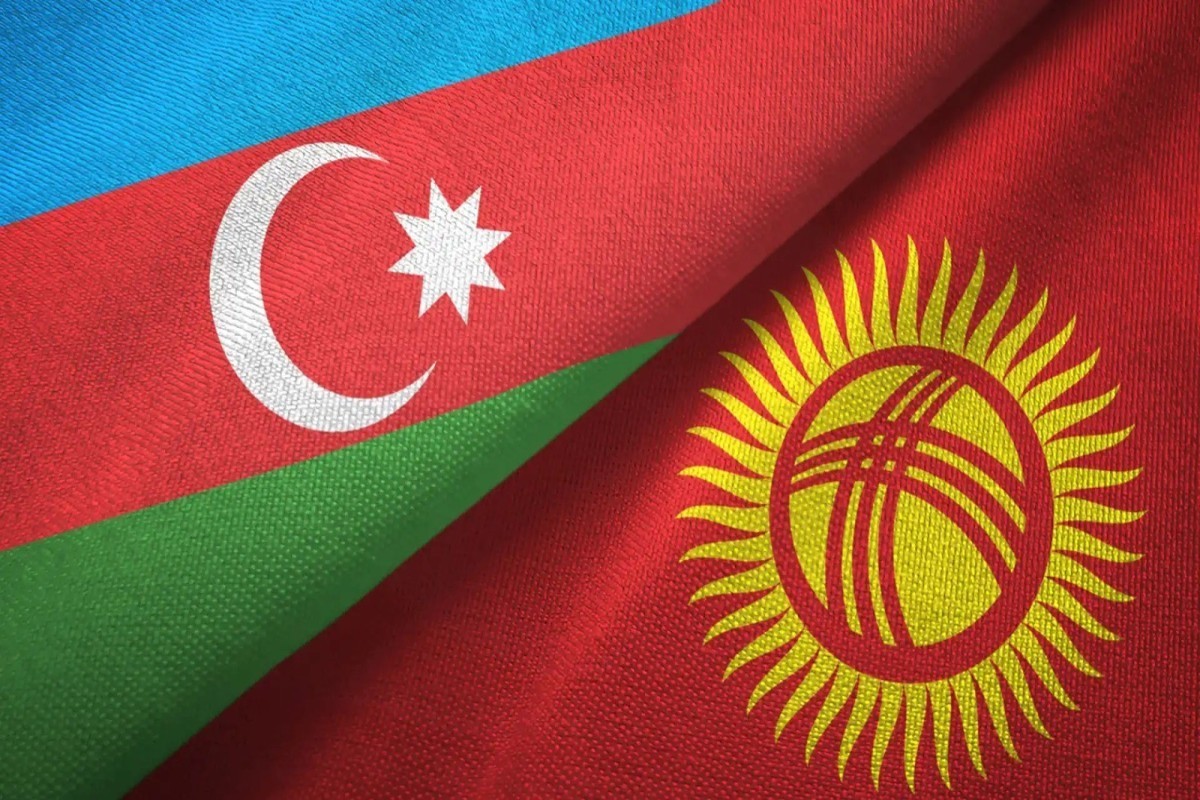


President of Azerbaijan Ilham Aliyev's participation in the 3rd meeting of the Azerbaijan-Kyrgyzstan Interstate Council, held in the Kyrgyz city of Cholpon-Ata, demonstrates that relations between the two countries have reached a new strategic stage. The visit is significant not only in terms of the development of bilateral relations, but also for deepening political integration within the Organization of Turkic States, expanding the potential of the Middle Corridor, and strengthening geostrategic cooperation between Central Asia and the South Caucasus.
Against the backdrop of global geopolitical changes, the strengthening of political coordination between Baku and Bishkek indicates that cooperation in regional security, transport, energy, and investment has entered a new phase. The 3rd meeting of the Interstate Council was also marked by important decisions that further strengthened the institutional foundations of this partnership.
The decision adopted at the 3rd meeting of the Interstate Council emphasizes the high level of allied relations between the two countries and highlights the importance of expanding cooperation in the fields of trade and the economy, transport, energy, agriculture, and culture and humanitarian affairs. It also highly appreciates the participation of Kyrgyz partners in reconstruction projects in Azerbaijan's liberated territories, particularly the construction of the Aikol Manas Secondary School in the village of Khydyrly in the Aghdam district. These decisions confirm that Azerbaijan-Kyrgyzstan relations have entered a long-term stage of cooperation based on a model of strategic alliance.
In a comment to the APA, political analyst Yegana Hajiyeva said that the modern international system is undergoing a profound transformation, and that intensifying competition among global centers of power and the weakening of the traditional security architecture are forcing states to redefine their foreign policy priorities.

According to her, the concept of a strategic alliance has evolved significantly from its previous meaning: "Whereas strategic partnership was once based primarily on military cooperation and political support, today it has evolved into a comprehensive model of cooperation that serves to shape the regional geopolitical order, manage geoeconomic routes, and ensure multilateral political coordination."
The expert believes that for this reason, relations between Azerbaijan and Kyrgyzstan should not be viewed solely through the prism of bilateral cooperation. In her opinion, these relations constitute an important element of the emerging geopolitical space between Central Asia and the South Caucasus, as well as the evolving political configuration across Eurasia.
Yegana Hajiyeva stressed that the geopolitical landscape of Central Asia has changed significantly over the past three decades: "Previously, the foreign policies of the countries in the region were largely shaped within the balance of power between Russia, China, and the West. This limited the development of regional integration initiatives."
According to the political analyst, the institutional strengthening of the Organization of Turkic States, the growing strategic importance of the Middle Corridor, and increasing demand for alternative transport and communication routes have, for the first time, united Central Asia and the South Caucasus into a single geopolitical space.
"In this process, Azerbaijan has become not only an important geographical link but also a center of political coordination thanks to its foreign policy. Azerbaijan is no longer merely a transit country or an energy exporter. Baku is acting as a platform that reconciles various geopolitical interests, promotes regional cooperation, and serves as one of the key initiators of political integration among the Turkic states. The dynamic development of relations with Kyrgyzstan is an integral part of this strategic approach," she said.
The expert noted that cooperation between Azerbaijan and Kyrgyzstan has long gone beyond the boundaries of economic projects. Mutual investments, transport corridors, logistics routes, energy cooperation, and political coordination have already become elements of a unified geostrategic concept.
According to her, this cooperation deepens political integration between Central Asia and the South Caucasus, strengthens the institutional unity of the Turkic world, and contributes to the emergence of a new center of power on the geopolitical map of Eurasia.
Yegana Hajiyeva believes that one of the most important outcomes of this cooperation is its impact on the regional security environment. In her view, security in modern international relations is no longer determined solely by military factors, but also by political trust, economic interdependence, and shared strategic interests.
"The strategic partnership developing between Azerbaijan and Kyrgyzstan combines these three elements and contributes to the creation of a belt of stability between Central Asia and the South Caucasus."
The expert added that Central Asia and the South Caucasus are no longer passive regions where major powers compete for influence. According to her, the region is becoming a key strategic space that will shape the future of international transport routes, energy security, and Eurasian integration.
"For this reason, viewing Azerbaijan-Kyrgyzstan relations merely as bilateral cooperation would be an incomplete political assessment. In reality, this process is about the formation of a new model of political integration in the Turkic world, the establishment of a unified geostrategic space between Central Asia and the South Caucasus, and the expansion of the influence of regional states in the future political order of Eurasia. In this process, Azerbaijan's role has gone beyond that of a participating country and has risen to the level of a leading political actor shaping the regional agenda," Yegana Hajiyeva said.
Referring to the Treaty on Allied Relations signed between the two countries, the expert said that the document constitutes the fundamental legal framework that elevates Azerbaijan-Kyrgyzstan relations to a qualitatively new stage and enshrines the highest level of political cooperation: "The treaty is not only an indicator of mutual political trust, but also defines the main directions of long-term strategic cooperation in the fields of security, foreign policy coordination, the economy, transport, energy, and humanitarian affairs."
The expert noted that the document would make an important contribution to deepening integration within the Organization of Turkic States, accelerate the development of the Middle Corridor, and provide additional momentum for expanding geoeconomic ties between Central Asia and the South Caucasus.
In her opinion, the decisions adopted at the third meeting of the Interstate Council, together with the Treaty on Allied Relations, transform relations between the two countries from a traditional partnership into an institutional, long-term model of strategic alliance.
"This will enable Azerbaijan and Kyrgyzstan to coordinate more closely on regional and international issues, defend their common interests from a unified position, and further strengthen political solidarity within the Turkic world."


 Follow us on Telegram
 t.me/apanewsaz
 Follow us on Instagram
 Follow us on TikTok
 Follow us on Facebook
 Follow us on X