












Baku. Vugar Masimoglu – APA. Russian-Armenian agreement signed in Yerevan today for prolongation of the term of deployment of the Russian military base in Armenia didn’t create new agenda. The similar agreement has been existed between the two countries since 1995 and after the USSR collapse Russia took responsibility for the security of Armenia. The newly-signed agreement didn’t entrust the sides with additional responsibilities. Moscow was a guarantor for Armenia’s security on the basis of bilateral and multilateral (Collective Security Treaty Organization) agreements and it continues to do that. There is no important process in the world and region that can change the situation and it has little probability to occur.
What is changed? The agreement is a Russian message to the West that it will not step back from its policy to strengthen its position in the South Caucasus for long time. Unlike its predecessor, the Obama’s administration prefers to pursue careful policy in the points where its interests confront with the Russian interests and following the East Europe it gives up the South Caucasus to Kremlin. Moscow successfully uses the USA’s “momentary†hesitations to strengthen its positions in the troubled areas. Russia officialized its military presence in Armenia for 35 years more and it is proving to the United States that scenarios prepared by the Western political circles for “pressing Russia to leave the South Caucasus†is utopia.
One of the dangerous points of the agreement is that it leads to the military balance upset in the South Caucasus and it can also promote the acceleration of the armament process in the region. Of course, military balance upset in favor of the aggressor country concern other countries and both Azerbaijan and Georgia (with direct support of the United States) will have to increase defense expenses to restore the balance. The Russian-Armenian agreement shows that the South Caucasus will remain as an active conflict zone for long time.
The agreement signed in Yerevan means that the situation will not be changed toward the settlement of Nagorno Karabakh conflict for long time. Updating its alliance with the aggressive part of the Nagorno Karabakh conflict, Moscow proved that it can not take unbiased position in the settlement of the conflict. This action will render confidence, which was reduced even without that, to the OSCE Minsk Group’s efforts null. Russia doesn’t officialize its commitments not to use its military resources in Armenia against Azerbaijan. In this regard, Russian-Armenian military-political alliance will threaten Azerbaijan’s interests, specially its interests in the solution to Nagorno Karabakh conflict, for long years (until 2044).
What can change this status-quo existed and expected to exist for long years? In this context, Azerbaijan’s joining the Collective Security Treaty Organization is one of the scenarios that can be considered in hypothetic order. In fact, the agreement signed in Yerevan is a message to Azerbaijan inviting it to the Collective Security Treaty Organization. Of course, Azerbaijan’s representation in this military alliance can fundamentally change the balance of political interests in the region. Baku has fundamental arguments to avoid membership in CSTO. Azerbaijan can not participate in joint security scenarios together with Armenia, which occupied a part of its lands. CSTO membership can be possible only in that case when the Nagorno Karabakh conflict is solved and Armenia doesn’t threaten Azerbaijan’s security. Can Russia, which hopes to see Azerbaijan in CSTO, be a guarantor for fair solution to Nagorno Karabakh conflict? It is not likely. Russia prefers its interests than interests of Azerbaijan, Armenia or Georgia and in this regard, Russia makes brave steps forward against the background of weakening positions of the West in the region and it shouldn’t surprise anyone that Russia will start pressure campaigns against the regional countries in the near future.
How can the threats to Azerbaijan’s interests posed by Russia-Armenia alliance be neutralized? It is possible to view variants of improving the relations with the countries having similar interests into the strategic alliance, making the strategic position and energy resources of the country an influential political resource. It would be one of the most important steps to improve the relations with the neighboring countries, first of all with Georgia and Turkey into real strategic alliance (US-UK, US-Israel, Russia-Armenia etc.). In this context the “Contract between Turkey and Azerbaijan on strategic partnership and mutual assistance†signed during the visit of Turkish President Abdullah Gul to Azerbaijan is of great importance. Such kind of contracts officializing the strategic alliance lay the responsibility on the participating states to perform from common position, not pursuing a policy contrary to one another.
Everyone knows that at times there were problems between Azerbaijan and Turkey. And the main source of these problems was compulsion of Turkey by the West to pursue policy-approach with Armenia. Opening borders with Armenia is one of the urgent issues in the agenda for two years. Indeed, Armenia represents interests of Russia in this issue as well. Undoubtedly, making more official its partnership ties with Moscow, Yerevan will increase its pressure upon Ankara in the issue of opening borders in the next period. It is not clear whether Ankara will make backward or not in this issue. Last statements made at the official level shows Ankara’s hesitation, opinions on opening borders with Armenia temporarily due to holding trainings with NATO aims to prepare the public opinion from psychological standpoint.
From this standpoint, Turkey will send a message to both homeland and international society by opening borders with Armenia. By this means, ruling AKP party will be able to give a promise “You see, I have shown that I may open borders though the pressure of Azerbaijan, this issue will be realized after the elections†to the part of its electorate which supports the opening of borders. The message to US, Europe and Russia does not change essentially: “I have shown that I may open borders though pressure from inside, your pressure is important for direct solution of this problemâ€.
Moreover, unlike previous period, Turkey has a new argument in its hand – this is the treaty on strategic partnership signed with Azerbaijan. According to this treaty, there is a connection between the opening of Turkey-Armenia borders and settlement of Nagorno Karabakh conflict. Formalized strategic alliance means the mutual protection of interests and from this point of view Turkey will partly neutralize pressures through making statements that the opening of Turkey-Armenia borders is contrary to the interests of an official ally Azerbaijan. Certainly, Ankara should openly declare that it seriously approaches the commitments undertaken to Azerbaijan. Like statement Dmitry Medvedev made in Yerevan that “we seriously approach the commitments undertaken to Armeniaâ€.
Dmitry Medvedev’s visit to Armenia, Abdulla Gul’s official visit to Azerbaijan again resulted with formalization of allied relations between the countries. Russia and Turkey formalized their interests in struggle for Caucasus through Russia’s prolongation of the term of deployment of the its military base in Armenia and Turkey’s strategic alliance and mutual assistance treaty with Azerbaijan. Poling process has already started in the South Caucasus. Will the treaties signed in Yerevan further accelerate this process? We will find an answer to this question soon. /APA-Analytics/
Turkey-Azerbaijan strategic alliance treaty and Russia-Armenia military agreement: Status-quo in the South Caucasus remains unchanged – ANALYTICS

 20 August 2010 16:22 (UTC +04:00)



 İDMAN XƏBƏR
 Follow us on Telegram
 t.me/apanewsaz
 Follow us on Instagram
 Follow us on TikTok
 Follow us on Facebook
 Follow us on X
Political
Alarm bells over the Caspian Sea: Sharp decline in water levels poses not only environmental but also economic and strategic challenges - ANALYSIS
16:15
 9 October 2026
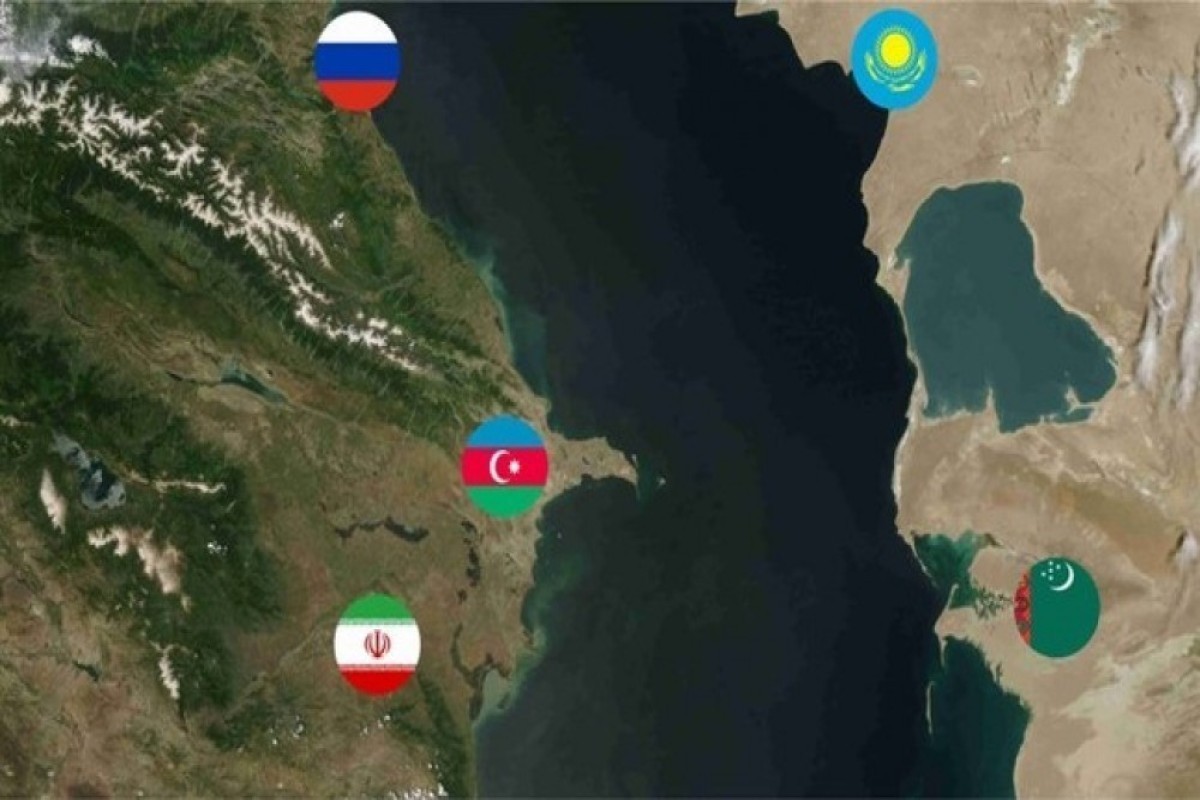
Caspian Environmental Summit: Sea’s environmental problems to be discussed in five-party format - COMMENTARY
13:34
9 October 2026
Consultative Meeting of Central Asian and Azerbaijani Heads of State: Cooperation format transforms into C6 - COMMENTARY
10:39
8 October 2026
School protests in France: International organizations remain silent on human rights violations - COMMENTARY
14:26
7 October 2026

NEWS FEED
More than 40 flights to Istanbul have been diverted to other airports
04:09
15 October 2026
Houthis claim hit on Saudi fighter jet
03:41
15 October 2026
US destroys Iran-linked ship in Gulf of Oman
02:37
15 October 2026
Aston Villa beat Fenerbahce 6-0 in Champions League clash at Villa Park
02:10
15 October 2026
Media and Broadcasting Council and Ministry of Health release joint statement
01:37
15 October 2026
Trump: Canada will end up being 51st state
01:14
15 October 2026
Istanbul roads collapse, traffic hits 90% as flooding continues
00:52
15 October 2026
Banks, buildings burn as Albania's capital Tirana erupts into student violence
00:26
15 October 2026
Six years pass since Armenian army's shelling of Terter cemetery
00:00
15 October 2026
Haberturk: Teenager dies from electric shock during heavy rain in Istanbul
23:45
14 October 2026
Ukrainian President rules out resigning, holding elections
23:39
Audio
14 October 2026
FBI denies Patel's visit to Russia
23:16
14 October 2026
Britain will develop military equipment for Ukraine
23:00
14 October 2026
Dinner hosted on behalf of President Ilham Aliyev in honor of participants of 7th CICA Summit
22:44
14 October 2026
French President to visit Gulf states from October 19 to 21
22:34
14 October 2026
President Ilham Aliyev met with President of Tajikistan
22:18
14 October 2026
President Ilham Aliyev met with President of Uzbekistan-UPDATED
21:50
14 October 2026
US plans to deploy hundreds of thousands of kamikaze drones
21:41
14 October 2026
Zelenskyy says he feels 'betrayed' by Trump's actions
21:25
14 October 2026
FBI Director Patel visits in Russia
20:37
14 October 2026
Iranian FM, Lebanese President discuss developments in Lebanon and the region
20:27
14 October 2026
Le Pen and Melenchon gain momentum ahead of French 2027 election, poll shows
20:11
14 October 2026
Amir of Qatar arrives in Azerbaijan
19:35
14 October 2026
Hakan Fidan arrives in Baku - UPDATED
19:13
14 October 2026
President Ilham Aliyev met with President of Israel
19:11
14 October 2026
President Ilham Aliyev receives member of Political Bureau of CPC Central Committee
19:09
14 October 2026
President Ilham Aliyev receives Bahrain’s Foreign Minister
19:09
14 October 2026
Georgia not invited to EU forum
19:08
14 October 2026
President of Azerbaijan receives Sri Lankan minister
19:06
14 October 2026
President Ilham Aliyev met with Vietnamese Vice President
19:06
14 October 2026
State Migration Service: More than 30 Azerbaijani citizens readmitted from Germany
18:48
14 October 2026
MP from Pashinyan’s party denied entry to Russia
18:32
14 October 2026
Shavkat Mirziyoyev arrives in Baku - UPDATED
18:30
14 October 2026
Azerbaijani delegation familiarizes itself with operations of Kazakhstan’s leading ports and terminals
18:22
14 October 2026
Azerbaijani and Kyrgyz delegations hold meeting - VIDEO
18:15
14 October 2026
“Falcons Meet - 2026” joint tactical flight exercise continues - VIDEO
18:14
14 October 2026
Trump did not invite OSCE observers to the U.S. midterm elections
18:10
14 October 2026
Chinese and Russian foreign ministers meet in Baku
18:08
14 October 2026
Emomali Rahmon arrives in Azerbaijan
18:03
14 October 2026
Kyrgyz President arrives in Azerbaijan
17:47
14 October 2026
NATO Secretary General: No need for idea of unified European army
17:32
14 October 2026
Prime Ministers of Azerbaijan and Cambodia meet in Baku
17:29
14 October 2026
Kanak politician: We cannot allow France to continue its colonial policy
17:26
14 October 2026
Azerbaijan-Laos investment and business forum held in Baku - PHOTO - UPDATED
17:26
14 October 2026
Kazakh President begins visit to Azerbaijan
17:23
14 October 2026
Agreement reached on draft documents to be adopted at 7th CICA Summit in Baku tomorrow
17:19
14 October 2026
Assessment of OPEC+ countries’ production capacities to be ready by year-end
17:15
14 October 2026
Azerbaijani and Kyrgyz delegations hold meeting - VIDEO
17:11
14 October 2026
Russian FM arrives in Azerbaijan - UPDATED
16:58
14 October 2026
Novak: Diesel agreement with US will increase oil production in Russia
16:56
14 October 2026


