












By Alexander Jackson
Caucasus Update No. 53
Caucasian Review of International Affairs (CRIA)
www.cria-online.org
For some time, there have been fears that Turkey has begun moving away from its traditional Euro-Atlantic orientation, towards the Middle East and the Muslim world. Turkey’s condemnation of Israel’s attack on Gaza in January was followed by Prime Minister Recep Tayyip Erdogan’s walk-out during a debate with Israeli President Shimon Peres at the World Economic Forum.
In early October, Turkey vetoed Israel’s participation in a joint air-force exercise, again citing its conduct in Gaza. In the same week Turkish TV aired a show portraying Israeli soldiers as child- killers, provoking fury in Tel Aviv.
On a recent visit to Iran, the Turkish premier signed a gas deal and several economic cooperation agreements (Press TV, October 28). Before the visit, Mr Erdogan defended Iran’s right to nuclear energy and accused those countries which oppose Tehran’s atomic program of hypocrisy (Guardian, October 26). Iran’s President Mahmoud Ahmadinejad was understandably delighted, and pundits in the West were understandably shaken.
The New York Times argued that lack of progress on EU membership was driving Turkey away (NY Times, October 27). The Christian Science Monitor called it ‘worrisome’ (Christian Science Monitor, October 29). Overall, the assumption seems to be that Turkey’s growing clout, and disillusionment with its EU membership talks, is leading it towards a closer relationship with autocratic Middle Eastern states like Iran and Syria.
So are Europe and America ‘losing’ Turkey? Probably not. The evidence in support of this theory is disjointed and selective, and ignores other key facts. On Israel, for instance, this argument assumes that Turkey’s fury over Gaza is in some way manufactured, that it is designed entirely to win support on the ‘Arab street’ (and indeed the Persian street).
Although Turkey’s leaders are not blind to the credit that this will earn them in the Muslim world (also, within Turkey itself), there is little doubt that their anger is genuine. Turkey has been attempting to encourage progress on the Arab-Israeli peace process for years, and saw its fragile gains destroyed during Operation Cast Lead. Rightly or wrongly, Ankara sees Israel as mainly responsible. As for the TV program, it would be absurd to assume that the Turkish government was responsible for the content and the timing.
It is also odd to link Turkish anger at Israel with turning away from the EU. For all its links with Brussels and Washington, the Jewish state is not an integral part of ‘the West’, geographically or politically. Ankara is quite capable of opposing Israel’s actions without abandoning its EU membership application. And although the reputation of that process is heavily tarnished, and there is significant frustration amongst ordinary Turks over European hostility to Turkish membership, EU integration remains a priority of the AKP Government.
Senior Turkish officials have made this plain in recent days. They also poured cold water on the whole idea that Turkey is turning East – “Is it so easy to change direction?†asked President Abdullah Gul rhetorically (Today’s Zaman, October 30).
This statement hints at the heart of the matter. Complex states do not have a single geopolitical ‘direction’. President Gul visited Serbia on October 26th, but this hardly means that Ankara is seeking to re-establish Ottoman influence in the Balkans, as some seem to believe it is doing in the Middle East. To take another parallel, no-one would seriously believe that increased US diplomacy towards China would be a sign of abandoning NATO and Europe.
Ankara’s foreign policy, now more than ever, is famously focused on ‘zero problems with neighbours’ (RFE/RL, October 30). Given Turkey’s unique position at the confluence of so many different regions, this policy is bound to involve dealing with states whom the West distrusts – Iran, Russia, and Syria, for instance.
Expecting Turkey to suspend cooperation with Tehran is an easy judgement to make in Washington or Brussels, but not so in Ankara. An otherwise hostile Wall Street Journal acknowledged this on October 30, recognising that “nations do not have the luxury of picking their neighbours†(Wall Street Journal, October 30). Turkey needs Iran to cooperate: on energy, trade, and on containing Kurdish militants.
In any case, Turkey has absolutely no interest in a nuclear Iran. What most commentaries fearing a Turkish-Iranian alliance ignore is that, just a few weeks ago, Ankara ordered advanced Patriot missile batteries from the US (Eurasia Daily Monitor, September 16). It was keen to insist that this was not due to any threat, but the move is obviously in response to Iran’s strategic missile programme. Mr Erdogan’s praise of President Ahmadinejad was, given this context, simple diplomacy, made before a visit in which he hoped to secure extensive trade and energy deals. It would have been surprising, and contrary to Turkey’s foreign policy, to have prepared for his visit by thundering against the country’s nuclear program.
The ‘losing Turkey’ argument – which assumes that, given the AK Party’s Islamist past, Turkey is also becoming more Islamic in nature - also ignores moves such as the thaw with Christian Armenia. This was also undertaken in the framework of the same “zero problems†concept.
Assuming that Turkey is somehow moving away from the West, towards the Middle East, or towards some kind of pact with Iran, is a narrow view. It ignores historic rivalry between them, fails to recognise Turkish fears of an Iranian nuclear weapon (whatever Mr Erdogan might say in public), and conflates Israel with the EU or NATO. Most importantly, it underestimates Ankara’s foreign policy. Turkey is smart enough to be able to look East and West at the same time.


 Follow us on Telegram
 t.me/apanewsaz
 Follow us on Instagram
 Follow us on TikTok
 Follow us on Facebook
 Follow us on X
Political
Alarm bells over the Caspian Sea: Sharp decline in water levels poses not only environmental but also economic and strategic challenges - ANALYSIS
 16:15
16:15
 9 October 2026
Caspian Environmental Summit: Sea’s environmental problems to be discussed in five-party format - COMMENTARY
13:34
9 October 2026
Consultative Meeting of Central Asian and Azerbaijani Heads of State: Cooperation format transforms into C6 - COMMENTARY
10:39
8 October 2026
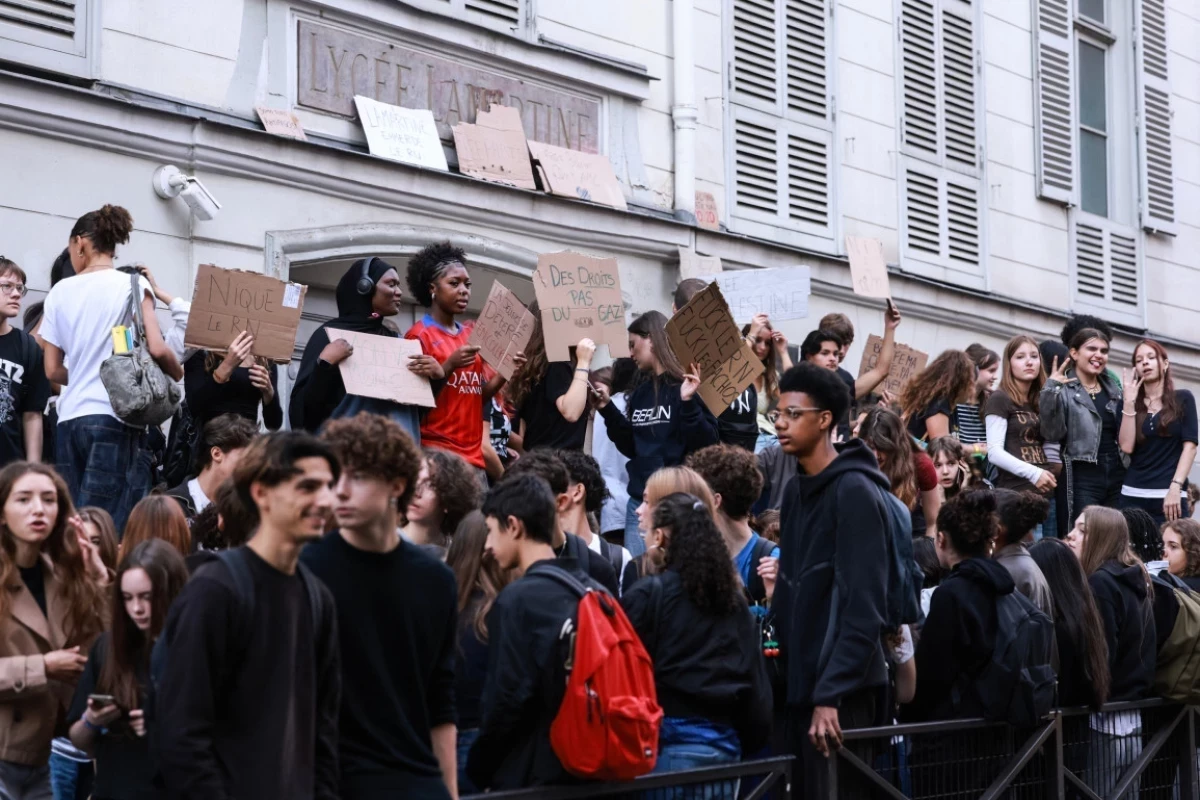
School protests in France: International organizations remain silent on human rights violations - COMMENTARY
14:26
7 October 2026

NEWS FEED
More than 40 flights to Istanbul have been diverted to other airports
04:09
15 October 2026
Houthis claim hit on Saudi fighter jet
03:41
15 October 2026
US destroys Iran-linked ship in Gulf of Oman
02:37
15 October 2026
Aston Villa beat Fenerbahce 6-0 in Champions League clash at Villa Park
02:10
15 October 2026
Media and Broadcasting Council and Ministry of Health release joint statement
01:37
15 October 2026
Trump: Canada will end up being 51st state
01:14
15 October 2026
Istanbul roads collapse, traffic hits 90% as flooding continues
00:52
15 October 2026
Banks, buildings burn as Albania's capital Tirana erupts into student violence
00:26
15 October 2026
Six years pass since Armenian army's shelling of Terter cemetery
00:00
15 October 2026
Haberturk: Teenager dies from electric shock during heavy rain in Istanbul
23:45
14 October 2026
Ukrainian President rules out resigning, holding elections
23:39
Audio
14 October 2026
FBI denies Patel's visit to Russia
23:16
14 October 2026
Britain will develop military equipment for Ukraine
23:00
14 October 2026
Dinner hosted on behalf of President Ilham Aliyev in honor of participants of 7th CICA Summit
22:44
14 October 2026
French President to visit Gulf states from October 19 to 21
22:34
14 October 2026
President Ilham Aliyev met with President of Tajikistan
22:18
14 October 2026
President Ilham Aliyev met with President of Uzbekistan-UPDATED
21:50
14 October 2026
US plans to deploy hundreds of thousands of kamikaze drones
21:41
14 October 2026
Zelenskyy says he feels 'betrayed' by Trump's actions
21:25
14 October 2026
FBI Director Patel visits in Russia
20:37
14 October 2026
Iranian FM, Lebanese President discuss developments in Lebanon and the region
20:27
14 October 2026
Le Pen and Melenchon gain momentum ahead of French 2027 election, poll shows
20:11
14 October 2026
Amir of Qatar arrives in Azerbaijan
19:35
14 October 2026
Hakan Fidan arrives in Baku - UPDATED
19:13
14 October 2026
President Ilham Aliyev met with President of Israel
19:11
14 October 2026
President Ilham Aliyev receives Bahrain’s Foreign Minister
19:09
14 October 2026
President Ilham Aliyev receives member of Political Bureau of CPC Central Committee
19:09
14 October 2026
Georgia not invited to EU forum
19:08
14 October 2026
President Ilham Aliyev met with Vietnamese Vice President
19:06
14 October 2026
President of Azerbaijan receives Sri Lankan minister
19:06
14 October 2026
State Migration Service: More than 30 Azerbaijani citizens readmitted from Germany
18:48
14 October 2026
MP from Pashinyan’s party denied entry to Russia
18:32
14 October 2026
Shavkat Mirziyoyev arrives in Baku - UPDATED
18:30
14 October 2026
Azerbaijani delegation familiarizes itself with operations of Kazakhstan’s leading ports and terminals
18:22
14 October 2026
Azerbaijani and Kyrgyz delegations hold meeting - VIDEO
18:15
14 October 2026
“Falcons Meet - 2026” joint tactical flight exercise continues - VIDEO
18:14
14 October 2026
Trump did not invite OSCE observers to the U.S. midterm elections
18:10
14 October 2026
Chinese and Russian foreign ministers meet in Baku
18:08
14 October 2026
Emomali Rahmon arrives in Azerbaijan
18:03
14 October 2026
Kyrgyz President arrives in Azerbaijan
17:47
14 October 2026
NATO Secretary General: No need for idea of unified European army
17:32
14 October 2026
Prime Ministers of Azerbaijan and Cambodia meet in Baku
17:29
14 October 2026
Kanak politician: We cannot allow France to continue its colonial policy
17:26
14 October 2026
Azerbaijan-Laos investment and business forum held in Baku - PHOTO - UPDATED
17:26
14 October 2026
Kazakh President begins visit to Azerbaijan
17:23
14 October 2026
Agreement reached on draft documents to be adopted at 7th CICA Summit in Baku tomorrow
17:19
14 October 2026
Assessment of OPEC+ countries’ production capacities to be ready by year-end
17:15
14 October 2026
Azerbaijani and Kyrgyz delegations hold meeting - VIDEO
17:11
14 October 2026
Russian FM arrives in Azerbaijan - UPDATED
16:58
14 October 2026
Novak: Diesel agreement with US will increase oil production in Russia
16:56
14 October 2026


