



The Zangezur corridor has historically been a strategic route that provided the main connection between Azerbaijan and Nakhchivan. During the Soviet period, both freight and passenger transportation were carried out via this route via the railway, playing an important role in the economic and social life of the region. After Armenia occupied the Azerbaijani lands, the railway stopped operating, and Nakhchivan's direct land connection with Azerbaijan was cut off.
In November 2020, with the signing of the trilateral statement, it was decided to open all communication lines in the region, and thus the restoration of the Zangezur corridor was included on the agenda. On August 8, 2025, in Washington, the President of Azerbaijan, the President of the United States, and the Prime Minister of Armenia signed a Joint Declaration regarding the meeting held between the President of Azerbaijan and the Prime Minister of Armenia.
Paragraph 4 of the aforementioned Declaration states that “The Republic of Armenia will work with the United States of America and mutually determined third parties, to set forth a framework for the “Trump Route for International Peace and Prosperity” (TRIPP) connectivity project in the territory of the Republic of Armenia. We confirm our determination to pursue efforts in good faith to achieve this goal in the most expeditious manner.”
Azerbaijan takes steps to implement the Zangezur corridor, Armenia waits
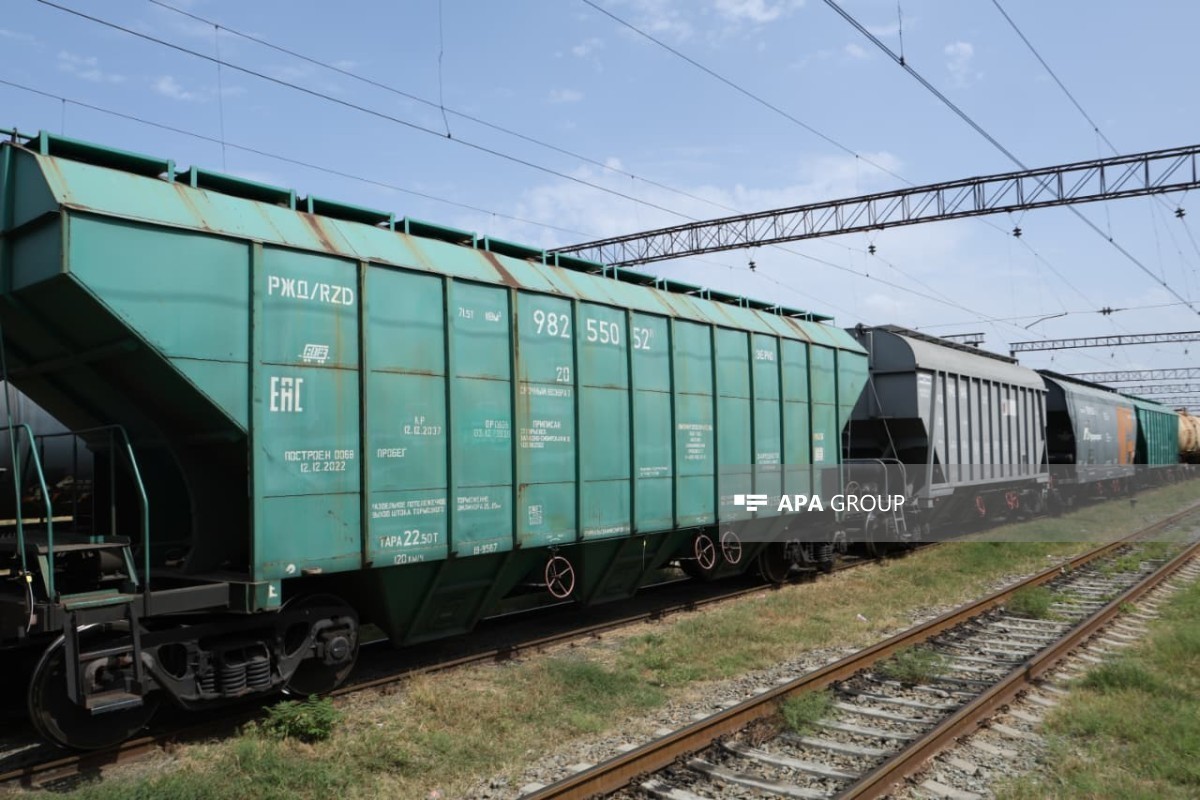
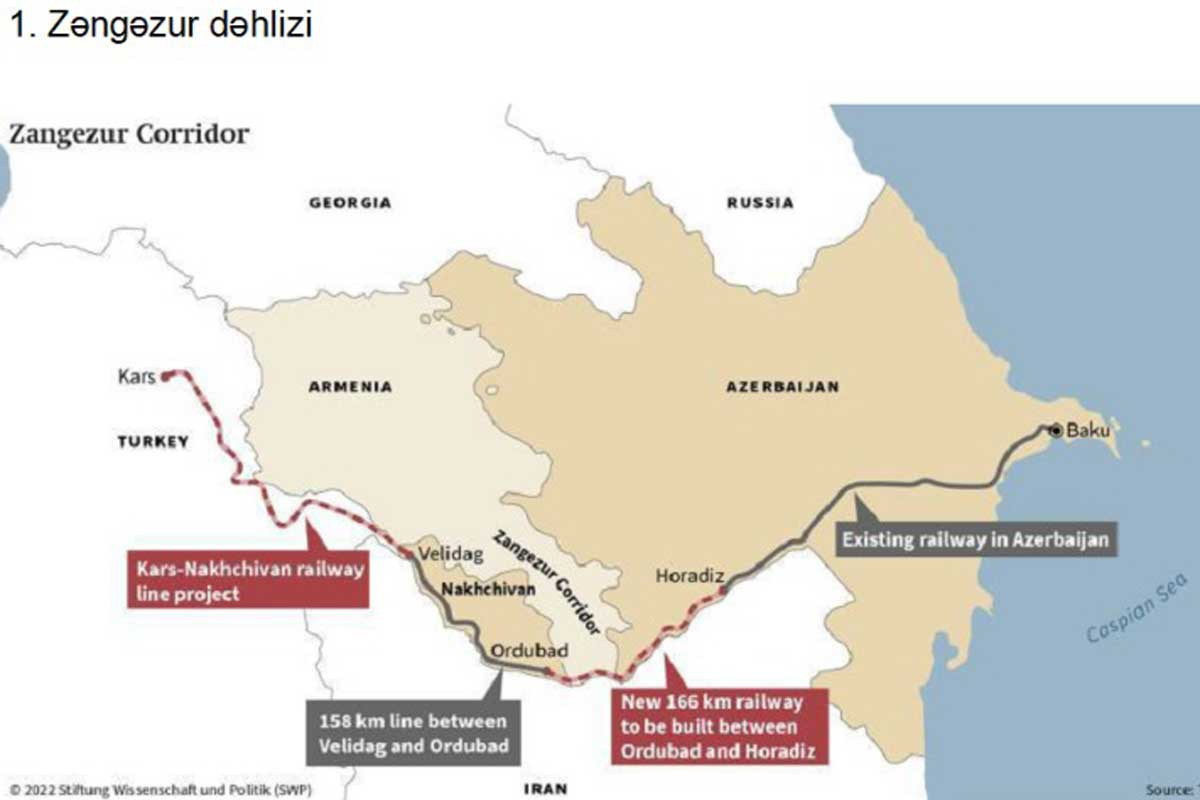
The construction of the Horadiz-Aghband railway is underway by the Azerbaijani state in order to implement the Zangezur corridor (“Trump Route for International Peace and Prosperity” - TRIPP).

The project was launched in 2021 and is scheduled for full completion in 2026. The Horadiz–Aghband railway line is a single-track, non-electrified route. Its total length is 110.4 km (140.6 km including sidings), and along the route, stations are planned in Horadiz, Yukhari Marjanli, Shukurbayli, Soltanli, Gumlag, Hakari, Minjivan, Bartaz, and Aghband. The Azerbaijani section is expected to be fully operational within one year.
To date, 84% of the design work on the Horadiz–Aghband railway line has been completed, while physical progress on construction and installation works stands at 67%.
As for the Ahmadbayli–Horadiz–Minjivan–Aghband highway project, the total length is 149.902 km. Within this framework, the main road will extend 123.566 km, with junction roads totaling 26.336 km. The road will be of technical category 1B, with a carriageway width ranging from 14 to 21 meters and an embankment width between 21.5 and 29.5 meters. The highway will consist of 4 to 6 lanes. Currently, 95% of the physical work under this project has been completed.
Meanwhile, on August 22, a groundbreaking ceremony was held in Türkiye's eastern Igdir province for the construction of the Kars–Igdir–Aralik–Dilucu railway. The 224-kilometer double-track, electrified, and signaled line is planned to be completed and commissioned within four years. This route will become part of the Zangezur Corridor.
The planned route is 43 kilometers long. However, as it passes through Armenian territory, no timeline has been set for the design and construction works.
An essential part of the Middle Corridor
Member of the Milli Majlis Committee on Economic Policy, Industry, and Entrepreneurship, Tahir Mirkishili, told APA that ever since trade became the driving force of the economy, the Eurasian continent has been one of the world’s most important economic spaces. He noted that throughout history, numerous wars have been fought for control over trade in this region, with empires seeking to dominate routes between Europe and Asia. While in the past battles were fought over land roads and straits, in the 21st century, the competition has shifted to control over transport corridors.
According to him, the Zangezur Corridor, which has become a focal point of global attention and a critical economic and geopolitical route in Eurasia, holds strategic importance: “Thanks to the political wisdom of President Ilham Aliyev, the peace declaration signed in the United States has created significant opportunities for the international status and active operation of the corridor. The Zangezur Corridor is an important component of the Middle Corridor, which is increasingly vital in East–West trade relations. By reviving the historic Silk Road, it connects Azerbaijan directly to Europe through Nakhchivan and Türkiye.”
The role of the Zangezur Corridor in the North–South Transport Corridor
The MP emphasized that the Zangezur Corridor has an estimated annual cargo capacity of around 15 million tons. This highlights its value in creating added benefits not only for the Middle Corridor but also for the North–South transport routes, thereby expanding Azerbaijan’s transit capabilities. With its implementation, an uninterrupted circular railway network will be established within the country: “Compared to the Baku–Tbilisi–Kars railway, the Zangezur Corridor offers a shorter distance, which, thanks to terrain and speed advantages, ensures more efficient transport in terms of both time and cost. At the same time, the corridor provides an alternative to existing routes, enabling diversification of cargo flows in different directions. This expands the region’s transit potential and strengthens Azerbaijan’s role as a logistics hub along the Middle Corridor. Growing trade ties further enhance the strategic role of the Middle Corridor, with freight volumes increasing annually. According to projections by the World Bank, the European Bank for Reconstruction and Development (EBRD), and the Organisation for Economic Co-operation and Development (OECD), cargo volumes along the Middle Corridor are expected to reach 11 million tons by 2030, while container capacity will rise to 865,000 TEU by 2040. In this regard, the opening of the Zangezur Corridor, as a key branch of the Middle Corridor, is of particular importance.
The Zangezur Corridor is not only an integral part of the Middle Corridor but also a complementary element of the North–South transport corridor. It creates additional opportunities for cargo arriving from India and Iran to be transported northward via Azerbaijan. For example, goods from Iran could be routed through Nakhchivan to Türkiye and from there to Northern Europe.”
Impact of the Zangezur Corridor on Azerbaijan’s economy, Turkic integration, and global trade
Mirkishili further stressed that Azerbaijan’s non-oil economy is undergoing rapid modernization, significant qualitative transformation, and industrialization: “At such a stage, the Zangezur Corridor, which expands our export opportunities and ensures quick and cost-effective access to key markets, will have a substantial positive effect on Azerbaijan’s domestic economy. At the same time, the corridor is of exceptional importance for the economic integration of emerging Turkic states and for enhancing their global competitiveness. Recent statements by the world’s major trade partners demonstrate that the swift activation of the Zangezur Corridor is in everyone’s interest and will have a positive impact on international trade.”


 Follow us on Telegram
 t.me/apanewsaz
 Follow us on Instagram
 Follow us on TikTok
 Follow us on Facebook
 Follow us on X