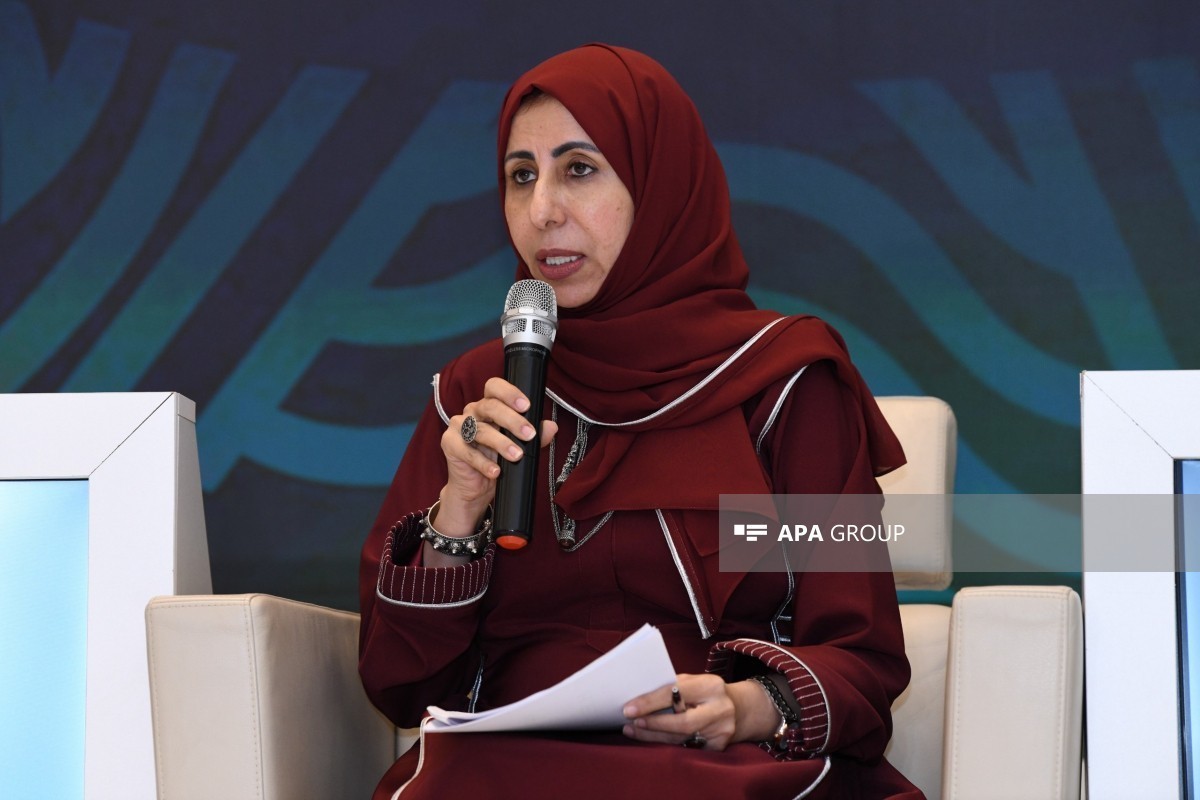


Unfortunately, development indicators in Yemen have deteriorated significantly over the 12 years since the conflict began, Yemen’s Minister of Planning and International Cooperation, Afrah Al-Zouba, said during the “Islamic Development Bank Resilience Dialogue 2026: High-Level Panel Session” organized as part of the Islamic Development Bank Annual Meetings held in Baku, APA-Economics reports.
According to her, approximately 80 percent of the population currently lives in poverty: “Fifty percent of them suffer from multidimensional poverty. State revenues have fallen by 70 percent, and the budget deficit is very high. The depreciation of the local currency against the U.S. dollar has led to rising inflation and increased prices for essential services and goods.”
She stressed that there are also very alarming indicators in Yemen: “More than 4.5 million children are out of school, and stunting among children under the age of five has reached approximately 49 percent. This is a very serious and alarming situation. At the same time, Yemen is also severely affected by climate change and is among the three most affected countries in the world. This further aggravates water scarcity, depletion of water resources, increasing floods and droughts, disruption of agricultural seasons, and the weakening of the fisheries sector.”
She said that under these circumstances, the first step is to prevent further deterioration: “It is particularly important to preserve healthcare, education, energy, and other essential services. The second direction is improving economic indicators. The Yemeni government is implementing reforms to increase revenues, which will help the state finance key expenditures, particularly salaries and services. The third important issue is job creation. Employment opportunities must be expanded so that families can meet their needs. Parallel measures in the humanitarian and development sectors can create more job opportunities. The fourth direction is strengthening infrastructure. Development in areas such as energy, electricity, and roads facilitates connectivity between communities and the transportation of goods.”
The minister noted that these are domestic priorities: “We can then also address the issue of international support.”


 Follow us on Telegram
 t.me/apanewsaz
 Follow us on Instagram
 Follow us on TikTok
 Follow us on Facebook
 Follow us on X