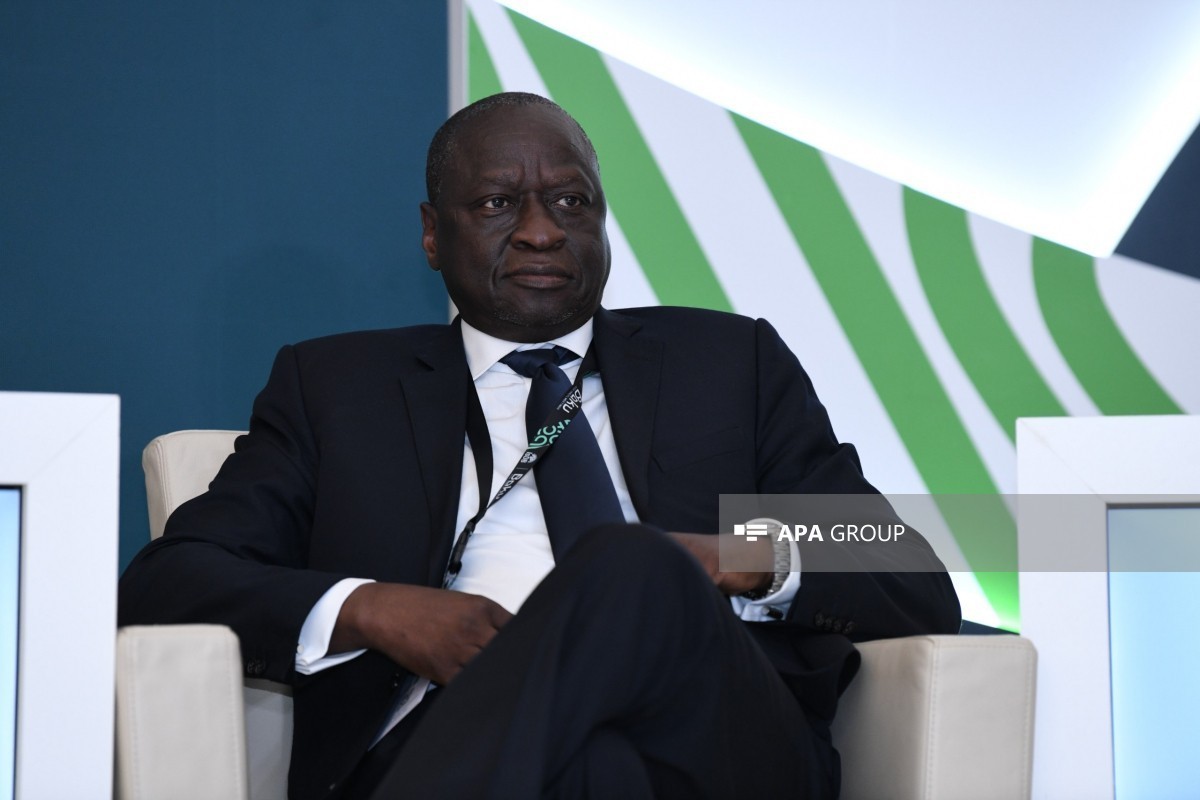


Preparedness and flexibility are among the key principles in the approach of international financial institutions to crises, Ousmane Diagana, Regional Vice President of the World Bank Group, said during the “Islamic Development Bank Resilience Dialogue 2026: High-Level Panel Session” organized as part of the Islamic Development Bank Annual Meetings held in Baku, APA-Economics reports.
According to him, the World Bank keeps the recovery and resilience of post-conflict countries at the center of its activities: “The International Development Association (IDA), which aims to support the poorest and most vulnerable countries, plays an important role in this regard. Currently, the World Bank works with 22 countries in West and Central Africa, and half of them fall into the category of fragile, conflict-affected, and vulnerable countries.”
He also stated that preparedness for crises should be ensured in advance, procedures should be simplified, and projects should be implemented more flexibly:
“It is necessary to be prepared in advance rather than reacting after a crisis occurs. For example, protection systems should be built before a flood occurs, not afterward. Therefore, crisis situations should be part of the overall strategy so that mechanisms that can be immediately activated already exist when an event occurs. The Bank has a ‘rapid response mechanism’ that is activated as soon as a crisis occurs. For example, this mechanism was recently used in countries vulnerable to external shocks, such as Cabo Verde.”


 Follow us on Telegram
 t.me/apanewsaz
 Follow us on Instagram
 Follow us on TikTok
 Follow us on Facebook
 Follow us on X