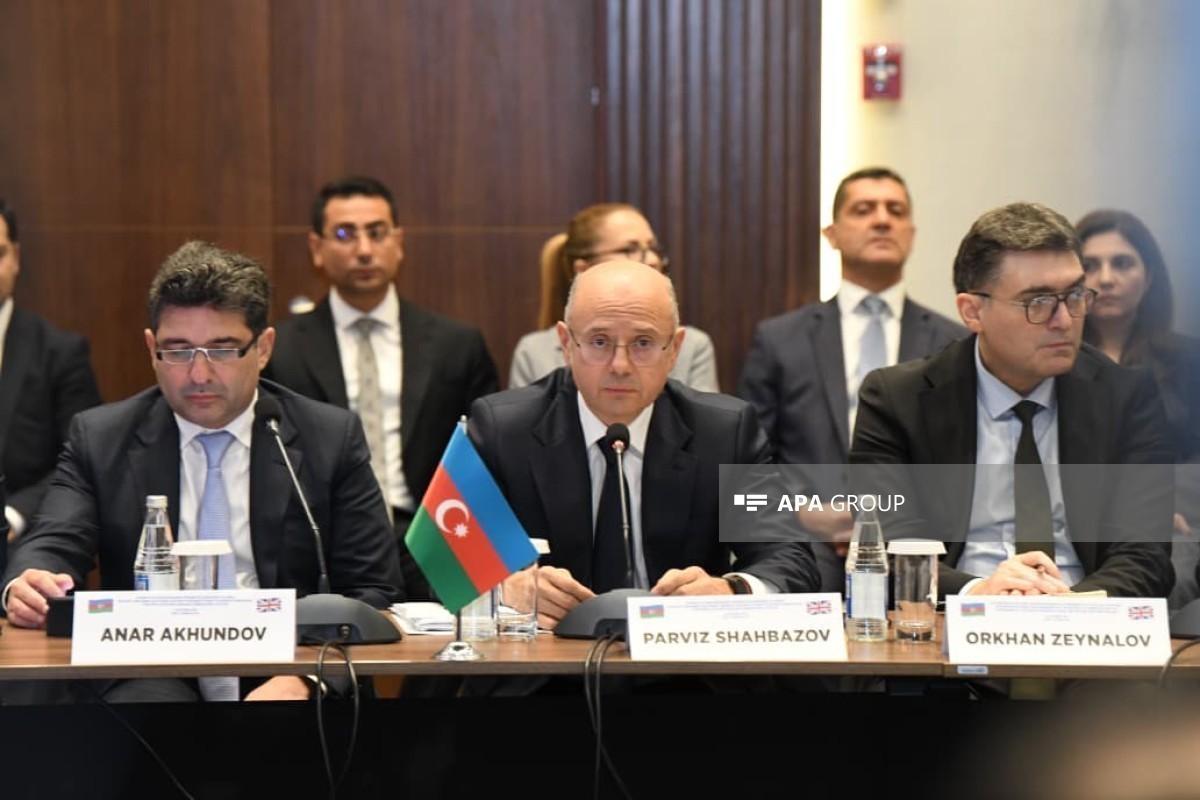


“According to the 2026 data of the IsDB Resilience Index, unfortunately, 32 of our 57 member countries are either in fragile or at-risk situations," Rami Mahmoud Ahmad, Vice President for Operations of the Islamic Development Bank Group, said during the “Islamic Development Bank Resilience Dialogue 2026: High-Level Panel Session” organized as part of the Islamic Development Bank Annual Meetings held in Baku, APA-Economics reports.
According to him, approximately 400 million people in these countries are projected to live in extreme poverty over the next decade: “These figures are quite alarming, but our faith also teaches us the importance of patience and resilience. The impact of fragility on people and development processes is clearly visible across different regions. In the Sahel region, particularly in Chad, Mali, Niger and Burkina Faso, conflicts, climate shocks and food shortages are increasing displacement and deepening vulnerability. In Syria, a crisis that has lasted for more than a decade has reversed development gains, displaced more than half of the population, and left millions living in poverty and dependent on humanitarian assistance.”
He noted that recurring droughts and food security challenges in some parts of Africa pose serious risks to lives and livelihoods: “At the same time, recent events in the Middle East demonstrate how quickly external shocks can cross borders and affect vulnerable economies. Twenty-seven of our member countries are among the least developed countries, and these uncertainties place even greater strain on their limited resources. Therefore, investing in resilience is becoming even more important.”
He added that these crises are not isolated events but interconnected challenges: “They know no borders, increase vulnerability, and undermine development gains. Therefore, they require a coordinated, sustainable and large-scale response encompassing humanitarian, development and peace dimensions. Taking this reality into account, the Islamic Development Bank has made resilience a central pillar of its work. Over the past five years, together with partners, more than 10 million people affected by fragility, conflict and natural disasters have been supported.”


 Follow us on Telegram
 t.me/apanewsaz
 Follow us on Instagram
 Follow us on TikTok
 Follow us on Facebook
 Follow us on X