

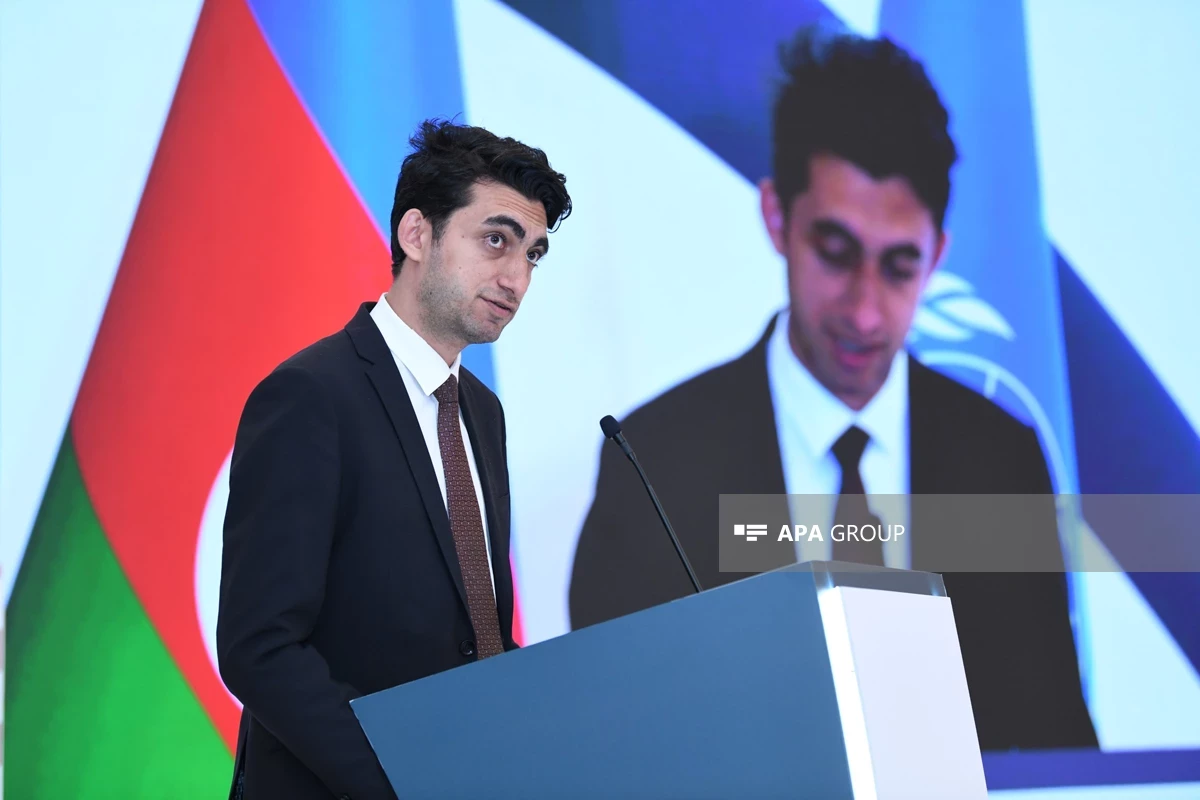


“We are considering ‘greening’ our market operations and are working closely with the government to integrate ESG elements into state support funds," Shahin Mahmudzada, Director General of the Central Bank of Azerbaijan, said during the session titled “8th SDG Dialogue: Innovative Financing for Sustainable Development – Beyond Aid and Traditional Official Development Assistance (ODA)” held as part of the Islamic Development Bank (IsDB) Annual Meetings in Baku, APA-Economics reports.
“However, unlike traditional financial risks, ESG risks extend beyond borders, are systemic in nature and cannot be confined within national frameworks. ESG risks create externalities, meaning that the activities of one company can affect other parties. For example, a company in Europe may depend on raw materials from Africa and production in Asia, and a problem at any stage of the chain can affect the entire system. Therefore, stronger international cooperation is essential. In this regard, together with partners such as IFC, SBFN, UNDP, UNEP FI and the Climate Bonds Initiative, we have launched the ‘Roadmap for Harmonization and Enhanced Comparability of Sustainable Finance Taxonomies’ project,” he noted.
He stated that this initiative is a voluntary multilateral platform aimed at addressing fragmentation, one of the biggest challenges in green finance.
“When taxonomies do not speak the same language, capital flows face uncertainty and barriers. This harmonization initiative aims to increase private capital flows and accelerate the transition to a more inclusive, equitable low-carbon economy. This is not only about harmonizing taxonomies, but also about establishing robust verification and validation mechanisms,” he said.


 Follow us on Telegram
 t.me/apanewsaz
 Follow us on Instagram
 Follow us on TikTok
 Follow us on Facebook
 Follow us on X