










Baku – APA. This week, a group of students broke into the hall of the Italian Senate in Rome, while another occupied the Colosseum; in Pisa, students took over a runway at the airport; in Palermo, they sat on the railway tracks; in Florence and Milan, they clashed with the police, while at a dozen universities, researchers dragged their sleeping bags onto the roofs, where they have been sleeping as a sign of protest, APA reports quoting “The New York Timesâ€.
The demonstrations, which spread to many other Italian cities this month, were aimed at a new bill, currently being discussed in the lower house, to overhaul the Italian university system. If it is approved in upcoming weeks, it will pass to the Senate, as long as Prime Minister Silvio Berlusconi’s tottering majority holds and his conservative government remains in power.
Education Minister Mariastella Gelmini’s proposed bill is one of the most far-reaching education overhaul efforts in recent years. It aims to reorganize the governance of institutions and the system of recruiting university teachers, and to change the way funds are allocated, by rewarding meritorious institutions and forcing schools that are running a deficit to close, the minister said.
The students are also protesting sharp cuts imposed by Finance Minister Giulio Tremonti on many Italian ministries.
For 2011, according to data posted on the Senate Web site, the government has allocated €6.9 billion, or $9.1 billion, to universities. This includes an additional €800,000 — yet to be approved — that Mr. Tremonti proposed just this month. But the extra funds have done little to calm tempers. The money, critics say, is insufficient to counter the deep crisis facing public education.
For the first time in 30 years, when classes began this autumn, researchers — who make up about 40 percent of the teaching staff — had abandoned their lecterns in protest of the bill, which they said would essentially dismantle public universities.
As a result, many courses usually listed in university curriculums were not offered. Many other courses began weeks late.
Overcrowding is common at dozens of institutions: on average, the ratio at Italian universities is 19.5 students per teacher, compared to an average of 15.4 students per teacher in other European Union member countries, according to the Organization for Economic Cooperation and Development.
The researchers’ protest has made the situation worse. At the University of Turin, for example, biology students had to take the same physics exam as physics students, said Alessandro Ferretti, one of the coordinators of the researchers’ association, Rete 29 Aprile (April 29 Network), named after the day the movement organized throughout the country.
“I am aware that we are causing major inconveniences to our students,†he said. Researchers are not formally on strike, he emphasized, because their contracts do not oblige them to teach. “We teach because we want to, but if this law doesn’t change, the second semester will just never happen,†he said.
Ms. Gelmini has said that she believes that in the long run, her overhaul will streamline Italy’s costly university system, trimming useless degrees and shutting down many of the tiny post-secondary institutions that have mushroomed in recent years.
Moreover, the new rules for governance and recruiting are expected to greatly reduce the influence of so-called university barons, powerful academics who often sway hiring policies.
And hiring teachers is no small matter: many university professors in Italy are reaching retirement age. The Education Ministry’s statistical office estimates that, on average, 18 percent of teaching staff at universities will retire in the next few years, reaching as high as 36 percent in some faculties.
This year, the law faculty at La Sapienza University, Italy’s largest post-secondary institution, lost 38 professors from its staff due to retirement, roughly a fifth of the whole teaching body. They have not been replaced.
But at the same time, under the overhaul, researchers who could eventually fill the gaps left by retirees would only be able to maintain their status for a maximum of eight years, and critics of the changes say this makes their situation precarious.
“What is at stake here is the very existence of Italian universities,†said Alberto Civica, an official with the U.I.L. trade union, which represents about 500 researchers and 300 professors.
“And all that this reform does is ignore the real problems of our universities.â€
Previous overhauls, he said, have been equally ineffective.
If anything, critics say, the plethora of legislation that has been passed in recent years to better the Italian post-secondary education system has actually made things worse.
From 1990 to 2006, there were 1,371 newly enacted laws, bills, ministry decrees, general norms and internal rules applying to Italian universities, according to statistics from the Education Ministry, compiled by Alessandro Monti, a professor of economic policies and university legislation at the University of Camerino and author of the book “Investigation on the Decline of Italian University,†published in 2007. More laws have since been introduced.
The result is a system that forces students to juggle their education amid ever changing rules, students say.
For example, a 1999 overhaul that introduced a division between a three-year bachelor’s degree and a two-year master’s degrees (intended to equalize Italian degrees to those of other E.U. countries) prompted a proliferation of degrees and a subsequent recruitment of new professors, often hired on short-term contracts, sometimes for little or no pay. Some universities offered 12 different degrees within the same field.
“It is a Kafkaesque situation,†Mr. Monti said. “There is no money, far too many courses, far too many directives and zero control over their application. But what I fear the most is the disqualification of our universities.â€
Giada Ianni, 27, will have taken about 50 exams when she graduates next year. In 2003, she started a three-year, 30-exam architecture degree at Rome’s Valle Giulia, one of the two architecture schools of La Sapienza University. She had anticipated that she would also take a 2-year graduate degree. But by the time she had finished her undergraduate studies, an overhaul had come along and the 2-year degree that she had chosen no longer existed. She had to fight to have her exams validated within the new system, which meant taking 20 more exams.
But she received a region-funded scholarship to help pay for her undergraduate degree. Students entering the university system today may not be that lucky. In October, the government approved a bill that cut scholarships by 90 percent to €26 million for 2011, and to €13 million for 2012.
Squeezed between bureaucracy, decreasing scholarships and a lack of basic structures like cafeterias, university students say they have little motivation to enter the world of academia.
“Youth are an opportunity for this country and they just don’t get it,†said Ms. Ianni, the mother of a 20-month-old who lives in a town 40 kilometers, or 25 miles, from the capital and gets up at 6 a.m. to drive to the city center with her baby.
“And my child needs a public university exactly as I do.â€


 Follow us on Telegram
 t.me/apanewsaz
 Follow us on Instagram
 Follow us on TikTok
 Follow us on Facebook
 Follow us on X
Europe
UK guarantees $1 billion World Bank loan to Ukraine
 23:20
23:20
 26 June 2026
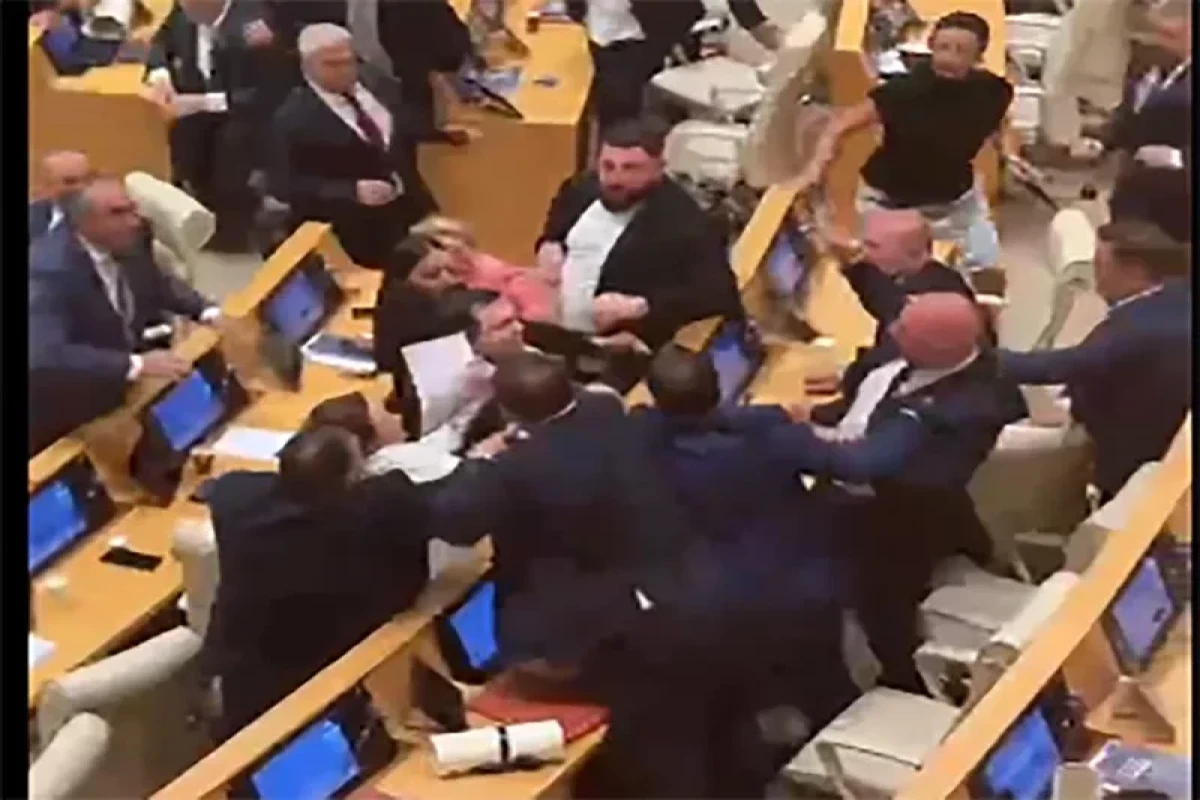
Scuffle breaks out during Georgian parliament session, proceedings suspended - PHOTO
20:00
26 June 2026
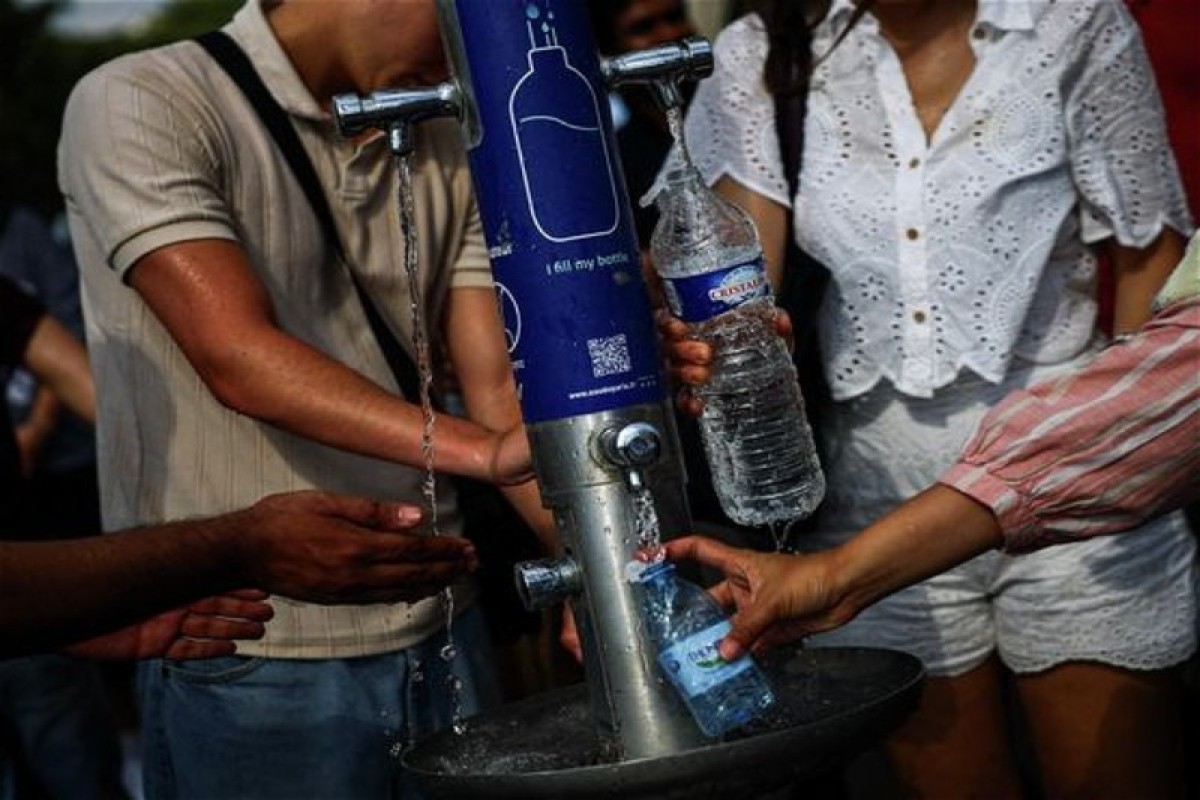
Death toll hits 55 in France as drownings rise amid Europe heatwave
19:07
26 June 2026
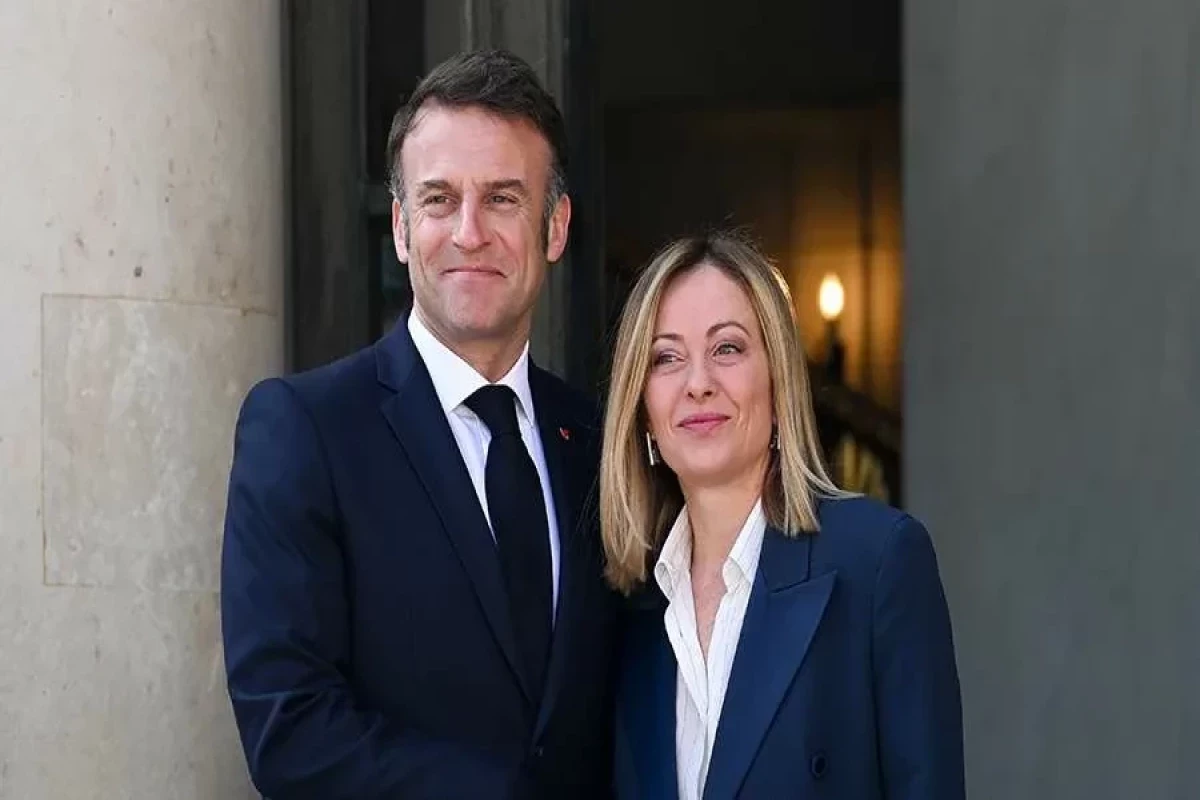
France, Italy seek multinational coalition to support Lebanon after UNIFIL withdrawal
09:02
26 June 2026

NEWS FEED
Vance: US ready to discuss memorandum disagreements with Iran
02:39
Audio
27 June 2026
IRGC says it struck US military positions in response to US airstrike on Iran
01:43
27 June 2026
France wins Group I after beating Norway 4-1
01:13
27 June 2026
US strikes Iranian targets in response to attack on cargo ship
00:47
Audio
27 June 2026
Netanyahu says Israeli army will remain in southern Lebanon ‘security zone’ until Hezbollah disarmed
23:49
26 June 2026
UK guarantees $1 billion World Bank loan to Ukraine
23:20
26 June 2026
Israel, Lebanon sign framework peace deal after US-mediated talks
22:36
Audio
26 June 2026
Venezuela quake death toll rises to 92
22:29
26 June 2026
Trump accuses Iran of violating ceasefire with US
20:24
Audio
26 June 2026
Scuffle breaks out during Georgian parliament session, proceedings suspended - PHOTO
20:00
26 June 2026
Turkish ships stranded in Strait of Hormuz safely leave the region
19:56
26 June 2026
Turkish actor Kadir İnanır dies at 77
19:33
26 June 2026
Putin meets with Belarusian President Lukashenko
19:22
26 June 2026
Putin bans deportation of foreigners serving under contract in Russian army
19:19
26 June 2026
Seven Hezbollah fighters killed in Lebanon
19:12
26 June 2026
Explosion followed by fire hits factory in Türkiye
19:10
26 June 2026
Death toll hits 55 in France as drownings rise amid Europe heatwave
19:07
26 June 2026
Baghaei: Joint statement by US and GCC is a distortion of truth
18:40
26 June 2026
Rosatom says plans Bushehr staff return
18:15
26 June 2026
Small aircraft crashes into Beijing’s tallest skyscraper - VIDEO
17:56
26 June 2026
If Iran attacks Israel, it will ‘commit its biggest mistake’: Katz
17:35
26 June 2026
Belarusian President Lukashenko departs for working visit to Russia
17:28
26 June 2026
Russia advises its citizens against traveling to Moldova
17:23
26 June 2026
Death toll from Venezuela earthquake rises to 589 - UPDATED - 4 - VIDEO
16:56
26 June 2026
Azerbaijan and Italian foreign ministers hold phone conversation
16:54
26 June 2026
Senior military ranks presented to servicemen of the Azerbaijan Ministry of Defense - PHOTO
16:23
26 June 2026
CIS Secretary General: Armenia is not considering leaving the CIS
16:16
26 June 2026
Former Russian Defense Minister Sergei Ivanov dies at 73
16:08
26 June 2026
European Commission President Ursula von der Leyen to visit Azerbaijan next week
16:03
26 June 2026
Leadership of the Ministry of Defense visits Alley of Honor, Victory Park, and Military Memorial Cemetery - PHOTO
16:00
26 June 2026
CIS Economic Council meeting held in Moscow, Armenia does not send high-level representative - PHOTO
15:54
26 June 2026
Russia and Ukraine conduct prisoner exchange
15:40
26 June 2026
Proposal made to lower the age of criminal responsibility to 12 in Russia
14:50
26 June 2026
Iran, South Korea discuss regional developments and diplomacy
14:42
26 June 2026
Hormuz shipping depends on coordination with Tehran, Iran deputy FM says
14:30
26 June 2026
State of emergency declared in Crimea and Sevastopol
14:27
26 June 2026
Peskov: It cannot be said that the U.S. is completely neutral in the Ukraine conflict
14:10
26 June 2026
Lavrov responds to Rubio's remarks on Alaska talks
14:06
26 June 2026
Military marches held in Baku, Khankendi, Shusha and five other cities - PHOTO - UPDATED
14:02
26 June 2026
Moldova's ambassador summoned to Russian Foreign Ministry
13:59
26 June 2026
Astrakhan vice governor: We are friends of Azerbaijan and will always stand by it
13:39
26 June 2026
Kazakhstan may begin importing aviation fuel from Azerbaijan
13:10
26 June 2026
Russian delegation inspects construction progress at kindergarten in Gubadli - PHOTO
13:05
26 June 2026
State Duma proposes death penalty for corrupt officials undermining Russia's defense
12:55
26 June 2026
Turkish Ministry of National Defense congratulates Azerbaijan on Armed Forces Day
12:37
26 June 2026
Russia says it shot down 660 Ukrainian drones overnight
12:10
26 June 2026
AZAL plans to expand its fleet to 50 aircraft by 2032 - VIDEO
12:05
26 June 2026
NATO special representative: Azerbaijani Army has a high level of interoperability with NATO standards
11:39
26 June 2026
Ambassador: UK committed to further strengthening partnership with Azerbaijan
11:20
26 June 2026
Montenegro police, FBI arrest Iranian wanted by US for hacking
11:15
26 June 2026


