










Baku – APA. The pound suffered its worst drop in months, as uncertainty about looming national elections combined with persisting economic problems to spook investors already nervous about the U.K.’s ragged fiscal situation, APA reports quoting “The Wall Street Journalâ€.
The pound skidded early Monday in Europe, at one point falling 3% against the dollar to $1.4784—its lowest level since April 2009—before recovering to finish at $1.4973 in London, down 1.2% from Friday. Sterling is down 7.3% against the dollar this year, and negative sentiment has increased sharply in the past week. Monday’s mid-morning fall was the biggest single-session drop in nearly a year, Bank of New York Mellon said.
Investors have focused heavily on the euro’s problems since Greece’s fiscal difficulties surfaced late last year. But the euro, down 5.4% against the dollar this year, has held up better than the pound. While Greece faces tough funding challenges, other members of the euro zone, notably Germany, are in strong enough shape to give Athens assistance should it be required.
The U.K. has no such rich relative to help it. Moreover, its fiscal situation has become a double-edged sword, with tensions around the deficit growing as the national election, due by June, approaches. Some market commentators argue that the U.K. must swiftly reduce its deficit to placate restless bond investors who are concerned about the possibility of the fiscal situation eroding even more.
At the same time, analysts at Swiss bank UBS AG recently warned that sterling could fall to $1.05 or even lower—if Britain moves too aggressively to cut the deficit. Being too quick to cut spending could shove the economy back into recession, UBS said. Fourth-quarter gross domestic product had a meager gain of 0.3%, heavily supported by government spending, so the fiscal debate remains a sticking point.
"You’ve got negative economic surprises, negative political risks and negative capital outflows," says Monica Fan, a currencies portfolio manager at investment firm State Street Global Advisors in London. "Investors who are concerned about the possibility of a Greek default are increasingly eyeing the U.K.’s high level of public debt and public deficit as a reason to sell sterling."
Ms. Fan’s reference to capital outflows referred in large part to insurer Prudential PLC’s plan, unveiled Monday morning, to acquire American International Group’s AIA business for $35.5 billion, $25 billion of it in cash. U.K.-based Prudential will need to convert a large amount of sterling into dollars to make the acquisition, something that investors said amplified negative sentiment around the pound.
The political debate has also turned darker now that the quagmire that would be caused by a hung Parliament is considered a realistic possibility after the coming elections.
In such a scenario, the winning party still doesn’t have sufficient Parliamentary support to carry out its legislative agenda without help from other parties.
David Cameron, the leader of the opposition Conservative Party, has watched the disintegration of his once double-digit lead in opinion polls over Prime Minister Gordon Brown’s ruling Labour Party. On Sunday, a YouGov poll for the London Sunday Times placed the Conservatives just two points ahead. That is among the slimmest of Tory leads since Mr. Brown enjoyed a brief honeymoon period after he took over from Tony Blair in June 2007.
Because of the way the U.K.’s voting system works, most commentators believe the Conservatives need a 10-percentage-point national lead to be confident of commanding a parliamentary majority. Failing that, the result could be the election of Britain’s first minority government in three decades.
The postelection stakes are large. International credit-ratings agencies have warned the U.K. it could lose its top-notch triple-A rating if the winner of the next election fails to offer a credible plan for fixing the nation’s finances.
Any new government plan must address what looks like a still-fragile national economy.
Economists and traders have started rifling through the speeches of the smaller British parties, since they could hold the key to crucial votes on budget matters. The Liberal Democrats, the country’s third-largest party, is seen as the most likely king maker.
The Conservatives have pledged to start cutting spending this year, whereas Mr. Brown’s Labour has said such a stance could undermine the nascent recovery.
Labour also has promised to protect more government departments from cuts. The Conservatives have given limited details of how they would reduce the deficit, and occasionally have appeared to contradict themselves on when any austerity measures would get under way.
Many analysts are taking politicians at face value when they say that they understand the gravity of the deficit and will act accordingly.
"Both sides recognize that something will have to be done quite quickly to avoid a downgrade," says Kevin Gardiner, the head of investment strategy at Barclays Wealth.
As political concerns grow, Britain’s economic data show the challenges it faces. The U.K. has lagged behind the U.S., Germany and France in bouncing back from the financial crisis. Some economists think the Bank of England may need to restart its quantitative-easing program—buying government bonds with newly created money—to pump cash into the economy, a move that would further burden the pound.


 Follow us on Telegram
 t.me/apanewsaz
 Follow us on Instagram
 Follow us on TikTok
 Follow us on Facebook
 Follow us on X
Europe

French navy has intercepted another Russian 'shadow fleet' tanker, Macron says
 14:51
14:51
 25 June 2026
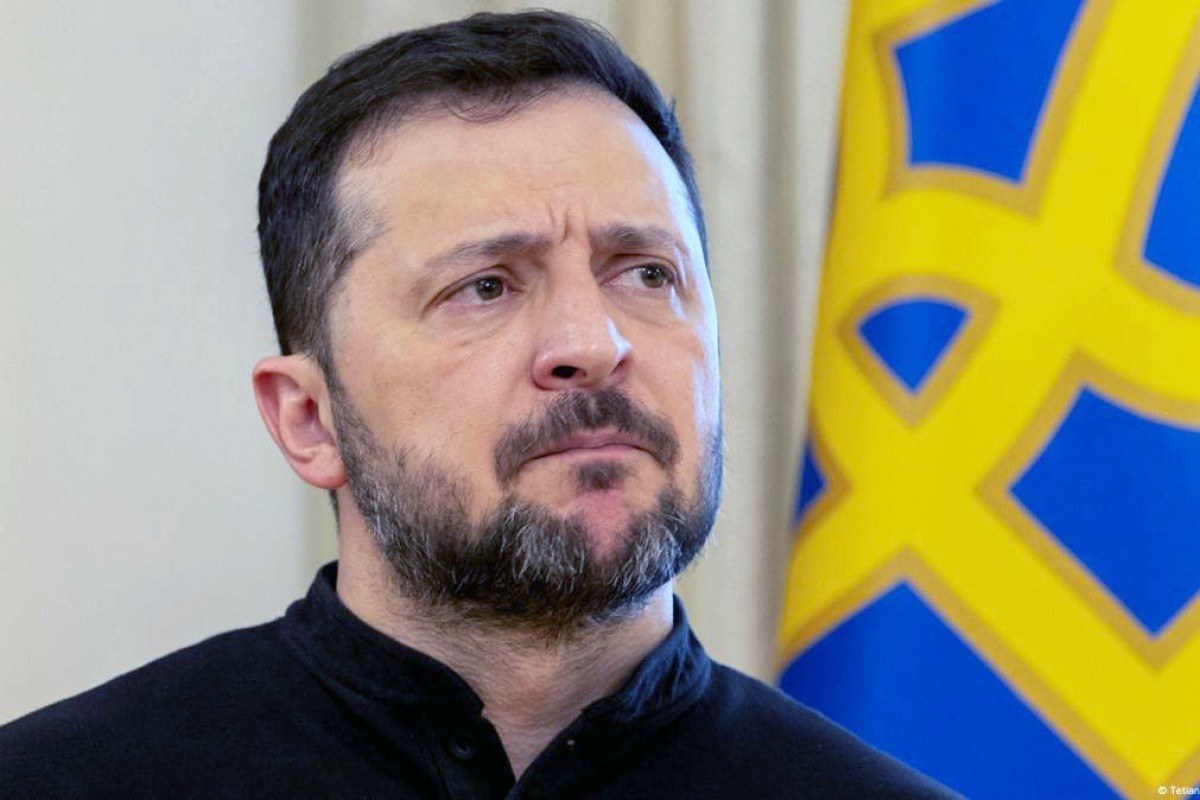
Zelenskyy says Ukrainian forces struck targets up to 1,500 km inside Russia
14:11
25 June 2026
German Patriot air defense system deployed in Türkiye
13:54
25 June 2026
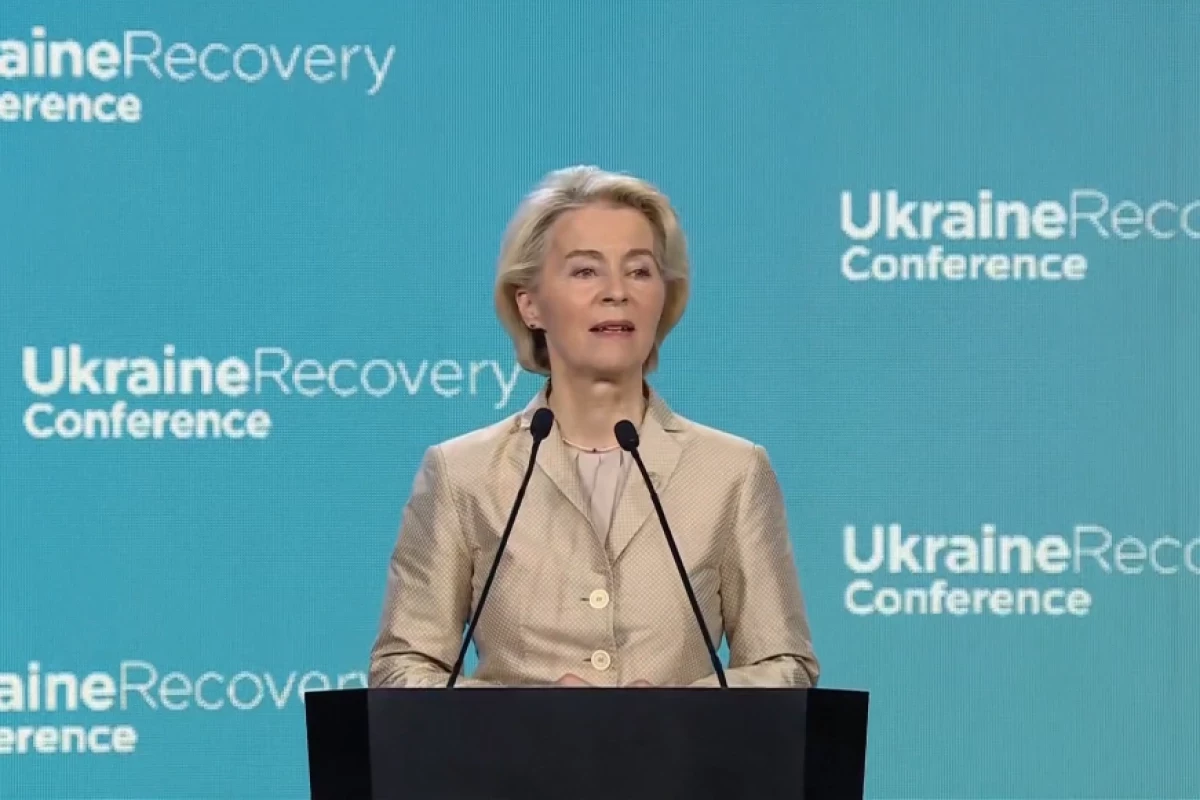
Von der Leyen announces first payment to Ukraine under €90 billion loan
13:37
25 June 2026

NEWS FEED
Azerbaijan-Israel innovation dialogue held at Shimon Peres Center - PHOTO
17:02
25 June 2026
Iran, Oman stress need for coordination on Strait of Hormuz traffic in foreign minister call
16:44
25 June 2026
Ghalibaf criticizes US over claims regarding Iran's unfrozen assets
16:43
25 June 2026
Iraqi Oil Ministry denies reports of potential OPEC exit, urges output quota reassessment-UPDATED
16:39
25 June 2026
President Ilham Aliyev signs order awarding Defense Ministry servicemen
16:31
25 June 2026
Azerbaijan's President awards fallen servicemen posthumously
16:31
25 June 2026
Military Institute named after Heydar Aliyev holds another graduation ceremony - PHOTO - VIDEO
16:26
25 June 2026
Azerbaijan establishes "Intellectual Customs" information system
16:24
25 June 2026
President Ilham Aliyev awards major general rank to five Defense Ministry servicemen
16:23
25 June 2026
Ashura blood donation campaign concludes in Azerbaijan, 1,269.45 liters of blood collected -PHOTO-UPDATED-1
16:21
25 June 2026
Rubio: No Gulf country supports charging fees for passage through the Strait of Hormuz
16:14
25 June 2026
Hikmat Hajiyev, Macron's adviser review state of Azerbaijan-France relations
16:10
25 June 2026
Azerbaijani cadet awarded Italy's "Sword of Honor"
16:00
25 June 2026
Azerbaijan establishes budget-funded organizations based on several public legal entities - DECREE
16:00
25 June 2026
Defense minister: Azerbaijani Armed Forces are among the strongest militaries in the region
15:56
25 June 2026
US sends search and rescue teams to Venezuela after deadly earthquake
15:55
25 June 2026
Citizens of Kyrgyzstan and Tajikistan graduate with honors from Heydar Aliyev Military Institute
15:53
25 June 2026
More than 90 kg of marijuana found in truck carrying cauliflower from Iran to Russia - PHOTO
15:47
25 June 2026
Azerbaijan's Foreign Minister attends Ukraine Recovery Conference in Poland
15:38
25 June 2026
Azerbaijan joins International Convention on the Control of Harmful Anti-Fouling Systems on Ships
15:25
25 June 2026
Charter of the State Medical Insurance and Expertise Agency approved-DECREE
15:24
25 June 2026
Azercell launches “Əsgərcell” offer on the occasion of 26 June – Armed Forces Day
15:23
25 June 2026
Azerbaijan recalls ambassador to Uzbekistan
15:14
25 June 2026
Financial results of "AzerGold" CJSC and its subsidiaries for year-end 2025 announced
15:14
25 June 2026
Azerbaijani delegation explores advanced pediatric rehabilitation practices in Israel
15:08
25 June 2026
Kremlin urges Russians to switch to Android and "national systems" after VK app removed from App Store
15:06
25 June 2026
Russia says nearly 170,000 Ukrainian drones shot down since war began
14:57
25 June 2026
Kremlin comments on Zelenskyy's statement about Belarusian retransmitters
14:54
25 June 2026
Azerbaijani Parliament reveals date and agenda of its next session
14:52
25 June 2026
Death toll from Venezuela earthquake rises to 164 - UPDATED - 1 - VIDEO
14:52
25 June 2026
French navy has intercepted another Russian 'shadow fleet' tanker, Macron says
14:51
25 June 2026
Azerbaijan-Israel innovation cooperation discussed at MUNI EXPO 2026
14:44
25 June 2026
Azerbaijan, Russia's Astrakhan Region discuss expanding economic cooperation
14:43
25 June 2026
Fuel sales restricted in Russia's Dagestan amid rising demand
14:40
25 June 2026
Azerbaijan introduces "Personal identification tag of military personnel" concept into legislation
14:35
25 June 2026
Azerbaijan relocates next group of families to Jabrayil’s Shukurbeyli village, families receive house keys
14:34
25 June 2026
Zelenskyy says Ukrainian forces struck targets up to 1,500 km inside Russia
14:11
25 June 2026
Azerbaijan FM discusses regional security issues with Polish counterpart
14:04
25 June 2026
Israeli airline suspends flights from Tel Aviv to Moscow after Ukraine strikes in Russia
13:56
25 June 2026
Second "Turkmen Heritage: Solidarity of Civil Societies" Forum held in Baku-PHOTO
13:54
25 June 2026
German Patriot air defense system deployed in Türkiye
13:54
25 June 2026
Azerbaijan's Foreign Ministry extends condolences to Venezuela over earthquake
13:45
25 June 2026
Von der Leyen announces first payment to Ukraine under €90 billion loan
13:37
25 June 2026
Israel, Lebanon deny that Israel has withdrawn from part of southern Lebanon
13:28
25 June 2026
Armenian PM says no Cabinet reshuffle planned
13:08
25 June 2026
Azerbaijan Railways plans to purchase new rolling stock from Chinese companies-PHOTO
12:49
25 June 2026
Pashinyan questions EAEU partners over statement adopted in Armenia's absence
12:48
25 June 2026
New resolution, old approach: PACE's bias against Azerbaijan continues - ANALYSIS
12:47
25 June 2026
Ali Asadov meets with Astrakhan Region Vice Governor
12:23
25 June 2026
Syrian MP: We hope Turkmen students will have the opportunity to study in Azerbaijan
12:21
25 June 2026


