



From September 12 to 16, 2025, the Center for Social Research conducted a broad sociological survey on state sovereignty among 1,200 respondents over the age of 18, the Social Research Center told APA.
The study was carried out using the CATI method (telephone interviews), and the margin of error is ±3% within a 95% confidence interval.
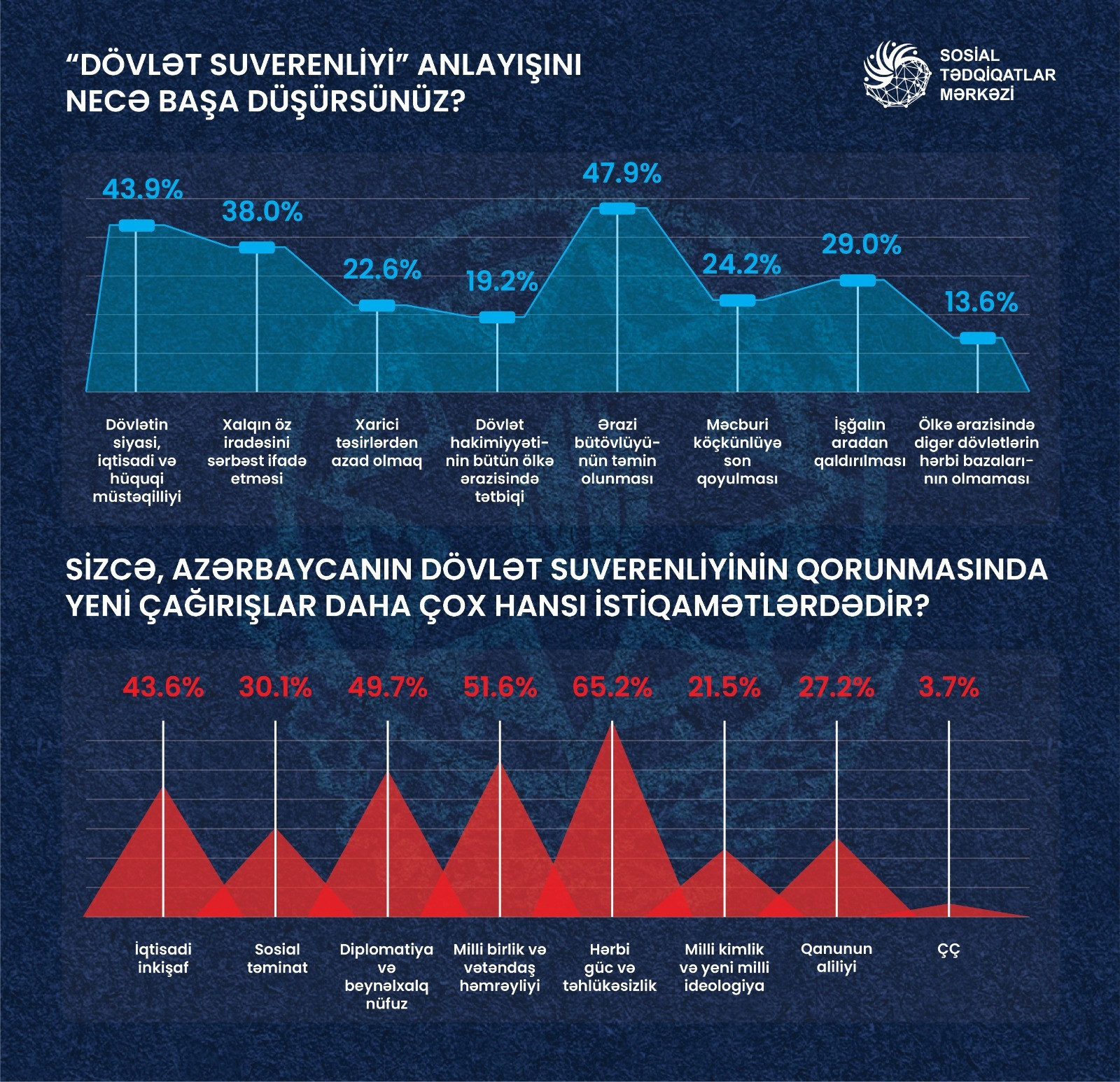
The survey showed that citizens mainly perceive the concept of “state sovereignty” as territorial integrity (47.9%), state independence (43.9%), and the free expression of the will of the people (38%). Other responses included the elimination of occupation (29%), ending forced displacement (24.2%), and freedom from foreign influence (22.6%).
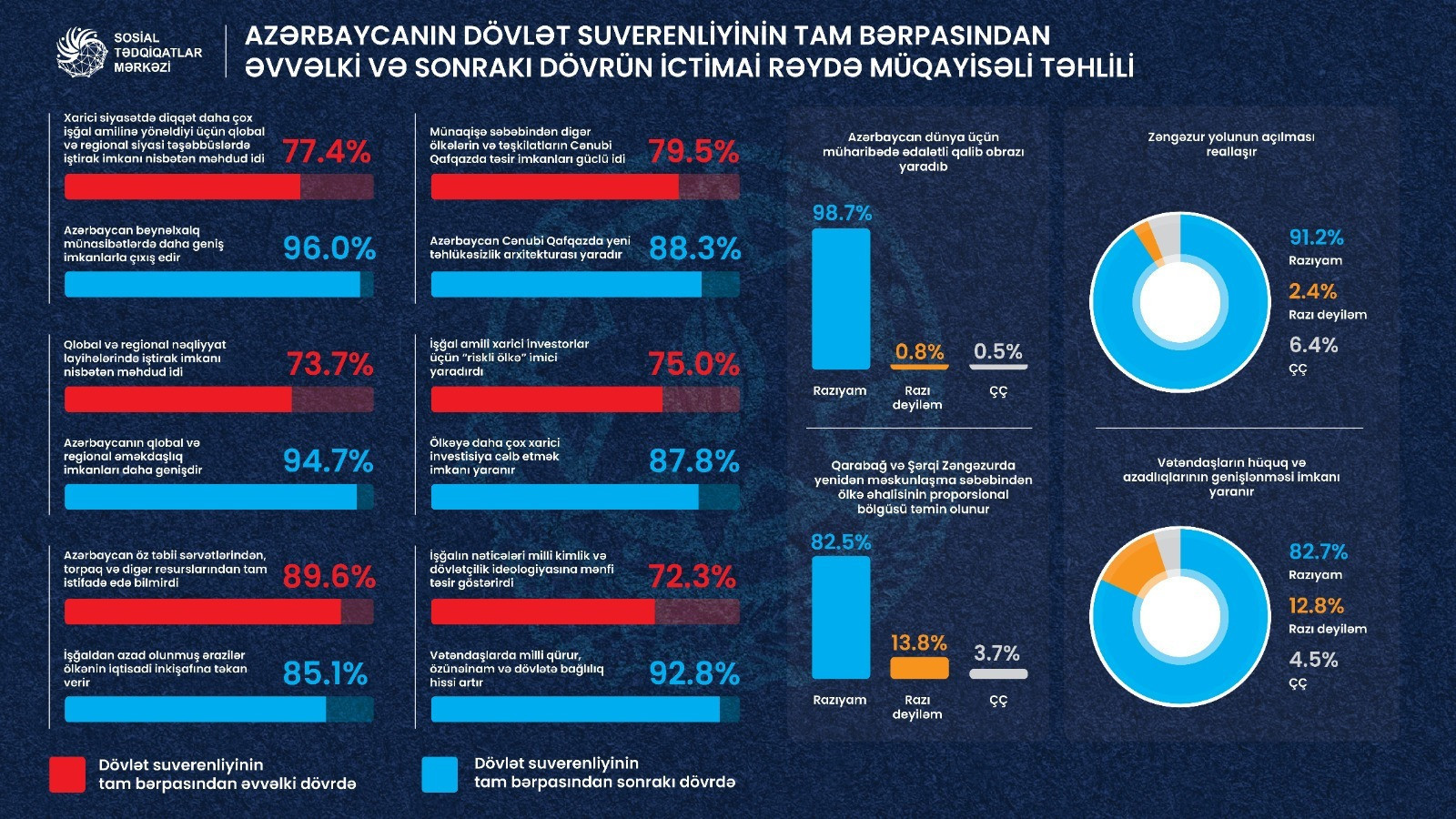
A large majority of respondents consider the 44-day Patriotic War as a decisive phase in the restoration of sovereignty. 96% of them emphasized that Azerbaijan now has broader opportunities in international relations, 94.7% noted increased regional cooperation, and 87.8% stated that attracting foreign investment has become easier after the conflict. At the same time, 92.8% said the liberation of territories has strengthened national pride and the sense of loyalty to the state.
The survey also shows that, at the current stage, the majority of citizens view the realization of the Zangezur corridor (91.2%), the impact of settlement in Karabakh and Eastern Zangezur on the balanced distribution of the population (82.5%), and the expansion of rights and freedoms (82.7%) as outcomes of state sovereignty.
Public opinion highlights military power and security (65.2%), national unity and civic solidarity (51.6%), and diplomacy and international reputation (49.7%) as the main challenges in preserving sovereignty. These are followed by economic development (43.6%), social security (30.1%), rule of law (27.2%), and national identity (21.5%).
Overall, the survey reveals that society perceives the full restoration of state sovereignty not only as the guarantee of territorial integrity but also as the strengthening of Azerbaijan's international reputation, economic capabilities, and strategic initiatives.


 Follow us on Telegram
 t.me/apanewsaz
 Follow us on Instagram
 Follow us on TikTok
 Follow us on Facebook
 Follow us on X