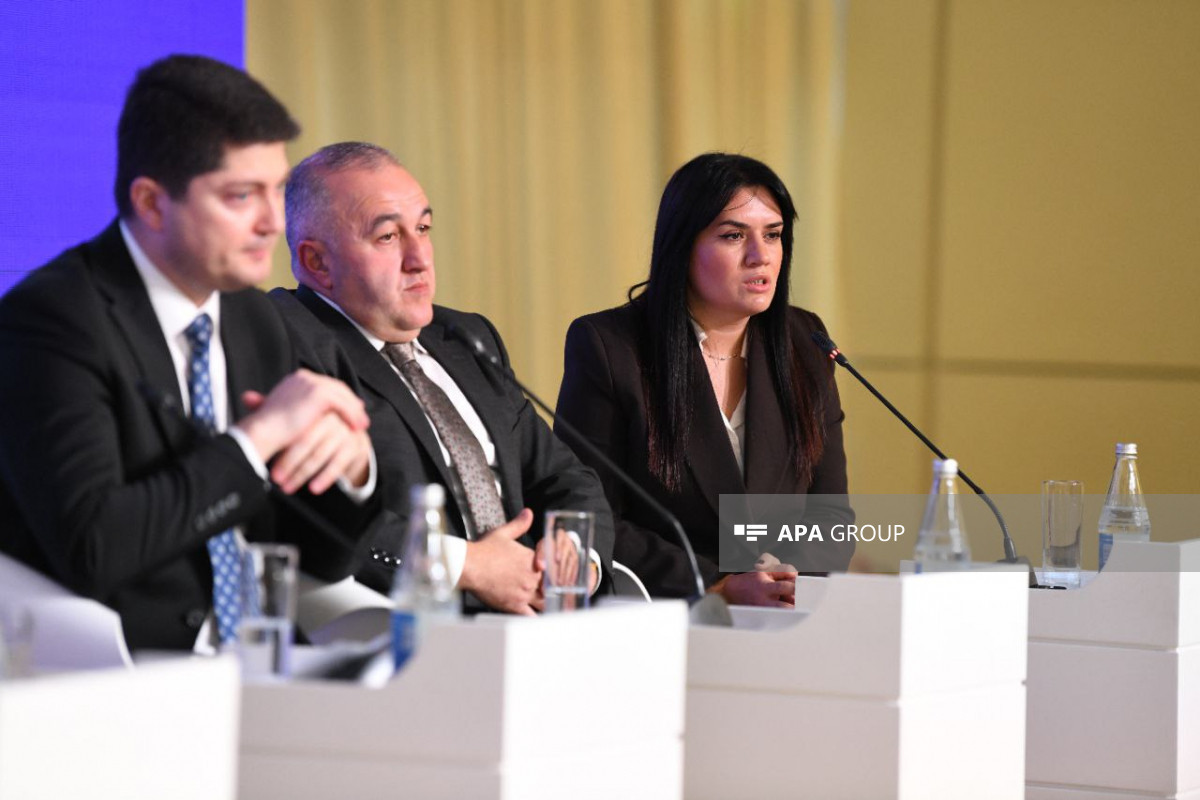


Most of the laws were adopted 20–25 years ago and do not fully reflect modern challenges, Gular Mikayilova, Head of the Legal Department of the Ministry of Culture, said during the “Culture and Law” panel discussion at the “Culture and Law: Modern Challenges” Forum, held for the first time in Baku, APA reports.
She noted that the laws “On the Protection of Historical and Cultural Monuments,” “On Cinematography,” and “On Library Affairs” were adopted in 1998 and no longer meet current needs.
“The presence of parallel regulatory norms in different areas in the existing legislation creates fragmentation. The laws ‘On the Legal Protection of Samples of Azerbaijani Folklore,’ ‘On the Protection and Development of Azerbaijani Carpet Art,’ ‘On the Protection of Historical and Cultural Monuments,’ and ‘On Museums’ regulate folklore, carpet art, and museum activities separately. Dividing these relations among different normative legal acts leads to fragmented and unsystematic legal regulation in the field of culture,” Gular Mikayilova said.
The department head also emphasized that although Azerbaijan joined UNESCO’s “Convention for the Safeguarding of the Intangible Cultural Heritage” in 2006, there is still no unified national legal regulation in the field of intangible cultural heritage protection, contrary to the Convention’s requirements: “The sub-mechanisms and implementation standards necessary for enforcing many normative acts are not clearly defined. The conceptual provisions of the Law ‘On Theatre and Theatre Activity’ do not fully align with current practice. For example, although the Law sets requirements for producer activities in the theatre sector, the ‘Unified Tariff-Qualification Reference Book of Service Positions in Theatre, Concert, and Circus Institutions’ does not include the position of producer at all, which creates inconsistency between legal governance and the normative classification of labor.”


 Follow us on Telegram
 t.me/apanewsaz
 Follow us on Instagram
 Follow us on TikTok
 Follow us on Facebook
 Follow us on X