










Baku-APA. Two F-4 Phantom jet fighters under NATO control streaked off the runway at a former Soviet air base in Lithuania this week in response to a report that an aircraft had lost communications as it neared Finnish airspace, APA reports quoting Associated Press.
It was all an exercise — a simulation — but one with a point beyond mere rehearsal: NATO officials hope that, at a summit in Chicago this May, member nations will put aside concerns over sovereignty and agree in principle to create joint defense capabilities.
The idea is that, in a time of dwindling defense budgets, it makes sense to have coordinated programs in which specific countries agree to buy certain weapons systems — and forgo others — to create a coherent whole.
The economic arguments are strong. Twenty of NATO’s 28 member countries cut their defense budgets between 2008 and 2011. And greater military integration in Europe would be of a piece with the greater economic integration that is emerging as a response to the continent’s financial crisis.
But defense is a closely guarded national prerogative, and the outcome is far from certain. A NATO official said earlier this week that no specifics would emerge from the summit in Chicago.
Instead, he said, NATO officials hope for a "public declaration of how far we’re prepared to go as an alliance." He spoke on condition of anonymity because of NATO rules.
The exercise in Lithuania involved German F-4 Phantom fighter planes at a Lithuanian air base cooperating with F-18 Hornet fighters from Finland — a country that cooperates with NATO but is not a member.
Since 2004, different NATO countries have been policing the airspace over the Baltic countries, all three of which — Lithuania, Latvia and Estonia — are small former Soviet republics that are now members of NATO, the North Atlantic Treaty Organization.
In microcosm, the security arrangements for the Baltics are similar to what NATO officials wish for the entire alliance. The three Baltic countries cannot do their own air policing. Lithuania, for example, used to have six L-39 training jets. But four have been grounded, one has crashed, and now the country’s air force is down to just one jet.
The defense budget is shrinking, and fighter planes cost many millions of dollars each.
"Buying aircraft today is something out of my fantasy," Col. Antanas Jucius, chief of staff of the Lithuanian Air Force, told The Associated Press.
So other NATO countries, on four-month rotations, do the Baltics’ air policing. And the Baltic countries do what they can. All three have sent troops to Afghanistan.
In the exercise Wednesday, a Lithuanian transport plane simulated losing communications. It was intercepted by the Finnish fighters, who assessed the problem, then turned control of the plane over to the two German Phantoms from NATO, who escorted it to Siauliai Air Base, where it was cleared to land by a Lithuanian air traffic controller.
The stress of shrinking budgets does not necessarily mean that national governments will agree to a coordinated way of deciding which country does what. During the Cold War, NATO tried to implement similar joint programs involving naval vessels, armored vehicles, munitions, and communications and other equipment, but achieved only limited success.
"We’ve been talking about this forever," said Jan Techau, director of Carnegie Europe, which studies such issues. He believes such sharing of capabilities is essential, but he is doubtful it will happen.
"Now, in the financial crisis, everybody’s broke," Techau said. "It’s ever more urgent, but it collides with the sovereignty, which is strongest in the defense sector, as we know. Nothing ever happens out of sheer necessity in politics."
Still, budgets are shrinking almost by the day. Earlier this year, Austria’s defense minister has confirmed plans to sell two-thirds of the army’s tanks. Last month, Italy’s foreign minister announced that he had cut an order for F-35 fighter jets from 131 to 90, and that the number of warships and submarines would also be cut. Poland’s prime minister said a plan to build a new Gawron class warship had been canceled.
A spokesman said last week the Czech Defense Ministry has 20 percent less funding this year than in 2009, and will dramatically cut its planned purchase of Belgian-made Minimi machine guns.
And just this week, Spanish Defense Minister Pedro Morenes said he expects his slice of the pie to be cut by 12 to 14 percent when the country’s new budget is unveiled Friday.
NATO’s top military commander, Adm. James Stavridis, said this week there are obvious areas where sharing resources makes sense, including joint use of helicopters and strategic airlift assets; intelligence, surveillance and reconnaissance; air-to-air refueling capability; and special operations.
There is no doubt that such cooperation would involve significant changes in the way decisions are made. Germany, for example, requires parliamentary approval before military assets can be used. But if other countries forgo certain military systems because they are relying instead on Germany, they would want assurance that those systems would be deployed quickly — and with certainty — in the event of an emergency in their home countries.
And NATO planners continue to hope for a strong declaration of political intent from the summit in Chicago.
"The ground has changed," the NATO official said.


 Follow us on Telegram
 t.me/apanewsaz
 Follow us on Instagram
 Follow us on TikTok
 Follow us on Facebook
 Follow us on X
CIS

US engineering consulting firm AECOM team surveys TRIPP site in Armenia
 10:20
10:20
 10 July 2026
Samvel Karapetyan's house arrest extended by another two months
19:11
9 July 2026
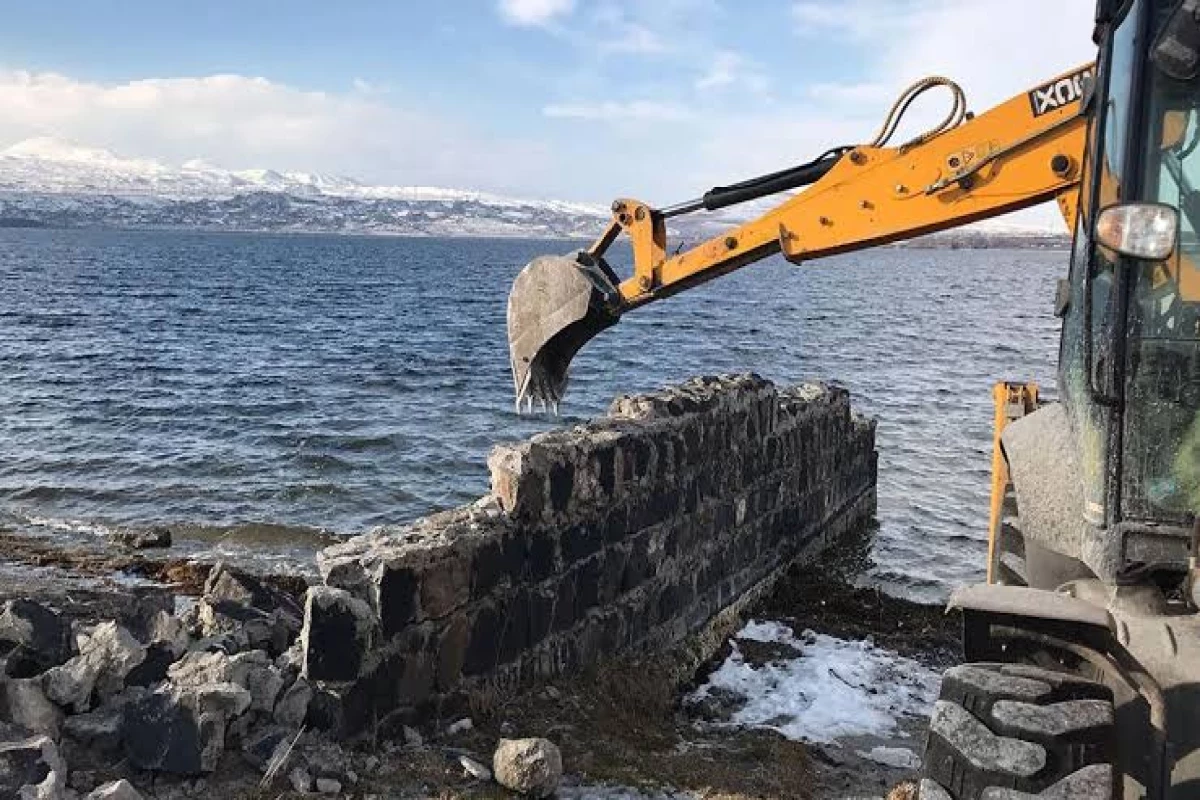
Illegal structures of Seyran Ohanyan and other former officials on shore of Lake Goycha demolished
18:17
9 July 2026
Peskov: Trump has not yet called Putin after NATO summit
13:51
9 July 2026

NEWS FEED
ADB keeps Azerbaijan's 2026-2027 economic growth forecast unchanged
10:49
10 July 2026
Türkiye sells Russian-made S-400 systems to Gulf country - Hürriyet
10:39
10 July 2026
Azerbaijan Minister of Defense meets with Baykar’s Chairman of the Board
10:31
10 July 2026
Shusha to host 4th Global Media Forum
10:27
10 July 2026
US engineering consulting firm AECOM team surveys TRIPP site in Armenia
10:20
10 July 2026
Azerbaijan and Russia discuss allocation of Samur River water resources
10:15
10 July 2026
Azerbaijani oil trades at $79 per barrel
10:06
10 July 2026
Israel warns US of new Iranian plot to assassinate Trump as tensions in region grow - report
10:00
10 July 2026
Baku hosts meeting between military cybersecurity experts from Azerbaijan and Serbia
09:48
10 July 2026
IMF keeps global growth outlook steady despite Middle East conflict
09:46
10 July 2026
Flood sweeps away over 100 animals from zoo in southern China
09:19
10 July 2026
Global stock markets' major indices post gains
09:16
10 July 2026
Oil prices rise on global markets
09:05
10 July 2026
Reuters: Technical consultations between the US and Iran continue
07:47
10 July 2026
12 killed in southern Spain wildfire
06:33
10 July 2026
Ali Khamenei buried after week-long funeral
03:43
10 July 2026
France beats Morocco 2-0 to reach 3rd straight World Cup SF
02:29
10 July 2026
WSJ: Some Iranian strikes on US bases in the Middle East achieved their goals
01:37
10 July 2026
Trump and Netanyahu just held a phone call to brief on "American moves in the Gulf"
01:18
10 July 2026
Merz told Netanyahu that steps to annex the West Bank are unacceptable
00:30
10 July 2026
Zelenskyy: Ukraine will soon receive Patriot missiles from US
00:10
10 July 2026
Ukraine can produce Freya anti-ballistic system fast if one condition is met
23:51
9 July 2026
CNN: Pakistan and Qatar are trying to bring Iran and US to negotiating table
23:30
9 July 2026
Erdogan: Türkiye keeps channels of communication open for peaceful settlement in Ukraine
23:19
9 July 2026
Explosions heard in two cities of Iran
22:57
9 July 2026
Idea of single European Union army deadlocked amid political ambitions-COMMENTARY
22:35
9 July 2026
Lagarde says she will not run for France's president
22:14
9 July 2026
Europa League: FK Qarabag defeated Iceland's Vestri
21:58
9 July 2026
Katz says Israel ready for third military campaign against Iran
21:36
9 July 2026
Netanyahu: IDF will remain in southern Lebanon as long as necessary for Israel's security
21:18
9 July 2026
Iran's foreign minister holds calls with Turkish and Omani counterparts
21:00
9 July 2026
Iranian FM warns US against new strikes, says armed forces ready to respond
20:48
Audio
9 July 2026
Iran's late Supreme Leader Khamenei to be laid to rest in hometown
20:40
9 July 2026
Azerbaijan and Türkiye discuss further development of military-technical cooperation
19:34
9 July 2026
Samvel Karapetyan's house arrest extended by another two months
19:11
9 July 2026
Illegal structures of Seyran Ohanyan and other former officials on shore of Lake Goycha demolished
18:17
9 July 2026
Türkiye and Iran FMs discuss ceasefire
18:14
9 July 2026
Azerbaijan and Italy discuss defense cooperation
18:12
9 July 2026
Death toll from shoe factory fire in China rises to 28 - UPDATED
18:08
9 July 2026
Speaker highlights environmental damage caused by Armenia's occupation at IPU conference
17:54
9 July 2026
NATO's Ankara Summit: Türkiye further strengthens its position as the Alliance's strategic center -ANALYSIS
17:51
9 July 2026
Oil tanker traffic through Hormuz at near standstill as attacks strain Iran truce
17:49
9 July 2026
Iran fired ten ballistic missiles on Jordan's Azraq military base
17:44
9 July 2026
US strikes over 170 Iranian military targets near Strait of Hormuz in two days: NYT
17:07
9 July 2026
Public hearing on protecting children from harmful effects of social media held at Azerbaijan's Parliament
17:03
9 July 2026
Implementation of 58 digital development initiatives launched in Azerbaijan
16:27
9 July 2026
President approves agreement on electricity supply and transit from Azerbaijan to Georgia
16:13
9 July 2026
Jordan intercepts 8 missiles launched from Iran
15:59
9 July 2026
US strike on Sirik pier in southern Iran kills three, official says
15:51
9 July 2026
Ramid Namazov: Work is underway on the creation of the National Data Lake
15:46
9 July 2026


