










Baku-APA. In Afghanistan’s first major sectarian assault since the fall of the Taliban regime a decade ago, a suicide bomber slaughtered 56 Shiite worshippers and wounded more than 160 others Tuesday outside a Shiite shrine in the capital, APA reports quoting Associated Press.
The body of a woman, clutching a dead child in each arm, was sprawled along a dirt road littered with shoes, bloodstained clothing, hats and body parts after the blast, which took place as a bombing that killed four Shiites in the northern city of Mazar-i-Sharif.
A loudspeaker at the shrine blasted a recitation of the Quran as ambulances with loud sirens rushed in to carry away the dead and wounded. Outside a hospital in Kabul, a man sobbing with other relatives cried out "Mother! My mother!"
The Taliban condemned the attack, which was reminiscent of the wave of sectarian bloodshed that shook Iraq during the height of the war there. Suspicion centered on militant groups based in neighboring Pakistan where Sunni attacks on minority Shiites are common.
A man who claimed to be from Lashkar-e-Jhangvi, a Pakistan-based group that has carried out attacks against Shiite Muslims, called various media outlets in Pakistan to claim responsibility for the bombing in Kabul. The validity of the claim could not be determined.
Until now, the decade-long Afghan war has largely been spared sectarian violence, where civilians are targeted simply for their membership in a particular religious group. Tuesday’s attack suggests that at least some militant groups may have shifted tactics, taking aim at ethnic minorities such as the Hazara who are largely Shiite and support the Afghan government and its Western partners.
The Afghan Taliban, who are mostly ethnic Pashtuns and nearly all Sunni Muslims, had been attempting to diversify their ranks, expanding to areas outside their southern homeland, recruiting some Tajiks and others and forging an alliance with Uzbek militants in the north in an attempt to present themselves as a national resistance movement.
Unlike some Iraqi militant groups — who consider anybody from the rival community a legitimate target — the Taliban have generally refrained from mass attacks against purely civilian targets. They usually focus instead on the U.S.-led coalition, Afghan forces or government offices, although recently the Taliban have been responsible for a rising number of civilian deaths in smaller attacks, according to a U.N. report.
Tuesday’s powerful explosion in Kabul was the deadliest attack in the capital since July 7, 2008, when a suicide car bombing at the gates of the Indian Embassy killed more than 60 people.
The bomb went off shortly before noon as bare-chested men were beating and cutting themselves with knives and chains to mourn the death of one of their most beloved saints. They had gathered at the Abul Fazl shrine with a blue minaret to mark the holiday called Ashoura, which honors the death of Imam Hussein, a grandson of the Prophet Muhammad, in 680 A.D.
Black and gray smoke spiraled skyward from the bomb site after the blast. Lifeless bodies were lying on top of one another. Survivors with blood-smeared faces cried for help.
"It was a very powerful blast," said Mahood Khan, who is in charge of the shrine. "It was out of control. Everyone was crying, shouting. It is a disaster."
At roughly the same time in Mazar-i-Sharif, 185 miles (300 kilometers) to the north, four other Shiites were killed and 21 were wounded when a bomb strapped to a bicycle exploded as a convoy of Shiites was driving down a road, said Sakhi Kargar, a spokesman for the Ministry of Public Health.
In the southern city of Kandahar, one civilian was killed when a motorcycle bomb exploded. But the Kandahar provincial police chief, Gen. Abdul Raziq, said the blast did not appear related to the Shiite holiday.
Afghan President Hamid Karzai, cutting short his trip to Europe after meeting German Chancellor Angela Merkel in Berlin, said the attack on Shiites was unprecedented in scope and marked the first time that one had been carried out during a religious event.
"Without any doubt, the enemies of Afghanistan are trying to separate the Afghan people," Karzai said in a statement. He didn’t blame any specific insurgent group, but when he uses the phrase "enemies of Afghanistan," it is widely believed that he is referring to countries, including Pakistan, that he suspects are backing insurgents fighting in Afghanistan.
U.S. Secretary of State Hillary Rodham Clinton condemned the attacks.
"These attacks directed at worshippers marking the Shia holy day of Ashura are deplorable, and those responsible show their complete disregard for the efforts of the Afghan people to make their country more stable, more peaceful, and more democratic," Clinton said in a statement.
Afghanistan’s Shiite community of mostly Hazaras make up about 20 percent of the nation’s 30 million population. Hard-line Sunnis consider Shiites nonbelievers because their customs and traditions differ from the majority sect.
"This was not Afghan. They (the attackers) were from outside," said Rahmaz Ali, a Shiite elder in the west end of Kabul. "Sunni and Shia in Afghanistan are like brothers."
That’s not the case in neighboring Pakistan where Sunni militants linked to al-Qaida and the Taliban have carried out scores of bombings and shootings against minority Shiites. One of the deadliest groups has been the Punjab-based Lashkar-e-Jhangvi, which claimed responsibility this summer for gunning down 26 Shiites riding in a bus through southwestern Baluchistan province.
Muhammad Mohaqeq, a top leader of Afghan Shiites and the Hazara faction, blamed insurgents who are backed by foreign nations and operate under the guise of the Islam faith.
"I don’t know. It’s possible that the tension between Pakistan and Karzai and the U.S. and Pakistan provoked it," he said.
Andrew Exum, a civilian adviser to former Gen. Stanley McChrystal, said he worried the attack was launched to incite sectarian tensions in Afghanistan.
Some Afghans think the war will worsen after tens of thousands of international combat troops with the U.S.-led NATO coalition withdraw from Afghanistan by the end of 2014. They fear a repeat of the four-year civil war that broke out after a Soviet-backed government collapsed in 1992, with ethnic factions turning their weapons on one another.
"One big worry over the past year has been that factions within Afghanistan have — independent of anything NATO has been doing — begun to prepare for another civil war in the aftermath of a NATO withdrawal," said Exum, a senior fellow at the Center for a New American Security, a think tank in Washington. "I see the attack simply hastening that process."
Taliban spokesman Zabiullah Mujahid called the attack "antihuman and anti-Islamic."
But not everyone was convinced that the Taliban’s hands were clean.
"Jihadists have come to realize that taking credit for killing Muslims — be they Sunni or Shia — garners them more ill will than support from the local population," said Rita Katz, director of the U.S.-based SITE Intelligence Group, which tracks jihadist Web sites.
That doesn’t mean they necessarily did not execute or plan them, she said.
"So long as they are able to maintain their distance from the attacks, jihadist groups benefit from sectarian strife because it shows the ineffectiveness of the government in providing security for the country, leading to fear and retaliation within the population and instability."


 Follow us on Telegram
 t.me/apanewsaz
 Follow us on Instagram
 Follow us on TikTok
 Follow us on Facebook
 Follow us on X
Asia
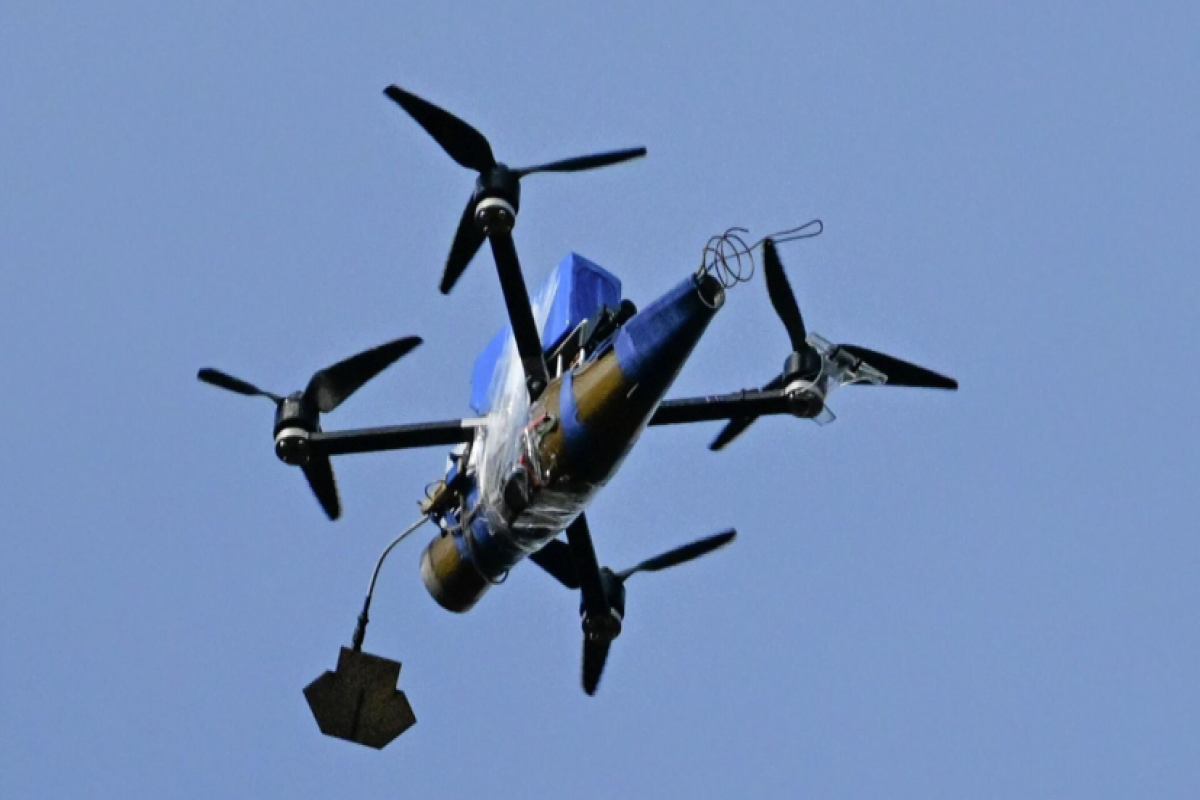
Ukrainian drone carrying explosives crashes on Türkiye’s Black Sea coast
 20:49
20:49
 1 July 2026
Iran warns of immediate response to any threat, cites US commitment to restrain Israel
15:54
1 July 2026
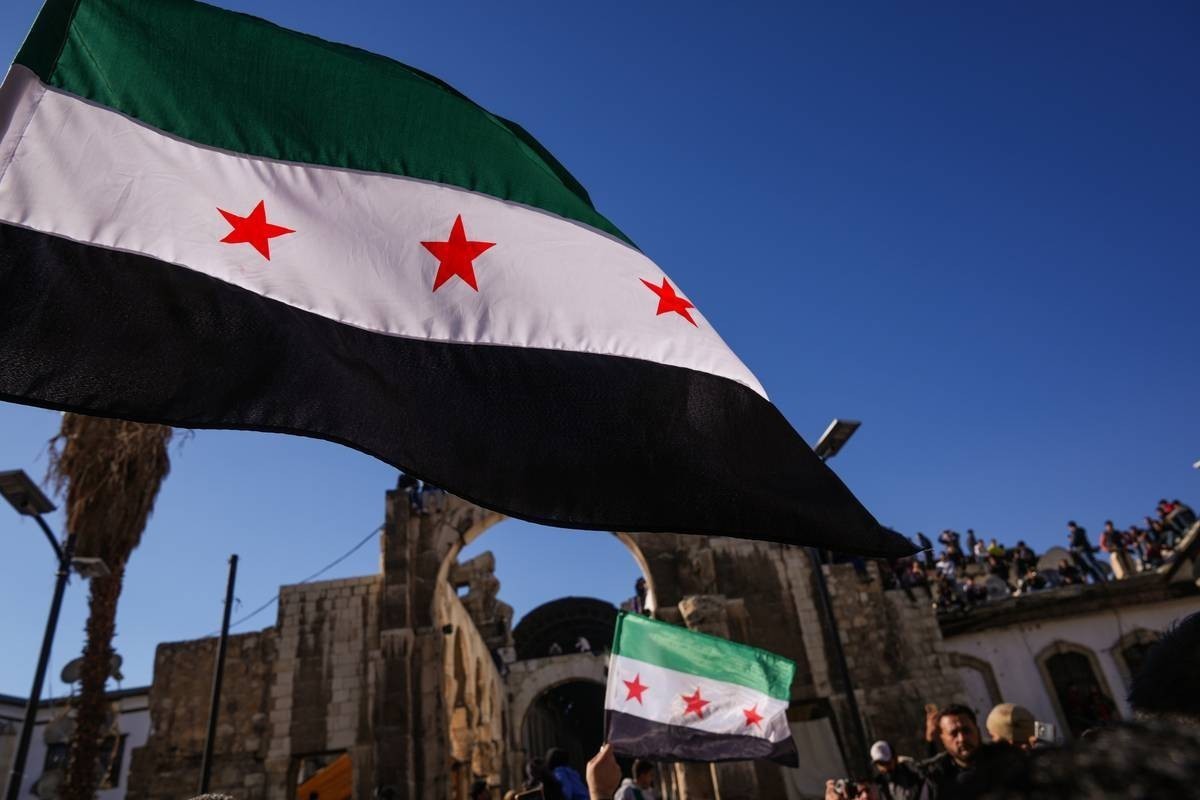
Syria: Parliament to be sworn in for first time since fall of Assad regime
13:59
1 July 2026
Mehr: Foreign cargo ship runs aground after leaving Iran-designated route in the Strait of Hormuz
13:08
1 July 2026

NEWS FEED
England eliminates DR Congo in World Cup's round of 32
22:02
1 July 2026
Ukrainian drone carrying explosives crashes on Türkiye’s Black Sea coast
20:49
1 July 2026
Assistant to President: Azerbaijan- EU partnership - looking beyond horizons
20:16
Audio
1 July 2026
Amy Carlon: Azerbaijan and United States continue to work together today for a more connected, more prosperous, and more secure future-PHOTO
20:12
1 July 2026
Leyen: We also highly appreciate your proposal to lay electric cable to Armenia
20:06
1 July 2026
Ursula von der Leyen: The European Union believes in the bright future of this region
19:59
1 July 2026
European Commission President: We will launch a new €20 million program to promote peace in the region
19:55
1 July 2026
European Commission President: We want to hold the Regional Connectivity Investment Conference in Baku
19:51
1 July 2026
Ursula von der Leyen: We propose establishing an EU-Azerbaijan Connectivity Partnership
19:49
1 July 2026
Ursula von der Leyen to President Ilham Aliyev: You have demonstrated personal leadership in promoting peace and cooperation in the region
19:47
1 July 2026
EU to allocate up to €200 million for transport, energy, and digital connectivity in the South Caucasus
19:47
1 July 2026
President Ilham Aliyev and President of the European Commission delivered press statements - UPDATED
19:44
1 July 2026
Von der Leyen: I am in Baku to further strengthen the EU-Azerbaijan partnership
19:43
1 July 2026
Ursula von der Leyen: Azerbaijan has proven to be a reliable partner for the EU
19:41
1 July 2026
President Ilham Aliyev: Azerbaijan can become a strategic renewable energy partner of the European Commission
19:39
1 July 2026
President: Cargo volumes through Azerbaijan are increasing in all directions
19:36
1 July 2026
President Ilham Aliyev: Azerbaijan is the EU's main trading partner in the South Caucasus
19:34
1 July 2026
President Ilham Aliyev: Half of Azerbaijan's gas exports now go to EU member states
19:33
1 July 2026
President Ilham Aliyev: Azerbaijan-Armenia normalization process is progressing successfully
19:31
1 July 2026
President Ilham Aliyev: We have a very active phase of relationship between European Commission and Azerbaijan
19:29
1 July 2026
President Ilham Aliyev held expanded meeting with President of the European Commission
19:16
1 July 2026
Bulgarian delegation visits Azerbaijan
18:39
1 July 2026
President Ilham Aliyev held one-on-one meeting with President of the European Commission
18:28
1 July 2026
Armenia's Constitutional Court retires to deliberate on parliamentary election challenge
18:16
1 July 2026
Azerbaijan’s PM meets with UN Secretary-General's Special Envoy for Road Safety
17:58
1 July 2026
Russian strikes kill three, injure dozens in Ukraine's Odesa, Kherson and Kharkiv regions
17:49
1 July 2026
Delegation from National Defense University of Türkiye visits Azerbaijan
17:29
1 July 2026
Azerbaijan detects contraband worth AZN 4.8 mln at border last month - PHOTO
17:27
1 July 2026
Azerbaijan's monetary base approaches AZN 24.4 billion
17:26
1 July 2026
Azerbaijan's Central Bank FX reserves exceed $13.1 billion
17:24
1 July 2026
EC President: I am in Baku to deepen the EU-Azerbaijan partnership
17:11
1 July 2026
Trump: Talks with Iran are going well
16:58
1 July 2026
President of European Commission arrives in Azerbaijan-PHOTO
16:49
Audio
1 July 2026
Russia buys gasoline from India to tackle shortages, sources say
16:42
1 July 2026
93.6% of respondents positively assess President Ilham Aliyev's performance - SURVEY
16:24
1 July 2026
Azerbaijan's Jewish communities urge Knesset not to recognize the so-called "Armenian genocide"
16:15
1 July 2026
Baku Security Forum presented to the international community at the UN
15:58
1 July 2026
NATO's new security concept to be discussed in Ankara
15:54
1 July 2026
Iran warns of immediate response to any threat, cites US commitment to restrain Israel
15:54
1 July 2026
Dozens injured after passenger bus crashes into building in Spain
15:46
1 July 2026
AZAL launches regular flights to Atyrau and Aktobe
15:41
1 July 2026
Hakan Fidan: Türkiye's full membership in the European Union is our strategic objective
15:41
1 July 2026
Several killed and injured in fire at Antwerp apartment building
15:26
1 July 2026
Firebomb attacks in northern Greek city target residences of governing party members
15:14
1 July 2026
Leyla Aliyeva visits Azeripek OJSC
15:09
1 July 2026
Leyla Aliyeva attends memorial event “One of Them: Emil”
14:58
1 July 2026
Yerevan comments on Russia's possible participation in TRIPP
14:51
1 July 2026
Turkish ruling party official thanks Azerbaijan
14:47
1 July 2026
AZAL to launch direct flights from Baku to Brussels
14:40
1 July 2026
Kazakhstan to hold snap parliamentary election on August 23
14:16
1 July 2026


