










Baku – APA. Two weeks ago, Gen. James L. Jones, the national security adviser, was holding a meeting at the White House with a high-powered array of his predecessors when President Obama dropped in, APA reports quoting “The New York Timesâ€.
The men gathered in the Situation Room had trolled through a number of national security issues, from China to Afghanistan to Iran. But on that Wednesday, the morning after the Israeli prime minister, Benjamin Netanyahu, had failed to resolve a standoff over new construction in East Jerusalem with Mr. Obama in White House talks, the major discussion topic was the Middle East. And the question on the table after Mr. Obama joined in: had the time come for the president to put forward his own proposal outlining what a peace deal should look like?
Zbigniew Brzezinski, Brent Scowcroft and Samuel Berger, the national security advisers to Presidents Jimmy Carter, Gerald R. Ford, the first President George Bush and President Bill Clinton, advocated such a move, according to several current and former administration officials in the room. Mr. Scowcroft cast the issue in terms of United States national security and its relations with the Arab world. He argued that only American leadership would break the cycle of distrust, hostility and violence that has prevented Israel and its Arab neighbors from forging a lasting peace deal.
The fact that Mr. Obama was willing to have such an impromptu discussion with former advisers illustrates his increasing frustration with the foot-dragging over Middle East peace talks, and a growing sense that he may have to present a specific plan, rather than wait for the two sides to come to any sort of agreement.
The White House is still pushing for Israelis and Palestinians to have the indirect talks both sides had agreed to before the construction announcement raised too much consternation to proceed. But several administration officials acknowledge that those talks, if they ever start, may get mired pretty quickly.
In joining the discussion two weeks ago, Mr. Obama gave very little away about his intentions, attendees said. “He asked a lot of questions,†said one official at the meeting. “He didn’t say ‘great idea, bad idea.’ But he listened.â€
For Mr. Obama, the issue of the status of East Jerusalem is central to his ambitions to forge a peace plan between Israelis and Palestinians during his presidency, a stated goal. But coming up with an American proposal has drawbacks of its own.
No one seated at the table disagreed with Mr. Scowcroft outright, the officials said — most of the men appeared to agree that Israelis and Palestinians, if left to their own devices, would not come up with anything. But a couple of the participants, including Gen. Colin L. Powell, who was national security adviser to President Ronald Reagan, urged caution, arguing that the administration had to figure out what “Acts 2, 3, and 4†would be if one or both of the sides balked at an American-designed peace deal.
So far, administration officials are still smarting from their first attempt at sticking their collective necks out, as they did last summer when they demanded a freeze of Jewish settlements, and then had to stand back with no contingency plan after Israel refused outright.
One Israeli worry is that once Mr. Obama puts American parameters on the table, the Palestinians will refuse to accept anything less. Meanwhile, Mr. Netanyahu, who leads the right-wing Likud party and whose governing coalition includes parties further to the right, might be unwilling or politically unable to make a deal, foreign policy experts said.
Still, for all of that, a consensus appears to be growing, both within the administration and among outside advisers to the White House, that Mr. Obama will have to consider suggesting a solution to get the two sides moving.
Such a move is “absolutely not on the table right now,†a senior administration official said, adding that the United States wanted to first see the start of the indirect, American-brokered peace negotiations, which diplomats refer to as “proximity talks.†But the official said those talks would “undoubtedly get mired down, and then you can expect that we would go in with something.â€
What that would be remains up in the air, but most Middle East experts draw the same outline for a peace deal. First, Palestinian officials would have to accept that there would be no right of return for refugees of the 1948 war that established the Israeli state, and for their millions of descendants. Rather, the Palestinians would have to accept some kind of compensation. Second, the two sides would have to share Jerusalem — Palestinians locating their capital in the east and Israelis in the west, and both signing on to some sort of international agreement on how to share the holy sites in the Old City.
Third, Israel would return to its 1967 borders — before it captured East Jerusalem and the West Bank in the Six-Day War — give or take a few negotiated settlements and territorial swaps. Fourth, the United States or NATO would have to give Israel security guarantees, probably including stationing troops along the Jordan River, to ease Israeli fears that hostile countries could use the Palestinian state as a springboard for attacks. And finally, Arab neighbors like Saudi Arabia would recognize Israel.
“It’s not rocket science,†said Robert Malley, director of the Middle East Program at the International Crisis Group, the Brussels-based organization that seeks to prevent and resolve deadly conflicts. “And a lot of people who have looked at this have reached the conclusion that the parties won’t reach there on their own. If the U.S. wants it done, it will have to do it.â€
Still, Mr. Malley said, “It’s not simply a matter of ‘put a plan on the table and see what happens.’ †He said the administration must work on getting both Mr. Netanyahu and the Palestinian president, Mahmoud Abbas, to believe that their best option would be to go along with an American proposal — a tall order.


 Follow us on Telegram
 t.me/apanewsaz
 Follow us on Instagram
 Follow us on TikTok
 Follow us on Facebook
 Follow us on X
Asia
Iran, Oman stress need for coordination on Strait of Hormuz traffic in foreign minister call
 16:44
16:44
 25 June 2026
Ghalibaf criticizes US over claims regarding Iran's unfrozen assets
16:43
25 June 2026
Iraqi Oil Ministry denies reports of potential OPEC exit, urges output quota reassessment-UPDATED
16:39
25 June 2026
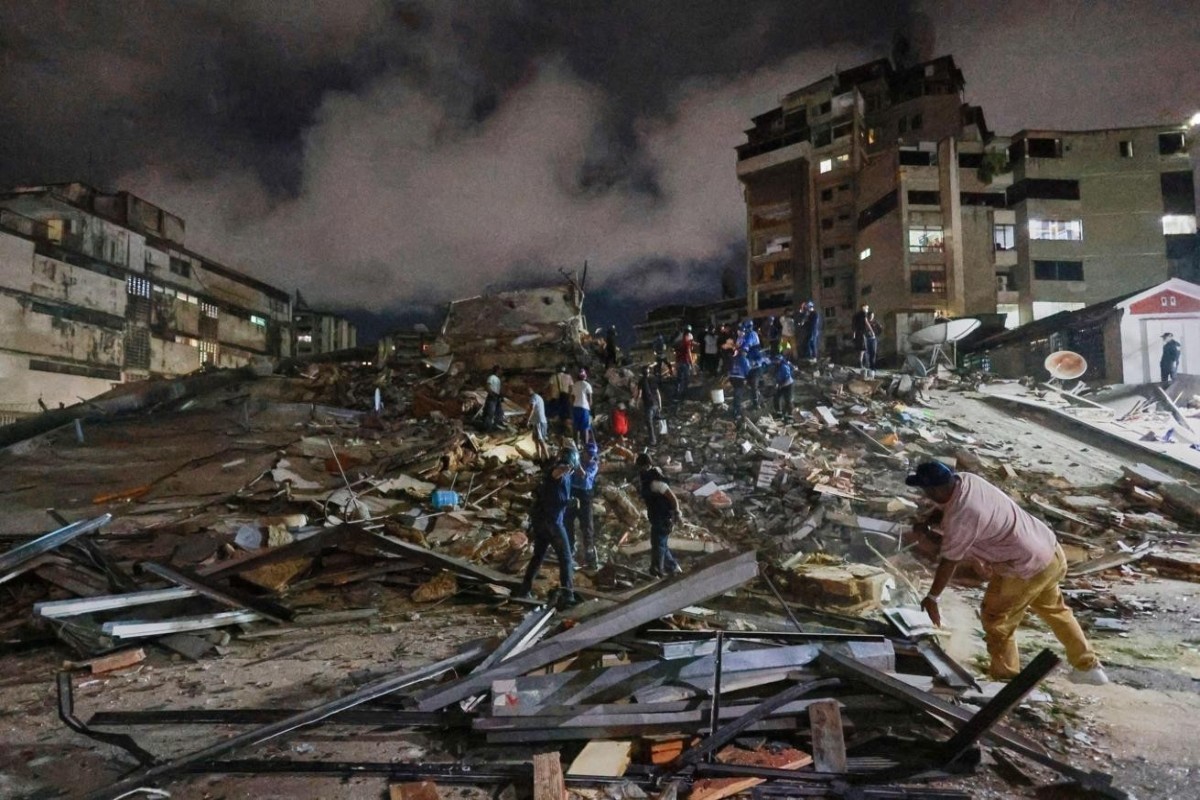
Death toll from Venezuela earthquake rises to 164 - UPDATED - 1 - VIDEO
14:52
25 June 2026

NEWS FEED
Azerbaijan-Israel innovation dialogue held at Shimon Peres Center - PHOTO
17:02
25 June 2026
Iran, Oman stress need for coordination on Strait of Hormuz traffic in foreign minister call
16:44
25 June 2026
Ghalibaf criticizes US over claims regarding Iran's unfrozen assets
16:43
25 June 2026
Iraqi Oil Ministry denies reports of potential OPEC exit, urges output quota reassessment-UPDATED
16:39
25 June 2026
President Ilham Aliyev signs order awarding Defense Ministry servicemen
16:31
25 June 2026
Azerbaijan's President awards fallen servicemen posthumously
16:31
25 June 2026
Military Institute named after Heydar Aliyev holds another graduation ceremony - PHOTO - VIDEO
16:26
25 June 2026
Azerbaijan establishes "Intellectual Customs" information system
16:24
25 June 2026
President Ilham Aliyev awards major general rank to five Defense Ministry servicemen
16:23
25 June 2026
Ashura blood donation campaign concludes in Azerbaijan, 1,269.45 liters of blood collected -PHOTO-UPDATED-1
16:21
25 June 2026
Rubio: No Gulf country supports charging fees for passage through the Strait of Hormuz
16:14
25 June 2026
Hikmat Hajiyev, Macron's adviser review state of Azerbaijan-France relations
16:10
25 June 2026
Azerbaijani cadet awarded Italy's "Sword of Honor"
16:00
25 June 2026
Azerbaijan establishes budget-funded organizations based on several public legal entities - DECREE
16:00
25 June 2026
Defense minister: Azerbaijani Armed Forces are among the strongest militaries in the region
15:56
25 June 2026
US sends search and rescue teams to Venezuela after deadly earthquake
15:55
25 June 2026
Citizens of Kyrgyzstan and Tajikistan graduate with honors from Heydar Aliyev Military Institute
15:53
25 June 2026
More than 90 kg of marijuana found in truck carrying cauliflower from Iran to Russia - PHOTO
15:47
25 June 2026
Azerbaijan's Foreign Minister attends Ukraine Recovery Conference in Poland
15:38
25 June 2026
Azerbaijan joins International Convention on the Control of Harmful Anti-Fouling Systems on Ships
15:25
25 June 2026
Charter of the State Medical Insurance and Expertise Agency approved-DECREE
15:24
25 June 2026
Azercell launches “Əsgərcell” offer on the occasion of 26 June – Armed Forces Day
15:23
25 June 2026
Azerbaijan recalls ambassador to Uzbekistan
15:14
25 June 2026
Financial results of "AzerGold" CJSC and its subsidiaries for year-end 2025 announced
15:14
25 June 2026
Azerbaijani delegation explores advanced pediatric rehabilitation practices in Israel
15:08
25 June 2026
Kremlin urges Russians to switch to Android and "national systems" after VK app removed from App Store
15:06
25 June 2026
Russia says nearly 170,000 Ukrainian drones shot down since war began
14:57
25 June 2026
Kremlin comments on Zelenskyy's statement about Belarusian retransmitters
14:54
25 June 2026
Azerbaijani Parliament reveals date and agenda of its next session
14:52
25 June 2026
Death toll from Venezuela earthquake rises to 164 - UPDATED - 1 - VIDEO
14:52
25 June 2026
French navy has intercepted another Russian 'shadow fleet' tanker, Macron says
14:51
25 June 2026
Azerbaijan-Israel innovation cooperation discussed at MUNI EXPO 2026
14:44
25 June 2026
Azerbaijan, Russia's Astrakhan Region discuss expanding economic cooperation
14:43
25 June 2026
Fuel sales restricted in Russia's Dagestan amid rising demand
14:40
25 June 2026
Azerbaijan introduces "Personal identification tag of military personnel" concept into legislation
14:35
25 June 2026
Azerbaijan relocates next group of families to Jabrayil’s Shukurbeyli village, families receive house keys
14:34
25 June 2026
Zelenskyy says Ukrainian forces struck targets up to 1,500 km inside Russia
14:11
25 June 2026
Azerbaijan FM discusses regional security issues with Polish counterpart
14:04
25 June 2026
Israeli airline suspends flights from Tel Aviv to Moscow after Ukraine strikes in Russia
13:56
25 June 2026
Second "Turkmen Heritage: Solidarity of Civil Societies" Forum held in Baku-PHOTO
13:54
25 June 2026
German Patriot air defense system deployed in Türkiye
13:54
25 June 2026
Azerbaijan's Foreign Ministry extends condolences to Venezuela over earthquake
13:45
25 June 2026
Von der Leyen announces first payment to Ukraine under €90 billion loan
13:37
25 June 2026
Israel, Lebanon deny that Israel has withdrawn from part of southern Lebanon
13:28
25 June 2026
Armenian PM says no Cabinet reshuffle planned
13:08
25 June 2026
Azerbaijan Railways plans to purchase new rolling stock from Chinese companies-PHOTO
12:49
25 June 2026
Pashinyan questions EAEU partners over statement adopted in Armenia's absence
12:48
25 June 2026
New resolution, old approach: PACE's bias against Azerbaijan continues - ANALYSIS
12:47
25 June 2026
Ali Asadov meets with Astrakhan Region Vice Governor
12:23
25 June 2026
Syrian MP: We hope Turkmen students will have the opportunity to study in Azerbaijan
12:21
25 June 2026


