










Baku – APA. America’s military alliance with Europe — the cornerstone of U.S. security policy for six decades — faces a "dim, if not dismal" future, U.S. Defense Secretary Robert Gates said Friday in a blunt valedictory address, APA reports quoting “Associated Pressâ€.
In his final policy speech as Pentagon chief, Gates questioned the viability of NATO, saying its members’ penny-pinching and lack of political will could hasten the end of U.S. support. The North Atlantic Treaty Organization was formed in 1949 as a U.S.-led bulwark against Soviet aggression, but in the post-Cold War era it has struggled to find a purpose.
"Future U.S. political leaders - those for whom the Cold War was not the formative experience that it was for me - may not consider the return on America’s investment in NATO worth the cost," he told a European think tank on the final day of an 11-day overseas journey.
Gates has made no secret of his frustration with NATO bureaucracy and the huge restrictions many European governments placed on their military participation in the Afghanistan war. He ruffled NATO feathers early in his tenure with a direct challenge to contribute more front-line troops that yielded few contributions.
Even so, Gates’ assessment Friday that NATO is falling down on its obligations and foisting too much of the hard work on the U.S. was unusually harsh and unvarnished. He said both of NATO’s main military operations now — Afghanistan and Libya — point up weaknesses and failures within the alliance.
"The blunt reality is that there will be dwindling appetite and patience in the U.S. Congress — and in the American body politic writ large — to expend increasingly precious funds on behalf of nations that are apparently unwilling to devote the necessary resources or make the necessary changes to be serious and capable partners in their own defense," he said.
Without naming names, he blasted allies who are "willing and eager for American taxpayers to assume the growing security burden left by reductions in European defense budgets."
The U.S. has tens of thousands of troops based in Europe, not to stand guard against invasion but to train with European forces and promote what for decades has been lacking: the ability of the Europeans to go to war alongside the U.S. in a coherent way.
The war in Afghanistan, which is being conducted under NATO auspices, is a prime example of U.S. frustration at European inability to provide the required resources.
"Despite more than 2 million troops in uniform, not counting the U.S. military, NATO has struggled, at times desperately, to sustain a deployment of 25,000 to 45,000 troops, not just in boots on the ground, but in crucial support assets such as helicopters, transport aircraft, maintenance, intelligence, surveillance and reconnaissance, and much more," Gates said.
Gates, a career CIA officer who rose to become the spy agency’s director from 1991 to 1993, is retiring on June 30 after 4 1/2 years as Pentagon chief. His designated successor, Leon Panetta, is expected to take over July 1.
For many Americans, NATO is a vague concept tied to a bygone era, a time when the world feared a Soviet land invasion of Europe that could have escalated to nuclear war. But with the demise of the Soviet Union in 1991, NATO’s reason for being came into question. It has remained intact — and even expanded from 16 members at the conclusion of the Cold War to 28 today.
But reluctance of some European nations to expand defense budgets and take on direct combat has created what amounts to a two-tier alliance: the U.S. military at one level and the rest of NATO on a lower, almost irrelevant plane.
Gates said this could spell the demise of NATO.
"What I’ve sketched out is the real possibility for a dim, if not dismal future for the trans-Atlantic alliance," he said. "Such a future is possible, but not inevitable. The good news is that the members of NATO - individually and collectively - have it well within their means to halt and reverse these trends and instead produce a very different future."
Gates has said he believes NATO will endure despite its flaws and failings. But his remarks Friday point to a degree of American impatience with traditional and newer European allies that in coming years could lead to a reordering of U.S. defense priorities in favor of Asia and the Pacific, where the rise of China is becoming a predominant concern.
To illustrate his concerns about Europe’s lack of appetite for defense, Gates noted the difficulty NATO has encountered in carrying out an air campaign in Libya.
"The mightiest military alliance in history is only 11 weeks into an operation against a poorly armed regime in a sparsely populated country, yet many allies are beginning to run short of munitions, requiring the U.S., once more, to make up the difference," he said.
His comment reflected U.S. frustration with the allies’ limited defense budgets.
"To avoid the very real possibility of collective military irrelevance, member nations must examine new approaches to boosting combat capabilities," he said.
He applauded Norway and Denmark for providing a disproportionate share of the combat power in the Libya operation, given the size of their militaries. And he credited Belgium and Canada for making "major contributions" to the effort to degrade the military strength of Libya’s Moammar Gadhafi.
"These countries have, with their constrained resources, found ways to do the training, buy the equipment and field the platforms necessary to make a credible military contribution," he said.
But they are exceptions, in Gates’ view.
A NATO air operations center designed to handle more than 300 flights a day is struggling to launch about 150 a day against Libya, Gates said.
On a political level, the problem of alliance purpose in Libya is even more troubling, he said.
"While every alliance member voted for the Libya mission, less than half have participated, and fewer than a third have been willing to participate in the strike mission," he said. "Frankly, many of those allies sitting on the sidelines do so not because they do not want to participate, but simply because they can’t. The military capabilities simply aren’t there."
Afghanistan is another example of NATO falling short despite a determined effort, Gates said.
He recalled the history of NATO’s involvement in the Afghan war — and the mistaken impression some allied governments held of what it would require of them.
"I suspect many allies assumed that the mission would be primarily peacekeeping, reconstruction and development assistance - more akin to the Balkans," he said, referring to NATO peacekeeping efforts there since the late 1990s. "Instead, NATO found itself in a tough fight against a determined and resurgent Taliban returning in force from its sanctuaries in Pakistan."
He also offered praise and sympathy, noting that more than 850 troops from non-U.S. NATO members have died in Afghanistan. For many allied nations these were their first military casualties since World War II.
He seemed to rehearse his position in the coming debate within the Obama administration on how many troops to withdraw from Afghanistan this year.
"Far too much has been accomplished, at far too great a cost, to let the momentum slip away just as the enemy is on his back foot," he said.
He said the "vast majority" of the 30,000 extra troops Obama sent to Afghanistan last year will remain through the summer fighting season. He was not more specific.
In a question-and-answer session with his audience after the speech, Gates, 67, said his generation’s "emotional and historical attachment" to NATO is "aging out."
He said he is not sure what this means in practical terms. But if Europeans want to keep a security link to the U.S. in the future, he said, "the drift of the past 20 years can’t continue."


 Follow us on Telegram
 t.me/apanewsaz
 Follow us on Instagram
 Follow us on TikTok
 Follow us on Facebook
 Follow us on X
Americas

Vance: US ready to discuss memorandum disagreements with Iran
 02:39
02:39
 27 June 2026
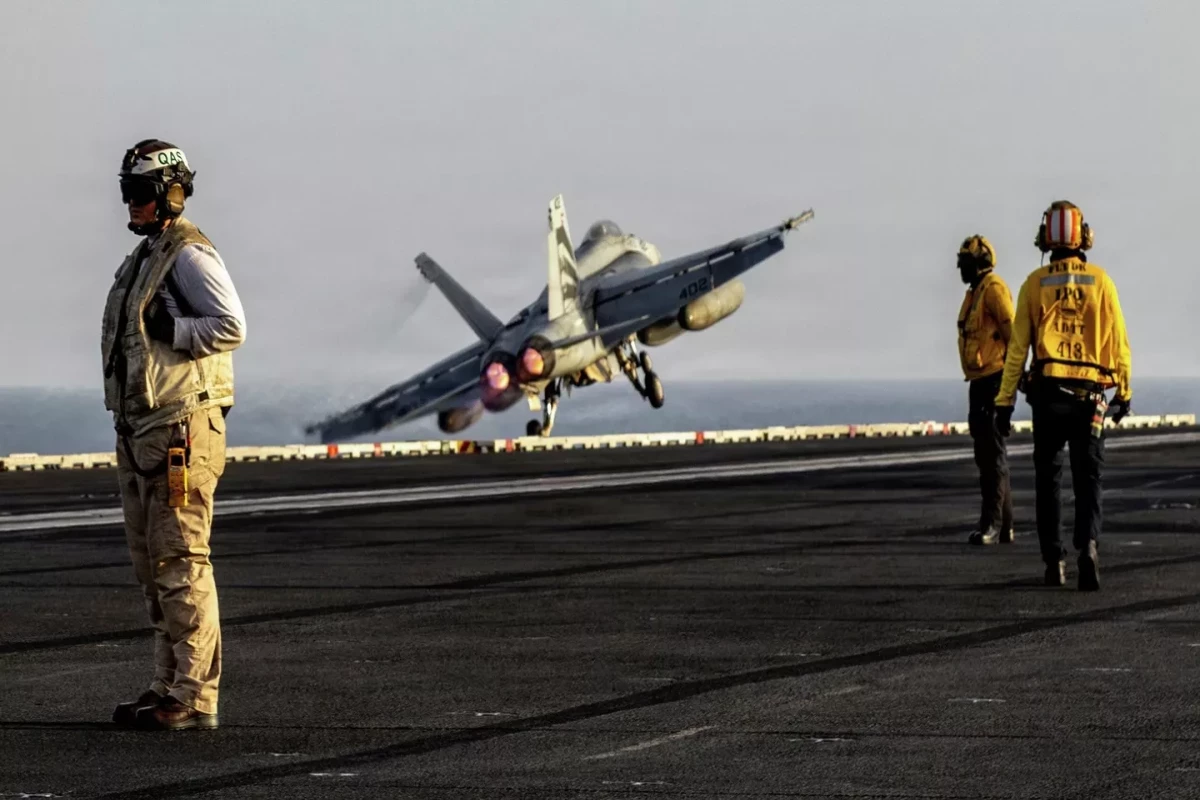
US strikes Iranian targets in response to attack on cargo ship
00:47
27 June 2026

Montenegro police, FBI arrest Iranian wanted by US for hacking
11:15
26 June 2026

Trump says U.S. will use Iranian funds to buy wheat, soybeans and corn
09:12
26 June 2026

NEWS FEED
Vance: US ready to discuss memorandum disagreements with Iran
02:39
Audio
27 June 2026
IRGC says it struck US military positions in response to US airstrike on Iran
01:43
27 June 2026
France wins Group I after beating Norway 4-1
01:13
27 June 2026
US strikes Iranian targets in response to attack on cargo ship
00:47
Audio
27 June 2026
Netanyahu says Israeli army will remain in southern Lebanon ‘security zone’ until Hezbollah disarmed
23:49
26 June 2026
UK guarantees $1 billion World Bank loan to Ukraine
23:20
26 June 2026
Israel, Lebanon sign framework peace deal after US-mediated talks
22:36
Audio
26 June 2026
Venezuela quake death toll rises to 92
22:29
26 June 2026
Trump accuses Iran of violating ceasefire with US
20:24
Audio
26 June 2026
Scuffle breaks out during Georgian parliament session, proceedings suspended - PHOTO
20:00
26 June 2026
Turkish ships stranded in Strait of Hormuz safely leave the region
19:56
26 June 2026
Turkish actor Kadir İnanır dies at 77
19:33
26 June 2026
Putin meets with Belarusian President Lukashenko
19:22
26 June 2026
Putin bans deportation of foreigners serving under contract in Russian army
19:19
26 June 2026
Seven Hezbollah fighters killed in Lebanon
19:12
26 June 2026
Explosion followed by fire hits factory in Türkiye
19:10
26 June 2026
Death toll hits 55 in France as drownings rise amid Europe heatwave
19:07
26 June 2026
Baghaei: Joint statement by US and GCC is a distortion of truth
18:40
26 June 2026
Rosatom says plans Bushehr staff return
18:15
26 June 2026
Small aircraft crashes into Beijing’s tallest skyscraper - VIDEO
17:56
26 June 2026
If Iran attacks Israel, it will ‘commit its biggest mistake’: Katz
17:35
26 June 2026
Belarusian President Lukashenko departs for working visit to Russia
17:28
26 June 2026
Russia advises its citizens against traveling to Moldova
17:23
26 June 2026
Death toll from Venezuela earthquake rises to 589 - UPDATED - 4 - VIDEO
16:56
26 June 2026
Azerbaijan and Italian foreign ministers hold phone conversation
16:54
26 June 2026
Senior military ranks presented to servicemen of the Azerbaijan Ministry of Defense - PHOTO
16:23
26 June 2026
CIS Secretary General: Armenia is not considering leaving the CIS
16:16
26 June 2026
Former Russian Defense Minister Sergei Ivanov dies at 73
16:08
26 June 2026
European Commission President Ursula von der Leyen to visit Azerbaijan next week
16:03
26 June 2026
Leadership of the Ministry of Defense visits Alley of Honor, Victory Park, and Military Memorial Cemetery - PHOTO
16:00
26 June 2026
CIS Economic Council meeting held in Moscow, Armenia does not send high-level representative - PHOTO
15:54
26 June 2026
Russia and Ukraine conduct prisoner exchange
15:40
26 June 2026
Proposal made to lower the age of criminal responsibility to 12 in Russia
14:50
26 June 2026
Iran, South Korea discuss regional developments and diplomacy
14:42
26 June 2026
Hormuz shipping depends on coordination with Tehran, Iran deputy FM says
14:30
26 June 2026
State of emergency declared in Crimea and Sevastopol
14:27
26 June 2026
Peskov: It cannot be said that the U.S. is completely neutral in the Ukraine conflict
14:10
26 June 2026
Lavrov responds to Rubio's remarks on Alaska talks
14:06
26 June 2026
Military marches held in Baku, Khankendi, Shusha and five other cities - PHOTO - UPDATED
14:02
26 June 2026
Moldova's ambassador summoned to Russian Foreign Ministry
13:59
26 June 2026
Astrakhan vice governor: We are friends of Azerbaijan and will always stand by it
13:39
26 June 2026
Kazakhstan may begin importing aviation fuel from Azerbaijan
13:10
26 June 2026
Russian delegation inspects construction progress at kindergarten in Gubadli - PHOTO
13:05
26 June 2026
State Duma proposes death penalty for corrupt officials undermining Russia's defense
12:55
26 June 2026
Turkish Ministry of National Defense congratulates Azerbaijan on Armed Forces Day
12:37
26 June 2026
Russia says it shot down 660 Ukrainian drones overnight
12:10
26 June 2026
AZAL plans to expand its fleet to 50 aircraft by 2032 - VIDEO
12:05
26 June 2026
NATO special representative: Azerbaijani Army has a high level of interoperability with NATO standards
11:39
26 June 2026
Ambassador: UK committed to further strengthening partnership with Azerbaijan
11:20
26 June 2026
Montenegro police, FBI arrest Iranian wanted by US for hacking
11:15
26 June 2026


