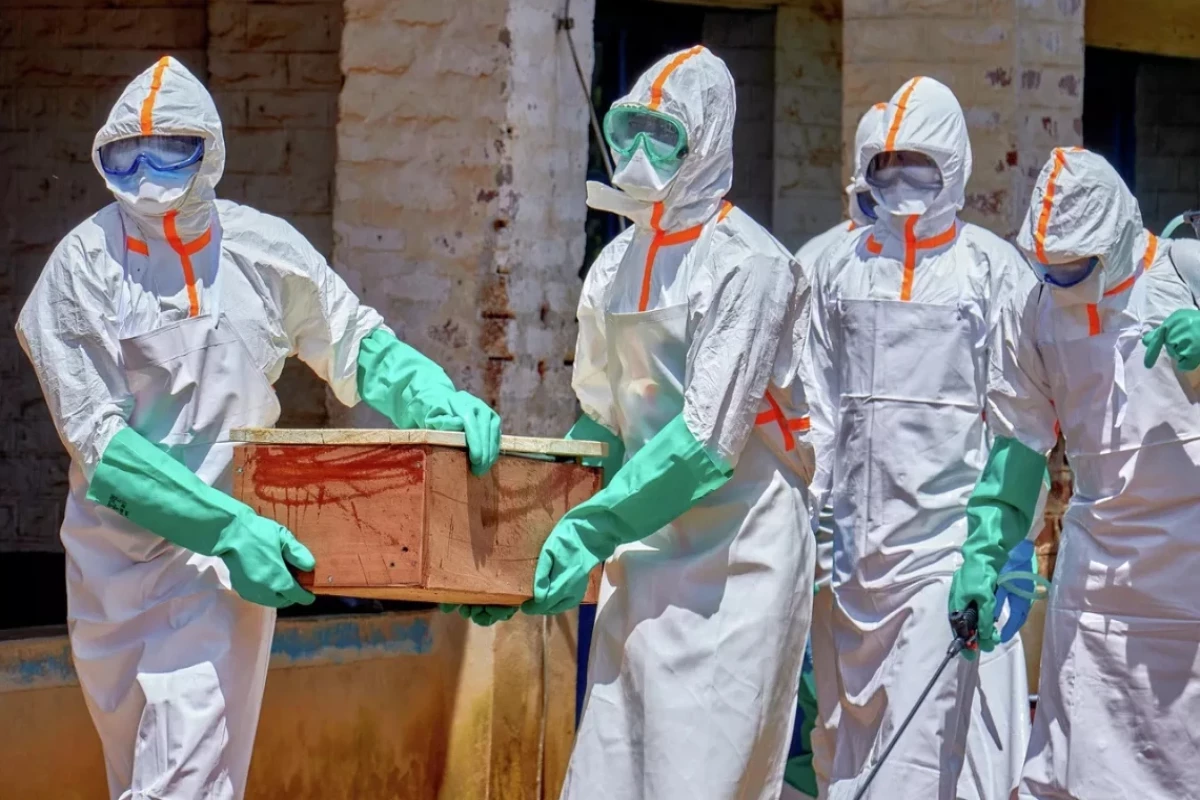


Outbreak declared in mid-May in the east of the country has already surpassed 1,400 confirmed cases and is approaching 440 deaths, amid growing international concern over the spread of the virus and the possible overflow of the deployed health response, Demócrata reports.
The Congolese Ministry of Health stated in a statement disseminated on social media that to date, 1,406 infections and 438 deaths have been recorded, with 73 new cases and 39 deaths in the last 24 hours. In addition, 192 people have managed to overcome the disease, three of them during the last day.
The health department emphasized that this data represents a fatality rate of 31.2% -- increasing in recent weeks -- and detailed that 609 patients remain admitted to isolation centers, while contact tracing reaches 82.5%.
The department also specified that the most affected province is Ituri, where 24 health zones report Ebola infections. The provinces of North Kivu -- with eleven affected health zones -- and South Kivu -- with one health zone -- also share the epicenter of the outbreak. These latter two regions are partially under the control of the rebel group March 23 Movement (M23).
To the cases detected in Congolese territory, 19 infections and two deaths in Uganda are added, at a time marked by warnings from the international community about the spread of the virus, which the World Health Organization (WHO) has described as a public health emergency of international concern.
Given this situation, the authorities in Ituri have recently announced a package of restrictions to try to curb transmission, including the prohibition of handling corpses, the closure of public swimming pools, and the obligation for motorcycle taxi drivers to use raincoats, masks, and helmets.
Similarly, limits have been set on the number of passengers in taxis, buses, and minibuses, with mandatory hand washing before boarding vehicles, and the maximum number of attendees at public gatherings has been restricted to 50, as reported by the Congolese broadcaster Radio Okapi.
DRC --which in December 2025 declared the previous Ebola outbreak in its territory, recorded in the Kasai region, to be over-- is considered the country with the most global experience in managing this virus, having faced more than a dozen outbreaks since its identification in 1976 in a double epidemic episode whose epicenter was located in the Congolese town of Yambuku, on the banks of the Ebola River, which gave the disease its name.


 Follow us on Telegram
 t.me/apanewsaz
 Follow us on Instagram
 Follow us on TikTok
 Follow us on Facebook
 Follow us on X