












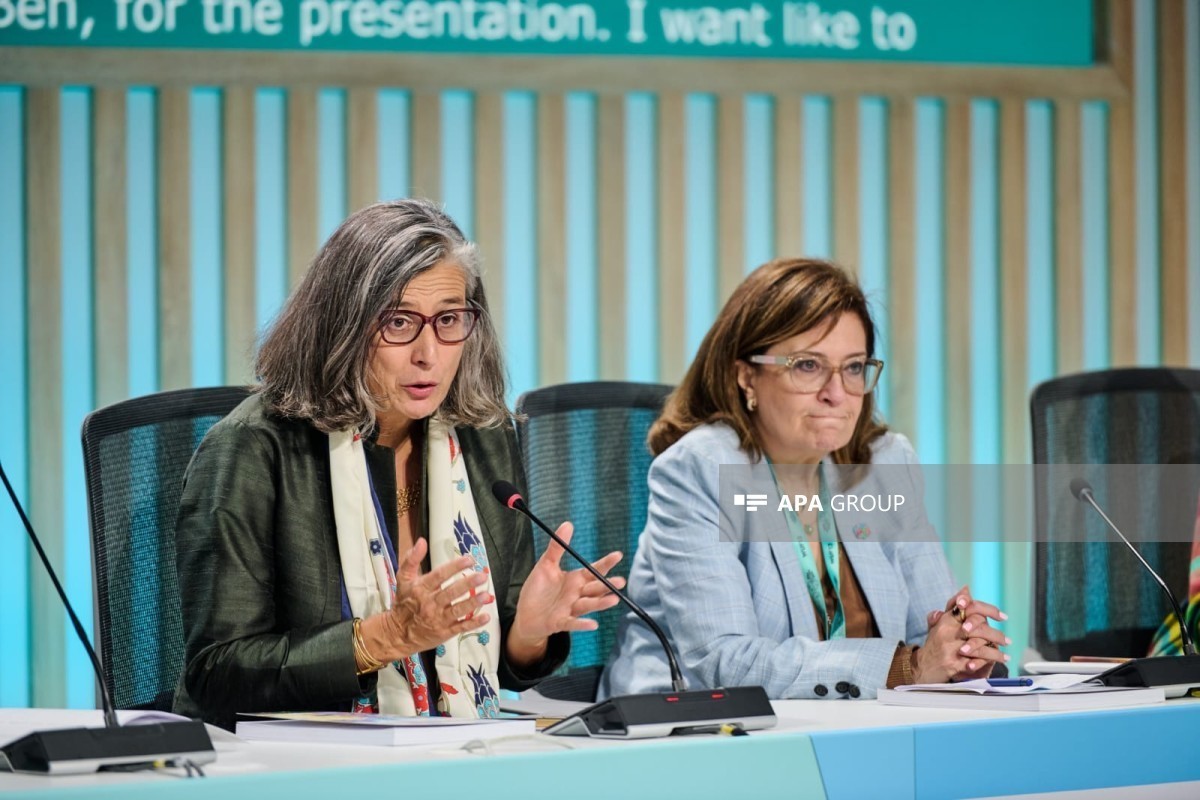


The “World Cities Report 2026” was presented within the framework of WUF13, APA reports.
The report includes the main challenges related to the global housing crisis, urbanization processes, the impact of climate change on cities and sustainable urban development.
Speaking at the presentation, Head of the Global Reports and Trends Unit of the United Nations Human Settlements Programme (UN-Habitat) Benedict Arimah stated that currently 1.6 billion people worldwide do not have adequate housing.
According to him, by 2024, 203 million people had been forced to leave their homes: “Housing problems in cities will increase even more by 2050. Only 25 percent of the world’s population can use mortgages to secure housing. This shows that the financial capacity of the majority of people is insufficient.”
Arimah noted that natural disasters and climate change seriously affect settlements, resulting in the need to relocate millions of people.
UN-Habitat Executive Director Anaclaudia Rossbach, in her speech, emphasized that the housing crisis is becoming increasingly deeper: “People everywhere can no longer afford to buy or rent homes. People living in informal settlements are at particularly high risk.”
She stated that informal settlements are the first areas to suffer during natural disasters: “People live in very dangerous conditions. During natural disasters, those who suffer first are the people living in informal settlements who lose their homes.”
The report, consisting of 9 chapters, evaluates adequate housing not only as a matter of shelter, but also as a key element of human well-being and sustainable urban development.
The document particularly emphasizes the importance of safe and accessible housing policy for reducing poverty, improving quality of life and transforming informal settlements.


 Follow us on Telegram
 t.me/apanewsaz
 Follow us on Instagram
 Follow us on TikTok
 Follow us on Facebook
 Follow us on X


