












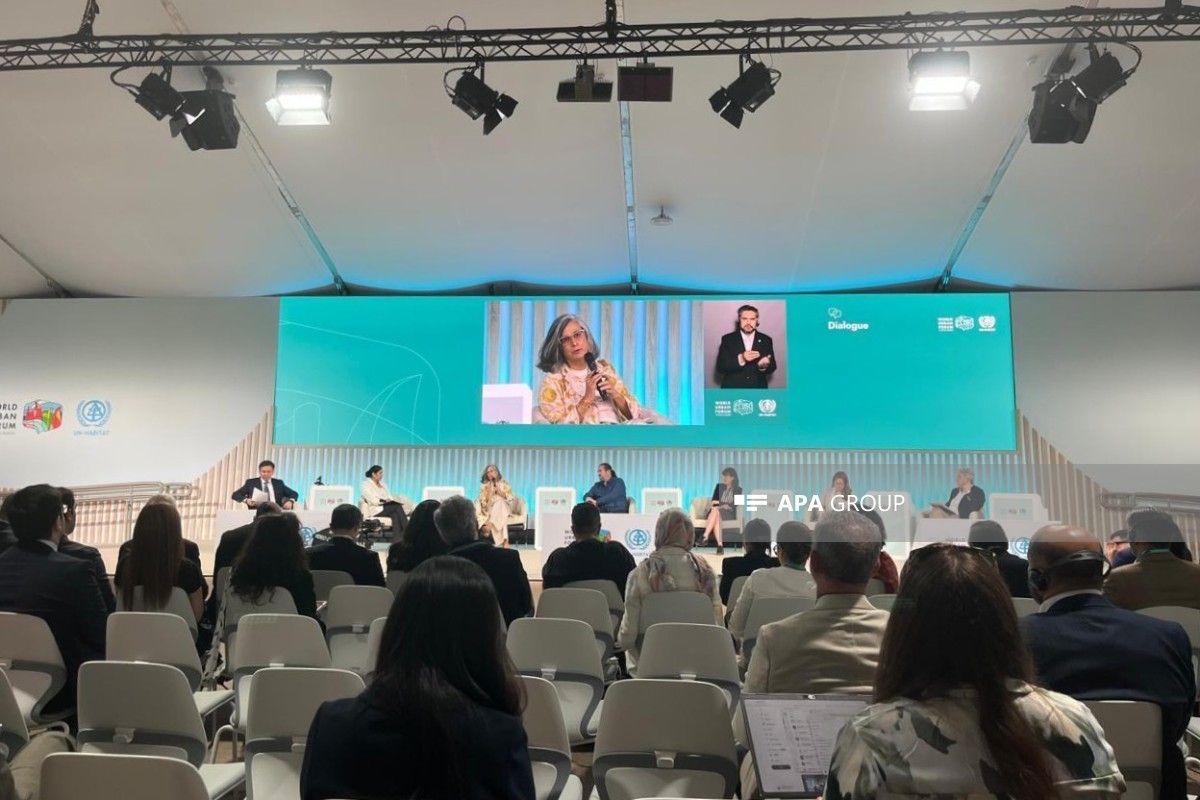


“We must change our approach to housing issues,” Executive Director of the United Nations Human Settlements Programme (UN-Habitat), Anacláudia Rossbach, said during her speech at the event titled “Housing at the Center of Post-Crisis Recovery and Reconstruction” held within the framework of WUF13, APA reports.
“Housing is an industry. This industry has a very broad value chain that includes both large and small businesses. If investments are made in housing, this will create a multiplier effect in terms of local economic development. As a result, people’s incomes will increase, positive economic circulation will emerge within communities, and this will also affect countries’ GDP. Considering housing as an industry and an investment is extremely important when addressing recovery processes. Because in this case, the invested funds will generate greater returns,” Rossbach noted.
She stated that funds allocated to the UN, non-governmental organizations, and international humanitarian institutions are mainly directed toward urgent and life-saving assistance and are not intended for long-term housing provision.
It was emphasized during the speech that the share of the housing sector in the financial portfolios of development banks is also very small:
“For this reason, many countries try to solve housing problems only through domestic financial resources. Countries that fail to establish a domestic financing system face serious difficulties in this area. As a result, people do not receive support and become dispersed across different places. This is a structural problem that we, as societies, must solve.”
According to Rossbach, strengthening social capital and communities should be among the main priorities in humanitarian planning processes.
She stated that communities can create gradual and sustainable housing solutions even with small-scale support:
“The role of local governments was also particularly emphasized here. Strengthening local governance structures is essential for organizing services and ensuring sustainable development.”


 Follow us on Telegram
 t.me/apanewsaz
 Follow us on Instagram
 Follow us on TikTok
 Follow us on Facebook
 Follow us on X


